
If you have ever turned on the tap and been hit by a sulfur stench, you know how unpleasant well water smells like rotten eggs can be. The culprit is usually hydrogen sulfide gas, which can enter your water supply from decaying organic matter, certain soil bacteria, or a corroded magnesium anode rod inside your water heater. While the smell is usually a nuisance, hydrogen sulfide can signal other water-quality issues and cause corrosion or staining. This article explains why it happens, how to pinpoint the source, and what actually works to fix it.
Key Takeaways
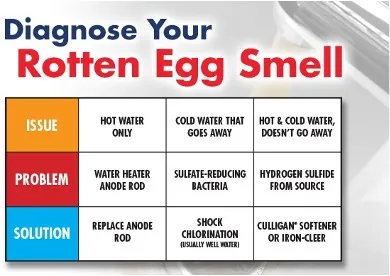
- Test both cold and hot water separately to tell whether the smell comes from the well or the water heater.
- Shock chlorination kills sulfate-reducing bacteria in the well and distribution system.
- Replacing a magnesium anode rod with an aluminum-zinc or powered anode often eliminates heater-only odors.
- Activated carbon filters remove low levels of hydrogen sulfide from drinking water.
- Oxidation filters, aeration systems, and continuous chlorination handle stronger or whole-house hydrogen sulfide problems.
- Retest your water after any treatment to confirm the odor and gas level are gone.
What Causes That Rotten Egg Smell
Hydrogen sulfide is a colorless gas that gives water its characteristic rotten egg odor. It forms when sulfur-reducing bacteria break down organic matter or sulfates in groundwater, releasing the gas as a byproduct. These bacteria thrive in low-oxygen environments such as deep wells, plumbing dead-ends, and water heater tanks. The gas can also enter water naturally from rock formations and soil.
Is the Smell Dangerous
At typical household levels, hydrogen sulfide in well water is mainly an aesthetic problem. It makes water unpleasant to drink and cook with, and it can leave a metallic or bitter taste.
High concentrations of hydrogen sulfide are toxic and can cause nausea, headaches, and respiratory irritation, but such levels are rare in residential well water. The gas is flammable in confined spaces, so a well pit or pump house with a strong odor should be ventilated before anyone spends time inside. If anyone in the household experiences dizziness or illness after water use, stop using the water and contact a licensed well professional or your local health department.
Finding the Source of Well Water That Smells Like Rotten Eggs
You need to know whether the odor comes from the groundwater itself or from inside your home’s plumbing. The simplest test is to compare cold and hot water at multiple taps.
- Cold water smells at every tap: The problem is likely in the well or the distribution system.
- Only hot water smells: The issue is probably the water heater, often the anode rod.
- Smell disappears after running the water: Hydrogen sulfide is likely trapped in the plumbing or well pressure tank.
- Smell stays constant: The source may be continuous, such as sulfate-reducing bacteria in the aquifer.
If only one faucet smells, the issue is likely localized to that fixture.
Water Heater Odor Causes
Most water heaters contain a sacrificial anode rod to protect the tank from corrosion. When the rod reacts with sulfate, bacteria can convert it into hydrogen sulfide gas.
Replacing the magnesium rod with an aluminum-zinc alloy rod often reduces the reaction. Powered anode rods are another option that doesn’t feed bacteria.
Well and Distribution Causes
If cold water smells, sulfate-reducing bacteria in the well, pump, or pressure tank are the likely source. Decaying organic matter, poor construction, or a shallow pump can increase the risk.
Test Your Water Before You Treat It
Don’t guess at a treatment system. A water test tells you the concentration of hydrogen sulfide, the presence of bacteria, and other parameters such as iron, manganese, pH, and hardness.
Contact your county health department or a state-certified laboratory to request a well water test. Ask specifically for hydrogen sulfide, sulfate-reducing bacteria, total coliform, and E. coli. The U.S. Environmental Protection Agency offers guidance on private well testing and recommended contaminants to check through its drinking water resources for well owners EPA private well testing guidance.
Treatment Options Compared
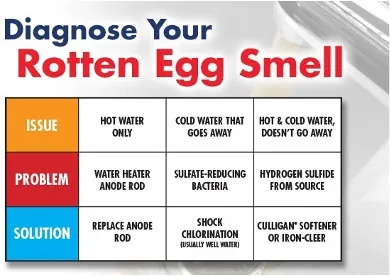
The right system depends on the gas concentration, whether bacteria are present, and whether you need point-of-use or whole-house treatment.
| Treatment Method | Best For | Typical Cost Range | Pros | Cons |
|---|---|---|---|---|
| Shock chlorination | Bacterial sulfur odor in well | $100–$300 | Kills bacteria; inexpensive | Temporary if source returns |
| Activated carbon filter | Low-level hydrogen sulfide | $50–$400 | Simple; improves taste | Cartridge replacement; limited capacity |
| Oxidation filter | Moderate to high levels | $600–$2,000 | No chemicals; whole-house | Requires backwashing; maintenance |
| Aeration system | High hydrogen sulfide | $800–$2,500 | Strips gas without chemicals | Needs space; may need repressurization |
| Continuous chlorination | Persistent bacteria and odor | $500–$1,800 | Reliable for ongoing control | Chemical handling; carbon polish needed |
Shock chlorination involves introducing a strong chlorine solution into the well and circulating it through the plumbing.
Shock Chlorination Step by Step
Shock chlorination is often the first treatment to try when bacteria are confirmed or suspected. Follow these steps carefully.
- Turn off the power to the well pump and open the well cap or seal.
- Add the correct amount of household bleach or pool chlorine based on well depth and diameter, following public health guidance.
- Recirculate the water by connecting a hose to an outdoor tap and running it back into the well until you smell chlorine.
- Open every indoor and outdoor tap until chlorine is detected at each one, then close them.
- Let the chlorinated water sit in the system for 12 to 24 hours.
- Flush the system by running water outdoors until the chlorine smell is gone.
- Retest the water after the chlorine has fully cleared.
Warning: Don’t drink, cook with, or bathe in the water while it contains high chlorine levels.
Filtration and Whole-House Systems
If shock chlorination doesn’t provide a lasting fix, a filtration system may be the answer. Activated carbon filters are common for drinking water at the kitchen sink.
Oxidation filters use media to convert dissolved hydrogen sulfide into a filterable form. These systems treat all water entering the house.
Aeration systems vent hydrogen sulfide outdoors by exposing water to air. Aeration is chemical-free and effective for higher concentrations, but the equipment takes up space and must be sized to your household’s water demand.
Continuous chlorination feeds chlorine into the supply, followed by a carbon filter. This approach works well when sulfur bacteria keep returning, but it requires ongoing chemical monitoring and maintenance.
Water Heater Fixes That Work
When the smell appears only in hot water, focus on the water heater. Start by flushing the tank to remove sediment. Attach a hose to the drain valve and run water until it’s clear. This removes organic material.
Next, inspect the anode rod. A magnesium rod is the most common trigger for hydrogen sulfide in heaters. Replacing it with an aluminum-zinc alloy rod reduces the chemical reaction that feeds sulfur bacteria. A powered anode rod eliminates the sacrificial metal entirely and is often the most permanent solution, though it costs more upfront.
Costs You Can Expect
Treatment costs vary widely based on the cause, water chemistry, and equipment chosen. The table below summarizes typical installed price ranges for common solutions.
| Solution | Typical Cost Range | Lifespan or Frequency |
|---|---|---|
| Well water lab test | $30–$150 | Once, then annually |
| Shock chlorination | $100–$300 | As needed |
| Anode rod replacement | $100–$300 | Every 3–5 years |
| Activated carbon filter | $50–$400 | Cartridges every 3–6 months |
| Oxidation filter system | $600–$2,000 | 5–15 years |
| Aeration system | $800–$2,500 | 10–20 years |
| Continuous chlorination | $500–$1,800 | Ongoing chemical cost |
Professional installation adds labor costs, which vary by region.
Prevention and Ongoing Maintenance
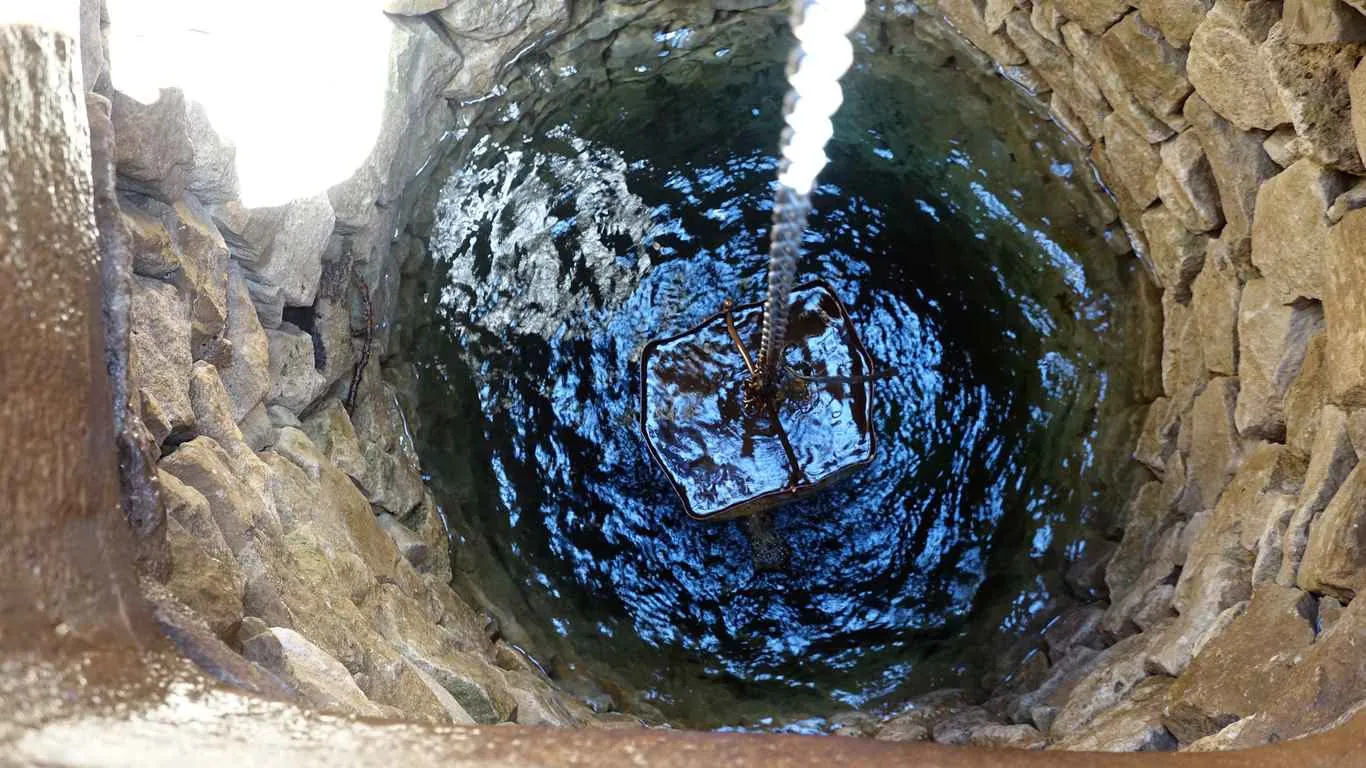
Prevention is easier than treatment. Test your well water at least once a year for coliform bacteria, nitrates, and any parameters that were previously high. Inspect the well cap regularly to ensure it’s secure and intact. Slope the area around the wellhead so surface water drains away.
Pro Tip: If you install an oxidation or aeration system, make sure it’s sized for your peak household flow rate, not just average use. Undersized equipment lets untreated water through during heavy morning or evening demand.
Related guides
Frequently Asked Questions
Can hydrogen sulfide make me sick?
At the low levels usually found in household well water, hydrogen sulfide is mainly a nuisance that causes odor, taste issues, and plumbing corrosion. High concentrations can be harmful, but those are uncommon in residential wells.
Will a water softener fix the rotten egg smell?
No. Water softeners remove hardness minerals such as calcium and magnesium, but they don’t remove hydrogen sulfide. In some cases, a softener can even provide a surface for bacteria to grow. Use a softener for hardness and a separate treatment method for sulfur odor.
How often should I shock chlorinate my well?
Only when testing or odor indicates bacterial contamination. Routine shock chlorination isn’t necessary if annual tests are clean and the well is properly sealed. Repeated chlorination without solving the source problem isn’t a long-term fix.
Can I use bleach to treat my well myself?
Household bleach can be used for shock chlorination, but you must use the correct amount for your well’s depth and diameter and follow safe flushing procedures. If you’re unsure, hire a licensed well professional to avoid damaging the well or leaving unsafe chlorine levels in the plumbing.
Does boiling water remove the smell?
Boiling can drive off some hydrogen sulfide gas, but it isn’t a practical treatment method and concentrates any other contaminants in the remaining water. It isn’t a substitute for proper filtration or disinfection.
Why does the smell come and go?
Hydrogen sulfide can accumulate in pipes and the pressure tank when water sits, then release all at once when you first turn on the tap. Seasonal changes in groundwater levels and bacterial activity can also make the odor stronger at certain times of year.
Conclusion
If your well water smells like rotten eggs, start by testing the water and checking whether the odor is in the cold supply, the hot supply, or both.