
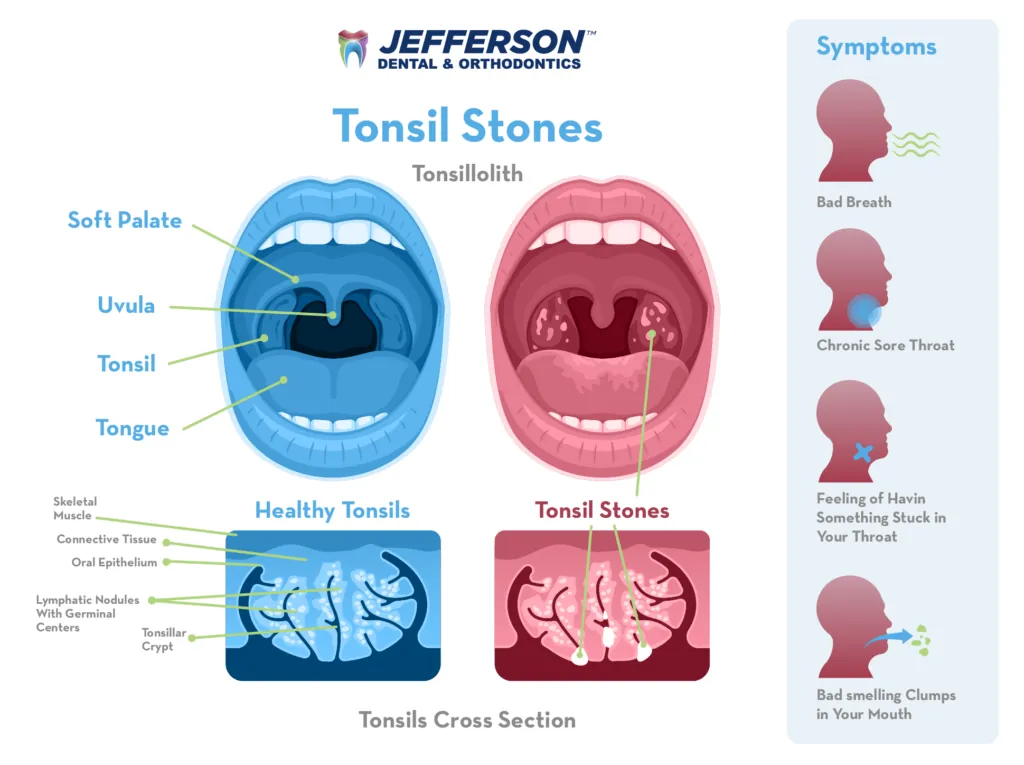
Tonsil stones smell because they’re made of trapped food particles, dead cells, and mucus that release sulfur compounds as they decay. This odor occurs when bacteria in your mouth break down these materials inside the small pits of your tonsils. If your tonsils have large, deep crevices, you’re more likely to have these calcified deposits than someone with smaller, smoother tonsils.
Facts About Tonsil Odor
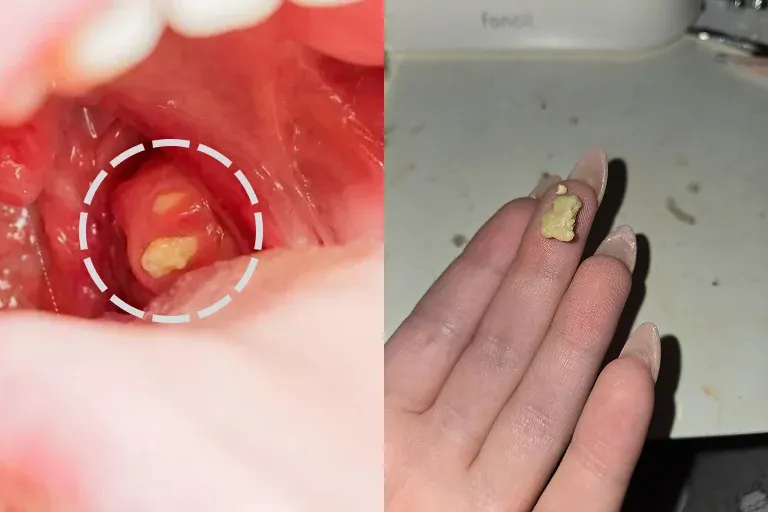
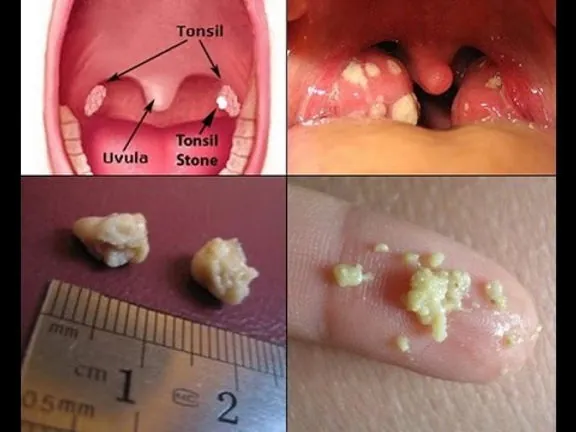
The white or yellow spots you see are calcified masses of debris and bacteria. These deposits, known as tonsilloliths, form when food particles, dead cells, and mucus become trapped in the crevices of your tonsils.
Sulfur-producing bacteria living in your mouth cause the distinct, unpleasant breath odor. These stones can range from the size of a grain of sand to a large pea. If you notice a metallic or rotten egg taste, it’s often a sign of active decay within a stone.
Poor oral hygiene can speed up the buildup of the material that forms these stones. Brushing your tongue and flossing daily reduces the organic matter available for bacteria to consume.
Recurring stones often indicate that your tonsils have naturally deep pockets, known as crypts. If you experience chronic stones despite good hygiene, consult an ENT to discuss whether your crypt structure requires professional intervention or simple, regular irrigation.
Why Tonsil Stones Cause Bad Breath
The primary reason for the odor is the anaerobic environment inside your tonsil crypts. These small pits act as traps for food, saliva, and dead cells. Because oxygen doesn’t circulate well inside these deep holes, it creates the perfect home for specific types of bacteria. These bacteria thrive in low-oxygen areas and produce volatile sulfur compounds as a byproduct of their metabolism.
These sulfur compounds are the same chemicals that give rotten eggs or sewage their signature smell. As the trapped debris sits in the crypts, it begins to harden through a process of calcification. While the stone itself is essentially a mass of waste, it’s the constant bacterial activity on its surface that keeps the odor strong. You might notice the smell is worse after eating, as fresh food particles get added to the existing buildup.
If you can see white or yellowish specks in the back of your throat, you’re likely dealing with stones. However, if your breath smells like sulfur but you see nothing, the debris may be trapped in deep crypts hidden behind the tonsil folds. In these cases, gargling with salt water for thirty seconds can often dislodge the hidden particles.
The size of the stone doesn’t always determine the strength of the odor. Even a tiny, invisible stone can produce a noticeable smell if the bacterial colony on it’s active. The odor will persist as long as the debris remains trapped and the bacteria have a steady supply of nutrients. Many people mistakenly scrub their tongues to fix this, but if the source is internal, tongue scraping will never solve the underlying decay.
When Your Tonsil Situation Changes
The simple answer about odor applies to most people, but some situations require a different approach or suggest a different cause for the smell.
If you feel sharp pain while swallowing, don’t assume it’s a simple stone. This often signals a peritonsillar abscess, which requires immediate drainage by a doctor to prevent airway obstruction.
White patches on your tongue or throat suggest oral thrush rather than debris. In this case, standard gargling will fail; you need an antifungal prescription from your dentist or primary care physician.
When your tonsils appear bright red and swollen, you’re likely dealing with bacterial tonsillitis. If you also develop a fever or chills, seek medical attention to rule out infections like strep throat, which require specific treatment to prevent complications.
If your throat remains sore for more than two weeks despite hygiene efforts, request a formal exam. Chronic inflammation can mask underlying issues that home remedies can’t reach. Always prioritize professional intervention if your symptoms involve systemic signs like high heat or difficulty breathing.
How to Manage Tonsil Stones
Gargle with warm salt water to help loosen debris; mix 0.5 teaspoons of salt into 8 ounces of warm water and gargle for 30 seconds. Focus the liquid at the back of your throat to reach the tonsillar crypts effectively.
Use a water flosser on the lowest pressure setting to gently flush out the crypts, but never aim the stream directly into the tissue. High pressure can cause micro-tears that lead to scarring and deeper pockets, making future stones more likely.
Brush your teeth and tongue twice daily to reduce the total amount of bacteria in your mouth that could contribute to stone formation. If you notice a persistent metallic taste or bad breath, focus your brushing on the very back of the tongue where bacteria accumulate.
Drink at least 64 ounces of water throughout the day to keep your mouth hydrated. A dry mouth allows debris to stick to your tonsils more easily.
Check your tonsils in a mirror with a bright light to see if you can safely remove a stone with a clean, damp cotton swab. If the stone is deeply embedded, leave it alone. Forcing a stubborn stone often causes inflammation.
Stop any attempt at removal if you feel pain or see blood. This indicates you’re damaging the delicate tissue.
The Mistakes That Ruin Your Progress
Using sharp objects like toothpicks to poke at your tonsils can cause deep cuts and lead to serious infection. These lacerations create new pockets for bacteria to colonize, often turning a minor annoyance into a painful peritonsillar abscess.
Ignoring daily oral hygiene allows food particles to accumulate, which makes the stones grow larger and faster. If you skip brushing after your final meal, you provide a consistent fuel source for the sulfur-producing bacteria.
Aggressive scrubbing of the tonsils leads to swelling, which actually makes the crypts trap more debris over time. If your tonsils appear inflamed or angry, stop all mechanical intervention immediately.
Assuming the smell is only from your teeth causes you to miss the real source, meaning the problem never goes away. If your breath remains foul after flossing and tongue scraping, the issue is almost certainly internal.
Related guides
Frequently asked questions
How long does the smell from tonsil stones last?
The smell lasts as long as the stone remains inside the tonsil crypt. Once you successfully dislodge the stone or it falls out on its own, the sulfur-producing bacteria lose their primary home, and the odor usually disappears within a few hours of cleaning.
Is it safe to remove tonsil stones at home?
It’s safe to remove them only if they’re clearly visible and can be gently nudged out with a soft, damp cotton swab. If the stone is deep inside the tissue or you feel any discomfort, you must stop immediately and see an ear, nose, and throat specialist.
Why do my tonsil stones keep coming back?
They return because your tonsils have naturally deep, irregular crypts that are designed to trap particles. This is a physical trait of your anatomy, and for many people, it’s a lifelong occurrence that requires consistent daily rinsing to manage.
Does drinking more water help prevent them?
Drinking more water helps by keeping your saliva thin and your mouth hydrated, which prevents food debris from sticking to the tonsils. Aiming for 64 ounces of water daily is a standard recommendation to maintain the flow of saliva needed to wash away small particles.
What happens if I leave them alone?
If you leave them alone, they may eventually fall out on their own during coughing or eating. However, they can continue to cause bad breath and, in some cases, lead to a feeling of having something stuck in your throat until they’re removed.
Does gargling really stop the odor?
Gargling with salt water works by neutralizing the sulfur compounds and physically washing away loose debris from the surface of the tonsils. While it doesn’t fix the deep crypts, it’s an effective way to manage the smell on a daily basis.
Conclusion
The best way to handle this issue is to keep your mouth clean and stay hydrated. If the stones cause you constant pain or the smell doesn’t improve with daily care, a doctor can discuss options like laser treatment or a tonsillectomy to remove the crypts entirely. Never try to force a stone out if it isn’t easily accessible, as your safety comes first.