
When you wake up to brew your morning cup and notice your coffee smells bad, it can be a jarring experience that ruins your appetite before you even take a sip. While fresh coffee should have a robust, nutty, or floral aroma, a foul odor often points to an issue with your beans, your equipment, or the water you’re using. Identifying the cause quickly allows you to salvage your morning routine and ensure your next cup is as delicious as you intended it to be.
Key Takeaways

- Check the roast date on your coffee bag to ensure you aren’t using stale or rancid beans.
- Perform a deep clean of your coffee maker, specifically focusing on the carafe and internal tubing.
- Inspect your water source for sulfurous odors or high mineral content that could taint the brew.
- Store your coffee in an airtight, opaque container away from heat, light, and moisture.
- Discard beans that show signs of mold, as these present a potential health risk to consumers.
Why Do My Beans Smell Off?
The most common culprit for a strange aroma is the state of the beans themselves. Coffee beans contain oils that can go rancid over time when exposed to oxygen, light, and heat. If your beans were roasted months ago or have been left in an open bag, they will lose their pleasant volatile compounds and begin to develop a cardboard-like or sour scent.
Rancid coffee oils are a primary driver of off-putting smells. When these oils oxidize, they lose their delicate flavor profile and transition into a stale, flat, or even fishy odor. Always check the “roasted on” date rather than the “best by” date; coffee is at its peak freshness within two to four weeks of being roasted. If you notice a musty or damp smell, it’s highly likely that moisture has entered the packaging, which can lead to mold growth.
| Bean Condition | Typical Odor | Cause |
|---|---|---|
| Freshly Roasted | Nutty, Floral, Fruity | Natural compounds |
| Stale/Old | Cardboard, Flat, Dust | Oxidation of oils |
| Improper Storage | Musty, Moldy, Damp | Humidity and fungi |
| Rancid | Sour, Fishy, Chemical | Long-term light/heat exposure |
Is Your Coffee Maker Clean?
If the beans smell fine but the brewed coffee smells bad, the issue is almost certainly your brewing equipment. Over time, coffee residue, mineral buildup, and oil deposits accumulate inside the internal components of your machine. When hot water passes through these dirty parts, it extracts those old, burnt, and rancid flavors into your fresh cup.
Biofilm buildup occurs when coffee oils and minerals settle in the internal tubing or the carafe. If you don’t rinse your carafe thoroughly or leave old grounds in the filter basket, bacteria can thrive in the humid environment. To verify this, smell the inside of your machine’s water reservoir or the carafe lid; if the odor matches the “bad” smell you noticed, your machine requires a deep cleaning session immediately.
Does Your Water Affect Flavor?
Sometimes the scent isn’t coming from the beans or the machine, but from the water used to brew.
If your tap water has a faint chemical or sulfurous smell, this will be amplified when heated. Using a high-quality water filter, such as a carbon-block pitcher or a plumbed-in filtration system, can remove these impurities. If you suspect your water is the source, try brewing a single cup using bottled spring water; if the odor disappears, you have successfully identified the culprit.
Proper Storage Techniques

Keeping your coffee in the bag it came in is often insufficient once the seal is broken. To maintain freshness, you must minimize exposure to the elements. Oxygen is the enemy of flavor, so investing in a vacuum-sealed canister or a container with a one-way valve is a smart move for any home barista.
- Keep coffee in a cool, dark cupboard.
- Avoid storing beans in the freezer, as condensation can ruin the flavor.
- Use ceramic, glass, or stainless steel airtight containers.
- Keep beans away from strong-smelling foods like spices or onions.
Airtight containers prevent the absorption of external odors. Since coffee beans are porous, they act like a sponge, soaking up the smells of whatever is nearby. If your coffee smells like the garlic in your pantry, it’s likely because the storage container wasn’t properly sealed or was placed too close to pungent ingredients.
Troubleshooting Why Coffee Smells Bad
When diagnosing the cause of the odor, follow this systematic process to rule out variables one by one. Start with the simplest solutions before moving to more intensive cleaning or equipment replacement.
- Inspect the beans for visible mold or an oily sheen that looks uneven.
- Brew a cup using bottled water to rule out tap water quality issues.
- Perform a descaling process on your machine using a vinegar or citric acid solution.
- Scrub the carafe and filter basket with hot, soapy water.
- Check the coffee grinder for old, stuck grounds that may be rotting.
Descaling solutions are essential for removing mineral deposits that hold onto odors. If you have hard water, these deposits build up quickly and can make your coffee taste and smell metallic or burnt.
How to Clean Your Equipment
Cleaning your machine doesn’t have to be a difficult chore. Most manufacturers recommend a deep clean at least once every three months, or more frequently if you live in an area with hard water.
- Rinse the carafe after every single use.
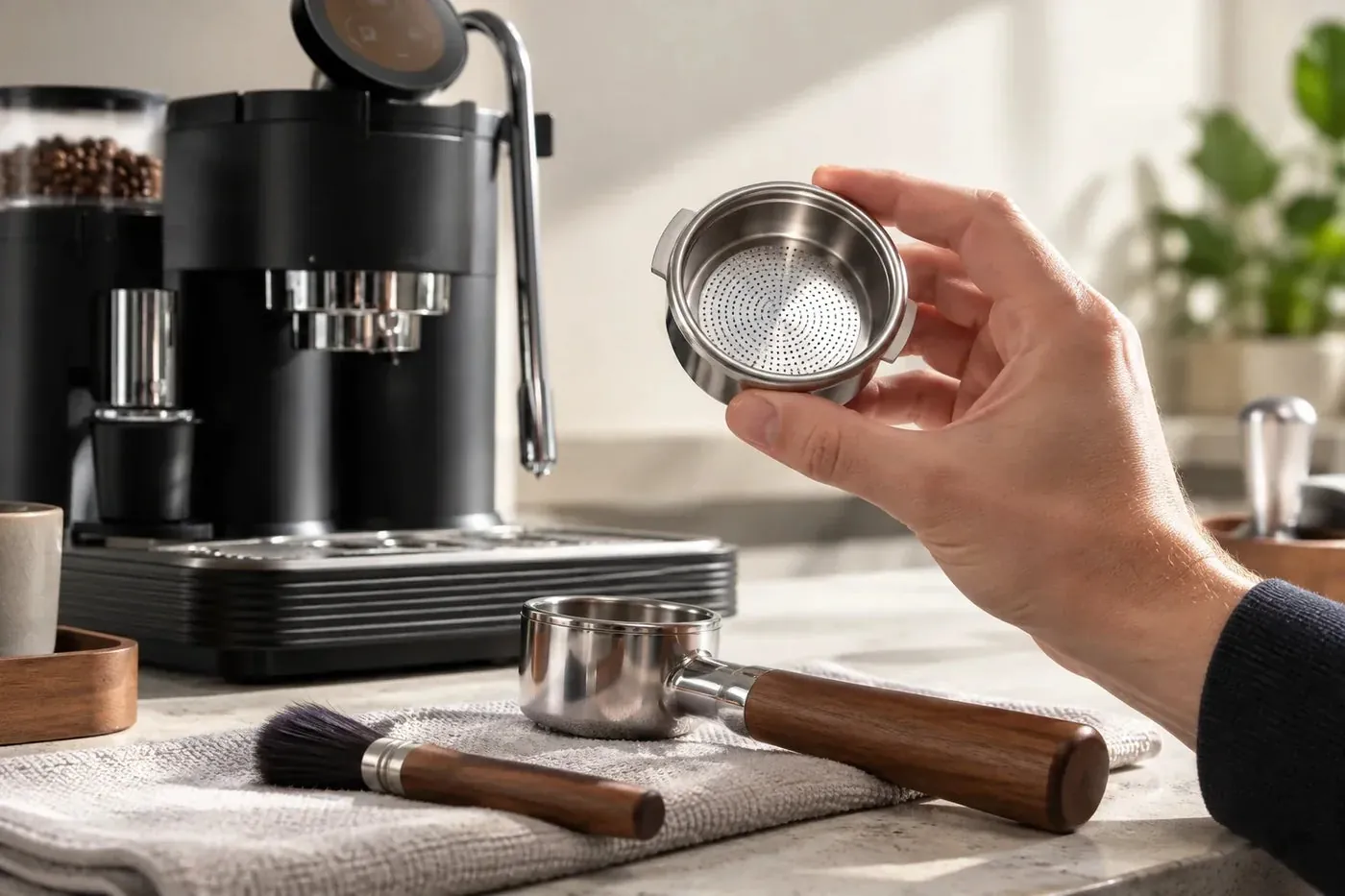
- Use a soft brush to clean the filter basket area.
- Run a cycle of half-water and half-white vinegar through the machine.
- Run two full cycles of plain water to remove the vinegar taste.
Cleaning frequency is the most important factor in preventing foul odors. If you leave a wet filter in the machine for more than an hour, mold spores can begin to colonize the damp paper or plastic, which will inevitably taint the flavor of your next pot of coffee.
When Should You Toss the Beans?
There are times when you simply can’t salvage the beans. If you notice any of the following, it’s time to throw the batch away for the sake of your health and taste buds:
- Visible white, green, or fuzzy spots on the beans.
- A strong, chemical-like scent that doesn’t dissipate after grinding.
- Beans that have been exposed to water or high humidity for an extended period.
- A persistent, nauseating smell that remains even after rinsing the container.
Moldy coffee beans can produce mycotoxins, which are harmful if ingested. While it’s rare to find moldy beans from reputable roasters, it can happen if the beans were improperly dried or stored during shipping. Never risk your health by trying to “roast away” or salvage beans that have clear signs of fungal growth.
Related guides
Frequently Asked Questions
Why does my coffee smell like rotten eggs?
A rotten egg smell is almost always related to the water source or a dirty machine. Sulfur in your water supply can cause this odor, especially when heated. Alternatively, if your coffee maker has old, decaying organic matter trapped in the internal tubing or the filter basket, it can produce a similar sulfurous smell. Clean your machine thoroughly and test with filtered water to resolve this issue.
Is it safe to drink coffee that smells slightly off?
If the smell is simply due to minor staleness or oxidation, it isn’t dangerous, though it will taste flat and unpleasant. However, if the smell is sharp, chemical, or reminiscent of mold, don’t drink it. Consuming moldy coffee can cause digestive upset or allergic reactions. When in doubt, it’s safer to discard the beans and start fresh with a new, high-quality batch.
Does the roast level change the smell?
Yes, roast levels have distinct scent profiles. Light roasts are often fruity, acidic, and floral, while dark roasts smell smoky, chocolatey, or burnt. If a dark roast smells like carbon or charcoal, that’s normal. However, if a light roast smells like wet cardboard or damp basement, it’s likely stale or moisture-damaged. Understanding the expected profile of your roast helps you identify when something is actually wrong.
Can my grinder make the coffee smell bad?
Absolutely. If your grinder isn’t cleaned regularly, old oils and coffee dust accumulate in the burrs or blades. When you grind fresh beans, the heat from the friction releases these rancid oils, coating your fresh grounds with a foul-smelling residue. To prevent this, wipe out your grinder chamber weekly and use a specialized grinder cleaning tablet to remove caked-on oils from the internal components.
How do I stop coffee from absorbing fridge smells?
You should never store your coffee in the refrigerator or freezer. The fluctuating temperatures cause condensation, which introduces moisture to the beans and makes them absorb the odors of other foods. Instead, store your beans in a cool, dark pantry inside an airtight, opaque container. This environment protects the coffee from heat, light, and moisture, ensuring it stays fresh and free from external kitchen odors.
Conclusion
Taking the time to evaluate your storage habits and the cleanliness of your brewing setup is the best way to ensure your coffee remains fresh. If you have already cleaned your machine and replaced your beans, yet the problem persists, consider checking your local water quality report to see if seasonal mineral changes are affecting your brew. Start by clearing out your pantry and purchasing a small, fresh bag of whole-bean coffee to reset your palate.