
A musty smell after rain often comes from water sneaking in through a crack, a gap, or wet material that never dried. You can keep using the house while you look for damp spots, peeling paint, or water marks.
Locating the musty house smell
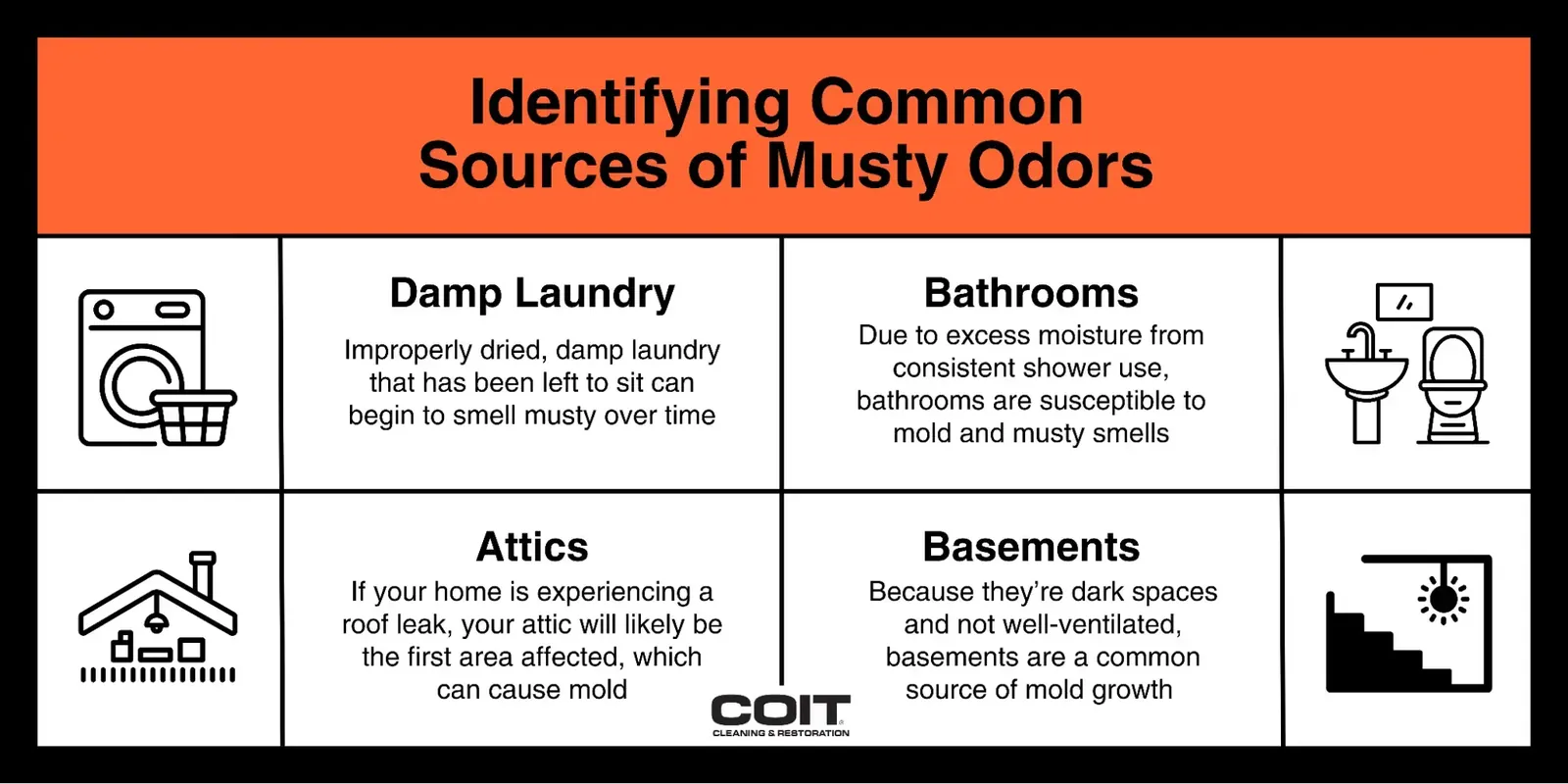
A house smells musty after rain because moisture entered somewhere and didn’t dry out quickly. Most people assume the smell is coming from the air, but it almost always originates from a specific material that has become saturated.
| What you notice | What it usually means | What to do first |
|---|---|---|
| Damp patch on a wall after rain | Water is getting through the exterior | Find where it enters |
| Musty smell strongest in one room | That room holds the wet spot | Check that room first |
| Wet carpet or rug near an exterior door | Rain blew in or seeped under | Dry it within 24 to 48 hours |
| Peeling paint or bubbling wallpaper | Moisture is behind the surface | Stop and look behind it |
| Water marks on the ceiling | A roof leak is likely | Check the attic or roof |
| Condensation on windows | Indoor air is too damp | Open windows or run a fan |
| Smell worse in the basement | Ground moisture is coming through | Check the foundation walls |
If you smell dampness but see no water, check the floor joists or the underside of the subfloor. A common mistake is ignoring the crawl space, which often traps moisture long after the exterior ground has dried. If the smell persists for more than three days after the rain stops, you’re likely dealing with active mold growth rather than simple evaporation. In this case, use a moisture meter to test the drywall.
The most likely cause
The most common reason a house smells musty after rain is water entering through the building shell and soaking into drywall, insulation, or carpet. It doesn’t take a flood; a small leak that stays damp for more than a day is enough for mold to start growing and releasing that smell.
You can confirm it yourself in under a minute: press your hand against the wall or floor where the smell is strongest. If it feels cool or damp, or if you see a water stain, you have found the entry point.
Fix it by finding where the water comes in and drying the area completely. Use fans and open windows, and keep them running until the material feels dry to the touch — this usually takes one to three days, depending on how wet it’s and how much airflow you have.
If the material stays damp longer than two days, mold can already be growing inside it, and simply drying the surface won’t remove the smell. You’ll know the fix worked when the musty smell is gone even after the next heavy rain.
You can tell this cause apart from condensation because the damp spot appears only after it rains outside, not on cold mornings when the weather is dry.
The second cause

Another common reason is condensation forming on cold surfaces inside the house. Warm, moist indoor air meets a cold wall, window, or pipe and turns into water. That dampness collects on surfaces and inside wall cavities, and it smells musty even though no rain entered from outside. It happens most often in bathrooms, kitchens, and rooms with poor airflow.
Check for it by looking for water droplets on windows, walls, or pipes on a dry day when it isn’t raining. If you see droplets and the surfaces feel damp, condensation is the likely cause. Fix it by improving airflow — open windows, run exhaust fans while cooking or showering, and keep interior doors open so air moves through the house.
A small room can dry out in a few hours with good airflow; a larger damp area may take a day or two. The sign it worked is that surfaces stay dry and the smell doesn’t return after the next rain.
This differs from a leak because condensation appears on indoor surfaces without any rain having entered the building, and it often shows up on windows and exterior walls rather than in one isolated damp patch.
The third cause
A less common cause is moisture rising through the foundation or slab into the house. Groundwater moves up through concrete or masonry, especially in basements and ground-floor rooms, where the smell is often strongest. You can tell it apart from the first two causes because the dampness stays at floor level, often along the edges of the room, and it doesn’t depend on a specific storm or a leaky pipe.
Check by pressing your hand to the floor along the walls in the room where the smell is worst. If the floor feels damp or you see a white, powdery stain known as efflorescence on the concrete, moisture is coming up from the ground. Many homeowners mistake this for a simple spill or surface condensation. Treating the surface with paint or sealant without addressing the hydrostatic pressure underneath will fail, causing the coating to bubble and peel within months.
Fixing this isn’t a quick do-it-yourself job. It usually means improving exterior drainage, sealing the foundation, or installing a sub-slab vapor barrier. This work requires specialized equipment and often a licensed contractor. If your basement floor remains dry and the smell vanishes through several rainy periods, the moisture migration has stopped. If the dampness persists, you likely have a high water table that requires a sump pump system to manage the incoming volume.
When to call in a professional

Stop and get help when the problem is beyond a surface dry-out.
- You see mold covering a large area of wall or ceiling. Mold that size needs safe removal by someone trained for it.
- The smell comes with visible water dripping or running. An active leak needs a plumber or roofer right away.
- The damp area is larger than a small patch and has stayed wet for more than two days. At that point mold is likely growing inside the material.
- Anyone in the house has asthma, allergies, or breathing problems that get worse when it rains. Dampness and mold can make these conditions worse, and the Environmental Protection Agency on mold advises caution.
- You can’t find where the water is coming in after checking walls, windows, roof, and foundation. A professional can use moisture meters and cameras to find hidden leaks.
- The smell is in the walls or ceiling and won’t go away after drying. Hidden mold or insulation damage needs an expert.
Never cut into a wall or ceiling to look for a leak unless you know what is inside. Pipes and wires run through those spaces, and cutting blindly can cause injury, flooding, or an electrical hazard.
Related guides
- How to Fix Polyurethane Mistakes: A Step-by-Step Repair Guide in 2026
- Can You Use Oil Based Primer Over Latex Paint? The Fix in 2026
Frequently asked questions
Can rain really make a house smell musty?
Yes. Rainwater that enters through a leak or damp foundation soaks into materials, and that dampness creates the musty smell.
Why does the smell only happen after it rains?
Because the moisture arrives with the rain. If the water doesn’t dry quickly, mold begins to grow and the smell appears.
How long does it take for the smell to go away?
One to three days, assuming the area is dried with fans and airflow. If the material stays wet longer, mold may already be growing and the smell can last much longer.
Is it safe to stay in the house?
Usually yes, unless you see widespread mold or anyone has breathing problems that get worse. In those cases, get professional help.
What happens if I ignore it?
The dampness stays, mold can grow inside walls and floors, and the damage becomes more expensive to repair.
Does it matter which room smells worst?
Yes. The room tells you where the water is entering — a basement points to the foundation, an upstairs room often points to the roof.
How can I tell a leak from condensation?
A leak shows damp spots only after rain. Condensation appears on windows and cold surfaces even when it’s dry outside.
Conclusion
If the scent doesn’t fade after a day or two, you shouldn’t ignore it. Hidden mold can be tricky, so it’s best to call a professional inspector if you can’t find the source yourself. They’ll help you protect your home’s air quality so you’re breathing easy again in no time.