
Discovering that your fish tank smells bad is an alarming experience that usually signals an imbalance in your aquatic ecosystem. While a healthy aquarium should have a mild, earthy scent reminiscent of a damp forest floor, any sharp, pungent, or rotten-egg odors indicate that your water quality is declining. Addressing these smells requires a systematic approach to identifying the source of decay, whether it be rotting organic matter, overfeeding, or a failing filtration system. By acting quickly, you can restore a fresh, clean environment for your fish and maintain the stability of your home aquarium.
Key Takeaways
- Perform partial water changes of 20% to 30% to immediately dilute pollutants and odors.
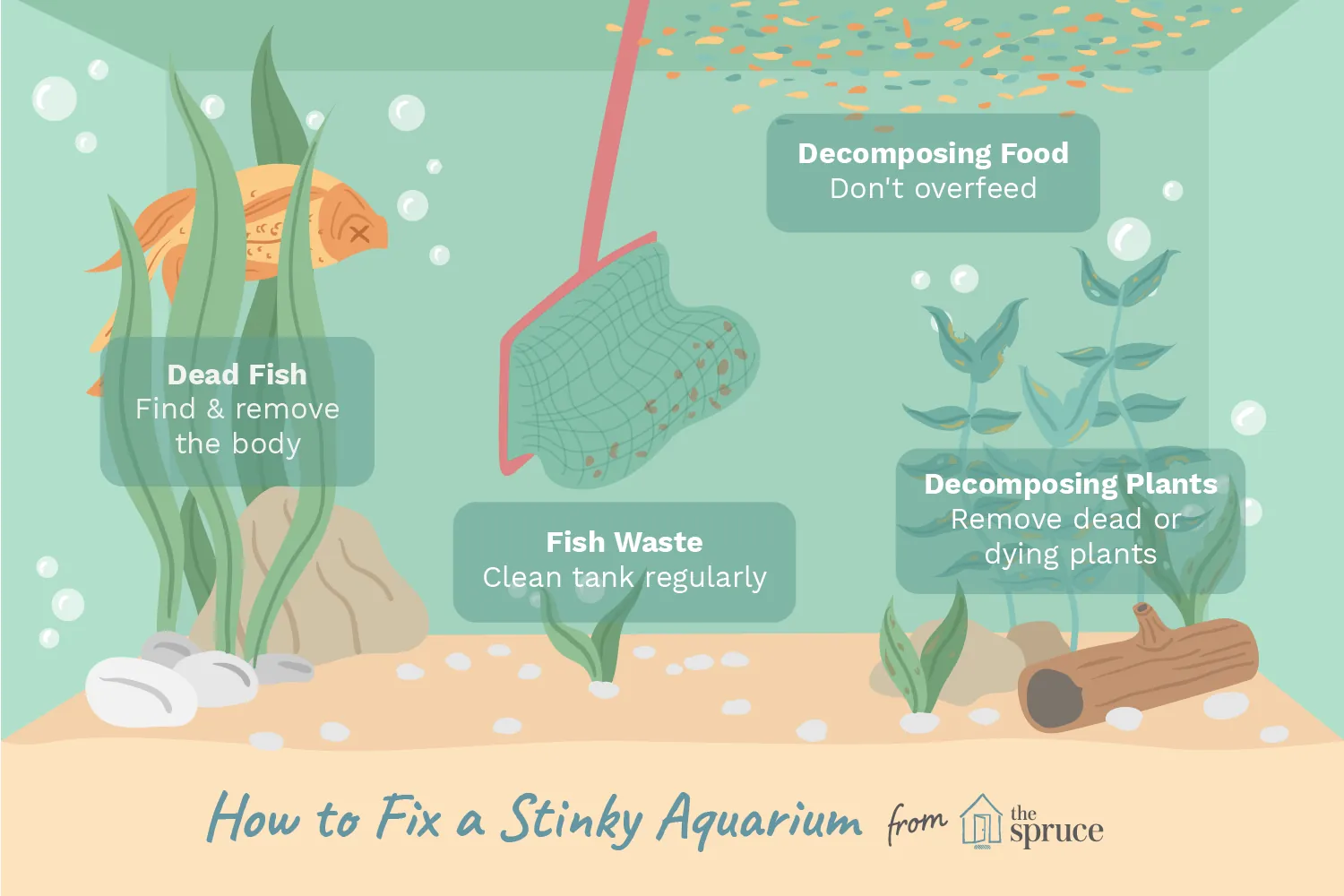
- Check your feeding habits to ensure no uneaten food is decaying in the substrate or filter.
- Clean your filter media gently in a bucket of tank water to preserve beneficial bacteria.
- Test your water parameters for ammonia, nitrites, and nitrates to identify biological stress.
- Remove any dead fish or decaying plant matter immediately to prevent rapid water degradation.
Why Does My Tank Smell?
The primary reason a fish tank smells bad is the decomposition of organic materials. When fish waste, leftover flakes or pellets, and dying aquatic plants accumulate, they release gases like hydrogen sulfide or ammonia into the water column. In a well-balanced system, beneficial bacteria process these waste products; however, if the volume of waste exceeds the bacteria’s capacity, or if the filter becomes clogged, these toxins build up. Identifying the specific source is the first step toward resolution.
| Source of Odor | Possible Cause | Recommended Action |
|---|---|---|
| Rotten Egg Smell | Hydrogen Sulfide | Vacuum substrate and increase oxygenation |
| Fishy/Ammonia Smell | Overfeeding | Reduce food portion and perform water change |
| Earthy/Musty Smell | Algae Overgrowth | Clean glass and improve lighting schedule |
| Decaying Sweet Smell | Dying Plant Matter | Trim plants and remove dead leaves |
The Importance of Regular Maintenance
Consistent maintenance is the most effective way to prevent foul odors. Overcrowding, lack of water changes, and neglecting filter maintenance are the leading causes of poor water quality. The Environmental Protection Agency notes that excess nutrients from decaying organic matter are a primary driver of water quality degradation in aquatic environments. Keeping a strict schedule ensures that nitrogenous waste is removed before it can impact the health of your fish or cause offensive odors.
Pro Tip: Always use a gravel vacuum to reach deep into the substrate, as hidden pockets of debris are the most common culprits for persistent, foul-smelling gases.
Troubleshooting Your Filtration System
Your filter is the engine of your aquarium, and when it malfunctions, the tank environment suffers. If your filter is undersized for your tank volume, or if the internal media is completely blocked by sludge, water won’t circulate or be processed correctly.
Checking the Filter Media
- Sponge filters: Rinse in a bucket of used tank water; never use tap water, as the chlorine will kill the beneficial bacteria.
- Carbon inserts: Replace these every 3–4 weeks, as they lose their ability to adsorb odors over time.
- Mechanical pads: Replace or rinse these if they’re clogged with visible debris or fish waste.
Managing Your Feeding Habits
Overfeeding is the most frequent cause of an aquarium smelling bad. Many hobbyists provide far more food than their fish can consume in two minutes. Any food that falls to the bottom of the tank will decompose within hours, spiking ammonia levels and creating a strong, unpleasant smell.
- Portion Control: Feed only what your fish can eat in 60 to 120 seconds.
- Feeding Rings: Use these to keep floating food in one area, preventing it from drifting into filter intakes.
- Frequency: Most adult fish thrive with one or two small feedings per day rather than one large, messy meal.
How to Clean Your Substrate
The substrate is a trap for detritus. Over time, fish feces and uneaten food settle into the gravel or sand, where they begin to rot. Using a high-quality siphon, such as the Python No Spill Clean and Fill or the Eheim Quick Vac Pro, allows you to pull waste out of the substrate without removing all the water.
Warning: Don’t stir up the entire substrate at once, as this can release a massive cloud of trapped gases and waste into the water column, potentially shocking your fish. Instead, clean one-third of the substrate area during each weekly maintenance session.
Addressing Decaying Plant Matter
Live plants are excellent for water quality, but dying leaves can cause significant odor issues. As leaves wilt and decompose, they contribute to the organic load of the tank.
- Pruning: Use sharp, stainless steel aquarium scissors to trim yellowing or melting leaves.
- Root Tabs: Ensure your plants are getting enough nutrition; if they’re starving, they will die back and contribute to the decay.
- Floating Debris: Use a fine-mesh net to skim the surface of the water regularly for any loose plant fragments.
Evaluating Water Chemistry Parameters
If your tank smells bad, your water chemistry is likely compromised. High levels of ammonia or nitrites indicate that the biological cycle is struggling. Use a liquid-based test kit, such as the API Freshwater Master Test Kit, to get accurate readings.
| Parameter | Target Range | Consequence of Imbalance |
|---|---|---|
| Ammonia | 0 ppm | Toxic stress and organ damage |
| Nitrite | 0 ppm | Suffocation and gill damage |
| Nitrate | 5–20 ppm | Excessive algae and potential toxicity |
Dealing with Dead Fish
It’s a difficult reality, but a single deceased fish hidden behind a rock or inside a decoration can cause a powerful, rotting odor in a very short time. If you notice an unusual spike in smell, perform a thorough head count.
Use a flashlight to inspect caves, dense plant thickets, and behind your filter intake tubes. If you find a deceased fish, remove it immediately with a net and perform a 30% water change to neutralize the ammonia spike caused by the carcass.
How to Fix a Fish Tank That Smells Bad
If you have cleaned the tank, checked the filter, and removed debris, but a faint odor remains, you can employ chemical or biological aids to assist.
- Activated Carbon: High-quality activated carbon, such as Seachem MatrixCarbon, is exceptionally effective at removing organic compounds that cause smells.
- Biological Boosters: Products like Tetra SafeStart or Dr. Tim’s Aquatics One and Only can help replenish the beneficial bacteria population if it has been depleted by a recent cleaning.
- Water Conditioners: Ensure your water conditioner, like Seachem Prime, is effectively neutralizing chlorine and chloramines, as these can sometimes react with organic matter to create pungent smells.
Improving Tank Oxygenation
Low oxygen levels can encourage the growth of anaerobic bacteria, which produce foul-smelling hydrogen sulfide gas. Increasing surface agitation helps eliminate these odors and promotes a healthier environment.
- Air Stones: Adding an air stone or a bubble wand creates constant movement at the surface.
- Filter Output: Adjust your filter spray bar or output nozzle to break the water surface, which improves gas exchange.
- Wave Makers: In larger tanks, a small powerhead or wave maker can prevent “dead spots” where water stagnates.
Related guides
- Dog Smells Like Fish From Back End: Causes and Solutions
- How to Remove Gorilla Glue From Wood: A Simple Step-by-Step Fix in 2026
- Can You Use Oil Based Primer Over Latex Paint? The Fix in 2026
Frequently Asked Questions
Is it normal for my fish tank to have any smell at all?
A healthy aquarium should have a very faint, pleasant, earthy, or “wet” smell. If you have to put your nose directly against the water surface to smell it, that’s usually acceptable. However, if you can smell the tank from several feet away, or if the scent is sharp, sour, or rotten, something is wrong with your water quality or maintenance routine.
Can I use soap to clean my aquarium decorations?
Never use soap, detergents, or household cleaning supplies to clean your aquarium or its decorations. These chemicals are highly toxic to fish and can cause immediate death. Even a small residue can disrupt your beneficial bacteria colonies, leading to a massive spike in ammonia and a lingering, chemical-based odor that’s extremely difficult to remove from the tank environment.
How often should I change my filter media?
You shouldn’t replace all your filter media at once. Replace mechanical pads or carbon inserts every three to four weeks, but leave your biological media—such as ceramic rings or bio-balls—alone. These harbor the beneficial bacteria that keep your tank clean. If your filter is clogged, gently rinse the sponges in a bucket of old tank water during your weekly water change.
Will changing all the water at once fix the smell?
Changing 100% of your water is dangerous and should be avoided. It removes the beneficial bacteria that keep your tank safe, leading to “new tank syndrome” and potential fish loss. Stick to weekly water changes of 20% to 30%. This gradual approach removes pollutants while keeping the biological cycle stable, which is the best way to permanently eliminate odors from your aquarium.
Why does my tank smell like rotten eggs?
A rotten egg smell is a hallmark sign of hydrogen sulfide gas, which is produced by anaerobic bacteria in the substrate. This occurs when oxygen can’t reach the bottom layers of gravel or sand. To fix this, use a gravel vacuum to clean the substrate thoroughly and increase your water flow to ensure oxygen-rich water circulates throughout the entire tank.
Conclusion
Maintaining a clean and odor-free aquarium is a rewarding process that begins with consistent habits. By monitoring your water quality, feeding your fish in moderation, and performing regular maintenance on your equipment, you can ensure your tank remains a beautiful focal point in your home. Your next step is to test your water parameters to confirm the biological health of your system and adjust your cleaning schedule accordingly.