
Most of the time, bad breath causes are related to bacteria living on the tongue or between teeth that release sulfur compounds. You can often confirm this by scraping the back of your tongue with a clean spoon and smelling the residue. If the smell is foul, the issue is likely local to your mouth rather than a systemic health problem.
Primary causes of bad breath
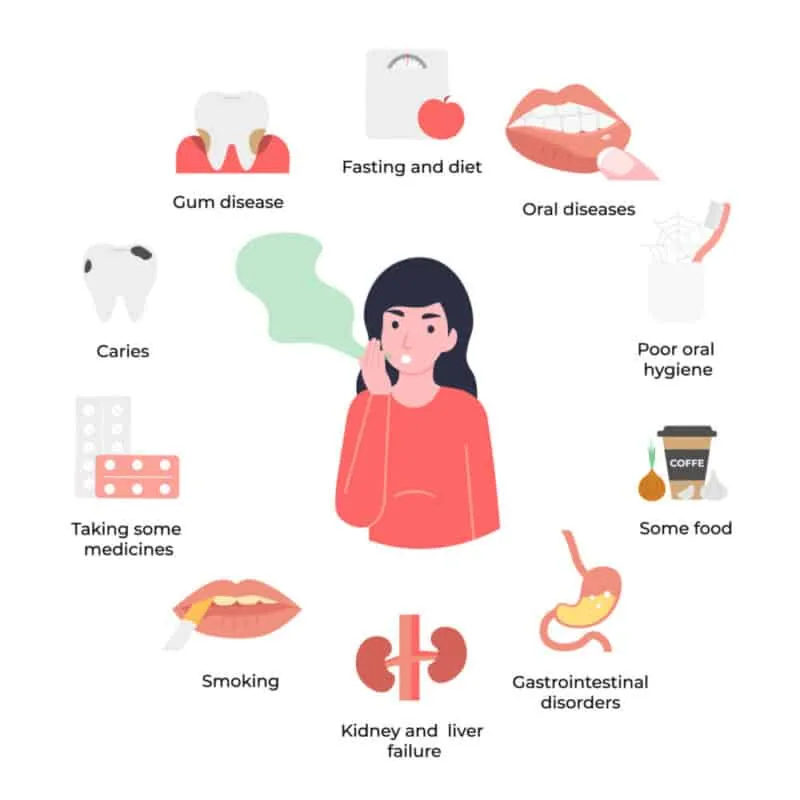
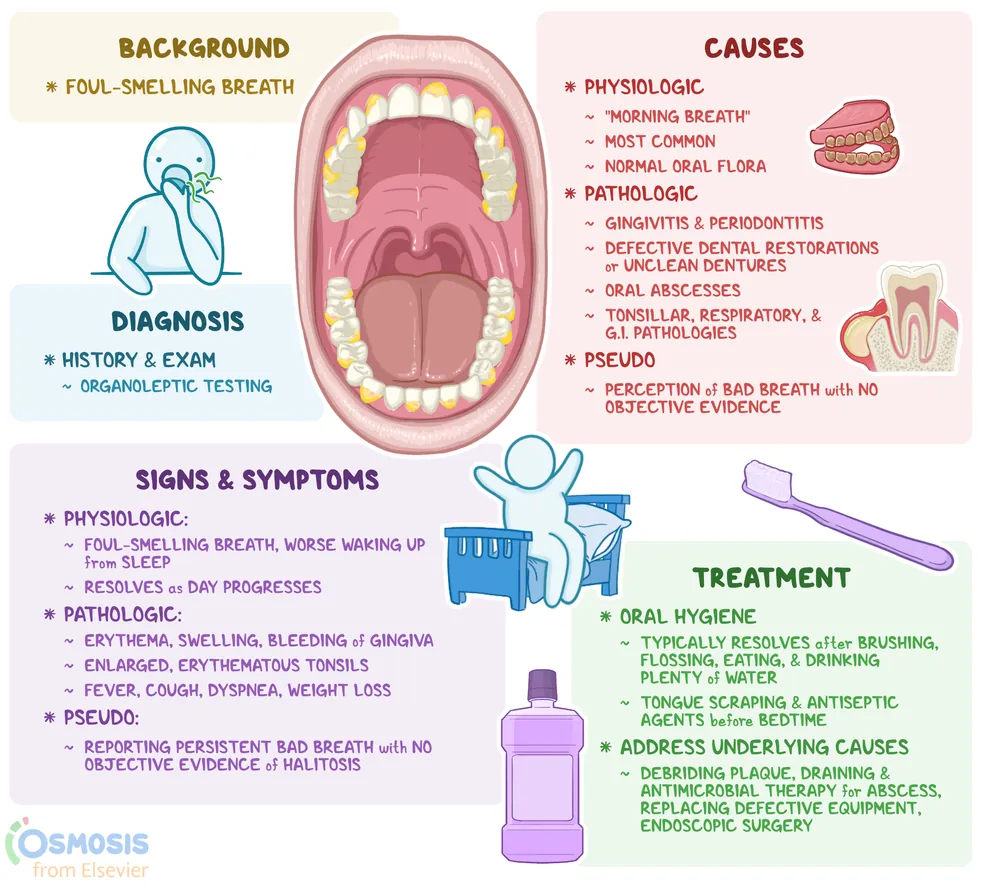
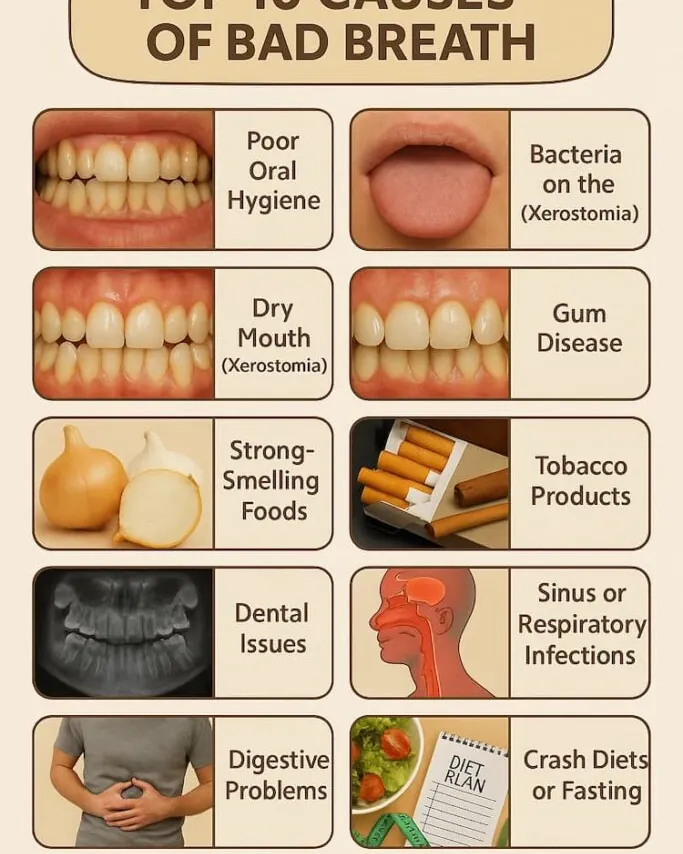
This table ranks the most frequent origins of mouth odor. If the cause is poor hygiene, the fix is simple; if it’s a medical issue, you need professional care.
| Cause | How common | How to confirm it | Fix it yourself? |
|---|---|---|---|
| Poor oral hygiene | Very common | Visible plaque on teeth | Yes |
| Tongue coating | Common | White film on tongue | Yes |
| Dry mouth | Common | Sticky or parched feeling | Yes |
| Gum disease | Frequent | Bleeding or red gums | Yes with care |
| Dietary choices | Frequent | Smell follows specific foods | Yes |
| Sinus infections | Occasional | Thick mucus or congestion | No |
| Systemic conditions | Rare | Persistent despite hygiene | No |
Inadequate dental cleaning habits
Poor oral hygiene is the leading reason for persistent odor. When you fail to brush and floss daily, food particles remain trapped in the spaces between your teeth. These bits of food decay and provide a steady supply of nutrients for bacteria. The bacteria break down these proteins, creating volatile sulfur compounds that smell like rotten eggs.
To check if your routine is the problem, look for signs of plaque buildup along the gum line. If you see a fuzzy or yellow film on your teeth, your current brushing method is leaving too much behind. Use dental floss to check for trapped debris; if the floss smells bad after use, it confirms that bacteria are hiding where your toothbrush can’t reach.
The fix requires a stricter routine. Brush for at least two minutes twice a day, ensuring you reach the back molars. Floss once daily to remove debris from between teeth. If your gums bleed during flossing, it’s a sign of inflammation. Continue to floss gently; the bleeding should decrease after about 7 to 10 days of consistent cleaning. If it persists longer, you must see a dentist.
Bacterial buildup on the tongue
The surface of the tongue is often the primary site for odor-causing bacteria. Unlike teeth, the tongue has a rough surface with tiny projections called papillae that trap food and dead cells. When this debris accumulates, it forms a coating that acts as a breeding ground for bacteria. This is a common issue for people who brush their teeth but skip their tongue.
You can verify this by looking at your tongue in a mirror. If you see a white or yellowish layer, it’s likely the source of the smell. A simple test is to gently scrape the back of your tongue with a plastic spoon. If the residue on the spoon has a strong, unpleasant odor, you have found the culprit.
To fix this, use a tongue scraper or your toothbrush to clean the area every morning. Start at the back of the tongue and pull forward with light pressure. Don’t scrape too hard, as you can damage the delicate tissue. Do this once daily, ideally as part of your morning routine. If you notice pain or open sores, stop immediately and consult a healthcare provider.
Reduced saliva flow
Saliva is your mouth’s natural defense against odor because it washes away food particles and neutralizes acids. When your mouth becomes dry, bacteria multiply much faster, which leads to a noticeable change in breath. This often happens overnight while you sleep, which is why “morning breath” is a universal experience for most people.
You can tell if dry mouth is the cause if your mouth feels parched, sticky, or if you have difficulty swallowing. Some medications, such as those for high blood pressure or allergies, significantly reduce saliva production National Institute of Dental and Craniofacial Research. If you suspect your medication is the cause, check your prescription label or talk to your pharmacist about side effects.
To manage dry mouth, stay hydrated by drinking water throughout the day. Chewing sugar-free gum can stimulate saliva flow between meals. If you wake up with a very dry mouth, use a humidifier in your bedroom to add moisture to the air while you sleep. If these steps don’t help, see a doctor to rule out underlying conditions like salivary gland issues.
Rare medical and systemic causes
- Sinus infections: Chronic congestion causes mucus to drip down the throat, providing a food source for bacteria.
- Acid reflux: Stomach acid can travel up the esophagus, leaving a sour or bitter smell on the breath.
- Diabetes: High blood sugar levels can lead to a sweet or fruity scent, which requires immediate medical attention.
- Kidney or liver disease: Certain organ dysfunctions change the chemical balance of your breath, often creating a musty or ammonia-like odor.
If you have tried improving your oral hygiene for two weeks with no change, stop trying to fix it at home. These rare cases require blood tests, imaging, or specialized care from a primary physician or an ear, nose, and throat specialist. Never ignore persistent changes in your breath, as they can be early warnings of systemic health issues.
What a typical fix requires
Fixing bad breath generally demands a combination of time and consistent tools. Most cases are resolved by upgrading your daily supplies, such as switching to a soft-bristled toothbrush or adding a tongue scraper to your routine. These items are inexpensive and available at any local pharmacy. The cost of a fix usually depends on whether you only need better habits or if you require professional dental work.
If your issue stems from gum disease, you’ll need a professional cleaning from a dentist. This is more expensive than buying a new toothbrush, but it’s necessary to remove hardened tartar that you can’t scrape off at home. Always ask for a clear estimate before the procedure begins. To get a real quote, schedule an initial consultation so the dentist can assess the severity of the buildup.
Related guides
Frequently Asked Questions
How do I know if my bad breath is serious?
Persistent breath issues that don’t improve with better hygiene are serious. If you have followed a strict cleaning routine for two weeks and the smell remains, you should schedule an appointment with your dentist. They can determine if the odor is caused by hidden decay, gum disease, or an external health factor.
Does mouthwash help long-term?
Mouthwash provides only a temporary mask for the smell. It doesn’t remove the physical bacteria or food trapped between teeth. If you use it, choose an alcohol-free version, as alcohol can dry out your mouth and actually make the problem worse over time by reducing your natural saliva flow.
How often should I replace my toothbrush?
Replace your toothbrush every 3 months or sooner if the bristles look frayed. Worn-out bristles lose their ability to remove plaque effectively, which allows bacteria to accumulate in your mouth. If you have been sick, replace your brush immediately to prevent the reintroduction of bacteria into your oral environment.
Can diet cause permanent bad breath?
Dietary choices cause temporary odor, not permanent breath issues. Foods like garlic and onions contain oils that enter your bloodstream and are released through your lungs when you breathe. The odor usually fades within 24 to 48 hours as your body processes the food, so it doesn’t indicate a long-term health problem.
Is it safe to use a tongue scraper every day?
It’s safe to use a tongue scraper daily if you use light, steady pressure. Don’t press hard enough to cause pain or bleeding, as this can irritate the tongue tissue. If you feel any discomfort or notice redness, take a break for a few days to let the surface heal.
Does drinking more water really fix it?
Drinking water helps because it keeps your mouth moist and washes away leftover food particles. If your breath is caused by dehydration or dry mouth, increasing your water intake will show results within a few days. However, water won’t fix odor caused by deep tooth decay or gum disease.
What happens if I ignore the smell?
Ignoring the smell often leads to worsening dental problems like tooth loss or gum recession. If the odor is caused by an underlying medical condition, ignoring it allows that condition to progress without treatment. A consistent bad smell is a signal that your body is struggling to manage bacteria in your mouth.
Conclusion
If you’ve tried these simple habits and the odor doesn’t improve, it’s time to schedule a checkup with your dentist. They’ll help you rule out hidden issues like gum disease or cavities. Don’t worry, because once you identify the root cause, you’ll feel much more confident about your smile again.