

Leave your home immediately if the air inside your house smells like gas because the risk of fire or explosion is high. Don’t touch any light switches, turn off appliances, or use your phone while you’re still inside the building. Once you reach a safe distance, call your utility company or emergency services to report the leak.
What to do when your house smells

If you detect the smell of sulfur or rotten eggs, take these actions to protect yourself and others:
Evacuate everyone from the house immediately, leaving the door open behind you to help dissipate the gas. Don’t stop to gather personal belongings or pets.
Avoid creating any sparks or flames. Don’t use a lighter, match, or even a flashlight. Leave all light switches and electronic devices exactly as they’re right now. Flicking a switch creates a tiny electrical arc that can ignite accumulated gas.
Call your gas provider or 911 only after you reach a safe location at least 150 feet away from the structure. Don’t use your cell phone inside the building.
Wait for professional emergency crews to arrive before you attempt to re-enter. If the smell persists or you feel dizzy, stay outside until a technician confirms the air is safe to breathe.
Why your house smells like gas
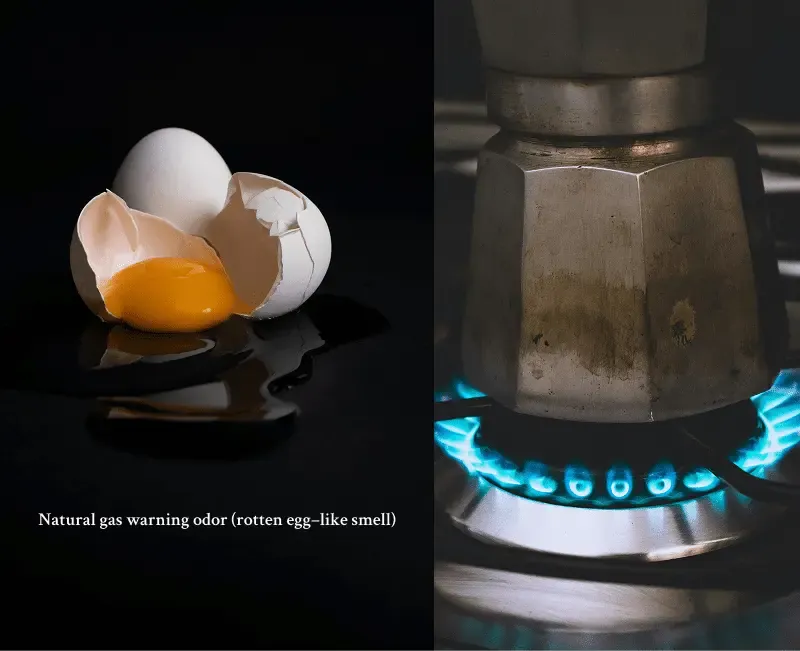
Natural gas is naturally odorless, so utility companies add a chemical called mercaptan to give it a distinct, pungent smell. This additive ensures that you can identify a leak before the gas reaches a dangerous concentration. If you notice this smell, it means gas is escaping from a pipe, a connection, or an appliance within your living space.
Sometimes, a faint smell might come from a pilot light that has blown out or a burner that isn’t fully turned off. However, never assume the cause is minor. Gas leaks can also originate from underground pipes or aging infrastructure outside your home that seeps into the crawlspace or basement. Because the gas is lighter than air, it tends to rise and collect in upper levels, though it can settle in lower areas depending on the ventilation.
If you smell gas, check the burners on your stove first. If they’re all off, don’t waste time hunting for the source. A common mistake is lingering to investigate, which risks exposure to high concentrations. If the smell is strong or persistent, evacuate immediately.
Natural gas is often confused with the scent of sewer gas. If the odor smells like rotten eggs, it’s mercaptan. If it smells more like stagnant water or sulfur, it’s likely a blocked plumbing vent. When in doubt, always treat the scent as a gas leak.
Checks to perform when safe
Check your stove burners
Ensure every knob is turned to the off position. If you hear a faint hissing sound near the range, the gas valve may not be closing completely.
Inspect pilot light status
Look at your water heater or furnace to see if the small flame is lit. A pilot light that has gone out will release raw gas into the room.
Review appliance connections
Check the flexible hoses behind your dryer or range for visible cracks or loose fittings. If you smell gas near a connection, the seal has likely failed.
Look for dead plants
Examine indoor plants or vegetation near external gas lines for sudden wilting or yellowing. A significant leak in the ground can displace oxygen and kill plant roots.
Test with soapy water
Apply a mixture of dish soap and water to joints or fittings to see if bubbles form. Bubbles indicate a leak, but only do this if you feel comfortable and the air is clear.
The repair process
If professionals confirm a leak, they will usually isolate the affected appliance by turning off the local gas valve. If the leak is in the main supply line, they will shut off the gas at the meter to prevent further flow.
You must hire a licensed professional to replace the damaged pipe, fitting, or valve. Never attempt to patch a gas line with epoxy or tape, as these materials can’t withstand the pressure fluctuations that occur when the system cycles. Such temporary fixes inevitably fail, leading to hazardous gas accumulations behind walls.
Once the repair is complete, the technician must perform a manometer pressure test. This procedure confirms the system is sealed tight by holding a specific pressure for at least fifteen minutes. If the gauge needle drops even slightly, a microscopic leak persists.
If the scent disappears and no hissing is detected, the system is likely secure. However, if the smell returns within a week, it indicates a secondary leak or a faulty seal that requires an immediate follow-up inspection.
When to contact a professional

You must call a qualified gas technician or your utility provider if you can’t immediately identify the source of the smell. Never attempt to tighten or replace gas pipes yourself, as improper installation can lead to catastrophic leaks or carbon monoxide buildup.
Professionals have the specialized leak-detection equipment, such as combustible gas indicators, required to locate hidden leaks inside walls or beneath floors. If you hear a hissing sound near a connection point, evacuate the building immediately and call from a safe distance. Don’t flip light switches or use a landline phone inside the home, as a single spark can ignite the gas.
If your utility company shuts off your gas supply, don’t try to turn it back on yourself. They must perform a safety inspection of your entire system before restoring service. This ensures all appliances are working correctly and the venting is clear. Attempting to bypass this step risks a secondary leak that may go undetected until it becomes fatal.
Related guides
- Dog Smells Like Fish From Back End: Causes and Solutions
- How Long Does Wet Wood Take to Dry: A Practical Guide in 2026
- How Long Does Bondo Take to Dry: Accurate Cure Time Guide in 2026
Frequently asked questions
Can I stay in the house if the smell is faint?
No, you must leave immediately because gas concentrations can rise quickly to explosive levels. Even a faint smell indicates that gas is escaping, and your sense of smell can become desensitized to mercaptan over time. Never gamble with your safety by staying to investigate a potential leak.
How do I know if the leak is outside?
If the smell is stronger near your exterior meter or along the path of the service line, the leak is likely outside. Report this to your utility company immediately, as they’re responsible for the maintenance of the infrastructure leading up to your home’s meter.
Is it safe to use a fan to clear the smell?
No, you should never turn on a fan or any electrical appliance when you smell gas. The motor inside a fan can create a small spark that could ignite the gas. Simply open windows and doors as you leave, but don’t stop to do this if the smell is very strong.
How long does it take for the smell to go away?
The smell should dissipate within a few minutes once the gas source is shut off and the area is ventilated. If the odor persists for more than an hour after the gas has been turned off, there’s likely another leak or gas trapped in a confined space.
Does it matter if the gas is from a stove or a furnace?
Yes, the severity depends on the volume of gas escaping, but both are equally dangerous. A stove leak is often easier to isolate, while a furnace leak might involve complex venting or internal components that require professional attention. Always treat any gas leak as a high-priority emergency.
What happens if I ignore a small gas smell?
Ignoring a small leak is dangerous because the concentration of gas can build up in enclosed spaces over time. A small leak can suddenly become a large one due to pipe corrosion or shifting foundations. Always report the smell to ensure your home remains safe.
Conclusion
The most important action is to prioritize your personal safety by evacuating the building whenever you detect the distinct scent of gas. Don’t delay your exit to troubleshoot or search for the source, as professional equipment is necessary to identify and repair leaks safely. By leaving the area and contacting your utility company, you ensure that the situation is handled by those with the training and tools to prevent a fire or explosion.