

It’s incredibly frustrating to pull a load of laundry from the dryer only to realize your clothes smell after washing. Instead of the crisp, clean scent of detergent, you’re met with a damp, musty, or even sour odor that signals your garments aren’t actually clean. This issue is common in households using high-efficiency machines, as these units use less water and rely on precise mechanical action to dislodge soil. When residue builds up or internal components become compromised by biological growth, the cleaning process fails, leaving your clothes smelling worse than when they started. Addressing this requires a systematic approach to cleaning the machine and adjusting your laundry habits to prevent future odors.
Key Takeaways

- Clean your washing machine gasket monthly to remove hidden mold and soap scum.
- Use the correct amount of high-efficiency detergent to prevent excessive residue buildup.
- Leave the washer door open between cycles to allow the drum to dry completely.
- Check your drainage hose for blockages that cause stagnant water backflow.
- Run a sanitizing cycle with white vinegar or specialized tablets every thirty days.
Why Do Clothes Smell Like Mildew?
The primary cause of lingering odors is the accumulation of biofilm and soap residue inside your washing machine. Modern front-loading washers are designed to be airtight to prevent leaks, but this feature also traps moisture.
When moisture sits in the dark, warm interior, it creates an ideal breeding ground for bacteria and mold. If your clothes smell after washing, it’s often because they were exposed to this microscopic ecosystem during the agitation phase, absorbing the odor instead of being rinsed clean.
| Source of Odor | Primary Cause | Solution |
|---|---|---|
| Rubber Gasket | Mold and mildew buildup | Wipe with vinegar or bleach |
| Detergent Drawer | Dried soap residue | Rinse with hot water |
| Drain Pump Filter | Trapped debris and lint | Clear and flush the filter |
| Drum Interior | Biofilm layer | Run a hot self-clean cycle |
Does My Detergent Cause Odors?
Using too much detergent is a frequent culprit. If you pour more soap than the manufacturer recommends, the machine can’t rinse it all away. This excess soap acts as a magnet for dirt, lint, and body oils, which eventually harden into a sticky film known as “scrud.”
Over time, this film begins to emit a foul odor that transfers directly to your clothing. Always use the measuring cup provided or follow the lines on the cap carefully. If you have soft water, you often need even less detergent than the label suggests.
How to Clean Your Washing Machine
To eliminate odors, you must perform a deep clean of your appliance. Start by checking the rubber door seal, as this is where hair, lint, and moisture hide. Use a cloth dampened with a mixture of water and white vinegar to scrub the folds of the gasket.
Next, remove the detergent drawer and soak it in hot, soapy water to dislodge any caked-on residue. Finally, run an empty cycle using the hottest setting available on your machine. You can add two cups of white vinegar or a commercial washing machine cleaner to the drum to help break down mineral deposits and kill odor-causing bacteria.
Is My Drainage System Blocked?

Sometimes the problem isn’t inside the drum, but in the plumbing. If your washer’s drain hose is positioned too low or is clogged with debris, dirty water can backflow into the machine after a cycle finishes. This water sits at the bottom of the tub, stagnating and causing a sour smell.
Ensure your drain hose is positioned according to the manufacturer’s installation manual, typically at a height that prevents siphoning. Additionally, locate the drain pump filter—usually found behind a small door at the bottom front of the machine—and clear out any coins, buttons, or hair that may be obstructing water flow.
Why Do Clothes Smell After Washing?
When you notice that your clothes smell after washing, it’s usually because the “clean” water used during the cycle is actually being contaminated by the machine itself. If you smell a faint scent of rotten eggs or damp earth, you’re likely dealing with hydrogen sulfide produced by bacteria colonies living in the crevices of your drum.
These bacteria thrive on the combination of fabric softener, detergent, and body soil. Switching to a high-efficiency specific detergent or reducing your reliance on liquid fabric softener can significantly reduce the amount of organic material available for these bacteria to consume.
Does Fabric Softener Increase Odors?
Fabric softener is a common contributor to laundry odors because it’s designed to coat fibers in a waxy, softening agent. While this makes clothes feel soft, it also creates a surface that traps dirt and bacteria. Over time, this waxy coating builds up not just on your clothes, but on the walls of your washing machine drum.
If you find your clothes have a sour smell, try skipping the liquid softener for a few weeks. You may find that using half a cup of white vinegar in the rinse cycle provides a softer feel without the residue.
Proper Drying Habits to Prevent Smells
The way you handle wet laundry is just as important as the washing process. Leaving wet clothes sitting in the washer for even a few hours can trigger rapid bacterial growth, which creates a musty “sour” smell that’s difficult to remove.
- Prompt Unloading: Move clothes to the dryer immediately after the cycle ends.
- Airflow: If you must leave items in the washer, keep the door slightly ajar to increase airflow.
- Dryer Maintenance: Clean your dryer lint trap before every load to ensure hot air can circulate effectively.
- Ventilation: If you air-dry, do so in a well-ventilated room or outdoors in direct sunlight, which acts as a natural disinfectant.
Pro Tip: If you live in a high-humidity climate, consider running a dehumidifier in your laundry room to help clothes dry faster and prevent moisture from settling into the machine components.
Troubleshooting Common Laundry Odor Issues
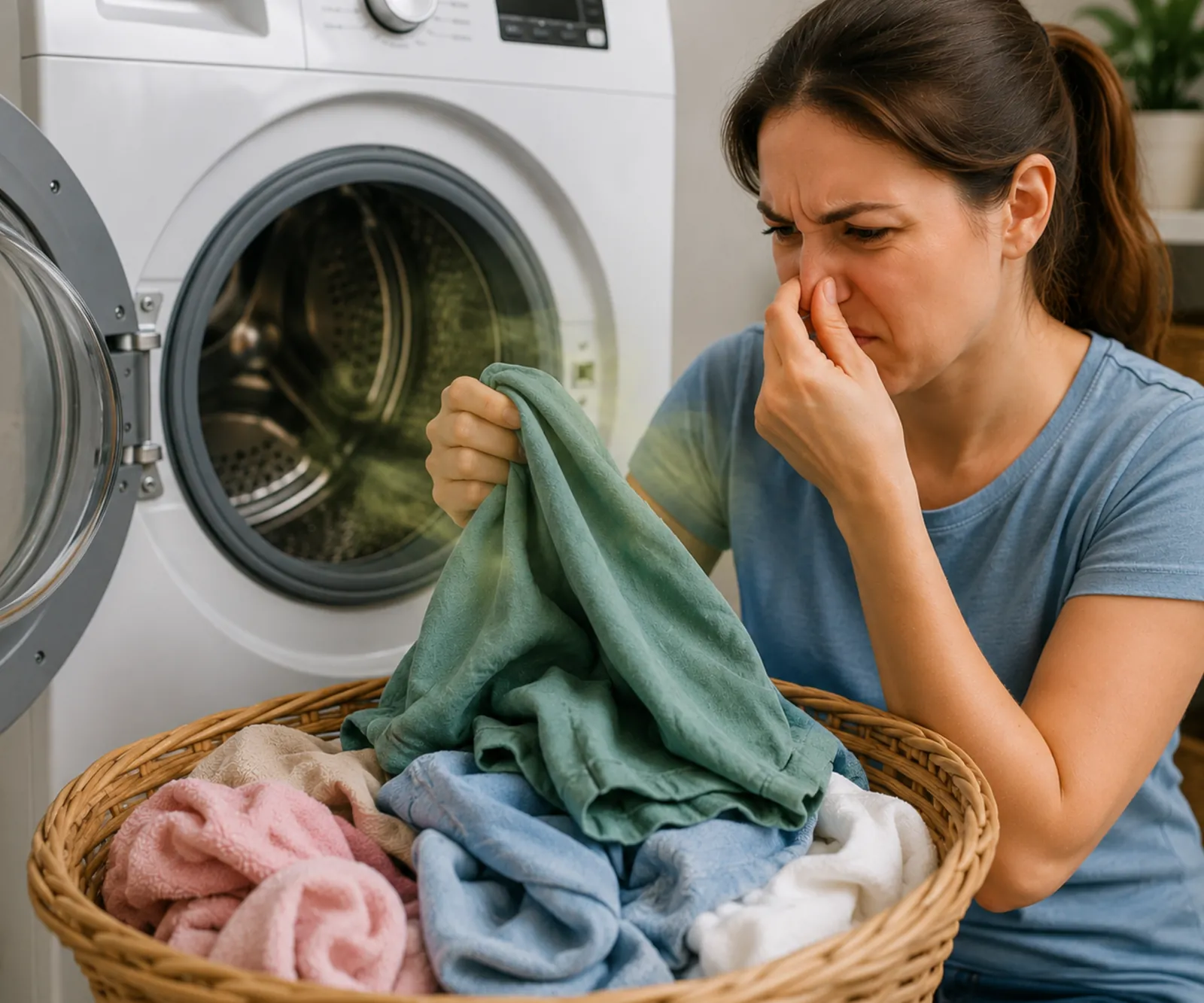
If you have tried the steps above and still face issues, consider these specific scenarios. If you use a front-loader, the door gasket is almost certainly the issue. If you use a top-loader, check the underside of the agitator or the top rim of the inner tub, where soap scum often collects.
| Troubleshooting Step | Goal | Frequency |
|---|---|---|
| Wipe door seal | Remove mold growth | Once per week |
| Clean drain filter | Clear debris blockage | Every three months |
| Run hot maintenance cycle | Dissolve soap buildup | Once per month |
| Air out drum | Prevent moisture trapping | Every single day |
Related guides
Frequently Asked Questions
Why do my clothes smell like wet dog?
This usually indicates the presence of mold or mildew in your washing machine drum or gasket. When clothes are washed in a machine with a biofilm layer, they absorb the musty odor during the spin cycle. To fix this, run a cleaning cycle with a heavy-duty machine cleaner and ensure you leave the door open after every use to allow the interior to dry completely.
Can I use bleach to remove odors?
Yes, liquid chlorine bleach is effective at killing mold and bacteria inside the machine. Add one cup of bleach to the detergent dispenser or directly into the drum and run a hot water cycle without any clothing inside. Be careful not to mix bleach with other cleaners, especially vinegar, as this can create hazardous fumes. Always ventilate your laundry room during this process.
How often should I clean my washer?
You should perform a basic maintenance wipe-down of the gasket and detergent drawer at least once every two weeks. A deep-cleaning cycle with a specialized product or vinegar should be performed once every month. If your household does a high volume of laundry, or if you live in a humid environment, you may need to increase the frequency of these deep-cleaning sessions to prevent odors from returning.
Does hard water cause laundry odors?
Hard water contains high levels of minerals like calcium and magnesium, which react with detergent to form insoluble soap scum. This scum accumulates in the machine and on fabrics, providing a surface for bacteria to colonize. If you have hard water, consider using a laundry booster or a water softening additive to help the detergent rinse away more effectively, preventing the buildup that leads to persistent odors.
Why do my clothes smell after drying?
If clothes smell clean coming out of the washer but sour after the dryer, the issue is likely the dryer itself or the clothes weren’t fully dry. Check your dryer’s lint duct for blockages, which prevent proper airflow and leave clothes damp. Additionally, ensure your dryer vent is clear, as restricted airflow prevents moisture from escaping, causing the “baked-in” smell of lingering dampness.
Conclusion
Taking the time to address your washing machine’s hygiene will transform your laundry routine and ensure your garments remain fresh. Start by running a hot cleaning cycle today to clear out the accumulated residue. Once the machine is sanitized, commit to leaving the door open between loads to maintain a dry environment. Consistent maintenance is the most effective way to guarantee your clothes smell clean every single time.