
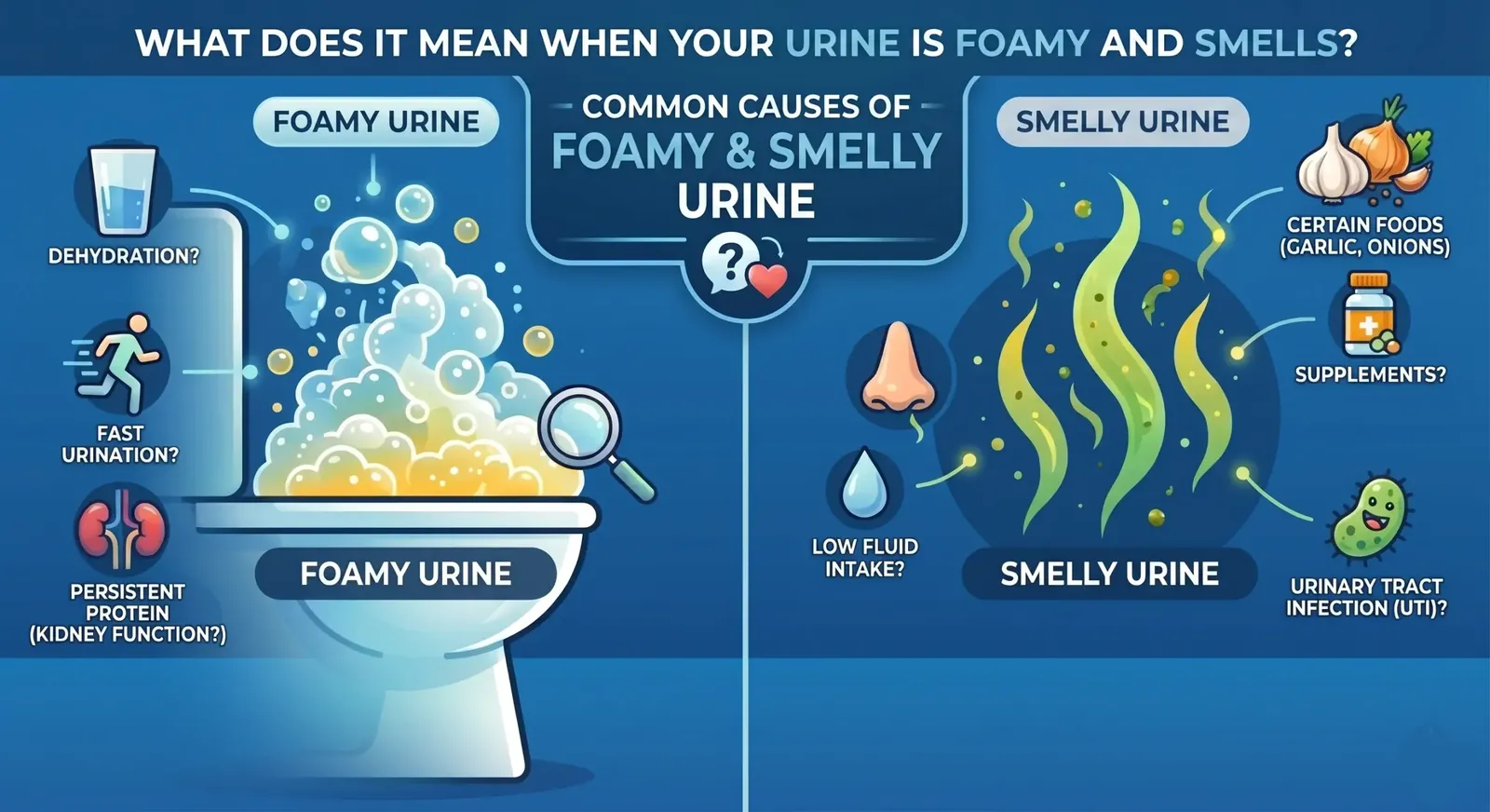
Dehydration is the most common reason that urine smells strong because your body lacks enough water to dilute the waste products. When you don’t drink enough fluids, your kidneys concentrate your waste into a smaller volume of liquid. This makes the scent much more noticeable than it’s when you’re well-hydrated. You can usually confirm this by checking your urine color; if it’s dark yellow or amber, you likely need more water.
Why your urine smells strong

Many factors change how your body processes waste. You can use this table to see which issues are common and how to check them.
| Cause | How common | How to confirm it | Fix it yourself? |
|---|---|---|---|
| Dehydration | Very common | Dark yellow color | Yes |
| Foods/Spices | Common | Recent meal check | Yes |
| Supplements | Common | Vitamin bottle label | Yes |
| Urinary infection | Moderate | Burning during urination | No |
| Diabetes | Rare | Excess thirst/hunger | No |
| Kidney issues | Rare | Lower back pain | No |
If your urine is dark but you have consumed two liters of water today, dehydration is likely not the culprit. Look instead at your B-complex vitamins, which often cause a neon yellow hue.
Most people mistake concentrated urine for a sign of kidney failure when it’s simply a lack of fluid intake. If you drink a full glass of water and the color doesn’t lighten within two hours, consult a doctor.
If you feel pain, don’t wait for the color to change. Burning sensations indicate an infection that requires antibiotics. Never assume that herbal teas or extra water will clear an active bacterial infection.
Dehydration and fluid intake
Low water intake creates a higher concentration of urea and other minerals in your bladder. This is the primary driver of a sharp, ammonia-like scent. If you drink enough water throughout the day, your urine should look like pale straw or clear liquid. If your urine remains dark despite drinking more, consult a doctor to rule out other issues.
If you’re active or live in a hot climate, your body loses water faster than a person sitting in an office. A general rule is to drink when you feel thirsty, but you may need more if your work involves heavy labor.
To track your levels, look at the National Health Service hydration guidance to see how much fluid you need for your daily activity level. This isn’t for people with specific heart or kidney conditions; those individuals must follow their doctor’s exact fluid limits.
Diet and supplement effects

Certain foods and vitamins change the chemical makeup of your waste. Asparagus is the most famous example, but coffee, garlic, and onions can also alter the scent profile. If you notice the change after a specific meal, it’s likely just a harmless reaction to those ingredients. You can confirm this by keeping a food diary for two days to see if the smell aligns with your diet.
Supplements, especially B-complex vitamins, often cause a distinct, pungent odor. If you take a multivitamin, check the label to see if it contains high levels of B6 or B12. If you stop the supplement and the smell goes away within 48 hours, the ingredients were the cause. A mistake people often make is doubling their dose to “catch up” on missed days; this only makes the odor and kidney strain worse.
Medical conditions and infections
A urinary tract infection occurs when bacteria enter the bladder and multiply, which often creates a foul or cloudy appearance. If you feel pain, burning, or a frequent need to go to the bathroom, you must see a medical professional. This isn’t something you can treat at home with extra water or cranberry juice. Delaying a visit to a doctor can allow the infection to spread to your kidneys, which requires more intense treatment.
Diabetes can also cause a sweet or fruity odor due to high sugar levels in the urine. If you experience extreme thirst or unexplained fatigue along with the smell, visit a clinic for a blood glucose test. This isn’t a condition you can manage without professional oversight and proper testing equipment. Only a lab test can confirm if your levels are outside the safe range.
Rare underlying causes
Liver disease may lead to a musty, sweet odor that requires a liver function panel to confirm. If the smell persists despite adequate hydration, ask your doctor to check your ammonia levels.
Metabolic disorders often present with distinct, sweet, or maple-syrup scents. While these are typically flagged in childhood, late-onset variants do exist. If you notice this change after starting a new diet or fasting, consult a metabolic specialist.
Bladder stones create a pungent, ammonia-like smell due to stagnant urine harboring bacteria. Request a pelvic ultrasound if you experience intermittent flow or pelvic pain alongside the scent.
Common blood pressure medications and antibiotics often alter urine odor as a standard side effect. If the smell began exactly when you started a new prescription, contact your prescribing physician or pharmacist to discuss the side effect.
What a typical fix involves
Fixing this issue usually depends on whether the cause is lifestyle-based or medical. If you’re dehydrated, the cost is zero; you simply need to increase your plain water intake throughout the day. If diet is the cause, you might choose to limit specific foods, which costs nothing but your own effort. For supplements, you may need to switch brands or adjust your dose, which involves a small expense for a different product.
Medical issues require a visit to a clinic, where costs vary based on your local healthcare system and insurance coverage. If you suspect an infection, don’t wait for the smell to pass, as the cost of treating a simple infection is much lower than treating a complicated kidney issue. Always check your insurance portal or call your doctor’s office to get a clear quote before your appointment.
Related guides
- Dog Smells Like Fish From Back End: Causes and Solutions
- How to Get Spray Paint Off Wood Safely and Effectively in 2026
- How to Glue Plywood Together for a Strong and Lasting Bond in 2026
Frequently asked questions
Can dehydration cause a strong urine smell?
Yes, dehydration is the most common reason for a strong smell because your urine becomes highly concentrated. When you don’t have enough water to dilute your waste, the concentration of ammonia increases significantly. Drinking more water usually resolves this within a few hours for a healthy person.
How long does it take for asparagus smell to go away?
The odor usually fades within 6 to 12 hours after eating, depending on how fast your metabolism processes the compounds. This timeline assumes you’re drinking a normal amount of water. If the smell persists longer than a day, it’s likely caused by something else in your diet.
Is it safe to ignore a strong urine smell?
It isn’t safe to ignore if the smell is accompanied by pain, burning, or cloudy urine. These are common signs of a bacterial infection that requires professional medical care. If you have no other symptoms, try increasing your water intake first to see if the scent clears up.
Does coffee make urine smell stronger?
Yes, coffee can change the odor because it acts as a mild diuretic and contains compounds that pass through the kidneys. If you drink multiple cups, your urine may become more concentrated and carry a distinct, coffee-like scent. Reducing your intake or drinking more water alongside coffee can help.
What happens if I have a urinary tract infection?
A urinary tract infection causes bacteria to grow in your bladder, resulting in a sharp, foul smell and potential pain. You need to see a doctor for a physical exam and a lab test to confirm the presence of bacteria. They will likely provide a prescription for antibiotics.
Does diabetes cause urine to smell sweet?
Yes, high blood sugar can lead to a sweet or fruity scent because the body is getting rid of excess glucose. This is a serious symptom that requires a blood test from a doctor to measure your glucose levels. Never attempt to diagnose or manage this condition without professional medical guidance.
Conclusion
Managing your hydration is the most effective way to keep your urine odor within a normal range. If you adjust your water intake and the smell persists for more than two days, or if you develop any pain, make an appointment with your doctor to rule out an infection or other health concerns.