
A scalp smells like mildew most often because of trapped moisture, yeast overgrowth, or a buildup of sebum and dead skin cells that creates a breeding ground for bacteria. If you notice a damp, musty odor, it’s usually a sign that your scalp isn’t drying fully after washing or that a fungal condition is present. Identifying the cause starts by checking your personal hygiene routine and observing for other symptoms like itching or flaking.
Why your scalp smells like mildew
Understanding the causes of this issue helps you determine the best treatment. This table breaks down the most frequent reasons for a musty scalp smell and what you should look for.
| Condition | Best for identifying | Common sign |
|---|---|---|
| Seborrheic dermatitis | Flaky, red patches | Greasy yellow scales |
| Fungal infection | Itchy, damp areas | Circular hair loss |
| Excessive sweating | High humidity levels | Constant damp feeling |
| Product buildup | Heavy styling gels | Sticky hair residue |
| Improper drying | Long, thick hair | Musty, towel-like scent |
Seborrheic dermatitis
This condition occurs when an overgrowth of Malassezia yeast triggers an inflammatory response on the scalp. It’s common in people with oily skin and often presents as red, itchy patches covered with greasy scales. If you have this, you may notice a distinct odor caused by the metabolic byproducts of the yeast interacting with your natural oils.
- Reduces inflammation on the scalp surface.
- Controls the yeast population using medicated ingredients.
- Prevents the accumulation of thick, odorous skin flakes.
If your scalp is red, tender, or bleeding, stop home treatment and see a dermatologist. They can confirm the diagnosis and prescribe stronger antifungal creams. For mild cases, the American Academy of Dermatology suggests using shampoos containing zinc pyrithione or selenium sulfide to manage symptoms effectively.
Fungal scalp infections
Fungal infections, often called tinea capitis, happen when a fungus invades the hair shafts and follicles. This is more common in children or those with weakened immune systems, but it can affect anyone who shares hair tools or has a break in the skin. The fungus thrives in moist environments, leading to a sour or mildew-like smell.
- Stops the spread of the fungal infection to other areas.
- Targets the root cause by killing the underlying fungus.
- Clears up circular bald spots or broken hairs.
This condition requires oral medication, which you can only get from a doctor. If you see circular patches of hair loss or broken hairs near the scalp, don’t use over-the-counter anti-dandruff shampoos. See a healthcare provider for a prescription antifungal, as store-bought products won’t reach the infection inside the hair follicle.
Excessive sweat and humidity
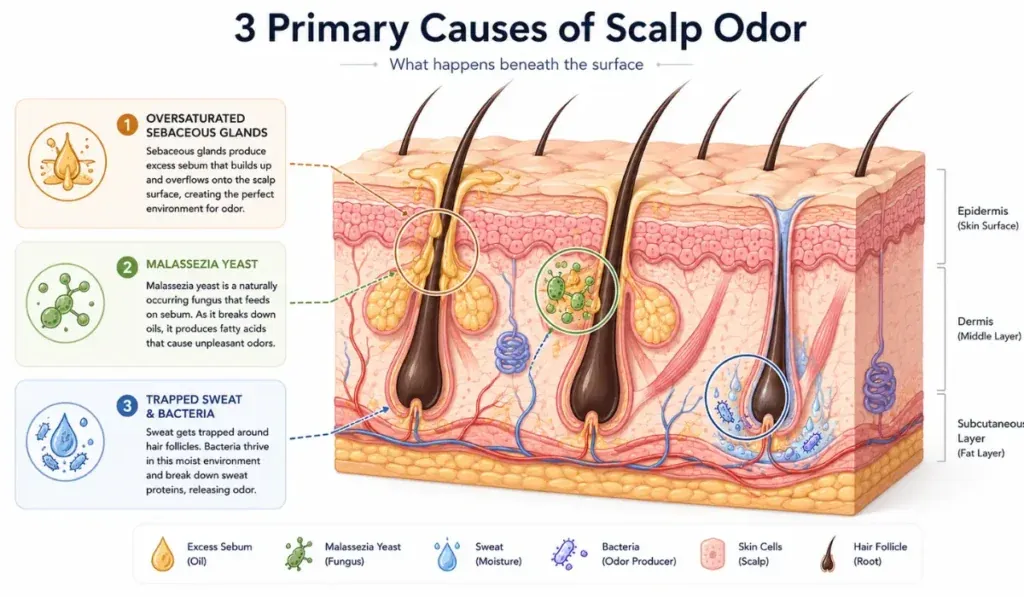
A scalp that stays damp for hours after a workout or in high humidity will develop a mildew smell. This happens because moisture trapped against the skin creates an ideal environment for odor-causing bacteria to multiply. If you have thick or long hair, the trapped heat prevents the scalp from drying naturally.
- Removes sweat and bacteria immediately after physical activity.
- Allows the scalp to breathe and dry completely.
- Prevents the sour smell of stagnant moisture.
If you have thick hair, use a hairdryer on a cool setting to dry your roots thoroughly after every wash. If you only have a mild odor after heavy exercise, washing your hair more frequently with a gentle cleanser usually solves the problem. If the smell persists despite daily washing, look for signs of a skin infection instead.
Product buildup
Using too much dry shampoo, hairspray, or heavy leave-in conditioners can trap debris and sweat against your scalp. This mixture becomes sticky and eventually starts to break down, producing a musty, stale odor. People who go many days between washes are more likely to see this accumulation.
- Breaks down oils and old styling products.
- Restores the scalp’s natural pH and breathability.
- Eliminates the source of the trapped, musty smell.
If you use products daily, switch to a clarifying shampoo once every two weeks to strip away the residue. If your hair feels heavy or sticky even after washing, you’re likely using too much product. Cut your usage in half and see if the smell fades over the next few wash cycles.
Other potential causes
Hormonal fluctuations—specifically spikes in androgens—trigger sebaceous glands to overproduce oil. This excess sebum acts as a primary fuel source for Malassezia yeast, which thrives in oily environments. If your scalp feels greasy within hours of washing, consult a healthcare provider to discuss potential underlying hormonal causes.
While dietary impact on scalp odor is often overstated, high sugar intake can accelerate inflammation. This systemic response weakens the skin barrier, making your scalp more susceptible to bacterial overgrowth.
Dirty hair tools are a frequent, overlooked culprit. If you don’t clean your brushes at least once every two weeks, you’re essentially reapplying a film of oxidized oils and dead skin cells directly to your clean scalp. Soak tools in warm, soapy water to break this cycle.
How to choose your treatment
Deciding which approach to take depends on your specific symptoms and habits. If you have visible flakes and itching, start with an antifungal shampoo; if the smell only appears after workouts, focus on better drying techniques and more frequent washing. If you see patches of hair loss or open sores, your condition is likely medical and requires a professional diagnosis before you apply any products.
Most cases of scalp odor are manageable with over-the-counter care, but remember that these methods can’t replace medical treatment for infections. You should pick one primary method to test for two weeks. If your symptoms don’t improve, it’s time to move to a different strategy or consult a professional.
Related guides
Frequently asked questions
How long does it take for a scalp smell to go away?
Most scalp odors clear up within 7 to 14 days of consistent treatment. If you’re using a medicated shampoo, you must use it at least twice a week during this period to see a change. If the smell remains after two weeks, you should consult a doctor to rule out a deep infection.
Can I use vinegar to remove the mildew smell?
You can use a diluted apple cider vinegar rinse to balance your scalp’s pH, but it won’t kill a fungal infection. Mix one part vinegar with four parts water and apply it after shampooing, then rinse thoroughly. If the odor is caused by bacteria or yeast, this rinse is only a temporary fix.
Is it safe to use essential oils on a smelly scalp?
It’s generally safe to use a few drops of tea tree oil mixed into your regular shampoo, but don’t apply oils directly to the skin. Tea tree oil has natural antifungal properties that can help, but it may cause irritation if your scalp is already red or inflamed. Stop immediately if you feel burning.
Why does my hair smell like wet dog after washing?
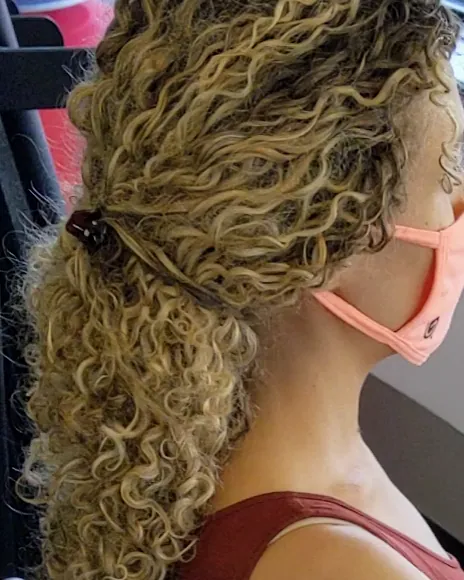
Your hair smells like a wet dog because it isn’t drying fast enough, allowing bacteria to grow in the damp strands. This is common if you have very thick hair or if you put your hair in a bun while it’s still damp. Always dry your roots with a cool dryer to prevent this.
Does diet cause a smelly scalp?
Diet is rarely the primary cause of a musty scalp smell, but high sugar intake can sometimes feed the yeast that causes seborrheic dermatitis. If you have an active yeast issue, reducing your intake of refined sugars may help support your treatment. Focus on hygiene and product use first before making major diet changes.
Should I wash my hair every day if it smells?
You should wash your hair daily if you’re dealing with excessive sweat or product buildup, but only if you use a gentle cleanser. If you have dry, flaky skin, washing every day might make the irritation worse. If the smell is persistent, stick to a medicated shampoo schedule instead of daily washing.
Conclusion
Start by washing your hair thoroughly with a clarifying shampoo to remove any buildup or sweat. If the smell disappears after a few days of proper drying and cleaning, you have solved the problem. If the odor persists, is accompanied by pain, or if you notice hair loss, stop home treatments and book an appointment with a dermatologist or your primary care provider.