
If you notice that your meat smells bad, it’s usually a sign that harmful bacteria have started to grow and you should throw it away immediately. You can’t fix spoiled food by washing or cooking it, as the toxins created by these bacteria often remain even after high heat.
Identifying when meat smells bad
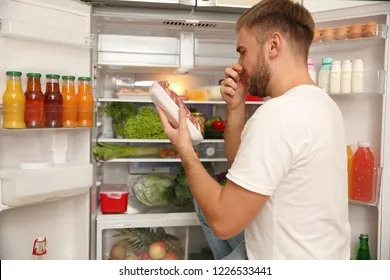
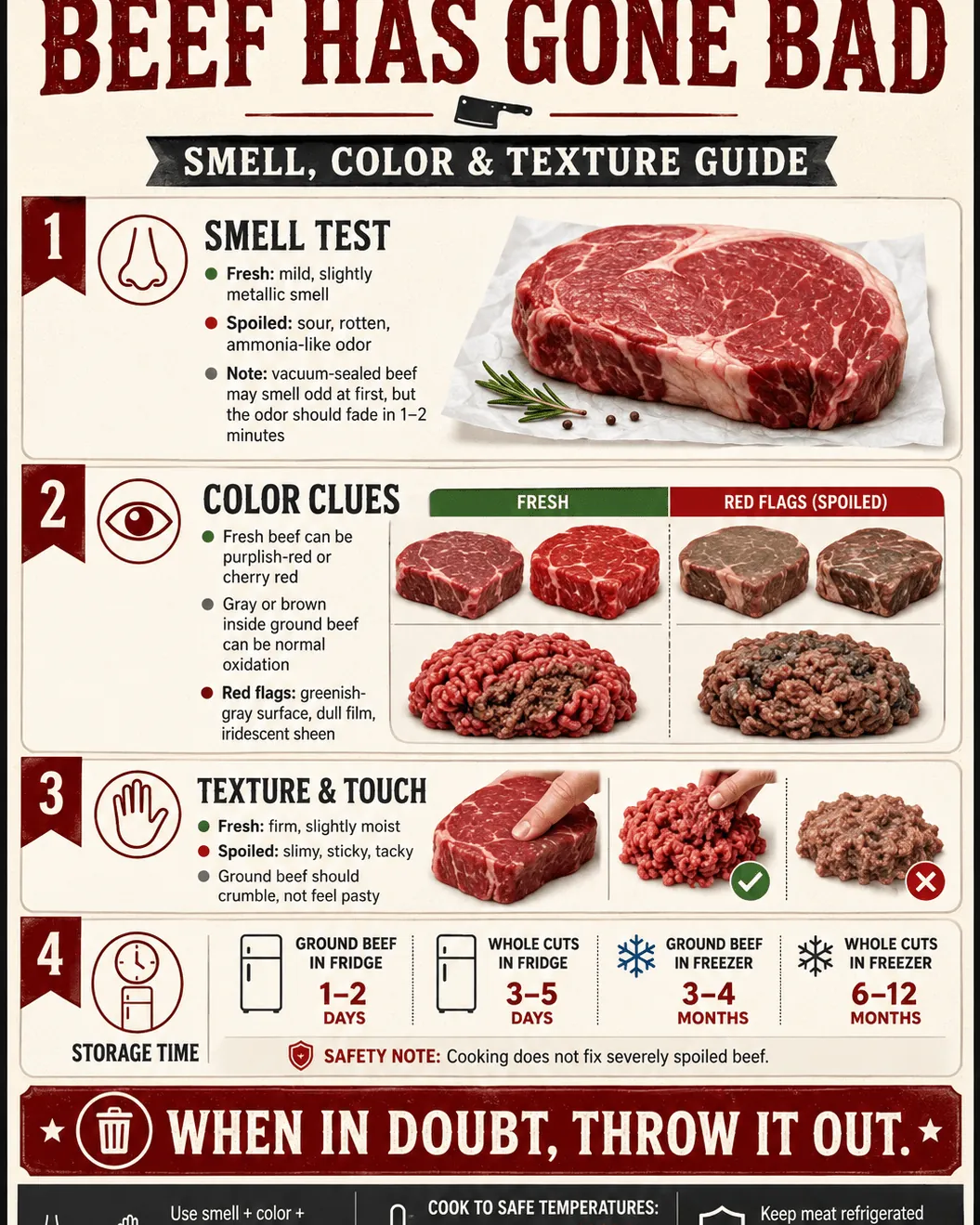
You can often tell if something is wrong by using your senses before you start cooking. Fresh meat should have a mild, neutral scent, but if you detect a sour, ammonia-like, or overly sweet odor, it’s time to discard the product.
Color changes: Look for dull, grey, or greenish hues instead of the natural red or pink shade. If you see iridescent rainbow sheens on beef, that’s often just light refraction on the muscle fibers and is perfectly safe.
Texture check: If the surface feels sticky, slimy, or tacky to the touch, don’t attempt to use it. This film is a byproduct of bacterial colonies multiplying on the surface.
Packaging condition: If the vacuum-sealed plastic is bloated or has a small puncture, air has entered and encouraged rapid bacterial growth. A bloated package is a sign of gas-producing microbes that thrive in oxygen-free environments.
Expiration dates: Always respect the “use-by” date on the label, as this is the manufacturer’s estimate for safety. If you’re unsure about the timeline, apply the two-day rule for raw poultry or ground meat. If the meat has been in your refrigerator longer than that, discard it regardless of how it looks.
Why Spoilage Happens
The primary reason meat smells bad is the rapid multiplication of spoilage bacteria and pathogens on the surface of the protein. These microorganisms consume the nutrients in the food and release gases as a byproduct of their metabolic activity. This process is accelerated by improper temperature control, which allows bacteria to enter the “danger zone” where they reproduce quickly.
According to the United States Department of Agriculture, the temperature range between 40°F and 140°F is where bacteria grow most rapidly. If food stays in this range for more than two hours, the risk of illness increases significantly. Even if the smell is faint, the bacterial load may already be high enough to cause food poisoning.
It’s important to understand that cooking doesn’t always make food safe. Some bacteria produce heat-stable toxins that survive boiling or frying. If you’re ever unsure about the safety of an item, the safest choice is to toss it out. Relying on your nose is a smart safety habit, but it isn’t a perfect test for every type of harmful pathogen.
When the Smell Is Normal
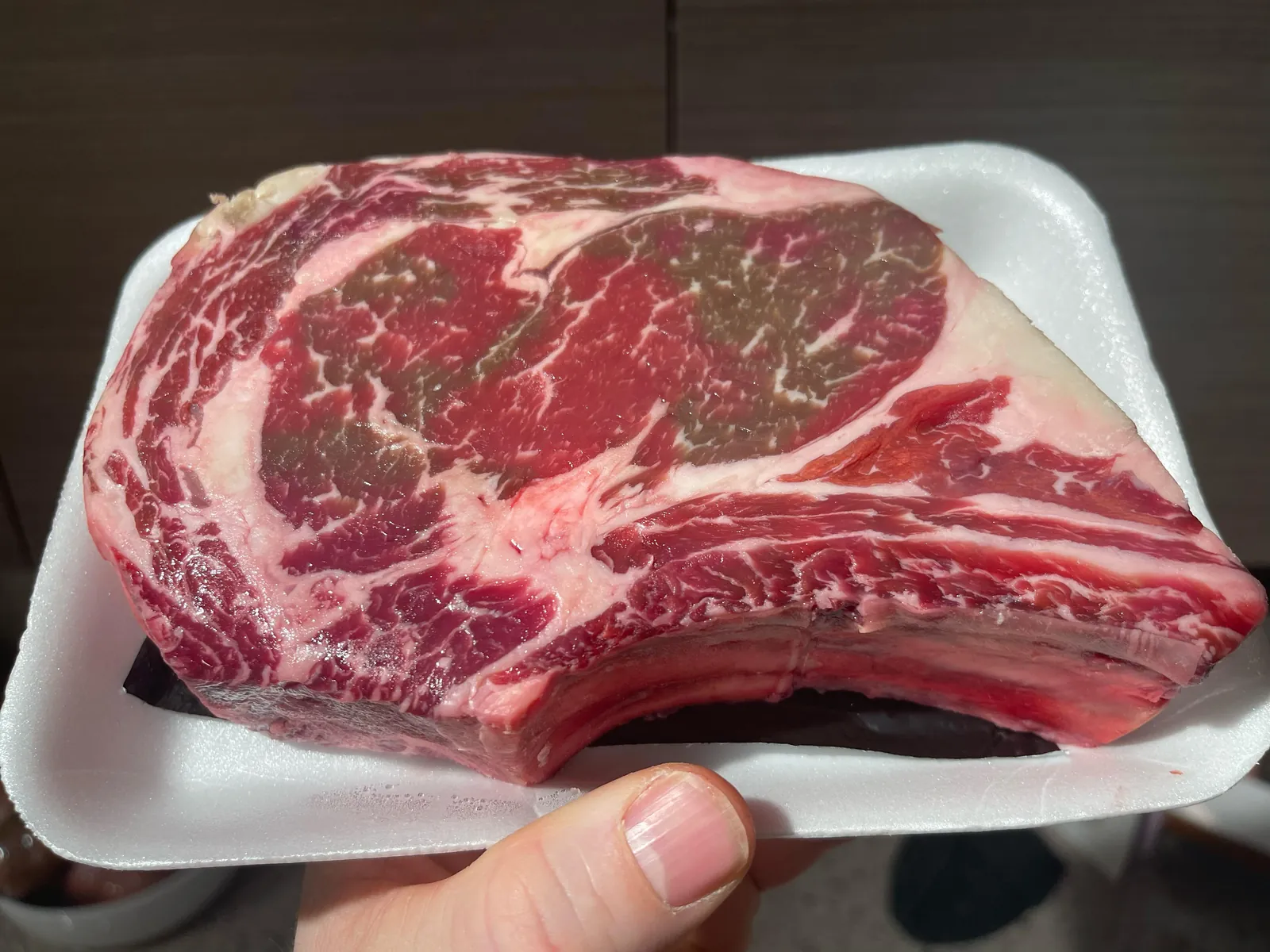
Sometimes a package might smell strange even if the food is still perfectly safe to eat. This often happens with vacuum-sealed packaging, which can trap gases that smell slightly sour when you first open the bag.
If the scent is caused by trapped gases, it should dissipate entirely within ten minutes of exposure to air. If the odor persists or intensifies after that window, the meat has likely begun to spoil.
Distinguish between a temporary scent and genuine rot by checking the surface texture. If your fingers come away with a tacky, glue-like film, discard the meat immediately regardless of the smell. A safe piece of meat should feel moist but firm, never slick or slimy.
When dealing with game or grass-fed meats, expect a naturally pungent, iron-like aroma that differs sharply from the mild scent of grain-fed beef. If you encounter a sharp, ammonia-like sting that irritates your nose, don’t attempt to cook it. That specific chemical sharpness is a reliable indicator of bacterial breakdown that heat can’t neutralize.
How to Handle Meat Safely
You need to follow strict handling procedures to keep your kitchen environment clean and safe. Always wash your hands with soap and warm water for at least 20 seconds before and after you touch raw proteins.
Keep your refrigerator set at or below 40°F to slow down the growth of bacteria. If your fridge lacks a built-in display, place a standalone thermometer in the door to verify the actual temperature.
Store raw products on the bottom shelf in a sealed container to prevent juices from dripping onto other food. If you lack a dedicated bottom shelf, place the meat inside a high-sided baking dish to catch any potential leaks.
Use a dedicated cutting board for raw items to avoid spreading bacteria to your vegetables or ready-to-eat foods. Plastic boards are safer for meat because they can be sanitized in a dishwasher at high heat. Wood is porous and can trap bacteria in deep knife grooves.
Thaw frozen items in the refrigerator, never on the kitchen counter, to keep them out of the danger zone. If you’re in a rush, submerge the sealed package in cold water, changing the water every 30 minutes.
Cook ground meats to an internal temperature of 160°F and whole cuts or poultry to 165°F. Use a calibrated food thermometer to verify the internal temperature at the thickest part of the cut.
Refrigerate leftovers within two hours of cooking and eat them within 3 to 4 days. If the ambient temperature in your kitchen exceeds 90°F, discard any food left out for more than one hour.
Common Mistakes That Ruin Safety
You might accidentally compromise your food through simple errors during storage or preparation. These mistakes lead to rapid bacterial growth and unnecessary waste.
Leaving perishable items on the counter for more than two hours allows bacteria to reach unsafe levels. If your kitchen temperature exceeds 90 degrees Fahrenheit, that window shrinks to just one hour.
Using the same knife for raw meat and salad spreads pathogens instantly. Always wash blades with hot, soapy water between tasks or keep a dedicated color-coded set for proteins.
Storing items in thin plastic bags leads to freezer burn, which ruins texture. Use airtight, heavy-duty containers or vacuum-sealed bags to prevent moisture loss.
Trying to mask a bad odor with spices won’t kill pathogens. If the food smells off, the bacteria have already produced toxins that heat can’t destroy. When in doubt, throw it out to avoid the cost of food poisoning.
Related guides
Frequently asked questions
Can I cook meat that smells slightly off?
No, you should never cook meat that smells off because the smell indicates that bacteria have already begun to break down the proteins. Heating the food might kill some bacteria, but it won’t remove the toxins they have already produced. If the smell is unpleasant, it isn’t worth the risk of food poisoning.
How long does meat last in the fridge?
Most raw ground meats and poultry stay safe for 1 to 2 days when stored at 40°F or colder. Whole cuts of beef, pork, or lamb can last slightly longer, usually 3 to 5 days. Always check the manufacturer’s date on the package, as this is the most reliable guide for your specific item.
Why does vacuum sealed meat smell when I open it?
It’s normal for vacuum-sealed meat to have a slight, temporary odor immediately after you open the package. This happens because the meat has been in an anaerobic environment, which causes a buildup of harmless gases. If the smell fades after a few minutes of exposure to air, it’s usually safe.
Is it safe to eat meat that smells like ammonia?
No, you must discard any meat that smells like ammonia. This scent is a clear sign that the spoilage process is advanced and that high levels of bacteria are present. Eating food in this state is a serious health risk and can lead to severe digestive illness.
Does freezing kill bacteria?
Freezing doesn’t kill bacteria; it only inhibits their growth. Once the meat thaws and enters the temperature danger zone, any bacteria present will immediately begin to multiply again. Freezing is for storage, not for cleaning or sanitizing food that has already started to spoil.
How can I tell if cooked meat is bad?
You can tell if cooked meat is bad by checking if it has been left out for more than two hours, if it has been stored at an unsafe temperature, or if there’s visible mold growth. If the food has been left out of the refrigerator for more than two hours, you should throw it away regardless of how it looks. Trust your judgment if you notice anything unusual.
Conclusion
Always prioritize your health by discarding any item that shows signs of spoilage or has been stored improperly. When in doubt, it’s always better to waste a few dollars than to risk a foodborne illness that could have been avoided with simple caution.