
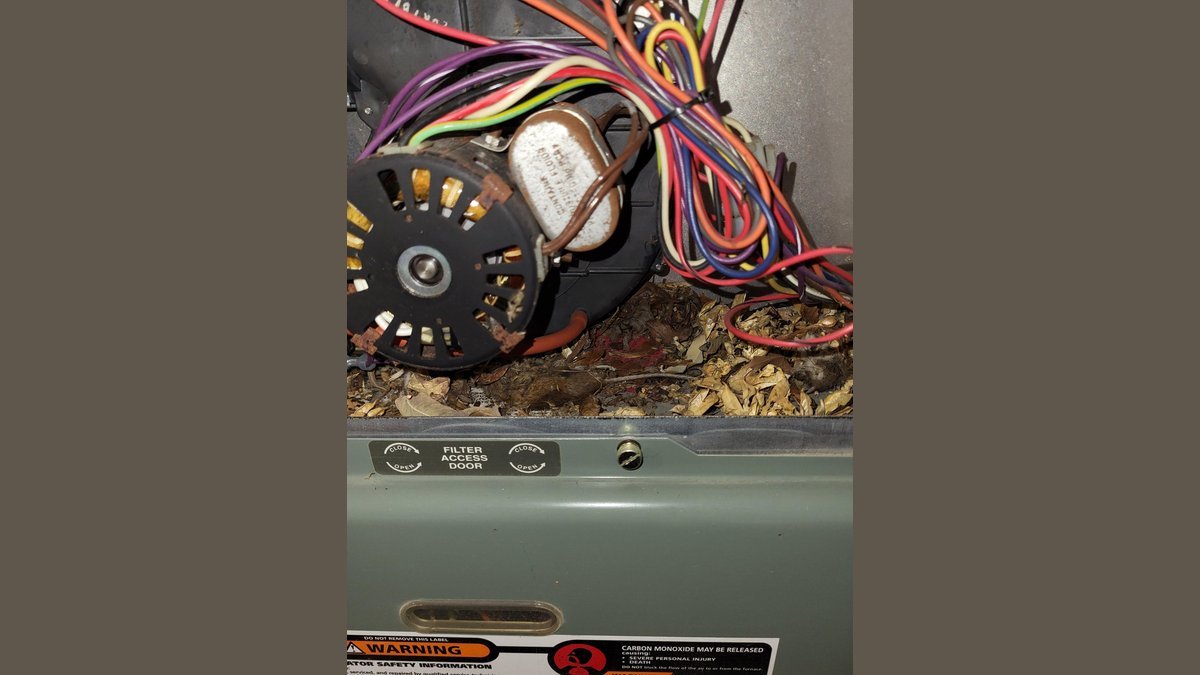
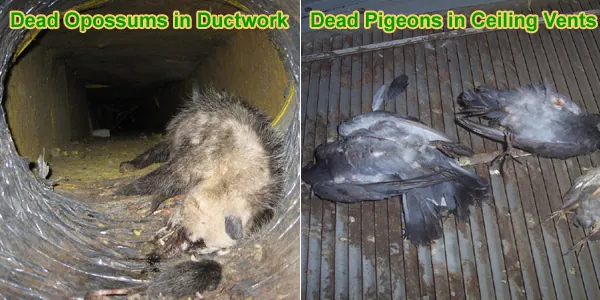
A furnace smells like dead animal when a small animal dies inside the ductwork or blower cabinet, or when dust burns off after weeks without use. The odor usually starts strong and fades within a few days as the body dries out, though it can last longer if the animal is large or tucked deep in the vents. If the smell doesn’t fade after several days of running the heat, something else is likely causing it.
Furnace Smells Like Dead Animal
| Cause | What it means | Example |
|---|---|---|
| Dead animal in ducts or blower | A mouse, bird, or squirrel died inside the system | A mouse caught behind the blower fan |
| Dust burning off | Settled dust heats up after the first use of the season | Dust on the heat exchanger at startup |
| Gas leak | A sulfur or rotten-egg smell from natural gas | A loose fitting on the gas supply line |
| Electrical issue | A burning plastic or fishy odor from wiring or motor | An overheating blower motor |
| Mold or mildew | Damp ducts or a clogged drain pan | Moisture sitting in the air conditioning coil |
Safety: Inside a mains-powered machine, the parts behind the outer cover can hold a dangerous electrical charge even after it has been unplugged — that’s why they sit behind a cover. Opening the housing, or testing or replacing anything behind it, is a job for a qualified technician, never a home repair.
Dead Animal in the Ductwork
A dead animal in the ductwork is the most direct match for this smell. It suits anyone who hears scratching before the odor starts, or who finds droppings near a vent.
- The smell is usually strongest near one or two vents rather than everywhere at once.
- You may hear scratching, scurrying, or flapping before the odor appears.
- The odor often fades as the body dries, which can take several days to a couple of weeks.
- Removing the body yourself means reaching into ducts most homeowners can’t access safely.
One example: a mouse dies behind the blower fan, and the smell comes through the living room vent every time the furnace starts.
Dust Burning Off
Dust burning off happens when the furnace runs for the first time after sitting idle. It suits homeowners who notice the smell only at the start of heating season.
- The odor smells musty or like burnt dust rather than rotting flesh.
- It appears the first time the heat kicks on after weeks or months off.
- It usually clears within an hour or two of running the system.
- Changing the filter before the first use can reduce the amount of dust that burns.
One example: after three months without heat, the furnace runs for twenty minutes and the whole house smells like burnt dust before the odor disappears.
Gas Leak
A gas leak doesn’t smell like a dead animal to most people, but the sulfur additive in natural gas can be mistaken for rotting matter. It suits anyone whose furnace uses natural gas or propane.
- The smell is more like rotten eggs than decay.
- It doesn’t fade with time and may get stronger near the furnace or gas line.
- It can come with a hissing sound at the gas valve or pipe.
- This is the only cause on this list that requires leaving the house and calling for help right away.
One example: a homeowner smells sulfur near the furnace, leaves the house, and calls the gas company from outside.
Electrical or Motor Issue
An electrical or motor issue creates a burning plastic or fishy smell, which some people describe as decaying. It suits furnaces that are older or that haven’t had recent maintenance.
- The odor smells like burning plastic, hot wires, or fish rather than rotting flesh.
- It may appear only when the blower motor starts or runs.
- You might notice the furnace cycling on and off more than usual.
- The blower motor, wiring, or control board can be the source.
One example: a blower motor with worn bearings smells like hot plastic every time the furnace runs a heating cycle.
Mold or Mildew
Mold or mildew grows in damp ducts or a clogged condensate drain pan. It suits homes with central air conditioning sharing the same ductwork as the furnace.
- The smell is musty, damp, or earthy rather than like decay.
- It’s often strongest when the fan runs or when the air conditioner has recently run.
- You may see dark spots around vents or feel excess humidity in the house.
- A clogged drain pan or dirty evaporator coil can hold moisture long enough for mold to grow.
One example: a clogged condensate pan under the indoor coil stays damp, and a musty smell comes through the bedroom vents whenever the fan runs.
Other Smells to Know
- Oil or smoke smell: an oil-fired furnace can smell like oil or smoke if the burner isn’t adjusted properly or if the chimney is blocked.
- Sewer smell: a dry floor drain near the furnace can let sewer gas into the basement, which may smell like decay when the furnace fan pulls air through the area.
- Chemical smell: a cracked heat exchanger can release formaldehyde-like odors, though this is less common and usually comes with other signs.
How to Choose Between Them
The source of the smell depends on what you notice first. If you heard scratching or found droppings before the odor, look for a dead animal in the ducts. If the smell only appears at the first startup of the season and fades within an hour or two, it’s likely dust burning off. If the odor smells like rotten eggs, doesn’t fade, or is strongest near the gas line, treat it as a gas leak.
If the smell is musty and appears when the fan runs, especially in a home with central air, check for mold or mildew in the ducts or drain pan. Some of these can be handled at home, but a gas leak or a cracked heat exchanger means calling a professional rather than trying to fix it yourself.
Related guides
- Dog Smells Like Fish From Back End: Causes and Solutions
- Can You Use Oil Based Primer Over Latex Paint? The Fix in 2026
Frequently Asked Questions
How long does a dead animal smell last in a furnace?
The odor usually fades within a few days to two weeks as the body dries out, depending on the size of the animal and where it died. A small mouse in an open duct may clear in a few days, while a larger animal deep in the system can take longer. If the smell persists beyond two weeks of regular furnace use, something else is likely causing it.
Can I remove a dead animal from my furnace myself?
You can only reach what you can see through a vent or an access panel you can open without tools. Anything deeper in the ductwork or inside the blower cabinet needs a professional with the right equipment, because reaching past that point can damage ducts or wiring.
Is a dead animal smell dangerous?
The smell itself is unpleasant but not usually toxic. The real concern is what the animal left behind — droppings, parasites, or damage to ducts and insulation — which a professional can assess during removal and cleaning.
Why does my furnace smell like rotten eggs?
A rotten-egg smell usually means a natural gas leak, because gas companies add a sulfur odor so leaks are noticeable. Leave the house right away and call your gas company or emergency services from outside; don’t turn lights on or off or use anything that could spark.
What does dust burning off smell like?
Dust burning off smells musty or like burnt dust, not like rotting flesh, and it typically clears within an hour or two of running the heat for the first time in the season. If it lasts longer, check your filter or call a technician.
Does a dead animal smell mean my furnace is broken?
No. The furnace may work perfectly while an animal is trapped in the ducts. The issue is the odor and any contamination, not necessarily the heating equipment itself.
What happens if I ignore the smell?
If it’s a dead animal, the odor will eventually fade as the body dries, but droppings and parasites can remain in the ducts. If it’s a gas leak, ignoring it’s dangerous. If it’s mold or an electrical issue, the problem can get worse over time.
When should I call a professional?
Call a professional if the smell lasts more than two weeks, if you can’t find the source, if you smell gas, or if the odor comes with the furnace short-cycling or shutting off. A technician can open the cabinet, inspect the heat exchanger, and clean the ducts safely.
What to Do Next
Turn the furnace off and check your vents for droppings, nesting material, or a visible animal you can reach without taking anything apart. If you find nothing and the smell fades within a few days of running the heat, it was likely dust or a small issue. If the smell doesn’t fade, or if you smell gas at any point, leave the house and call your gas company or a licensed HVAC technician.