

A burning rubber smell under the hood is one of the most common car odors drivers report, and it usually means something is touching a hot surface or slipping against a metal part. If you searched car smells like burning rubber, you’re likely wondering whether you can keep driving or whether you need to pull over right away. The answer depends on where the smell is coming from and how strong it is, but you should never ignore it for long because some causes can lead to engine damage or a fire.
Key Takeaways

- Pull over and shut off the engine if the smell is strong, smoke is visible, or warning lights are on.
- Check the serpentine belt, accessory belts, and hoses for cracks, glazing, or contact with hot parts before driving again.
- Don’t keep driving if the temperature gauge is climbing or the car feels like it’s losing power.
- Many rubber smells come from a slipping belt, an oil leak onto the exhaust, or a stuck brake caliper.
- Have a mechanic inspect the car if you can’t find the source after a cool-down visual check.
Most Common Causes of a Burning Rubber Smell
Several parts under the hood can produce that odor, and not all of them are actually rubber burning. The most frequent culprits are drive belts, fluid leaks, brakes, and clutches.
Serpentine Belt and Accessory Belts
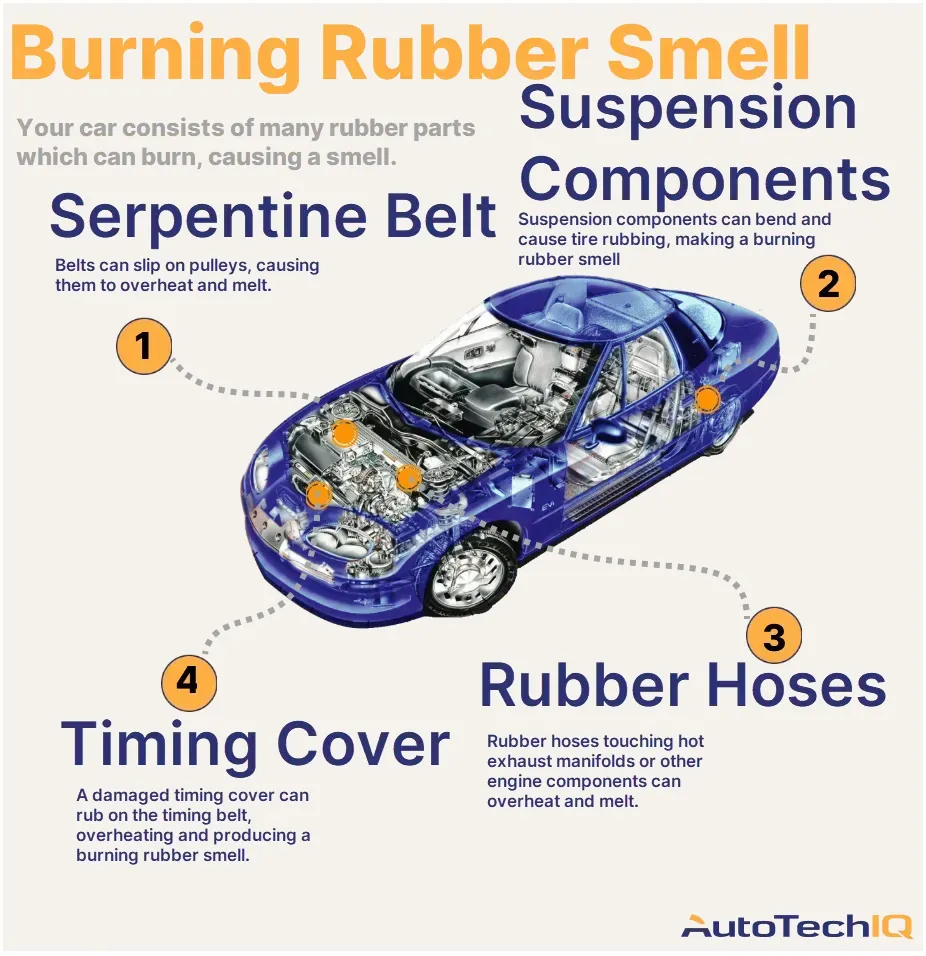
A serpentine belt runs the alternator, power steering pump, water pump, and air conditioning compressor. If a belt is worn, loose, or misaligned, it can slip on a pulley and create friction heat that smells like burning rubber. A seized pulley bearing can do the same thing by stopping the pulley from spinning while the belt keeps moving.
Look for cracks, frayed edges, glazing, or missing ribs on the belt. Also check that the belt is seated correctly in every pulley groove. A belt that chirps or squeals when you start the engine or turn the steering wheel is often the source.
Oil or Fluid Leaks on Hot Surfaces
Engine oil, transmission fluid, power steering fluid, or coolant can leak onto the exhaust manifold, catalytic converter, or other hot engine parts. The fluid doesn’t have to be rubber to smell like it; hot oil burning off metal often produces a sharp, acrid odor that drivers describe as rubber or burnt toast.
Check the valve cover gasket, oil filter housing, and oil pan for seepage. Look for wet spots on the engine block and drips on the ground after the car has been parked. Even a small leak can create a strong smell once the engine reaches normal operating temperature.
Brakes and Wheels
A stuck brake caliper, a parking brake left partially engaged, or worn brake pads can overheat the brake components. The smell may come from one wheel more than the others, and you might feel a pull to one side when braking or notice that one wheel is hotter than the rest after a short drive.
New brake pads sometimes smell during the first hundred miles as the material beds in, but a strong odor on an older car usually means a mechanical problem.
Clutch and Manual Transmission Issues
If you drive a manual transmission, a slipping clutch can create a burning rubber or burnt paper smell. This often happens when the clutch isn’t fully engaging, such as when riding the clutch pedal in traffic or starting on a steep hill. The odor may be accompanied by engine revving without a matching increase in vehicle speed.
Electrical Issues and Wire Insulation
An electrical short can melt the insulation on wires, producing a smell similar to burning rubber. This is less common than belt or leak issues, but it’s more serious because it can lead to a fire. Look for exposed wiring, loose connectors, or melted plastic near the battery, fuse box, or engine wiring harness.
When the Smell Is Dangerous
Not every burning rubber smell means immediate danger, but some situations require you to stop driving right away.
Signs You Should Pull Over Immediately
Stop the car in a safe location and turn off the engine if you notice any of the following:
- Thick smoke coming from under the hood or around a wheel
- The temperature gauge in the red zone or a coolant warning light
- A sudden loss of power steering or electrical power
- Flames visible anywhere on the vehicle
- A strong smell accompanied by a loud squealing or grinding noise
Continuing to drive with an overheating engine or a failed belt can cause expensive damage, and a fluid leak onto a hot exhaust can start a fire under the right conditions.
When It Is Probably Safe to Drive a Short Distance
A faint odor that appears right after an oil change, a new brake pad installation, or driving through a puddle may not be an emergency. Still, you should drive directly to a repair shop or home and inspect the car once it has cooled. Don’t treat a recurring smell as normal.
How to Diagnose the Source Yourself
You don’t need to be a mechanic to narrow down the cause. A systematic check after the engine has cooled can reveal the problem or give a shop useful information.
Step 1: Let the Engine Cool
Never open the hood immediately after driving if you suspect an overheating issue or a coolant leak. The cooling system is pressurized, and steam or hot coolant can cause serious burns. Wait at least 30 minutes before inspecting.
Step 2: Look Under the Hood
With the engine off and cool, inspect the following:
- Serpentine belt condition and alignment
- Hoses for cracks, bulges, or contact with hot parts
- Oil residue on the engine block, valve cover, or exhaust manifold
- Loose or melted wiring near the battery and fuse box
- Plastic bags or debris caught on the exhaust or engine
A flashlight and a mirror help you see behind the engine and around tight spaces.
Step 3: Check the Wheels and Brakes
After a short drive, carefully hold your hand near each wheel without touching it. Excessive heat at one corner suggests a sticking caliper or a dragging parking brake. Look for smoke or discoloration on the brake rotor or caliper.
Step 4: Note When the Smell Occurs
Does the smell happen only when you accelerate, only when you brake, or all the time? Is it stronger outside the car or inside through the vents? These details help a mechanic diagnose the issue faster.
Repair Costs and What to Expect
Repair prices vary by vehicle, labor rates in your area, and whether you go to an independent shop or a dealership. The table below shows typical parts and labor ranges for common fixes.
| Repair | Typical Parts Cost | Typical Labor Cost | Total Typical Range |
|---|---|---|---|
| Serpentine belt replacement | $25–$75 | $75–$150 | $100–$225 |
| Valve cover gasket replacement | $40–$100 | $150–$350 | $190–$450 |
| Brake caliper service or replacement | $80–$250 | $100–$250 | $180–$500 |
| Clutch replacement (manual) | $400–$800 | $400–$800 | $800–$1,600 |
| Oil leak diagnosis and seal repair | $50–$200 | $150–$400 | $200–$600 |
These are typical ranges, not quotes. Luxury vehicles and European models often cost more, and some repairs require removing other parts, which adds labor time.
Warning: Don’t delay a repair if the smell is getting stronger or if you see fluid dripping onto hot components. A small oil leak can turn into an engine fire under the right conditions.
What a Mechanic Will Check
When you take the car to a shop, the technician will usually start with a visual inspection and a test drive. They may use a UV dye to find oil leaks, a stethoscope or listening device to check pulley bearings, and a brake temperature check to identify a sticking caliper.
Expect the shop to inspect these systems:
- Drive belts and tensioners
- Engine gaskets and seals
- Exhaust system for contact with fluids or plastic
- Brake calipers, rotors, and pads
- Clutch assembly if you have a manual transmission
- Wiring harness and electrical connectors
Ask for a written estimate before authorizing work, and request that the shop show you the failed part if possible.
Prevention and Maintenance Tips
Regular maintenance reduces the chance of a burning rubber smell. Follow your vehicle’s maintenance schedule for belt inspections, oil changes, and brake service.
- Replace the serpentine belt at the interval recommended in your owner’s manual, usually between 60,000 and 100,000 miles.
- Check fluid levels monthly and look for new leaks under the car.
- Replace brake pads before they wear down to the metal backing plate.
- Avoid riding the clutch pedal in a manual transmission car.
- Keep the engine bay clean so leaks and worn belts are easier to spot.
Pro Tip: Keep a notebook in the glove compartment and write down when the smell occurs, how strong it is, and what you were doing at the time. Patterns help a mechanic find intermittent problems.
Related guides
Frequently Asked Questions
Is it safe to drive with a burning rubber smell?
It depends on the cause and strength. A faint, short-lived odor after maintenance may not be urgent, but a strong smell with smoke, warning lights, or loss of power means you should pull over and shut off the engine. When in doubt, have the car towed or inspected before driving farther.
Can a burning rubber smell damage the engine?
Yes, if the cause is an overheating engine, a failed belt driving the water pump, or an oil leak that leads to low oil pressure. Continuing to drive can cause overheating, loss of power steering, or engine seizure. Early inspection usually prevents expensive damage.
Why does my car smell like burning rubber after an oil change?
A small amount of oil may have spilled onto the exhaust manifold or engine during the service. The odor should disappear after the oil burns off, usually within a short drive. If the smell persists for more than a day or two, return to the shop to check for a loose drain plug or filter.
Can brakes smell like burning rubber?
Yes. Overheated brake pads, a stuck caliper, or a parking brake left partially engaged can create a strong burning odor. You may also notice the car pulling to one side or one wheel feeling much hotter than the others after driving.
Should I open the hood right away if I smell burning rubber?
Wait until the engine has cooled, especially if the temperature gauge is high or you see steam. The cooling system is under pressure and can release hot coolant that causes burns. Once cool, open the hood and look for obvious signs like a broken belt, leaking fluid, or smoke.
Conclusion
Don’t ignore a burning rubber smell in your car. The safest next step is to let the engine cool, do a careful visual check of belts, hoses, and fluid leaks, and schedule a mechanic inspection if you can’t find the cause or if the odor returns.