

That sharp, acrid smell under the hood is never normal. A burnt rubber smell usually indicates a part failing under load or touching a hot engine component. Some causes are cheap and quick to fix; others can strand you or start an engine fire if you keep driving. This guide walks through the most likely sources, how to check them yourself, what a shop will charge, and when to stop driving immediately.
Key Takeaways
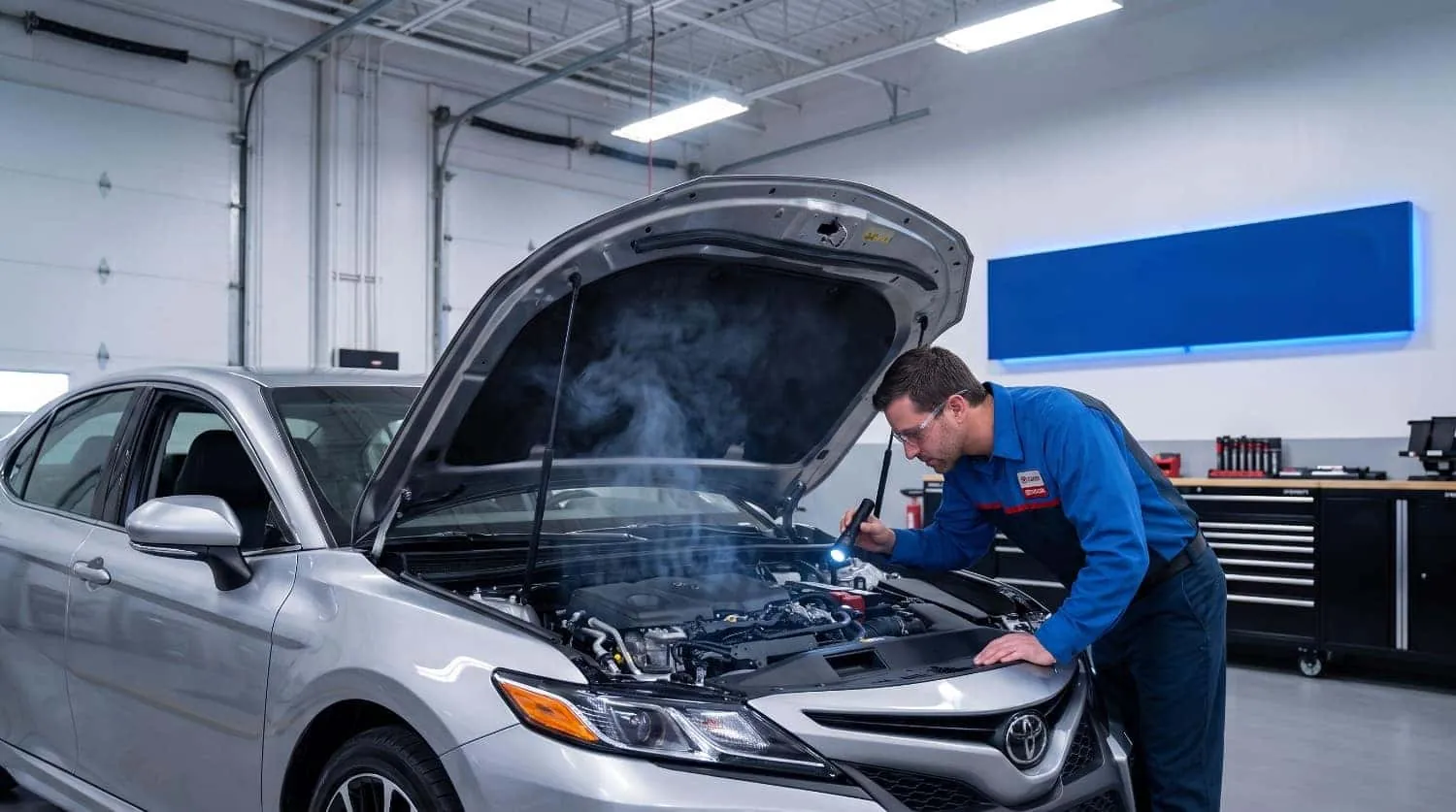
- Pull over and shut off the engine as soon as you notice the smell; don’t keep driving while it’s strong.
- Check the serpentine belt, drive belt, and hoses for slipping, glazing, or contact with hot parts before anything else.
- Look under the car for fresh oil, coolant, transmission fluid, or power-steering fluid dripping onto the exhaust.
- Feel each wheel after a short drive; one wheel that’s much hotter than the others often means a sticking brake caliper or seized slider pins.
- If you drive a manual and the smell happens during hard acceleration or hill starts, suspect a slipping clutch.
- Expect typical repair costs from $100 to $1,200 depending on the part, with belts and hoses at the low end and clutches or major leaks at the high end.
Most Common Causes of a Burnt Rubber Smell
Several components can create that odor, and they don’t all announce themselves with a warning light. The smell happens when rubber or fluid reaches temperatures it wasn’t built to handle, or when a part slips against metal fast enough to generate friction heat.
Serpentine Belt and Drive Belt Issues
The serpentine belt powers engine accessories. A seized pulley or glazed belt causes slipping and squealing. This friction creates a burnt rubber smell and a high-pitched squeal.
Check the belt for cracks, fraying, or a glazed surface. A weak tensioner or dry pulley bearing can also cause belt slippage. Replacing a serpentine belt is inexpensive, but snapping causes a loss of power steering or charging.
Fluid Leaks Touching Hot Exhaust Parts
Leaking engine fluids produce an acrid smell when contacting hot exhaust.
Oil leaks often come from the valve cover gasket, oil pan gasket, or front crankshaft seal. Coolant can leak from a hose, the radiator, or the water pump. Power-steering fluid frequently leaks from hoses near the pump. Because these fluids are under pressure when the engine is hot, the smell may be strongest right after you shut the engine off.
Sticking Brake Caliper or Seized Brake Hardware
When one brake corner does all the work, heat burns pad material or nearby rubber. A stuck caliper or corroded slider pins keep the pad pressed against the rotor. This causes a hot wheel, a dragging sensation, and a burnt rubber or metallic smell.
You can check this yourself after a short drive. Carefully hold your hand near each wheel without touching the rim. If one wheel radiates significantly more heat than the others, or if you see dark, burnt residue on that wheel, the brake on that corner is likely sticking.
Overheating Clutch in Manual Transmission Cars
If you notice the smell during hard acceleration, hill starts, or towing, the clutch may be slipping. A worn clutch, weak pressure plate, or oil contamination prevents full engagement. The friction material overheats, giving off a strong burnt odor.
Electrical Wires and Insulation Melting
Less common but more serious, a short circuit or loose ground can melt the insulation on wiring harnesses.
If you suspect an electrical issue, don’t keep driving.
Quick Diagnostic Checklist
You don’t need a lift or professional tools to narrow down the source.
- Park and shut off the engine. Let it cool for at least 15 minutes before opening the hood if the smell is strong.
- Open the hood and look for obvious signs. Check the serpentine belt for cracks or glazing. Look for fluid dripping onto the exhaust manifold or catalytic converter.
- Sniff around the engine bay. Oil and coolant smells often concentrate near the top of the engine; exhaust-related odors are stronger near the underside.
- Check each wheel for heat. After a short drive, compare the heat radiating from each wheel. One unusually hot wheel points to a brake problem.
- Test drive with attention. Note whether the smell happens at idle, under acceleration, when braking, or only after the engine is fully warm.
- Check fluid levels. Low engine oil, coolant, transmission fluid, or power-steering fluid can confirm a leak you haven’t seen yet.
What It Typically Costs to Fix

Repair prices vary by vehicle make, model, and labor rates in your area. The table below shows typical parts-and-labor ranges for the most common burnt rubber smell repairs.
| Repair | Typical Cost Range | Parts or Labor Dominant |
|---|---|---|
| Serpentine belt replacement | $100 to $250 | Mixed |
| Belt tensioner or idler pulley | $120 to $300 | Mixed |
| Valve cover gasket replacement | $200 to $500 | Labor |
| Radiator or coolant hose replacement | $150 to $450 | Mixed |
| Brake caliper service or replacement | $250 to $600 per corner | Mixed |
| Brake pad and rotor replacement | $300 to $700 per axle | Mixed |
| Clutch replacement (manual) | $700 to $1,500 | Labor |
| Wiring harness repair | $150 to $600 | Mixed |
These are typical ranges, not quotes.
When to Stop Driving Immediately
Some burnt rubber smells mean you shouldn’t drive another block. If the odor is strong inside the cabin, if you see smoke under the hood or from a wheel, or if the temperature gauge is climbing, pull over safely and shut off the engine. Call for a tow rather than risking an engine fire or brake failure.
Warning: Don’t open the radiator cap or coolant reservoir while the engine is hot. Pressurized coolant can spray out and cause severe burns.
Also stop driving if the brake pedal feels soft, goes to the floor, or if the car pulls hard to one side when you brake. Those symptoms with a burning smell indicate a brake system problem that can become dangerous without warning.
How a Mechanic Will Diagnose It
A shop typically starts with a visual inspection and a test drive. The technician will check belt condition and tension, look for fluid leaks with a dye or UV light if needed, measure brake temperatures with an infrared thermometer, and inspect clutch engagement in manual vehicles. If an electrical short is suspected, they will test circuits and inspect wire insulation for melting.
Prevention and Regular Maintenance

Catching these issues early keeps the smell from becoming a breakdown. Replace the serpentine belt according to your vehicle manufacturer’s interval, often between 60,000 and 100,000 miles, though some belts last longer.
Check fluid levels monthly. If you drive a manual, avoid resting your foot on the clutch pedal and use the parking brake on hills instead of holding the car in gear with the clutch.
Pro Tip: Keep a small LED flashlight and a rag in the trunk. A quick look under the hood after a strange smell can reveal a dripping hose or a loose belt before it causes a roadside failure.
Related guides
Frequently Asked Questions
Is it safe to drive if my car smells like burnt rubber?
Not if the smell is strong or you see smoke. Pull over, shut off the engine, and check for leaks, smoke, or a hot wheel.
Can a burnt rubber smell come from the tires?
Yes, but only in specific situations. Hard braking, a stuck caliper, or a tire rubbing against the wheel well or suspension can overheat rubber and create the odor. Normal driving shouldn’t make tires smell burnt.
How much does it cost to fix a burnt rubber smell?
Typical repair costs range from $100 to $250 for a serpentine belt, $200 to $500 for a valve cover gasket, $250 to $600 per brake caliper corner, and $700 to $1,500 for a clutch replacement. Exact pricing depends on your vehicle and local labor rates.
Why does the smell come through the air vents?
The cabin air intake is usually near the base of the windshield, close to the engine bay. If oil, coolant, or another fluid is leaking onto hot exhaust parts, the fumes rise and get drawn into the ventilation system, carrying the smell inside the car.
Can low oil cause a burnt rubber smell?
Low oil itself doesn’t smell like rubber, but an oil leak caused by low levels or a failing gasket can. When oil drips onto the exhaust manifold or catalytic converter, it burns and creates an acrid odor that many drivers describe as burnt rubber.
What should I do if the smell happens only after I turn off the engine?
That often means a fluid is dripping onto a hot part and vaporizing as the engine cools. Check for fresh leaks under the car and around the valve cover, then have a technician inspect the area before the leak worsens.
Conclusion
Don’t ignore a burnt rubber odor hoping it will go away. The next step is to pop the hood when the engine is cool, check your belts and fluid levels, and book an inspection if you can’t find the source.