
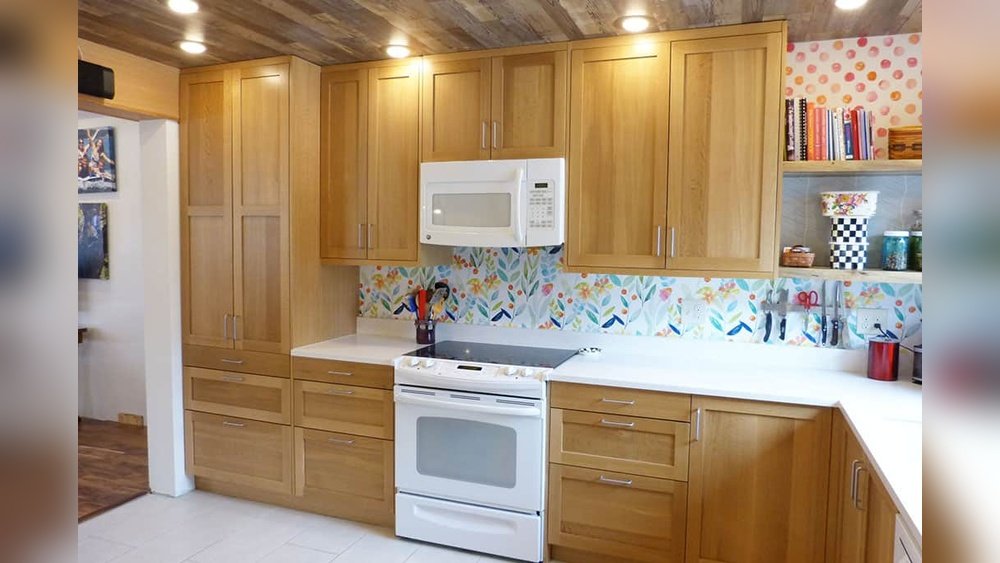
The allure of a beautiful, functional kitchen often leads homeowners to explore various cabinet options. IKEA, with its accessible pricing and modern designs, is a popular choice for many. However, a common question arises: are IKEA kitchen cabinets solid wood? This inquiry is crucial for understanding the durability, longevity, and overall value of a kitchen investment. While IKEA offers a wide range of products, the answer isn’t a simple yes or no. Understanding the materials used in IKEA cabinetry is key to making an informed decision that aligns with your budget, aesthetic preferences, and long-term expectations.
This comprehensive guide will dissect the materials used in IKEA kitchen cabinets, differentiating between solid wood, wood veneer, particleboard, and MDF. We’ll explore how these materials contribute to the cabinet’s construction, examine specific IKEA product lines, and offer insights into their durability and maintenance.
By the end, you’ll have a clear picture of what to expect when choosing IKEA for your kitchen renovation.
Key Takeaways
- IKEA cabinets are not typically made entirely of solid wood. While some components might incorporate solid wood elements, the majority of their construction relies on engineered wood products like particleboard and MDF, often finished with veneers or laminates.
- Different IKEA cabinet lines use varying material combinations. Understanding the specific series (e.g., SEKTION) and door styles is essential for identifying the exact materials.
- Engineered wood offers advantages like cost-effectiveness and stability. Particleboard and MDF are less prone to warping than solid wood in humid environments, making them suitable for kitchens.
- Veneers and laminates provide the aesthetic appeal of wood. These finishes can mimic the look of solid wood convincingly, offering a wide range of styles and colors.
- Durability varies based on material and construction. While IKEA cabinets are designed for functionality and affordability, their longevity can be influenced by the specific materials used and how they are maintained.
- Solid wood accents are sometimes present. Drawer sides, for instance, may feature solid wood or a durable composite, while doors might have solid wood frames with panel inserts.
:max_bytes(150000):strip_icc()/IKEA-Sektion-Kitchen-Cabinets-56a4a1413df78cf772835321.JPG)
Credit: www.thespruce.com
Understanding Cabinet Construction Materials
To accurately answer whether IKEA kitchen cabinets are solid wood, it’s vital to understand the common materials used in cabinet construction and how IKEA employs them. The term “solid wood” refers to lumber that has been milled directly from a tree.
It’s known for its natural beauty, strength, and potential for refinishing. However, it’s also more expensive and susceptible to moisture and temperature fluctuations.
In contrast, engineered wood products offer a more stable and cost-effective alternative. These materials are manufactured by binding wood fibers, particles, or veneers together with adhesives.
Solid Wood
Solid wood is the traditional choice for high-end cabinetry. It offers a rich, natural aesthetic and can last for generations if properly cared for.
- Types: Common solid woods used in cabinetry include oak, maple, cherry, and birch. Each has distinct grain patterns and color variations.
- Pros: Unmatched natural beauty, durability, ability to be sanded and refinished multiple times, potential for unique grain patterns.
- Cons: Higher cost, susceptibility to warping, cracking, or swelling with changes in humidity and temperature, can be heavier.
- IKEA Application: While you won’t find entire IKEA cabinet boxes made of solid wood, you might find solid wood used for drawer sides or as framing in some door styles.
Plywood
Plywood is a versatile engineered wood product made by layering thin sheets of wood veneer, typically glued together with adjacent layers having their wood grain rotated up to 90 degrees to one another. This cross-graining provides strength and stability.
- Construction: Multiple thin layers (plies) of wood veneer are bonded together with adhesives, with the grain of each layer perpendicular to the grain of the layers above and below.
- Pros: Strong, stable, resistant to shrinking and swelling, good screw retention, available in various grades.
- Cons: Can be more expensive than particleboard or MDF, edges may require finishing to conceal the layered construction.
- IKEA Application: IKEA primarily uses particleboard and MDF for its cabinet boxes. While some higher-end or older IKEA lines might have used plywood, it’s not the standard for their current popular systems like SEKTION.
Particleboard
Particleboard, also known as chipboard, is an engineered wood product manufactured from wood chips, sawdust, and wood scraps bonded together with a synthetic resin or binder.
- Manufacturing: Wood particles are pressed and extruded under heat and pressure.
- Pros: Cost-effective, relatively stable, good base for veneers and laminates.
- Cons: Lower strength and screw-holding ability compared to plywood, susceptible to swelling and disintegration when exposed to moisture, can be heavy.
- IKEA Application: This is a primary material used for the boxes of IKEA kitchen cabinets. It provides a stable and affordable substrate for their finishes.
Medium-density Fiberboard (mdf)
MDF is an engineered wood product made by breaking down hardwood or softwood into wood fibers, combining them with wax and a resin binder, and forming panels by applying high temperature and pressure.
- Manufacturing: Wood is broken down into fine fibers, mixed with binders and wax, then pressed into dense, uniform panels.
- Pros: Very smooth surface ideal for painting and finishing, stable, consistent density, less prone to warping than solid wood.
- Cons: Heavier than particleboard, can sag under heavy loads over time if not properly supported, susceptible to water damage, lower screw-holding power than plywood.
- IKEA Application: MDF is frequently used for cabinet doors, drawer fronts, and sometimes for cabinet boxes, especially where a smooth, paintable surface is desired or for specific structural components.
Wood Veneer Vs. Laminate
These are the finishing materials applied to the core of particleboard or MDF to give the cabinets their appearance.
- Wood Veneer: A thin slice of real wood applied to a substrate. It offers the look of solid wood but at a lower cost and with greater stability. IKEA uses veneers on many of its cabinet doors and visible end panels.
- Laminate: A synthetic material made of layers of paper or plastic bonded together under high pressure. It’s durable, easy to clean, and can mimic various wood grains, solid colors, or textures. IKEA uses laminate finishes on some of its more budget-friendly or modern-styled doors.
Ikea’s Sektion System And Material Breakdown
IKEA’s primary kitchen system is called SEKTION. This modular system allows for a high degree of customization, and understanding the materials used within this system is key to knowing what you’re purchasing. The SEKTION system itself refers to the cabinet *boxes* and the internal organization, while the doors, drawer fronts, and visible panels are separate components that determine the aesthetic and often the primary material finish.
Cabinet Boxes (carcasses)
The internal structure of IKEA cabinets, the boxes that house your shelves and drawers, are predominantly constructed from particleboard. This material is chosen for its cost-effectiveness, stability in typical kitchen humidity levels, and ability to provide a sturdy base for the hardware and shelves.
- Material: High-density particleboard, often with a melamine foil or laminate finish on the interior and exterior surfaces. The interior is usually white, grey, or a wood-effect finish, while the exterior visible edges might be finished to match the doors.
- Edge Banding: The exposed edges of the particleboard are typically covered with edge banding, which is a strip of plastic or veneer that protects the core material and provides a finished look.
- Reinforcement: To enhance durability and support for shelves and drawer slides, IKEA often incorporates metal supports or thicker panels in key areas. The back panels of the SEKTION cabinets are usually thin hardboard, designed to add rigidity.
Doors And Drawer Fronts
This is where IKEA offers the most variety, and consequently, the materials differ significantly across their extensive range of door styles.
- Foil Finish Doors: Many popular IKEA doors, such as VEDDINGE or HAGGEBY, are made from particleboard or MDF and covered with a foil wrap. This foil is a plastic film printed with a wood grain pattern or solid color. It’s cost-effective, easy to clean, and offers a consistent look. The edges are typically wrapped seamlessly.
- Example: The VEDDINGE white door is a foil-finished particleboard door known for its clean, modern look and affordability.
- Veneered Doors: Higher-end IKEA door styles, like EKESTAD or BJÖRKSNÄS, feature a wood veneer applied over an engineered wood core (particleboard or MDF). This provides a more authentic wood appearance, as it is real wood. The grain pattern will be more natural and varied than a foil finish.
- Example: The EKESTAD brown stained oak door uses a real oak veneer over a particleboard base, offering the look and feel of solid oak at a reduced cost.
- Painted Doors: Doors like AXSTAD are typically made from MDF and then painted. MDF provides an excellent smooth surface for painting, resulting in a durable and attractive finish.
- Example: The AXSTAD matte white door is an MDF door with a painted finish, offering a sophisticated look without the premium price of solid wood.
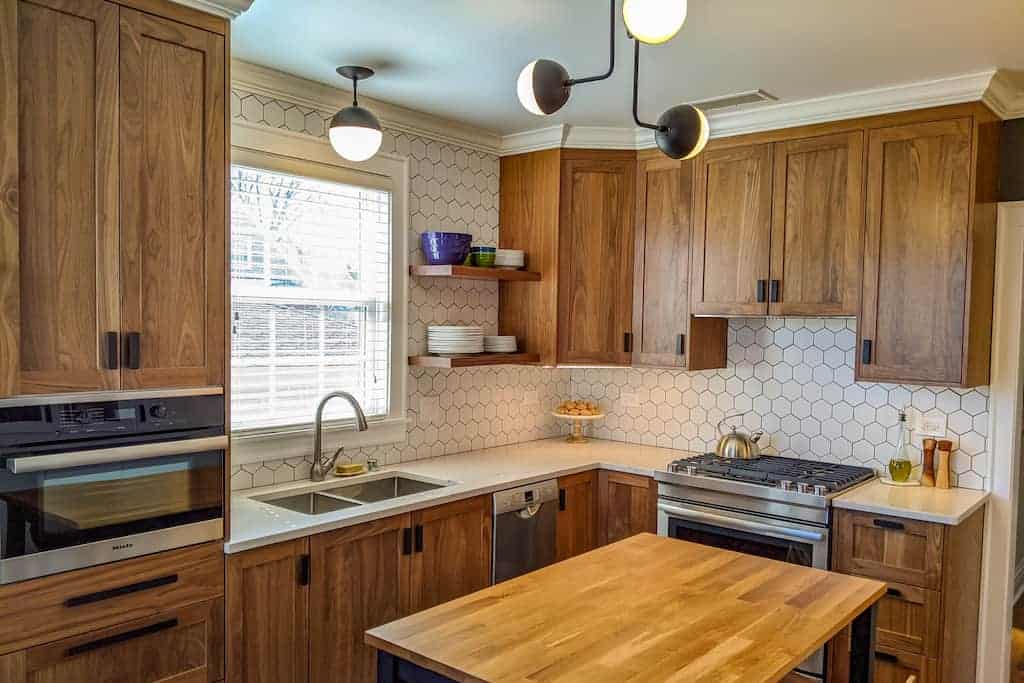
- Solid Wood Accents: Some door styles incorporate solid wood framing with a panel insert. The panel insert might be solid wood, veneer, or even MDF depending on the specific door.
- Example: Certain SEKTION doors might feature a solid wood frame (e.g., oak or birch) with a veneer or MDF panel in the center.
Drawer Components
- Drawer Sides: IKEA often uses solid wood (like birch or pine) or a durable composite material for the sides of their drawer boxes, especially for their premium drawer slides like MAXIMERA. This ensures strength and smooth operation.
- Drawer Bottoms: The bottom panels of the drawers are typically made from thinner hardboard or particleboard, designed to slide into grooves in the drawer sides for stability.
Credit: thecabinetface.com
Ikea’s Approach To Value And Sustainability
IKEA’s design philosophy centers around democratic design, which aims to balance form, function, quality, sustainability, and low price. This approach heavily influences their material choices. Using engineered wood products like particleboard and MDF allows them to achieve lower price points while maintaining acceptable levels of durability and aesthetic appeal for most consumers.
Cost-effectiveness
The primary driver behind IKEA’s material selection is affordability. Solid wood is significantly more expensive than particleboard or MDF. By utilizing engineered wood and finishes like foil and laminate, IKEA can offer complete kitchen solutions at prices that are often much lower than custom cabinetry or even many other big-box store options.
Stability And Performance
While solid wood is beautiful, it can be temperamental in environments with fluctuating humidity, such as kitchens and bathrooms. Engineered wood products like particleboard and MDF are generally more stable and less prone to expanding or contracting with changes in moisture levels. This stability contributes to the longevity of the cabinet joints and the overall structure.
Sustainability Initiatives
IKEA is committed to increasing the use of renewable and recycled materials. While particleboard and MDF are wood-based products, their manufacturing process can utilize wood byproducts and waste from other industries. IKEA also focuses on responsible forestry, aiming for all wood used in their products to be at least 100% recycled or from forests that are managed sustainably and contribute to protecting biodiversity. You can learn more about their wood sourcing policies on the IKEA website.
Credit: www.apartmenttherapy.com
Durability And Longevity Of Ikea Cabinets
The question of “solid wood” often ties directly into concerns about durability. While IKEA cabinets may not be solid wood throughout, their construction is designed to meet the demands of a typical kitchen environment.
Factors Affecting Durability
- Material Quality: The quality of the particleboard, MDF, and the adhesives used plays a significant role. IKEA generally uses materials that meet industry standards for their price point.
- Finish: Foil and laminate finishes are generally durable and easy to clean but can be susceptible to chipping or peeling if subjected to harsh impacts or prolonged exposure to excessive moisture. Veneered and painted finishes can be more susceptible to scratches or dents but may offer a more premium feel.
- Hardware: The quality of hinges, drawer slides, and handles is crucial for the long-term functionality of any cabinet. IKEA uses its own branded hardware, which is generally considered adequate for home use, with options for upgrading to higher-performance slides if desired.
- Installation: Proper installation is paramount. Cabinets must be securely anchored to wall studs. Uneven installation can lead to doors not aligning, drawers sticking, and undue stress on the cabinet boxes.
- Maintenance: Regular cleaning with appropriate products and avoiding excessive moisture are key to extending the life of any cabinetry, including IKEA’s.
Real-world Performance
In my experience, IKEA kitchens can last for 10-15 years or even longer with proper care and maintenance. Many homeowners successfully use IKEA kitchens for decades. The most common points of wear and tear tend to be:
- Door edges and corners: These are susceptible to chipping from impacts.
- Foil or laminate peeling: Can occur in areas exposed to high moisture or heat, like near dishwashers or ovens, if not properly sealed or if damaged.
- Drawer slide wear: While generally robust, heavy use can eventually wear down drawer slides, though replacements are readily available.
It’s important to set realistic expectations. IKEA cabinets are not heirloom pieces designed to be passed down through generations without refurbishment. They are designed to provide a stylish, functional, and affordable kitchen solution for a significant period.
Comparing Ikea Cabinets To Other Options
Understanding where IKEA cabinets stand requires a comparison with other common kitchen cabinet types.
Ikea Vs. Custom Cabinets
- IKEA:
- Materials: Primarily particleboard/MDF boxes, with various finishes (foil, laminate, veneer, paint) for doors. Some solid wood accents.
- Price: Highly affordable.
- Customization: Modular system allows significant customization within IKEA’s offerings.
- Lead Time: Available off-the-shelf or with relatively short delivery times.
- Durability: Good for the price point, but generally less durable than high-quality custom options.
- Custom Cabinets:
- Materials: Often made entirely of solid wood or high-grade plywood boxes, with solid wood or premium veneers for doors.
- Price: Significantly more expensive, ranging from moderate to very high.
- Customization: Virtually unlimited design, material, and dimension options.
- Lead Time: Can take several weeks to months.
- Durability: Can be extremely durable, often lasting for decades, depending on materials and craftsmanship.
Ikea Vs. Big Box Store Stock/semi-custom Cabinets
- IKEA:
- Materials: As described above.
- Price: Generally lower than stock or semi-custom options from big box stores.
- Design: Modern, clean aesthetic. Limited by IKEA’s style range.
- Assembly: Requires self-assembly of boxes.
- Big Box Store Stock/Semi-Custom (e.g., Home Depot’s KraftMaid, Lowe’s Diamond):
- Materials: Often use plywood boxes as standard or an upgrade option, with MDF or solid wood doors. Wider range of material choices.
- Price: Mid-range to high. Stock cabinets are more affordable than semi-custom.
- Design: Wider variety of traditional and transitional styles.
- Assembly: Stock cabinets come assembled; semi-custom options are built to order.
Here’s a simplified comparison table:
| Feature | IKEA Kitchen Cabinets | High-End Custom Cabinets | Big Box Stock/Semi-Custom |
|---|---|---|---|
| Primary Box Material | Particleboard | Solid Wood or Plywood | Plywood (often standard or upgrade), Particleboard |
| Door Materials | Foil, Laminate, Veneer, Painted MDF, some Solid Wood accents | Solid Wood, Premium Veneers | Solid Wood, MDF, Veneers |
| Price Range | $ – $$ | $$$$ – $$$$$ | $$ – $$$$ |
| Durability Expectation | 10-15+ years (with care) | 25+ years (often heirloom quality) | 15-20+ years (depending on quality tier) |
| Assembly Required | Yes (boxes) | No | No (stock), Built to order (semi-custom) |
Case Study: The Budget-conscious Kitchen Refresh
Sarah and Tom, a young couple in a starter home, wanted to update their kitchen without breaking the bank. Their existing cabinets were dated and worn. They opted for IKEA’s SEKTION system with AXSTAD matte white doors for a clean, modern look.
- Material Choice Rationale: They chose the AXSTAD doors because they liked the minimalist, painted appearance and the durability of the MDF base, knowing it would be less prone to warping than solid wood in their humid climate. The particleboard boxes of the SEKTION system were acceptable given their budget.
- Process: They meticulously planned their layout using IKEA’s online planner, measured everything twice, and assembled the cabinet boxes themselves over a weekend. They hired a handyman for the final installation and countertop fitting.
- Outcome: The resulting kitchen looked significantly more modern and spacious. After three years, the cabinets show minimal wear, primarily a few minor scuffs on the lower door edges from vacuum cleaner impacts. They found the durability to be excellent for the price and their lifestyle. This case highlights how choosing the right IKEA door style and ensuring proper installation can lead to a successful and long-lasting renovation.
Maintaining Your Ikea Kitchen Cabinets
Proper maintenance is key to ensuring the longevity and appearance of any kitchen cabinets, including those from IKEA. Given that many IKEA cabinets utilize engineered wood and various finishes, specific care practices are beneficial.
Routine Cleaning
- Surfaces: For foil, laminate, and veneered surfaces, use a soft cloth dampened with water and a mild, non-abrasive detergent. Wipe dry with a clean cloth. Avoid abrasive cleaners, steel wool, or scouring pads, as these can scratch the finish.
- Painted Surfaces (MDF): Similar to other finishes, use a damp cloth and mild detergent. For stubborn spots, a soft brush might be used gently. Always wipe dry.
- Wood: If you have doors with solid wood elements, use a cleaner specifically designed for wood, following the manufacturer’s instructions.
Protecting Against Moisture And Heat
- Spills: Wipe up spills immediately, especially water, to prevent absorption into the engineered wood core.
- Appliances: Ensure dishwashers, ovens, and kettles are properly vented. Excessive steam or heat directed at cabinet doors or nearby panels can cause delamination or warping over time, particularly with foil finishes. Consider using heat-resistant mats or deflectors if needed.
- Ventilation: Good kitchen ventilation helps manage overall humidity levels, benefiting all cabinetry.
Hardware Care
- Hinges and Slides: Periodically check that hinges are aligned and drawer slides operate smoothly. Most IKEA hinges allow for adjustment. Lubrication is rarely needed unless there’s a specific issue, but check the IKEA manual for your specific hardware.
- Handles and Knobs: Clean these according to their material (metal, plastic, etc.). Ensure they are securely fastened.
Addressing Wear And Tear
- Minor Scratches: For foil or laminate, minor scratches are difficult to repair. For painted MDF doors, touch-up paint may be an option if available in the exact color and finish. For veneered doors, minor scratches might be buffed out with appropriate wood polishes, but deep gouges are harder to conceal.
- Peeling Finishes: If a foil or laminate finish begins to peel, especially at edges, it can be a sign of moisture damage or wear. In some cases, a strong adhesive might temporarily fix small areas, but significant peeling often requires door replacement.
Frequently Asked Questions
What Is The Main Material Used For Ikea Cabinet Boxes?
The primary material for IKEA SEKTION cabinet boxes is particleboard. This engineered wood product is chosen for its cost-effectiveness, stability, and ability to provide a solid base for hardware and shelving. It is typically finished with a durable melamine foil or laminate.
Are Ikea Cabinet Doors Solid Wood?
No, most IKEA cabinet doors are not made entirely of solid wood. While some higher-end door styles might feature a solid wood frame around a veneer or MDF panel, the majority are constructed from MDF or particleboard with finishes like foil, laminate, veneer, or paint. This approach allows IKEA to offer a wide range of styles at competitive