

You can fix air conditioner smells by cleaning or replacing the dirty filters and clearing the drain line. The most common cause is trapped moisture and dust creating mold or mildew inside the unit. If you notice a strong, sharp odor, turn the system off immediately and check the filter for visible debris. For more complex issues involving the evaporator coil, consult your manufacturer’s manual to see if you can safely access it.
Causes of air conditioner smells
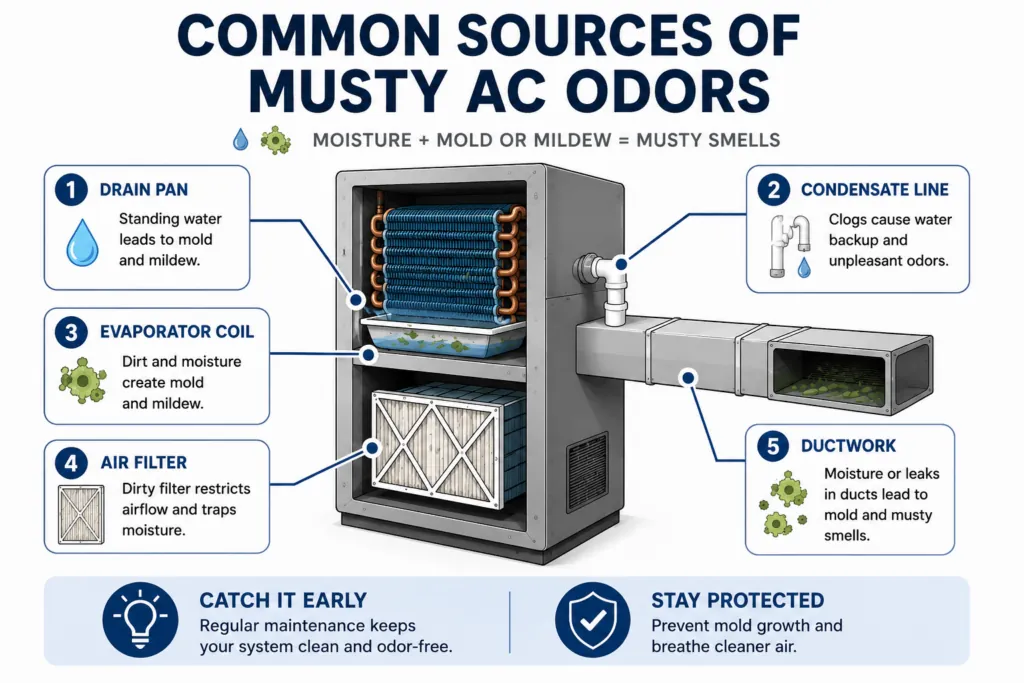
The primary reason for bad smells is the buildup of organic matter on the internal components of your HVAC system. When air passes over the evaporator coils, it cools down and creates condensation. If the drainage system fails to move this water away, it pools inside the unit. This creates a damp environment where mold and bacteria grow quickly.
Another frequent cause is the accumulation of dust and pet dander on the blower motor or inside the ductwork. As these particles get wet from high humidity, they release a musty, stale odor throughout your home.
If you smell something similar to burning plastic, it may indicate an electrical issue within the fan motor or wiring. In these cases, you should contact a professional technician immediately to avoid fire hazards. The United States Environmental Protection Agency provides detailed guidance on maintaining air quality and managing moisture problems in home cooling systems.
Replace or clean the air filters
Most units rely on a simple filter to trap dust before it hits the coils. When this filter becomes clogged, airflow drops and the unit struggles to manage moisture, which leads to odors. If you have a disposable pleated filter, check it once a month. If it looks grey or fuzzy, replace it with a new one of the same size and rating.
For washable mesh filters, remove them gently and rinse them under cool water. Let the filters air-dry completely before sliding them back into the slot. A wet filter can actually make the mold problem worse by adding extra moisture to the internal air path.
If you notice a persistent smell even after changing the filter, the issue is likely deeper inside the machine. This step isn’t for you if you can’t easily reach the filter compartment without using tools or standing on a ladder.
Clear the condensate drain line

The drain line is a small pipe that carries water away from your indoor unit. Over time, algae and sludge can block this pipe, causing water to back up and smell bad. To check for a clog, look for the drain line near your unit; if it’s full of water, you have a blockage. Use a wet-dry vacuum to suck debris out from the outside end of the pipe.
Some people pour a cup of distilled white vinegar into the drain access point to kill minor algae growth. If the drain line is completely blocked by hard debris, don’t force it. You might need a professional to clear it with specialized tools. If you aren’t comfortable working with water lines or electrical components near the unit, call a licensed HVAC technician to perform this maintenance safely.
Clean the evaporator coil
The evaporator coil is the cold metal part that chills the air. Because it stays damp, it’s a hotspot for mold. If you have clear access to the coil, you can use a no-rinse coil cleaner spray from a hardware store. Spray it evenly across the fins while the unit is off, then let it dry according to the bottle instructions.
This task is only for those who can remove the access panel without touching electrical wires or the refrigerant lines. If the coil is covered in thick, caked-on dirt, a spray won’t be enough. You should hire a professional for a deep chemical cleaning in that situation. Attempting to scrub the delicate metal fins yourself often results in bent fins, which restricts airflow and forces your compressor to work much harder.
Common mistakes to avoid
- Using heavy scented sprays inside the intake vents to hide smells, as this only adds more chemicals to the air.
- Ignoring the smell until it becomes a health issue, which can lead to costly professional duct cleaning or mold removal.
- Attempting to repair electrical components or refrigerant lines yourself, which is dangerous and usually voids your manufacturer’s warranty.
Maintaining a fresh smelling system
Stop the cycle of smells by keeping the unit dry and clean. You must balance the need for cooling with the reality of how much humidity your specific climate produces. If you live in a very humid area, you might need to check your drain line twice as often as someone in a dry climate.
| If you’re doing this | Do this instead | Why |
|---|---|---|
| Leaving the fan on “Auto” | Set the fan to “On” after cleaning | It helps dry the coils |
| Ignoring a dripping pipe | Clear the drain line | It prevents standing water |
| Using cheap thin filters | Use a high-quality pleated filter | It catches more debris |
| Waiting for a smell | Inspect filters monthly | It stops buildup early |
Related guides
- Can You Cut MDF With a Table Saw: Tips for Clean Results in 2026
- How to Use Mineral Spirits on Wood for Cleaning and Prep in 2026
- How to Remove JB Weld: Proven Removal and Cleaning Methods in 2026
Frequently asked questions
How long does it take for a musty smell to go away?
The smell should fade within 24 to 48 hours after you have thoroughly cleaned the filters and cleared the drain line. If the odor remains after two days, mold may still be present on the evaporator coil or inside the ventilation ducts. You should inspect the unit again or contact a professional if the air quality doesn’t improve after this initial maintenance.
Is it safe to run an air conditioner that smells like mold?
No, it isn’t recommended to run the unit if you suspect mold growth, as it can circulate spores throughout your home. Inhaling these particles can trigger allergies or other respiratory issues for sensitive people. Turn the system off and address the moisture source before you switch it back on to ensure the air remains clean and safe for everyone in your household.
Why does my air conditioner smell like rotten eggs?
A smell like rotten eggs often indicates a natural gas leak or a dead animal trapped in your ductwork. If you smell this, leave your home immediately and call your gas utility company to check for a leak. Don’t assume it’s just a dirty filter, as a gas leak is a serious safety risk that requires an expert to resolve quickly.
How often should I clean my ac drain line?
You should check and clear your drain line at least once every six months, ideally at the start of the cooling season. If you live in a very humid climate, check it every three months to prevent algae buildup. Staying on this schedule prevents water from backing up and damaging your home or causing the persistent moldy odors that occur when water sits stagnant.
Can a dirty filter cause a burning smell? No, a dirty filter restricts airflow, but a burning smell typically indicates an electrical fault or a failing motor component.
Yes, a very dirty or blocked filter can cause the motor to overheat, resulting in a burning plastic or metallic odor. This happens because the system can’t move enough air to keep the internal parts cool, putting extra strain on the blower. Turn the unit off immediately and replace the filter, but if the smell continues, call a technician to inspect the motor for damage.
What happens if I ignore the smell?
Ignoring the smell will likely cause mold to spread further into your ductwork and damage the internal components of your system. Over time, this leads to lower efficiency, higher energy bills, and potentially expensive professional repairs or duct replacement. Addressing the source of the odor early is the most effective way to protect your equipment and keep your indoor air quality at a healthy level.
Conclusion
Regular maintenance is the most effective way to keep your system running efficiently. By checking your filters and drain lines consistently, you protect your indoor air quality and avoid the need for costly professional interventions. If you ever feel uncertain about a step or notice strange noises alongside the odor, don’t hesitate to contact a local HVAC specialist to handle the problem safely.