
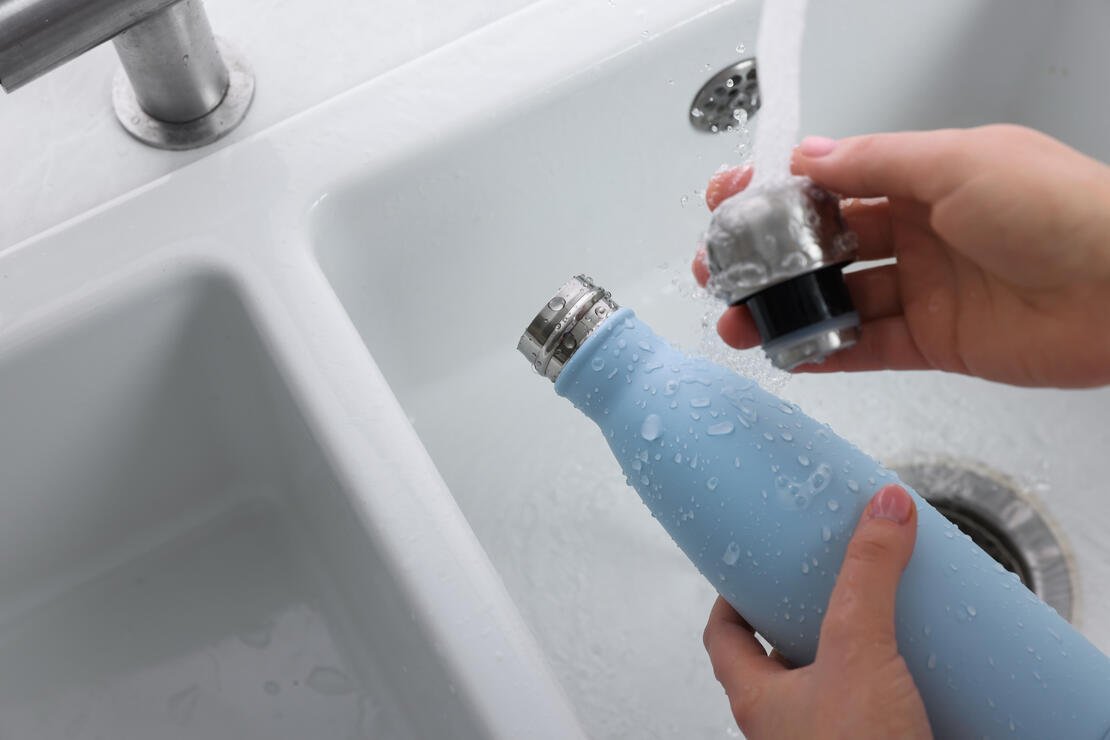
You can stop your water bottle from smelling bad by cleaning it with a mixture of warm water and mild dish soap after every single use. A water bottle smells bad because bacteria and mold thrive in the damp, dark environment inside the container. If you leave water sitting for more than 24 hours, the risk of a foul odor increases significantly.
Why your water bottle smells
The main reason odors develop is the buildup of biofilm, which is a thin layer of bacteria that sticks to the inner walls of your container. When you drink from a bottle, saliva and skin cells transfer into the water, providing food for these microbes. If you store your bottle with the cap on while it’s still damp, you create the perfect breeding ground for these germs.
Materials also play a role in how odors behave. Porous materials like certain types of plastic or rubber seals can absorb smells from liquids like sports drinks or tea. If you notice a persistent smell even after washing, the seal or the straw might be trapping residue that’s hard to reach. If you see visible dark spots inside, this is likely mold, and you should consider replacing the bottle or its parts.
Scrub with soap and warm water
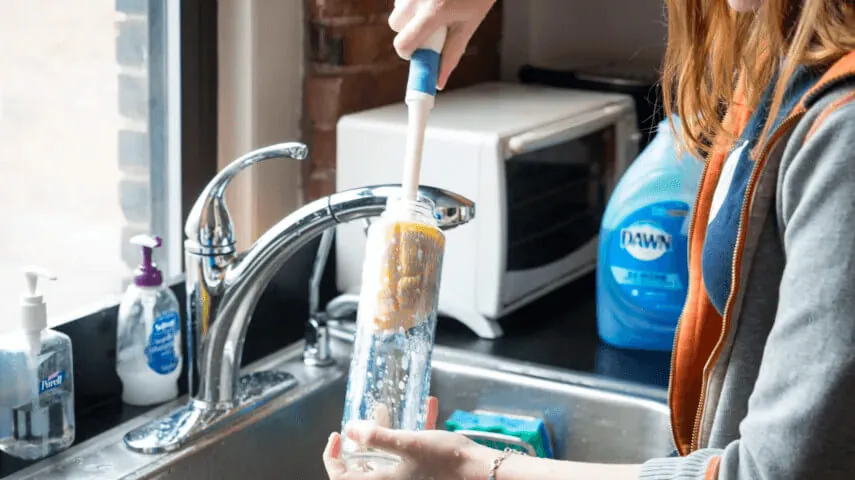
The most reliable way to maintain your bottle is a thorough manual scrub. Use a long-handled bottle brush to reach the bottom and sides where bacteria collect. Fill the bottle with warm water and a few drops of mild dish soap, then scrub the interior vigorously for at least 30 seconds.
If your bottle has a straw or a complex lid, you must disassemble these parts every time you wash them. Small gaps in the cap are common places for gunk to hide. If the bottle is dishwasher safe, place the components on the top rack, but ensure they’re spaced out to allow for proper water flow.
If you’re unsure if your bottle is dishwasher safe, check the manufacturer’s engraving on the base. If you can’t reach the bottom properly, you must use a brush rather than just rinsing, as rinsing won’t remove the sticky biofilm.
Use vinegar for deep cleaning
When soap and water aren’t enough, white vinegar acts as a natural disinfectant that breaks down mineral deposits and stubborn odors. Fill the container with a mixture of one part white vinegar and three parts warm water. Let this solution sit inside the bottle for at least 60 minutes to neutralize the smell.
After the hour has passed, pour out the mixture and rinse the bottle thoroughly with clean water until the vinegar smell disappears. If you still detect a faint scent, repeat the process. This method is safe for most stainless steel and hard plastic bottles.
However, avoid using vinegar on bottles with specific rubber coatings that might degrade over time. If your bottle has a strong metallic taste after cleaning, it’s usually a sign that you need to rinse it for a longer period to remove all vinegar residue.
Utilize baking soda for tough cases
Baking soda is an excellent choice for neutralizing odors without using harsh chemicals. Mix two tablespoons of baking soda with warm water until the bottle is mostly full, then let it sit overnight. This is worth the extra time if your bottle has held coffee or protein shakes, which are notorious for leaving behind lingering scents.
If you find that the smell persists after an overnight soak, it’s likely that the odor has become embedded in the silicone gaskets or seals. You can remove these seals carefully with a butter knife and soak them in a separate bowl of baking soda and water.
If you damage the seal while removing it, the bottle may leak, so proceed with caution. This step is only necessary for deep, stubborn smells. If you don’t have the time for an overnight soak, a paste of baking soda and water scrubbed into the interior can also help lift away surface-level odors.
Mistakes that make odors worse
Storing the bottle with the cap closed while the inside is still wet traps moisture, creating a greenhouse for rapid bacterial growth. If you can’t air-dry the vessel completely, leave the cap off for at least four hours before sealing it.
Using abrasive scrubbers creates microscopic grooves in plastic surfaces. Bacteria thrive in these hidden crevices, making future odors nearly impossible to eliminate. Switch to a soft silicone brush or a simple cloth to preserve the integrity of the interior lining.
Adding sugary drinks or milk leaves organic residue that acts as a potent fuel for microbes. If you must use these liquids, rinse the bottle with hot, soapy water within thirty minutes to prevent biofilm buildup.
Ignoring the straw or mouthpiece is a common oversight. These parts harbor the most bacteria from your saliva. Scrub them daily with a dedicated pipe cleaner to stop odors at the source.
Keeping your bottle fresh
If you’re doing this, you can stop the cycle of bad smells. The key is to treat the bottle as a dish that needs daily maintenance rather than just an accessory.
| If you’re doing this | Do this instead | Why |
|---|---|---|
| Leaving water in overnight | Empty it every evening | Prevents biofilm buildup |
| Rinsing with only water | Use soap and a brush | Removes sticky bacteria |
| Storing with the cap on | Store with the cap off | Allows the inside to dry |
| Cleaning once a week | Clean after every use | Stops odors before they start |
Most users fail by ignoring the silicone gasket inside the lid. This ring traps moisture and creates a breeding ground for mold that soap alone can’t reach. If your bottle has a rubber seal, pry it out with a small tool once a week to scrub behind it.
If you notice a persistent metallic or sour scent, soak the bottle in a solution of two parts water to one part white vinegar for thirty minutes. This acidity breaks down mineral deposits that harbor bacteria. If the smell remains after a deep soak, the plastic or silicone has likely become porous and requires replacement.
Related guides
- How to Seal Burnt Wood: Step-by-Step Guide for a Clean Finish in 2026
- How to Use Mineral Spirits on Wood for Cleaning and Prep in 2026
- How to Clean Polyurethane Brush: The Best Solvent Methods in 2026
Frequently asked questions
Can I use bleach to clean a smelly water bottle?
No, you should avoid using bleach because it’s difficult to rinse away completely and can damage the material of your bottle. If you use bleach, you risk ingesting harmful chemical residues. Stick to mild dish soap or a vinegar solution, as these are safer for items you drink from daily. If you feel you must sanitize, use only a very diluted solution and rinse thoroughly.
How often should I deep clean my water bottle?
You should perform a deep clean with vinegar or baking soda at least once a week if you use the bottle every day. This schedule prevents the buildup of residue that standard soap might miss. If you only use the bottle for plain water, you might get away with every two weeks, but daily washing remains mandatory for safety.
Is it safe to drink from a bottle that smells?
No, a bad smell usually indicates that bacteria or mold are present, which can make you sick. While not every smell is toxic, the presence of biofilm is a clear sign that the bottle is no longer sanitary. If the odor doesn’t go away after a deep cleaning, it’s time to stop using the bottle to protect your health.
Why does my plastic water bottle keep smelling?
Plastic is a porous material that can absorb odors from the liquids you put inside it over time. Once the plastic is scratched or degraded, it becomes nearly impossible to remove the bacteria trapped in the surface. If your plastic bottle smells even after a thorough wash, the material has likely reached the end of its useful life and should be replaced.
How long does a water bottle stay clean?
A water bottle stays clean only until the next time you drink from it, as your mouth introduces new bacteria immediately. This is why you must wash it at the end of every day. If you leave it sitting for more than 24 hours without washing, the bacterial count will rise to levels that can cause an unpleasant taste or smell.
Conclusion
Keeping your bottle fresh isn’t just about hygiene; it’s about enjoying every sip you take throughout the day. If you’ve noticed a persistent scent that won’t go away, it’s time to replace the rubber seal or the entire container. You’ll feel much better knowing your hydration is clean and truly refreshing.