
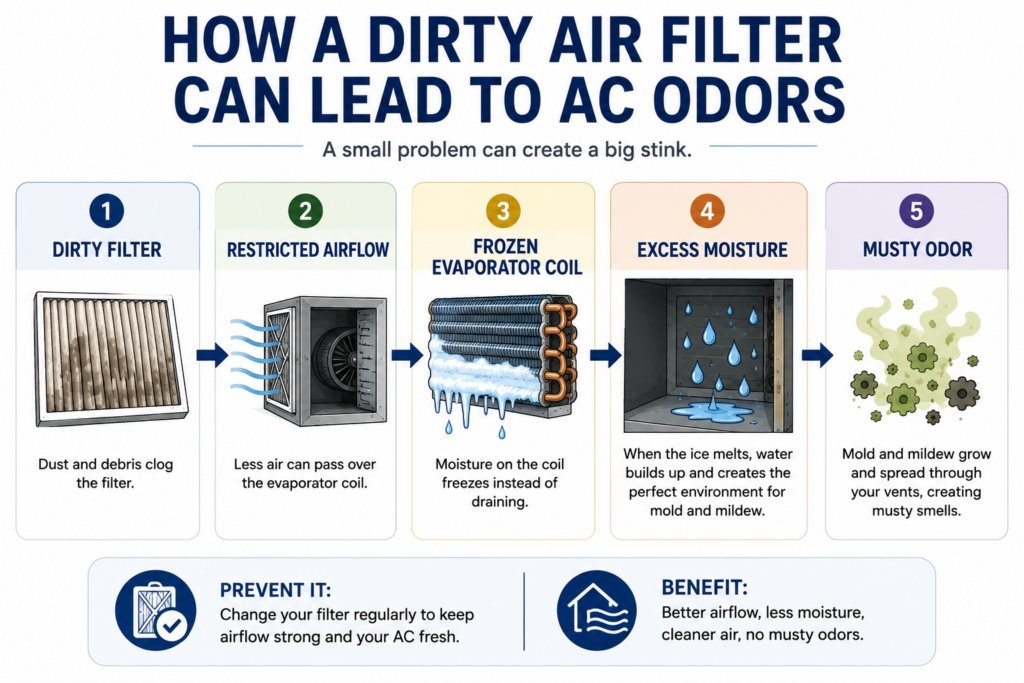
You fix an air conditioner when the ac smells musty by cleaning the evaporator coil and clearing the condensate drain line. This odor usually happens because moisture collects in the unit and stays trapped, which allows mold or mildew to grow on the damp internal surfaces.
Why Your AC Smells Musty
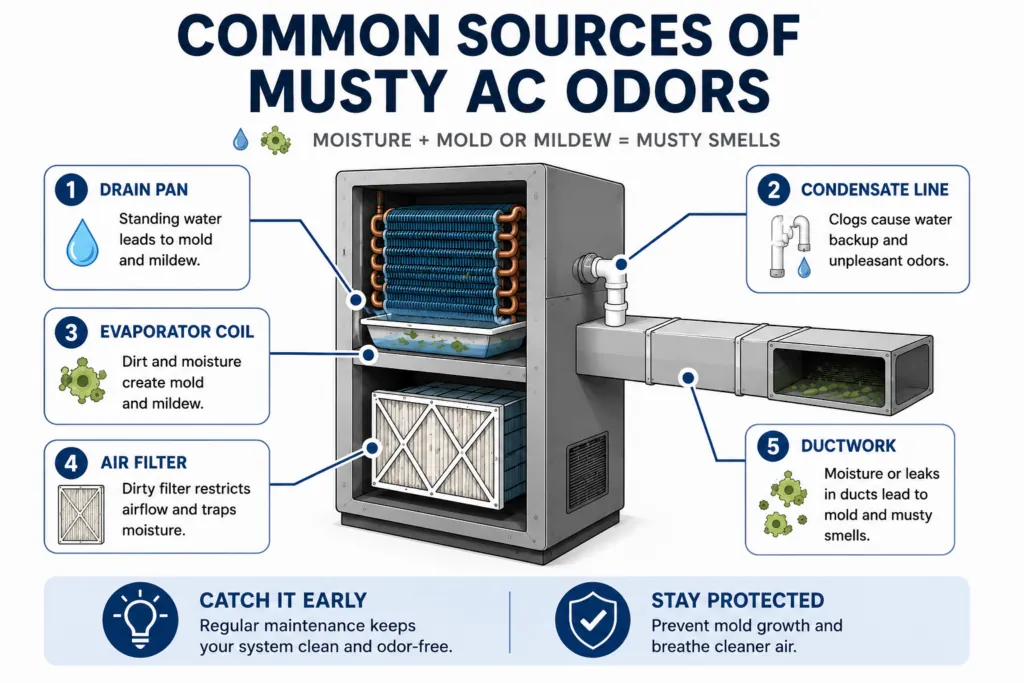
The primary reason for a bad smell is the accumulation of biological growth inside the indoor air handler. When your system runs, the evaporator coils cool the warm air from your home. This process pulls moisture out of the air, which should drip into a pan and drain away through a small pipe.
If this pipe gets blocked by dirt or algae, the water sits in the drain pan. This standing water creates a perfect environment for mold and bacteria to multiply.
Another factor is the buildup of dust and debris on the coils themselves. Over time, particles from your home filter into the system and stick to the wet metal. When the air passes over these dirty coils, it picks up the scent of the organic matter. If you notice the smell only when the fan first starts, it’s often a sign that the growth has had time to settle while the unit was idle.
Clean the Evaporator Coils
You can refresh your system by cleaning the evaporator coils, which are typically found behind the access panel of your indoor unit. Before you start, turn off the power at the breaker to ensure your safety. Use a no-rinse coil cleaner specifically made for air conditioners to spray the coils thoroughly. This foam helps lift away the trapped dirt and prevents new mold from forming.
Once the foam has worked for about 10 minutes, use a soft brush to gently remove any remaining debris. If the coils are severely bent or if the unit is located in a cramped attic space, it’s safer to hire a licensed HVAC technician.
They have the specialized tools to reach deep into the system without damaging the delicate metal fins. Always check your Environmental Protection Agency guidance on air duct cleaning to understand when professional maintenance is necessary for your health and safety.
Clear the Condensate Drain Line
If the drain line is clogged, the water will back up and create a musty environment inside the cabinet. Locate the PVC pipe exiting the indoor unit and look for a small capped opening near the system. This is the drain access point. Remove the cap and use a wet-dry vacuum to suck out any sludge or blockages from the line. If you don’t have a vacuum, you can flush the line with a cup of distilled white vinegar.
Pour the liquid slowly into the access point and let it sit for 30 minutes before flushing it with water. This kills the algae and helps the water flow freely again. If the water doesn’t drain after this step, the blockage might be further down the pipe, which may require a professional plumber to clear.
Replace the Air Filter
A dirty filter restricts airflow and forces the unit to work harder, which keeps the coils colder for longer and increases condensation. If your filter is gray or clogged with dust, it’s time for a replacement. Frequency depends on your specific usage, so consult your owner’s manual for guidance.
When selecting a new filter, look for the Minimum Efficiency Reporting Value (MERV) rating on the packaging. For most homes, a rating between 8 and 11 is sufficient to trap common allergens without putting too much strain on your blower motor. If you install a filter that’s too thick or restrictive, you risk freezing the coils, which will only lead to more moisture and more odors.
Common Myths About Odors
- Spraying air fresheners into the vents: This only masks the smell for a short time and does nothing to kill the mold or bacteria causing the issue.
- Running the fan on high speed: While this might circulate air, it won’t dry out a clogged drain line or clean the surface of the dirty coils.
- Using bleach in the drain line: Harsh chemicals can damage the plastic pipes or corrode metal parts, so stick to vinegar or professional cleaners instead.
- Ignoring the smell if it goes away: Mold inside an air conditioner doesn’t vanish on its own; it will continue to grow as long as moisture is present.
Stop Future Musty Odors

To keep your system running clean, compare your current habits with these maintenance steps.
| If you’re doing this | Do this instead | Why |
|---|---|---|
| Changing filters once a year | Change every 3 months | Prevents dust buildup on coils |
| Ignoring the drain line | Flush with vinegar twice a year | Stops mold growth in standing water |
| Keeping vents blocked | Clear all furniture from vents | Improves airflow and reduces moisture |
| Leaving the unit off for weeks | Run the fan for 1 hour after use | Dries out the internal components |
Most homeowners mistakenly assume that a filter only needs changing when it looks visibly gray. In reality, a filter that looks dirty has already restricted airflow enough to force the blower motor to work harder, which creates the heat that encourages mold spores to bloom. If your home humidity consistently exceeds 60 percent, you must move to a monthly filter replacement schedule.
If you notice a musty smell immediately upon startup, the drain pan is likely stagnant. Pour one cup of distilled white vinegar into the access port, but never use bleach. Bleach can damage the drain pan or corrode metal components, but it doesn’t cause refrigerant leaks in the evaporator coil. If the odor persists after cleaning, the mold has likely colonized the blower wheel itself, requiring a professional deep clean.
Related guides
- How to Clean Polyurethane Brush: The Best Solvent Methods in 2026
- How to Seal Burnt Wood: Step-by-Step Guide for a Clean Finish in 2026
- How to Clean Acrylic Paint Brushes: A Simple Step-by-Step Guide in 2026
Frequently asked questions
How often should I clean my air conditioner coils?
You should clean the evaporator coils periodically before the cooling season starts. Frequency depends on your specific usage and environment, so consult your owner’s manual for guidance to ensure no dust has settled on the wet surfaces.
Is it safe to use bleach to clean the drain line?
No, you should avoid using bleach because it can damage the PVC pipe joints and corrode the metal parts of your air conditioner. Distilled white vinegar is a safer, more effective choice for killing algae and clearing out the line without the risk of causing leaks or equipment failure.
How long does a standard air filter last?
Most standard filters require replacement when they appear gray or blocked. Frequency depends on your specific usage and environment, so consult your owner’s manual for guidance rather than following a set schedule.
Can mold in the air conditioner make me sick?
Yes, mold spores released into the air can irritate your nose, throat, and lungs, especially if you have asthma or allergies. If you notice a persistent musty smell or see visible mold on the coils, you should clean the unit immediately to ensure the air quality in your home remains safe.
What happens if I don’t clear the drain line?
If you don’t clear the drain line, the water will eventually overflow the drain pan and spill into your walls or ceilings. This can cause significant water damage and create an environment where mold grows rapidly throughout your home, leading to expensive repairs that go beyond simple air conditioner maintenance.
How do I know if the smell is coming from the ducts?
You can test this by turning the fan to the “on” position without the cooling function running. If the musty smell starts immediately, the issue is likely inside the blower or the ducts; if the smell only starts when the cooling kicks in, the problem is on the evaporator coils or in the drain pan.
Conclusion
If the damp scent persists after you’ve finished, it’s time to call a professional technician for a deeper inspection. They’ll check for hidden leaks or damaged insulation that you can’t easily reach. Don’t wait too long, as breathing in mold spores isn’t good for your family’s health in the long run.