

When you stand over your stove and notice that your cooking oil smells bad, it’s usually a clear signal that the chemical composition of the liquid has changed. Whether the scent is metallic, sour, or reminiscent of old crayons, your kitchen environment is reacting to the breakdown of fats. Understanding why your cooking oil smells bad is the first step toward maintaining a safe and flavorful kitchen, as rancid oils can negatively impact the taste of your meals and may contain compounds that are less than ideal for consumption.
Key Takeaways

- Oxidation is the primary cause of unpleasant odors in stored or used oils.
- Heat, light, and oxygen are the three main enemies of oil shelf life.
- Rancid oil often develops a waxy or pungent “off” scent compared to fresh oil.
- Proper storage involves airtight containers kept in cool, dark cupboards.
- Oil that has been used for deep frying should be filtered and refrigerated.
Is My Cooking Oil Rancid?
The most common reason for an unpleasant aroma is oxidative rancidity. This happens when the fatty acid chains in the oil break down due to exposure to environmental factors. Unlike spoilage in fresh produce, which happens quickly, rancidity is a gradual process.
If you open a bottle and catch a sharp, metallic, or paint-like odor, the oil has likely passed its peak. Fresh oil should have a neutral scent or a subtle aroma characteristic of its source, such as the mild nuttiness of high-quality olive oil.
Identifying Causes of Bad Cooking Oil Smells
Several factors contribute to the degradation of fats in your pantry. When you investigate why your cooking oil smells bad, look at your storage habits first.
- Heat exposure: Keeping oil near the stove or oven accelerates chemical breakdown.
- Light sensitivity: Clear glass bottles allow UV rays to penetrate and damage the oil.
- Oxygen contact: Leaving the cap loose allows air to circulate inside the bottle.
- Contamination: Using a dirty spoon or pouring used oil back into a fresh bottle introduces food particles.
| Cause | Effect on Oil | Prevention Strategy |
|---|---|---|
| Heat | Rapid oxidation | Store in a cool, dark pantry |
| Light | Molecular degradation | Use dark glass or opaque tins |
| Air | Rancidity | Keep caps sealed tightly |
| Particles | Bacterial growth | Filter used oils before storage |
Proper Storage for Long-Term Freshness
To keep your oils smelling neutral and fresh, you must control their environment. High-quality oils like extra virgin olive oil or avocado oil are particularly sensitive. Always store your bottles in a cool dark place, such as a lower kitchen cabinet away from the heat of your oven, dishwasher, or refrigerator vents.
If you buy oil in bulk, consider decanting a smaller amount into a secondary container for daily use to minimize the number of times you open the large bottle.
When to Discard Used Oil
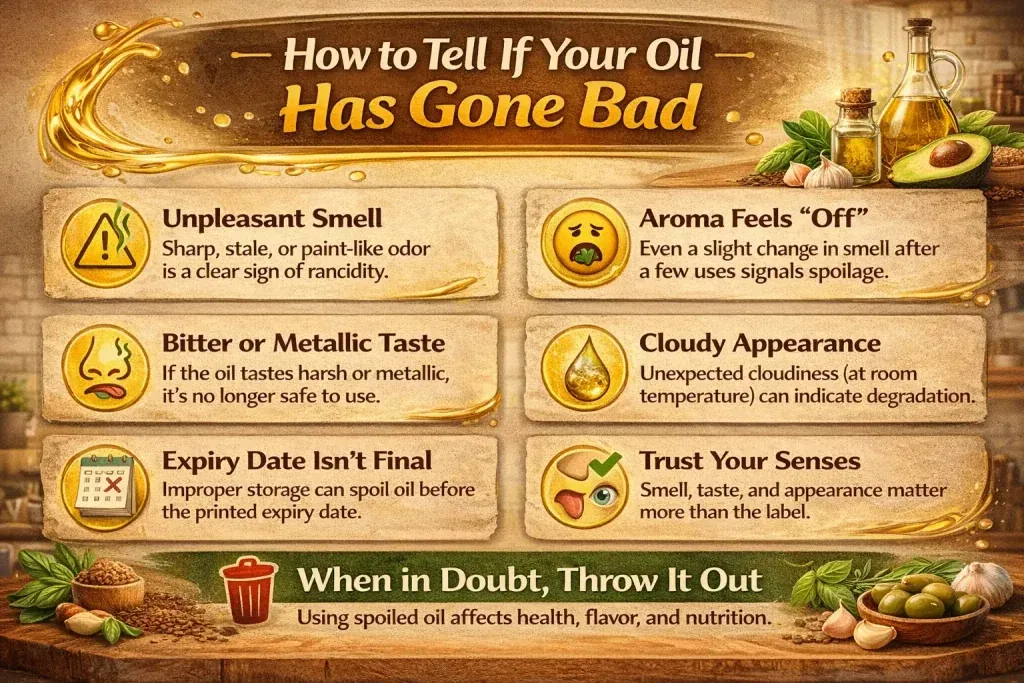
If you have been deep frying, the oil will naturally pick up the scent of the foods cooked in it. However, if the oil itself smells burnt or acrid even before you start heating it, it’s time to discard it. According to the USDA Food Safety and Inspection Service, oils that show signs of spoilage, such as an off odor or flavor, should be thrown away rather than consumed.
Warning: Never pour used cooking oil down the kitchen sink, as it can solidify in your pipes and cause significant plumbing blockages.
Comparing Different Cooking Oils
Not all fats have the same shelf life. Some are naturally more stable than others due to their chemical structure.
| Oil Type | Stability Level | Typical Shelf Life |
|---|---|---|
| Refined Coconut Oil | Very High | 18–24 Months |
| Grapeseed Oil | Low | 6–9 Months |
| Extra Virgin Olive Oil | Moderate | 12–18 Months |
| Canola Oil | Moderate | 12–18 Months |
Signs of Chemical Breakdown
When oil is heated past its smoke point, it begins to break down into various chemical compounds, including acrolein, which gives off a harsh, stinging odor. If you notice your oil smoking in the pan, remove it from the heat immediately. If the smell persists after the oil has cooled, it has likely undergone permanent chemical changes that will impart a bitter taste to your food.
Managing Used Frying Oil
If you choose to reuse oil, you must treat it with care to prevent it from turning rancid. After frying, allow the oil to cool completely, then strain it through a fine-mesh sieve or cheesecloth to remove any leftover food bits. Store this filtered oil in a clean, airtight container in the refrigerator. Even with careful filtering, the oil will eventually lose its quality. If it becomes dark, thick, or develops a noticeable odor, it’s time to dispose of it.
Troubleshooting Common Oil Issues

If you suspect your oil is turning, perform a quick sensory check. Pour a small amount into a clean glass and swirl it. Does it have a rancid smell? Does the oil appear cloudy or thicker than usual? These are classic signs that the fats have oxidized. If the oil is clear and smells neutral, it’s likely still safe to use. If you’re ever in doubt, the safest course of action is to discard it.
Related guides
- Dog Smells Like Fish From Back End: Causes and Solutions
- Can You Use Oil Based Primer Over Latex Paint? The Fix in 2026
Frequently Asked Questions
Does cold temperature ruin cooking oil?
Generally, no. Storing oil in the refrigerator can extend its shelf life, though some oils like olive oil may become cloudy or solidify. This is a normal physical reaction and doesn’t mean the oil is spoiled. Simply let the bottle sit at room temperature for a few minutes, and it will return to its liquid state without losing quality or flavor.
Can I fix oil that smells bad?
No. Once an oil has developed a rancid or metallic odor, the chemical process of oxidation has already occurred. There’s no way to reverse this breakdown, and heating or filtering won’t remove the off-putting taste or smell. Attempting to use rancid oil will likely ruin the flavor profile of any dish you’re preparing, so it’s best to discard it.
How do I dispose of old oil?
The best way to dispose of oil is to pour it into a sealable container, such as an empty jar or a plastic jug, and throw it in the trash. For larger amounts of frying oil, many local municipalities offer recycling programs where oil is collected and converted into biodiesel. Check your city’s waste management website to see if they offer oil collection services near you.
Does the bottle material matter?
Yes, it matters significantly. Clear plastic bottles are porous and allow oxygen to slowly permeate the oil, while clear glass offers no protection against light. For the best results, look for oils sold in dark, opaque glass bottles or metal tins. These materials provide a superior barrier against light and air, which are the two primary drivers of oil rancidity in a home kitchen.
Is it safe to eat rancid oil?
While a small amount of rancid oil is unlikely to cause immediate illness, it isn’t recommended for consumption. Rancid oils contain free radicals and other oxidation products that aren’t beneficial for the body. Furthermore, the unpleasant flavor and aroma can make your food unpalatable. If your oil smells bad, it’s a clear indicator that the quality has degraded to a point where it should be replaced.
Conclusion
To keep your kitchen running smoothly, start by auditing your pantry for any oils that have been open for more than six months. If you find a bottle that smells “off,” dispose of it properly in the trash and replace it with a smaller, light-protected container to ensure you’re always cooking with the freshest ingredients possible.