
A bathroom smells like urine when bacteria break down organic matter in drains, around the base of the toilet, or within porous surfaces like grout. This problem often comes from hidden spills or old seals that no longer keep sewer gases out of the room. You can fix most of these issues by cleaning surfaces thoroughly, checking the wax ring for leaks, and ensuring the P-trap in your floor drain remains full of water.
Why your bathroom smells like urine
The following table summarizes common sources of odors and how to identify them. If you can’t find the source after these checks, the issue may be inside the wall or under the floor.
| Source | Why it smells | Example |
|---|---|---|
| Toilet base | Failed wax ring | Water pooling on tile |
| Floor drain | Dry P-trap | Gurgling sound in pipes |
| Grout | Absorbed urine | Discolored porous joints |
| Sink overflow | Biofilm buildup | Dark slime in holes |
| Ventilation | Backdrafting air | Dust-clogged exhaust fan |
Toilet base seals
A toilet that rocks or shows water around the base usually has a failed wax ring. This seal sits between the toilet outlet and the sewer pipe to prevent waste gases from entering your home. If the seal breaks, sewer gas escapes every time the toilet is flushed.
- Check for movement by gently pushing the toilet side-to-side; if it shifts, the wax ring is likely compromised.
- Look for moisture or dark stains on the floor tiles immediately surrounding the base.
- Verify that the flange bolts are tightened, but don’t overtighten them, as this can crack the porcelain.
- Replace the wax ring if you see signs of leakage, as it’s a single-use seal that can’t be reused.
If you find water leaking from under the base, you must remove the toilet to replace the ring. If you aren’t comfortable lifting the toilet, call a licensed plumber to handle the reset.
Dry floor drain traps
A floor drain in a laundry area or bathroom relies on a P-trap to block sewer gases. This trap is a curved pipe section that must stay filled with water to act as a physical barrier. If the water evaporates during dry weather, the sewer air flows directly into the room.
- Pour 1 quart of water into the drain to refill the trap and create the air seal.
- Check the drain cover for debris that might be trapping odors or hair near the opening.
- Install a trap primer or a waterless trap seal if the drain is in a rarely used area where water evaporates quickly.
- Inspect the rubber gasket on the drain cover to ensure it fits tightly against the floor surface.
This assumes the drain is connected to a standard sewer line; if you have a septic system, verify the vent pipes are clear.
Porous grout and tile
Urine can soak into porous grout lines, especially if the sealant has worn away over time. Once the liquid penetrates the grout, simple surface mopping won’t remove the bacteria causing the smell. You need to use an enzymatic cleaner to break down the uric acid crystals hidden inside the porous material.
- Apply an enzyme-based cleaner to the floor and let it sit for 10 minutes to penetrate the grout.
- Scrub the area with a stiff nylon brush to lift trapped residue from the joints.
- Rinse the floor with clean water and dry it completely to prevent mold growth in damp areas.
- Seal the grout once it’s clean and dry to prevent future absorption of liquids.
This assumes the grout is cement-based; if you have epoxy grout, it won’t absorb liquids and the odor is likely coming from another source.
Sink overflow channels
The small hole near the top of your bathroom sink acts as an overflow drain, but it often collects hair and soap scum. This organic matter decays over time and creates a persistent smell that mimics urine. Because this area is dark and damp, it provides an ideal home for odor-causing bacteria.
- Pour a mixture of mild dish soap and warm water into the overflow hole, or use a specialized enzymatic drain cleaner.
- Flush the channel with 2 quarts of hot water after the mixture stops bubbling.
- Use a small, flexible bottle brush to reach inside the overflow if you see visible buildup.
- Avoid using harsh chemical drain cleaners, as these can damage the finish of your sink or the piping.
If the smell persists after cleaning, the issue may involve the main sink trap beneath the cabinet.
Other hidden odor sources
- Exhaust fans: Dust buildup inside the fan housing traps moisture and bacteria, creating a stale smell that spreads when the fan runs. Clean the grill and the blades with a vacuum or damp cloth.
- Cabinet interiors: Spilled cleaning products or hidden leaks under the vanity can create damp, musty odors that are easy to mistake for urine. Remove all items and check for damp wood.
- Wall cavities: If you smell odors coming from behind the wall, you might have a hidden plumbing leak or a vent pipe issue. This requires a professional inspection to avoid water damage.
How to choose the right fix
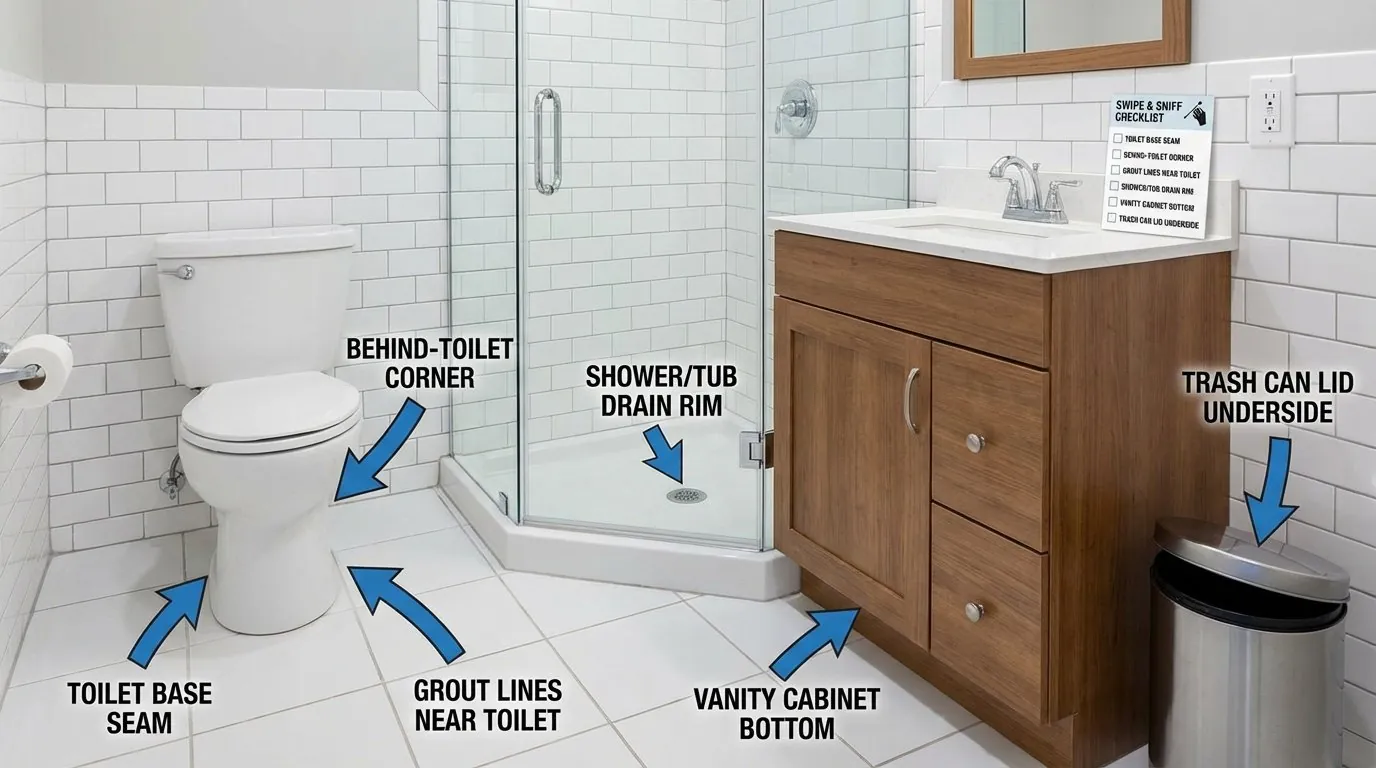
Deciding which fix to try first depends on where the smell is strongest. If the odor is near the toilet base, inspect the floor for moisture and check the seal. If the smell is strongest near a floor drain, simply adding water to the trap is the most likely solution.
If the smell is generalized throughout the room, clean the grout lines with an enzyme cleaner and check the sink overflow. These actions are independent; you can perform the cleaning steps in any order, but a broken wax ring or a dry drain trap requires specific attention.
Related guides
- Can You Use Oil Based Primer Over Latex Paint? The Fix in 2026
- How to Fix a Hole in a Gun Stock: Step-by-Step Repair Guide in 2026
- Dog Smells Like Fish From Back End: Causes and Solutions
Frequently asked questions
Can a blocked vent pipe cause bathroom smells?
Yes, a blocked vent pipe prevents sewer gases from escaping through the roof, forcing them back into the bathroom drains. If your drains gurgle or smell like sewage, the vent stack on your roof may be obstructed by leaves or nests, which requires a professional to clear safely.
Is it safe to use bleach on urine smells?
No, bleach isn’t effective for removing urine odors because it doesn’t break down uric acid crystals in porous grout. You should use an enzyme-based cleaner instead, as these products contain bacteria that digest the organic matter rather than just masking the scent with chemicals.
How long does a wax ring last?
A wax ring typically lasts for a long duration if the toilet is installed correctly and doesn’t rock.
What happens if I ignore a bathroom smell?
Ignoring the smell often leads to long-term issues like mold growth, wood rot in the subfloor, or persistent sewer gas exposure. Once the subfloor or drywall becomes saturated with moisture or bacteria, the cost of repair increases significantly compared to fixing a simple seal or drain issue.
Does it matter if I have a septic system?
Yes, septic systems rely on proper ventilation to function, and odors inside the house often indicate a blockage in the vent or a full tank. If you have a septic system and notice strong odors, check the level of the tank or call a professional to inspect the baffle.
Why does the smell get worse in the summer?
Heat increases the rate of bacterial growth and causes sewer gases to expand, which makes odors more noticeable in warm weather. If you notice a spike in smell during hot months, focus on keeping your P-traps full, as evaporation happens faster when the air is warm and dry.
Conclusion
Start by cleaning the floor and sink overflow with an enzyme-based cleaner to rule out surface bacteria. If the smell remains, check the toilet for stability and the floor drain for water. If you notice water damage on the ceiling below the bathroom or if the toilet continues to rock after tightening, contact a plumber to prevent structural damage to your floor.