
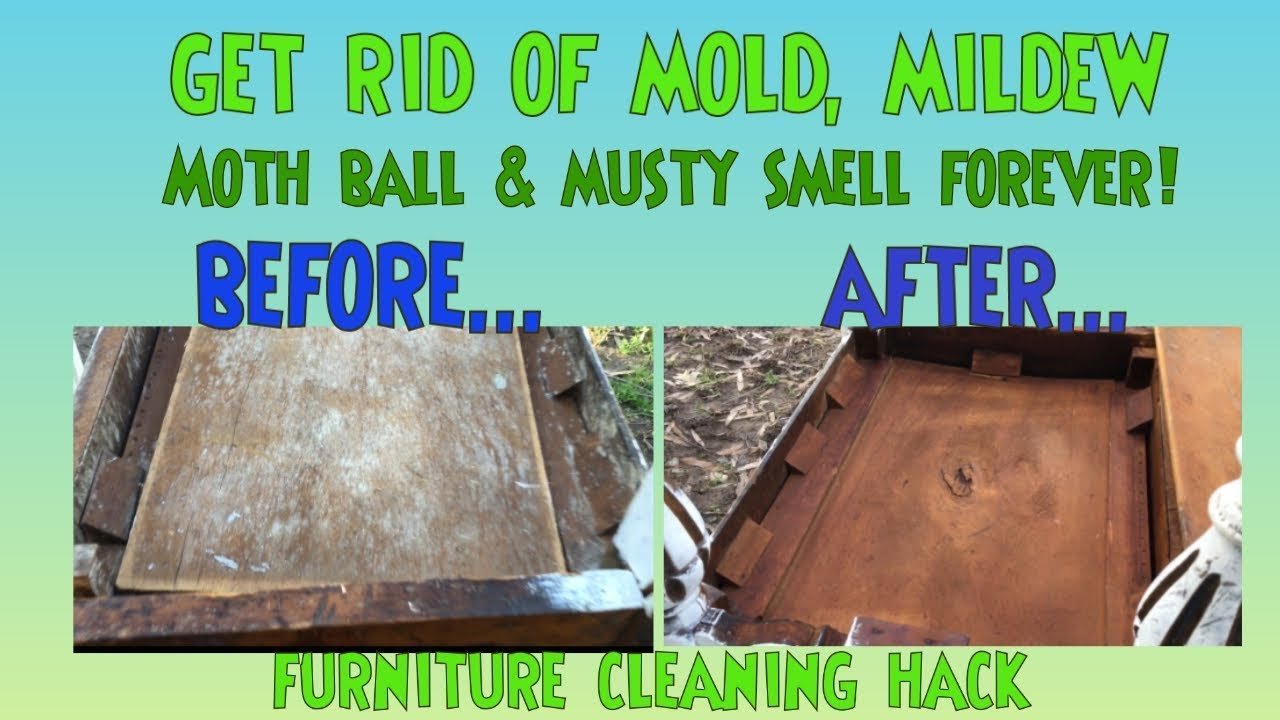
You can safely clean mold from furniture by using a mixture of white vinegar and water to kill the spores and wipe away the growth. This job usually takes about two hours of active work, plus one full day for the piece to air-dry completely. It’s a medium-difficulty task because it requires careful handling to avoid damaging the wood finish. Before you begin, you must have a well-ventilated space, as breathing in mold spores is a significant health risk. Check your furniture’s finish or manual first to see if it can handle liquid cleaners.
What you need to remove mold
| Item | How much | Why it’s needed | A substitute |
|---|---|---|---|
| White vinegar | 1 cup | Kills mold spores | None — don’t swap this |
| Distilled water | 1 cup | Dilutes the vinegar | Tap water |
| Soft cloth | 2 pieces | Wiping and drying | Old cotton t-shirt |
| Scrub brush | 1 medium | Removes stubborn spots | Soft toothbrush |
| Rubber gloves | 1 pair | Protects your skin | Disposable latex gloves |
| Face mask | 1 unit | Prevents spore inhalation | N95 respirator |
Use high-acidity white vinegar with at least 5% acetic acid for the best results. If the mold covers an area larger than ten square feet, stop your work and hire a professional. You risk spreading spores through your ventilation system if you attempt a large-scale cleanup alone.
Always use a fresh cloth for the final wipe to ensure you aren’t reintroducing spores to the surface. If you see mold growing on porous materials like drywall or ceiling tiles, don’t scrub them. These items must be discarded entirely, as the roots penetrate too deeply for surface cleaning to be effective.
When choosing a mask, verify the N95 rating on the packaging. A standard surgical mask won’t filter out microscopic mold spores and offers no real protection. If you notice a persistent musty odor after cleaning, the mold is likely still active behind the wall or under the flooring. In that case, professional moisture testing is required to find the hidden source of the growth.
Preparation before cleaning
Move furniture to an outdoor space or a room with open windows to ensure constant airflow. If you can’t move the piece, seal off the room with plastic sheeting and tape to prevent spores from migrating to your HVAC system.
Wear long sleeves, heavy-duty rubber gloves, and an N95 mask. Exposure to airborne spores can trigger severe respiratory reactions, especially if you have existing allergies or asthma.
Vacuum the entire surface with a HEPA-filter vacuum before applying any liquid. Standard vacuums often exhaust spores back into the air, which can cause the mold to spread to nearby surfaces.
Clear the surrounding area of all fabrics, rugs, and books. Mold spores are microscopic and settle easily into porous materials, turning a contained problem into a room-wide infestation.
Press firmly on the wood with a screwdriver. If the wood feels soft, spongy, or crumbles under light pressure, the structural integrity is compromised. In this case, the mold has reached the core, and the piece should be discarded rather than cleaned.
Steps to remove mold from wood furniture
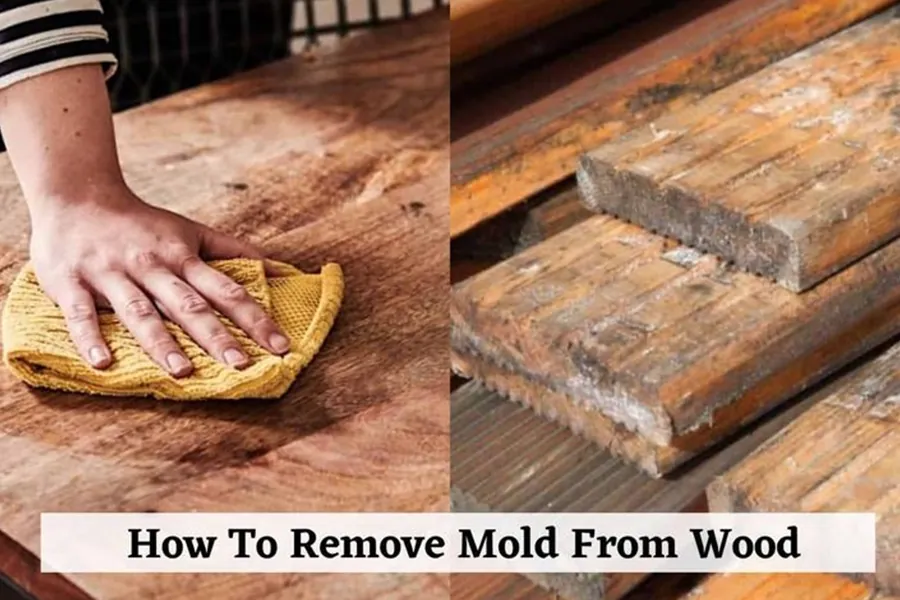
- Mix one cup of white vinegar with one cup of distilled water in a spray bottle or a small plastic bowl.
- Put on your protective mask and gloves before you touch the affected area to ensure you don’t inhale or transfer any spores.
- Spray the vinegar solution lightly onto the moldy surface, but don’t soak the wood, as excess moisture can cause warping or swelling.
- Let the solution sit on the mold for a few minutes to allow it to penetrate the surface.
- Scrub the area gently with your brush using small, circular motions to lift the mold without scratching the finish or the wood surface.
- Wipe away the loosened mold and the vinegar solution with a clean, damp cloth, turning the cloth often to avoid spreading the grime.
- Use a second dry cloth to absorb any remaining moisture from the wood, ensuring the surface feels completely dry to the touch.
- Place the furniture in a sunny, breezy spot for at least 24 hours to ensure the wood dries out entirely through the grain.
Identifying successful removal
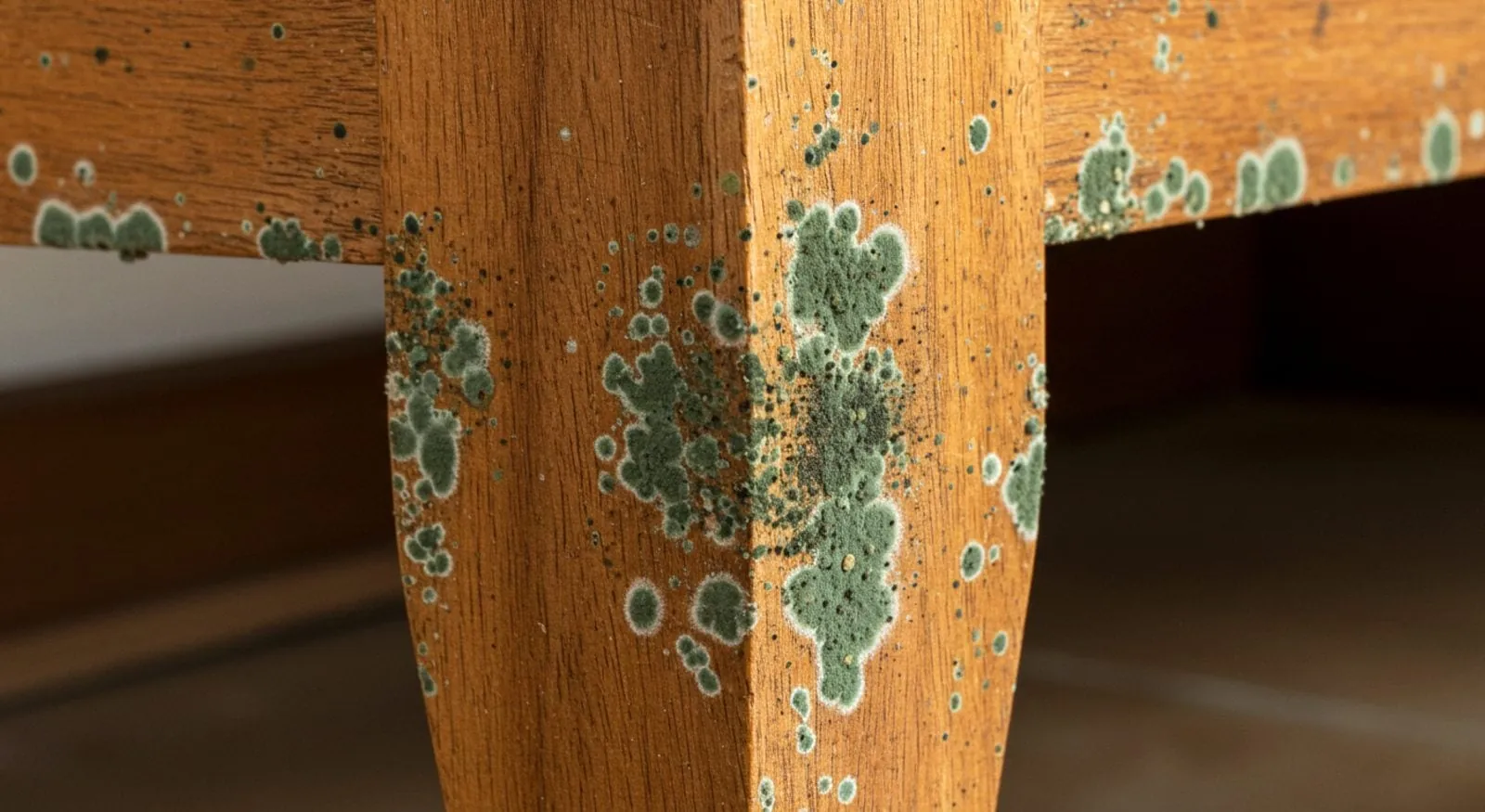
You’ll know the mold is gone when the wood surface is clear of any fuzzy, dark, or discolored patches. The wood should look clean and smell slightly like vinegar, which will fade within a few hours as it airs out.
If you still see dark spots or feel a fuzzy texture after the wood has dried for 24 hours, the mold has likely gone deeper into the fibers. In this case, you must repeat the cleaning process once more, ensuring you allow the wood to dry fully between applications.
Most people make the mistake of scrubbing while the wood is still damp, which forces spores deeper into the grain. If the stains remain after two attempts, they’re likely permanent discolorations in the finish rather than active mold.
Check for active growth by pressing a piece of clear adhesive tape to the surface. If the tape pulls up fibers or debris, the infestation remains. If you notice a persistent musty smell that doesn’t go away after drying, consult a professional furniture restorer. They can determine if the rot has compromised the structural integrity of the wood.
Troubleshooting common issues
| What happened | Why | What to do |
|---|---|---|
| Wood looks dull | Vinegar stripped wax | Apply furniture polish |
| Mold returns quickly | High room humidity | Use a dehumidifier |
| Wood feels rough | Raised wood grain | Sand lightly after drying |
| Stains remain | Deep wood staining | Paint or refinish wood |
| Strong vinegar smell | Too much liquid | Wipe with damp cloth |
Switch to a pH-neutral wood cleaner if the grain appears gray or chalky.
When sanding raised grain, use 220-grit sandpaper. If you use anything coarser, you risk scratching the underlying wood fibers. Always sand in the direction of the grain to avoid visible cross-hatch marks.
If you’re dealing with mold, check the room’s relative humidity. Keep it below 50 percent to prevent spores from germinating again. If the wood feels damp to the touch, move the piece into a climate-controlled room for 48 hours before attempting further treatment.
Finally, never let liquid sit on wood joints. If moisture seeps into the seams, it causes swelling that no amount of sanding can fix. If you see bubbling at the joints, stop cleaning immediately and use a fan to force air circulation until the wood is bone-dry.
Preventing future mold growth
You should check your furniture for new mold growth every three months, especially if the piece is located in a basement or near an outside wall. The two factors that change this interval most are the humidity levels in your home and the amount of airflow around the furniture.
If your home stays above 60% humidity, you should inspect the piece monthly to catch issues early. A simple digital hygrometer will confirm your humidity levels; if you can’t keep the room below 50% with a dehumidifier, assume growth is inevitable and inspect every four weeks.
If you move the furniture to a dry, well-ventilated area, you may only need to check it twice a year. Always keep wooden furniture at least two inches away from walls to allow air to circulate behind it.
Many people make the mistake of pushing heavy cabinets flush against exterior walls to save space. This traps condensation against the wood, creating a dark, damp microclimate. If you see dark spots or smell a musty odor, move the piece immediately to a sunny, ventilated room for a week to dry out completely.
Related guides
Frequently asked questions
Is it safe to use bleach on wood?
It isn’t recommended to use bleach on wood because it’s too harsh and can damage the finish or the wood fibers. Bleach is designed for non-porous surfaces like tile or glass, and it often fails to kill mold roots inside porous wood. Stick to the vinegar solution mentioned in the steps above, as it’s safer for your health and for the long-term integrity of your furniture.
How long does it take for mold to grow back?
Mold can reappear in as little as 48 hours if the environment remains damp or if the source of moisture isn’t fixed. You must control the humidity in the room to stop the cycle of growth. If the room stays damp, the spores that are naturally present in the air will settle on the wood and begin to grow again very quickly after your cleaning.
Can I save antique furniture with mold?
You can often save antique furniture if the mold is only on the surface, but you must be extremely careful to avoid harming the original finish. Use the lightest touch possible when scrubbing, and test your vinegar solution on a small, hidden spot first to ensure it doesn’t remove the stain or varnish. If the piece is very valuable, consult a professional conservator before you start.
What if the mold is inside the wood grain?
If the mold has grown deep into the wood grain, it’s often impossible to remove it completely without stripping the finish and sanding the wood. This is a significant repair that requires specific tools and time. If you don’t have experience with woodworking, it’s best to hire a professional or consider if the piece is worth the cost of a full restoration.
Does sunlight kill mold on furniture?
Sunlight can help kill surface mold through ultraviolet radiation, but it isn’t enough to remove deep infestations. Leaving your furniture in direct, hot sunlight for too long can also cause the wood to crack or the finish to fade. Use sunlight as a drying aid after cleaning, but don’t rely on it as the primary method for getting rid of the mold growth itself.
Why does my furniture smell musty after cleaning?
The musty smell is likely coming from spores still trapped deep within the wood or from moisture that hasn’t fully evaporated. Ensure the piece is in a very dry, airy location for at least 24 hours to allow all internal moisture to escape. If the smell persists after several days of drying, the mold may have reached the inner structure, and the piece may need to be discarded.
Conclusion
Once the wood is bone-dry, apply a high-quality furniture wax or polish to restore its natural shine and protect the surface. Keep the piece in a low-humidity room to prevent the spores from returning. If you don’t see any new growth after a week, you’re officially in the clear.