
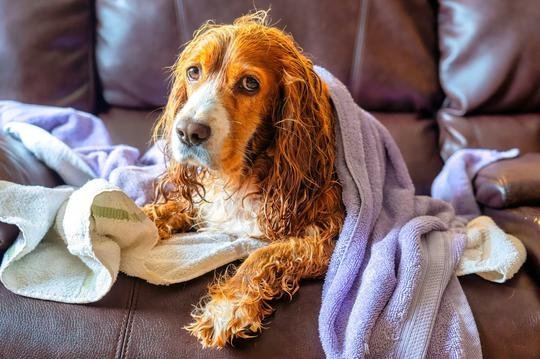
Your house smells like wet dog when a damp, warm spot in the home is letting bacteria grow on a surface that holds moisture. The most common places are carpet, pet bedding, washing machines, and air conditioning ducts. The smell itself doesn’t mean anything dangerous, but the damp that causes it can damage floors, walls, and indoor air quality if you leave it alone.
Locate where the house smells
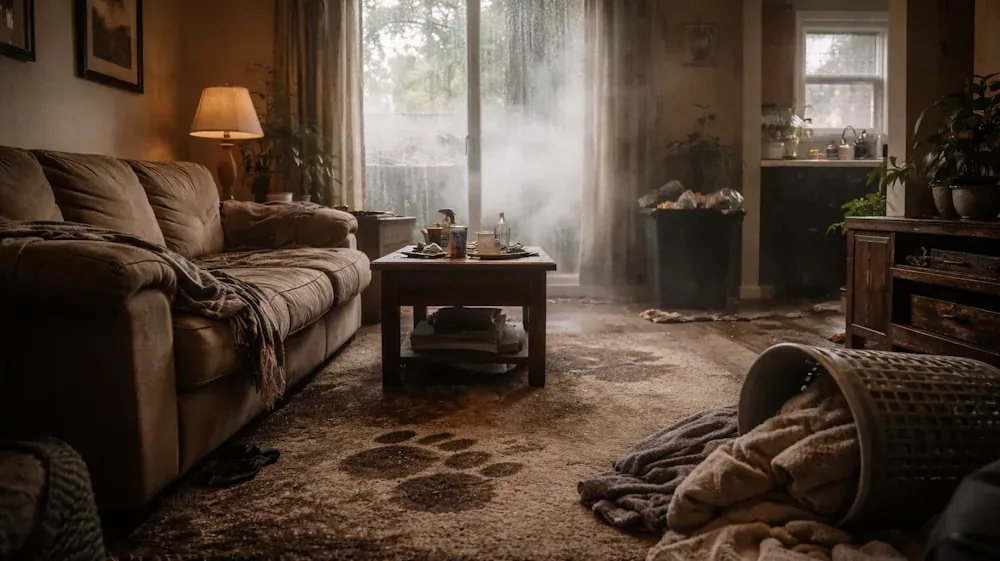
The smell comes from one of a few likely sources, ranked below from most common to least common. The table matches each cause to the symptom that usually gives it away.
| Cause | What you usually notice | Where to check |
|---|---|---|
| Damp carpet or rug | Smell is stronger in one room, worse after rain | Carpet edges, under furniture, near doors |
| Wet pet bedding or blankets | Smell follows your dog’s favourite sleeping spots | Dog beds, crates, sofa throws |
| Washing machine | Smell is strongest near the laundry room | Machine drum, door seal, detergent drawer |
| Air ducts or HVAC filter | Smell gets worse when the fan or AC runs | Vents, filter, return air grille |
| Hidden leak or damp wall | Smell never goes away, may smell musty too | Under sinks, behind appliances, basement walls |
| Mould in bathroom or kitchen | Smell is strongest in one wet room | Shower grout, under sinks, around the fridge |
Damp carpet or rug
Carpet holds water longer than hard floors, and even a small spill that never fully dried can smell like a wet dog. The odour comes from bacteria breaking down organic matter trapped in the fibres while the backing stays damp underneath.
This suits homes with wall-to-wall carpet, especially in rooms where pets sleep or where spills happen often.
- It traps the smell in one area, so you can treat just that spot.
- You can test it yourself by pressing a dry paper towel onto the carpet and checking for moisture.
- A deep clean removes the source instead of covering it up.
Example: A dog’s water bowl spilled on the living room carpet last week; the backing stayed damp and the smell appeared three days later.
Wet pet bedding or blankets
Dog beds and blankets absorb saliva, skin oils, and moisture from a damp coat. Once the fabric stays wet for more than a day, bacteria grow and the wet dog smell follows your pet wherever it rests.
This suits anyone whose dog sleeps indoors, especially after walks in rain or swimming.
- Washing removes the oils and bacteria that hold the smell.
- Drying fully prevents the odour coming back.
- It’s usually the cheapest cause to fix.
Example: A dog bed washed on Saturday but left to dry indoors in a cool room still smells on Monday because the foam inside never dried.
Washing machine
Front-loading washing machines collect water in the door seal and detergent drawer. If the door stays closed between loads, the seal stays damp and mildew grows, which makes clean laundry smell like a wet dog.
This suits homes that run cool or short wash cycles and leave wet laundry sitting in the drum.
- It explains why the smell moves from room to room on clothes and towels.
- Leaving the door open after a wash lets the seal dry.
- A hot service wash clears the drum without taking anything apart.
Example: Towels washed at 30°C and left in the machine overnight smell damp when they come out.
Air ducts or HVAC filter

An air conditioner or heating system blows air through ducts and over a filter. If the filter is dirty or condensation sits in the ducts, the system spreads a damp smell through every room whenever the fan runs.
This suits homes with central air or forced-air heating, especially in humid weather.
- The smell gets stronger when the system turns on.
- Changing the filter is a task most homeowners can do safely.
- It affects the whole house rather than one corner.
Example: The smell is faint in the morning but strong by afternoon once the air conditioning has been running for hours.
Hidden leak or damp wall
Water leaking behind a wall, under a floor, or from a pipe keeps building materials damp out of sight. The smell doesn’t improve with cleaning because the source is hidden and keeps getting wetter.
This suits older homes, basements, and rooms next to bathrooms or kitchens.
- It rarely goes away on its own.
- It can damage timber and plaster if left alone.
- It often needs someone who can find and fix the leak.
Example: A smell in the hallway that started after a heavy rainstorm and never fully disappears.
The rest of them
- Mould in bathroom or kitchen — grows in shower grout, under sinks, and around appliances that use water; reach for this if the smell is strongest in one wet room and cleaning doesn’t shift it.
- Refrigerator drip pan — collects condensation under the fridge and can smell if it’s never cleaned; check this if the kitchen smell seems to come from beneath the appliance.
- Dirty rubbish bin — holds food waste and liquids that go bad; worth checking if the smell is near where you keep kitchen or pet waste.
How to choose why your house smells like a wet dog

Start with where the smell is strongest. If it follows your dog’s bed or a carpet patch, treat that item first. If it gets worse when the heating or air conditioning runs, check the filter and vents before anything else. If the smell never changes no matter what you clean, assume a hidden leak and stop looking at surface causes.
You can usually combine two fixes at once, such as washing bedding and cleaning the carpet, but a hidden leak means leaving the rest to someone else while it gets sorted.
If the smell is in one room only, start with carpet or bedding there. If it moves through the house on clothes, start with the washing machine. If it gets stronger when the fan runs, start with the filter.
Related guides
- Dog Smells Like Fish From Back End: Causes and Solutions
- How to Remove Mold From Wood Furniture: A Step-by-Step Guide in 2026
- How to Remove Gorilla Glue From Wood: A Simple Step-by-Step Fix in 2026
Frequently asked questions
Can I remove the smell with air freshener?
No. Air freshener covers the odour for a short time but doesn’t remove the damp or the bacteria causing it, so the smell comes back once the scent fades.
Why does the smell get worse when it rains?
Damp air slows drying, so carpet, bedding, and walls stay moist longer and bacteria keep growing. The moisture in the air also makes existing odours easier to smell.
How long does it take for damp carpet to dry?
It can take 24 to 48 hours in a warm room with good airflow, and longer in cool or humid weather. A fan pointed at the spot speeds it up.
Is it safe to sleep in a room that smells like this?
Usually yes, but if you also see mould or feel breathing irritation, keep the room aired out and have someone check for hidden damp before sleeping there regularly.
What happens if I ignore it?
The damp can damage floors, walls, and plaster over time, and mould may spread to areas that cost far more to repair than the original fix.
Does it matter which cleaning product I use?
Yes. Products that only add scent don’t treat the cause; look for something meant to remove odours from fabric, and always test it on a hidden patch first.
What to do next
Walk through your home and find the room where the smell is strongest, then check the most likely source from the list above. Expect the odor to fade within a day or two once the area is clean and fully dry.
If the scent persists beyond 48 hours, the source is likely trapped moisture rather than surface grime. Check for dark spots on drywall or soft floorboards that yield under pressure. These signs indicate hidden mold growth that requires professional remediation.
Stop and call a cleaner, plumber, or heating engineer if you find damp behind a wall, under a floor, or inside ducts you can’t reach safely. Attempting to scrub these areas yourself often spreads spores into the HVAC system, which can triple your eventual repair costs.