
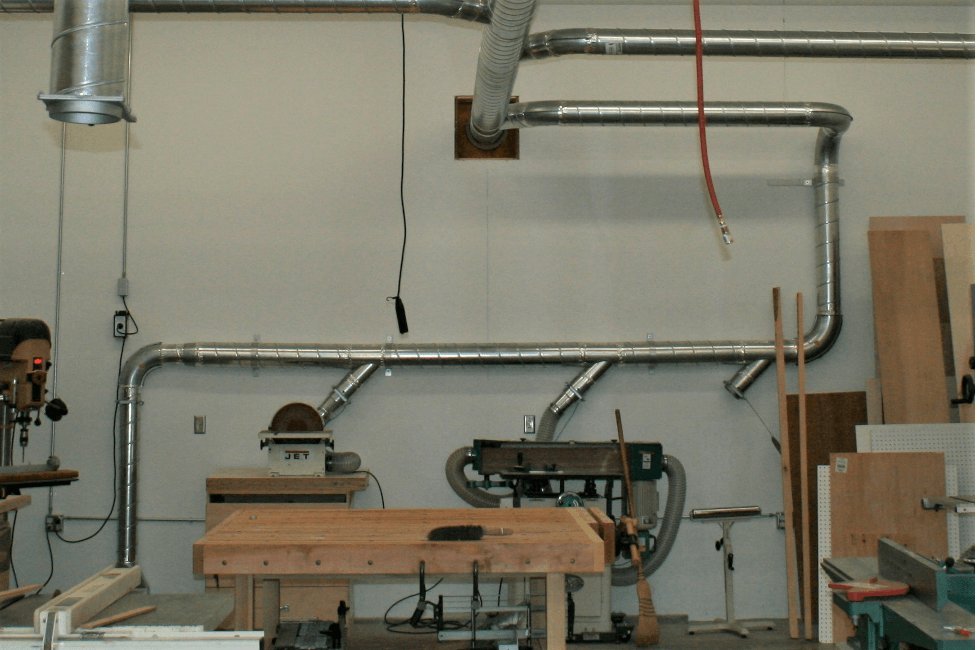
The most reliable material for a professional setup is smooth-walled metal ducting, though many home workshops find that rigid PVC pipe is the most practical choice for dust collection. Metal provides the best fire resistance and static grounding, while PVC is cheaper and easier to install for most hobbyists.
Your choice depends on your budget, the size of your shop, and your comfort level with electrical grounding. If you’re building a permanent system in a wooden structure, fire safety is your main concern. If you’re setting up a temporary or smaller station, ease of assembly becomes the priority.
Selecting the best pipe for dust collection
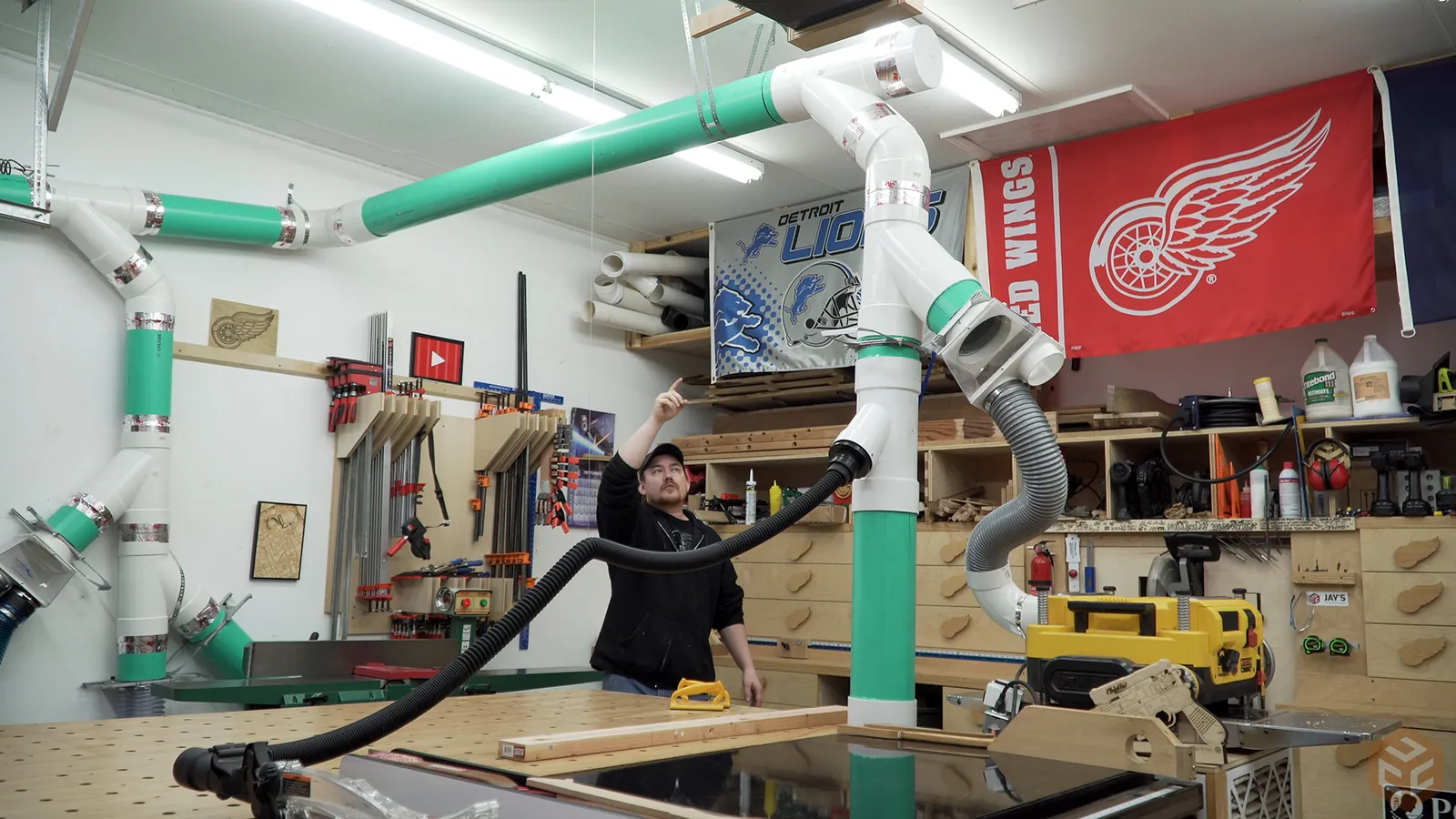
Most workshop owners choose between two main materials: sheet metal or schedule 40 PVC. Sheet metal is the industry standard because it’s smooth, rigid, and doesn’t build up static electricity like plastic. It’s the preferred choice for professional shops where machines run for many hours every day.
Schedule 40 PVC is the common alternative for home woodworkers. It’s thick, strong, and easy to cut with standard hand tools. People often choose this because it’s widely available at hardware stores and requires no specialized sheet metal skills. You should avoid thin-walled, flexible dryer vent hoses for main lines, as they collapse under suction and trap debris inside.
Factors that change your result
The diameter of your pipe is the most important factor for airflow. A 6-inch pipe moves significantly more air than a 4-inch pipe because it reduces friction. If your dust collector has a 6-inch port, don’t reduce it to 4 inches at the machine; this creates a bottleneck that kills your system’s efficiency.
Static electricity is another factor to consider with plastic pipes. While many hobbyists use PVC without issue, the National Fire Protection Association provides guidance on managing combustible dust hazards, which include grounding measures for industrial systems. If you use PVC, you may need to wrap the exterior with copper wire to dissipate static charges.
The layout of your shop determines how many fittings you need. Every 90-degree elbow adds resistance to the airflow. Try to use two 45-degree elbows instead of one 90-degree turn whenever possible. This keeps the air moving fast enough to carry dust all the way to the separator or filter.
Installing your ducting system
- Measure the distance from your main dust collector to each machine.
- Sketch your layout to minimize the number of turns and branches.
- Cut your pipe to length using a hacksaw or a power miter saw.
- Deburr the edges of every cut to prevent dust from snagging on rough spots.
- Apply a small amount of PVC primer and cement to the joints for a permanent seal.
- Support the pipe every 4 to 6 feet using metal pipe hangers or strapping.
- Install blast gates at every machine connection to direct suction where you need it.
- Connect the final few feet to your machine using flexible, anti-static hose.
- Turn on the system and check all joints for air leaks using a piece of tissue paper.
- Ground your system by attaching a copper wire to the machine frame and running it to a solid earth ground.
The real difference between a professional job and a weak one is the quality of your seals. Every small leak at a joint reduces the suction at the tool. If you can hear a whistling sound when the system is running, you have a leak that needs to be sealed with aluminum tape.
Comparison of common ducting materials
| Material | Best for | Ease of use | Cost |
|---|---|---|---|
| Sheet Metal | Large shops | Low | High |
| Schedule 40 PVC | Home shops | High | Medium |
| Flexible Hose | Short runs | Very High | Low |
| Thin-wall PVC | Small tools | High | Low |
Sheet metal remains the gold standard for long-term industrial reliability. Because it’s rigid and smooth, it minimizes static pressure loss and prevents dust buildup. Use this if you have a permanent shop layout and a high-horsepower cyclone collector.
Schedule 40 PVC is the preferred choice for hobbyists because it’s airtight and easy to seal with standard cement. Avoid using thin-wall drain pipe for main lines, as it can collapse under the vacuum pressure of a powerful blower. If the pipe flexes when you cover the intake with your hand, it’s too thin for your system.
Flexible hose is convenient for connecting tools, but it creates massive friction. Keep these runs under three feet to avoid clogging. If your total hose length exceeds ten feet, your airflow will drop by nearly half, forcing your motor to work harder and increasing your electricity bill.
Getting the best performance
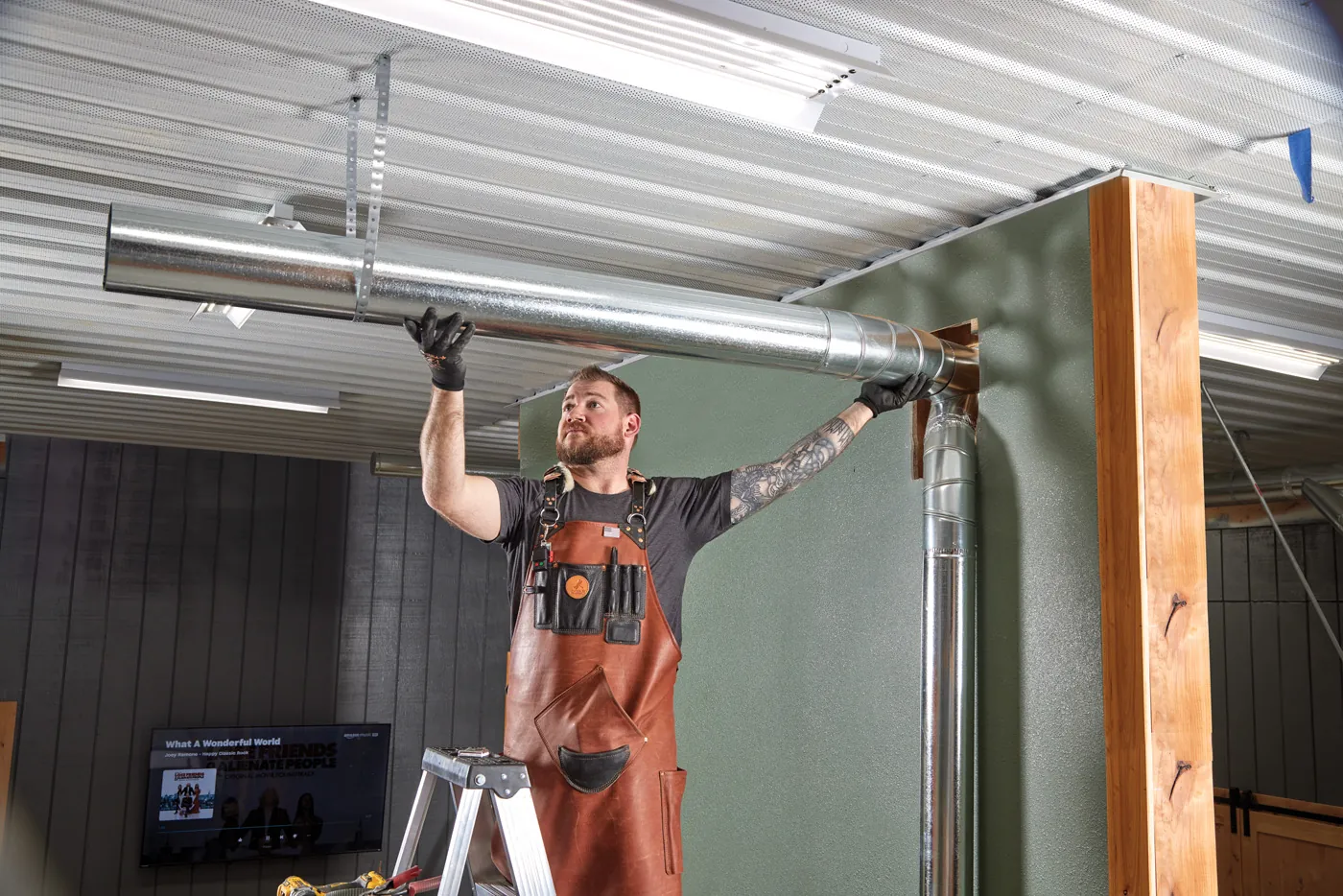
Experienced installers focus on keeping the interior of the pipe as smooth as possible. Any bump, screw head, or rough edge inside the pipe will catch wood chips. This eventually creates a clog that’s hard to reach and clean. They also avoid using long runs of flexible hose because the ridges inside the hose create massive drag.
Preparing your layout
Planning your path before you buy materials saves money and improves suction. Experienced users place the dust collector in a corner but keep it central to the most used machines. Always prioritize straight runs over complex networks. If you must have a long run, use larger diameter pipe to keep the air velocity consistent.
Managing your connections
Every connection point needs to be airtight. Use foil tape to seal joints in metal systems, or use proper cement for PVC. Beginners often rely on duct tape, but it dries out and falls off within a year. Using the right adhesive ensures your system stays strong and efficient for a long time without needing constant repairs.
Common problems and solutions
| What you notice | What it means | What to do | Stop it happening again |
|---|---|---|---|
| Weak suction | Air leak | Check all joints | Use proper sealant |
| Pipe collapses | Too thin | Use rigid pipe | Add more supports |
| Clogs forming | Rough interior | Clear the blockage | Deburr all cuts |
| Loud whistling | Air gap | Seal with tape | Secure every joint |
| Static shocks | No ground | Add copper wire | Install ground kit |
If your system loses suction, check the gaskets first. A hairline crack in a rubber seal often mimics a major blockage. If the joints are tight but pressure remains low, inspect the filter housing for microscopic stress fractures.
Pipe collapse usually occurs when the vacuum pressure exceeds the wall thickness rating. If you see oval-shaped deformation, replace the section with schedule 40 PVC immediately. Thin-walled flex hose should never run longer than three feet in a high-pressure line.
Whistling indicates a high-velocity air leak through a pinhole. Use a soapy water spray to locate the gap; bubbles will form precisely where the seal has failed. If you hear this sound, stop the machine.
Static buildup is common in dry environments. If you feel a shock, wrap a bare copper wire around the exterior of the pipe and connect it to a cold water pipe or a dedicated grounding rod. Don’t use the machine until the ground is secure.
Regulations and safety standards
Safety rules for dust collection depend on the type of material you’re cutting and the volume of dust produced. The National Fire Protection Association provides standards for the prevention of fire and dust explosions. While these rules are mostly for commercial buildings, they serve as a guide for safe home workshop design.
If you’re working with MDF or other fine dust sources, you must ensure your filter is rated for fine particles. Never vent your dust collection system into a space where you don’t have adequate airflow or where people are sleeping. If you’re unsure about the electrical load of your system, consult a certified electrician before installing heavy-duty motors.
Understanding your costs
The cost of a system varies based on the total length of the run and the number of machines you’re connecting. Metal pipe is generally more expensive per foot than PVC. You also have to account for the price of blast gates, which are quite affordable compared to the cost of the ducting itself depending on the material.
If your shop layout requires more than four 90-degree turns, choose PVC to save on fittings, which cost significantly more in metal. Metal is the better investment if you run the system eight hours a day, as its smooth interior prevents the static buildup that eventually clogs PVC.
The hidden cost is the time spent on installation. A professional metal system can take several days to hang and seal properly. PVC is much faster to install, which keeps your labor time low. Always check the current price of pipe at your local building supply store before you start, as material prices change frequently. If you see a 15% price spike, switch to a hybrid system using metal for the main trunk and PVC for drops.
Maintaining your system
After you finish the installation, your main task is keeping the lines clear. Check your filter bag or canister every time you empty the bin. If the filter is clogged, the motor will work harder and the suction will drop. You should also inspect the blast gates regularly to make sure they slide easily and close completely.
If you notice a drop in performance, start by checking the filter. If the filter is clean, check the main pipe for a partial clog. You can often clear a clog by tapping the pipe or using a long, flexible pole to push the debris through to the collector bin.
Most users make the mistake of ignoring small leaks at pipe joints. These gaps reduce airflow velocity, allowing heavy sawdust to settle and eventually form a solid blockage. If you hear a high-pitched whistling sound, seal the joint immediately with foil tape. If the system vibrates, check the impeller for buildup.
When to choose a different approach
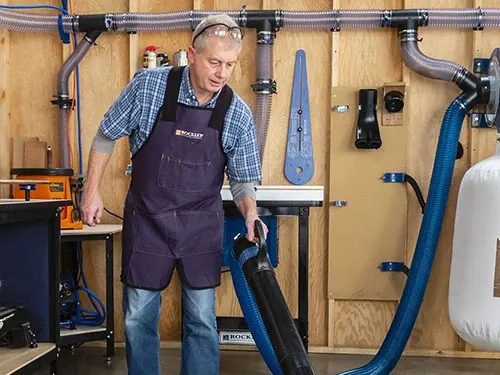
If you have a very small shop with only one or two machines, a full pipe network is likely overkill. You’re better off using a single high-quality hose that you move from tool to tool. This saves you the cost and space of a permanent duct system.
If your shop layout forces you to move the hose more than ten feet to reach your furthest tool, the static pressure loss will choke your suction. In that case, prioritize a central station rather than a mobile hose.
If you’re dealing with heavy, wet sawdust or large wood chunks, a standard dust collector might not be enough. You may need a high-volume cyclone separator to prevent heavy debris from reaching your filter. If you’re unsure about your machine’s capacity, check the owner’s manual for the required cubic feet per minute (CFM) rating.
Frequently asked questions
Can I use thin-wall sewer pipe for dust collection?
It isn’t recommended because thin-wall pipe can collapse under the pressure of a strong motor. Stick to schedule 40 PVC if you choose plastic, as it’s thick enough to withstand the suction forces generated by most shop dust collectors.
How often should I clean the dust collector filter?
You should clean the filter whenever the bin is full or when you notice a drop in suction power. Most modern systems have a handle to shake the dust off the internal pleats, which you should use before every new project.
Is it necessary to ground PVC pipe?
It’s recommended if you’re worried about static buildup or if you’re working in a very dry climate. You can ground the system by wrapping a bare copper wire around the outside of the pipe and connecting it to a metal machine frame.
How many machines can I connect to one system?
You can connect as many as you want, provided you use blast gates to close the lines you aren’t using. Only one machine should have an open blast gate at any time to ensure maximum suction power is directed to the active tool.
Why does my dust collector lose suction after a few minutes?
This usually happens because the filter is becoming clogged with fine dust. Check your filter status and use the cleaning mechanism to shake the dust loose so air can pass through the material freely again.
What is the best diameter for a main dust collection pipe?
A 6-inch diameter pipe is the gold standard for most workshop systems. It provides the right balance of air volume and velocity to keep dust moving toward your collector without creating unnecessary resistance or clogs.
How do I stop leaks in my pipe joints?
You should use aluminum foil tape or proper PVC cement depending on your material. Avoid standard duct tape, as the adhesive fails over time, leading to leaks that reduce the effectiveness of your entire dust collection system.
Conclusion
Start by sketching your workshop floor plan to identify the shortest path from your collector to your tools. You’ll know the installation is successful when you feel strong suction at the hose end of your most distant machine. If the motor sounds strained, stop immediately and check for a blockage.