
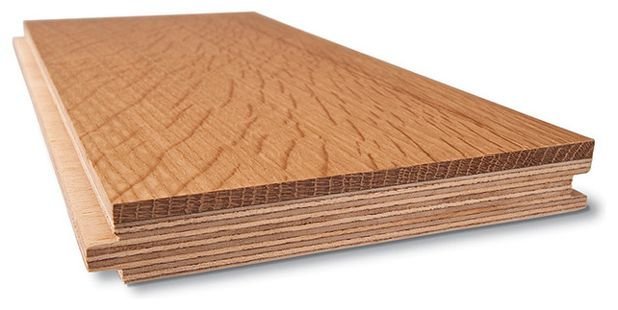
Manufactured wood consists of engineered products made by binding wood fibers, veneers, or particles with adhesives to form composite boards. These materials are designed to be more stable and consistent than solid timber.
The primary factors changing the quality of these boards include the density of the core material, the type of resin used, and the thickness of the finish layer. These variables determine if a board will warp in humid conditions or hold screws reliably over time.
What defines manufactured wood
Readers searching for this topic are typically homeowners, DIY enthusiasts, or furniture shoppers. Some are trying to identify the material used in a piece of flat-pack furniture, while others are comparing options for home renovation projects like flooring or cabinetry.
This page serves those who need to distinguish between high-quality composites and cheaper alternatives. It assumes you’re evaluating materials for interior use, such as shelving, baseboards, or structural sub-flooring. If you’re looking for information on heavy-duty structural timber beams, you should consult professional construction engineering guides instead.
Check the raw edge of the board. If you see uniform, tightly packed wood fibers, you’re likely looking at medium-density fiberboard. If you see distinct, larger wood chips or flakes, it’s particleboard. Particleboard often sags under heavy loads, so avoid using it for long, unsupported shelves. If the span exceeds 30 inches, opt for plywood instead to prevent permanent bowing.
Most people mistake thin, paper-like veneers for solid wood. Scratch the underside of a hidden joint to see if the material beneath is fibrous or solid. If the surface peels away to reveal a coarse, sandy texture, the piece will fail in high-humidity areas like bathrooms. Use moisture-resistant MDF in those rooms to avoid swelling. If you see a stamp indicating “NAUF,” you have chosen a product made without added urea-formaldehyde.
Factors influencing material quality
The performance of these products depends on how they’re manufactured and the intended environment for the finished piece. One major influence is the adhesive used, as formaldehyde-based resins are common in older or lower-cost products, while newer standards focus on low-emission binders.
The density of the core material also matters significantly. High-density boards, such as those used in premium cabinetry, resist sagging better than low-density options. You can check this by looking at the cut edge; a finer, tighter grain suggests a stronger, more stable product.
Moisture resistance is essential for long-term durability. If you’re using these materials in a kitchen or bathroom, you must choose versions specifically treated to resist humidity, as standard composite boards will swell and lose structural integrity when exposed to water.
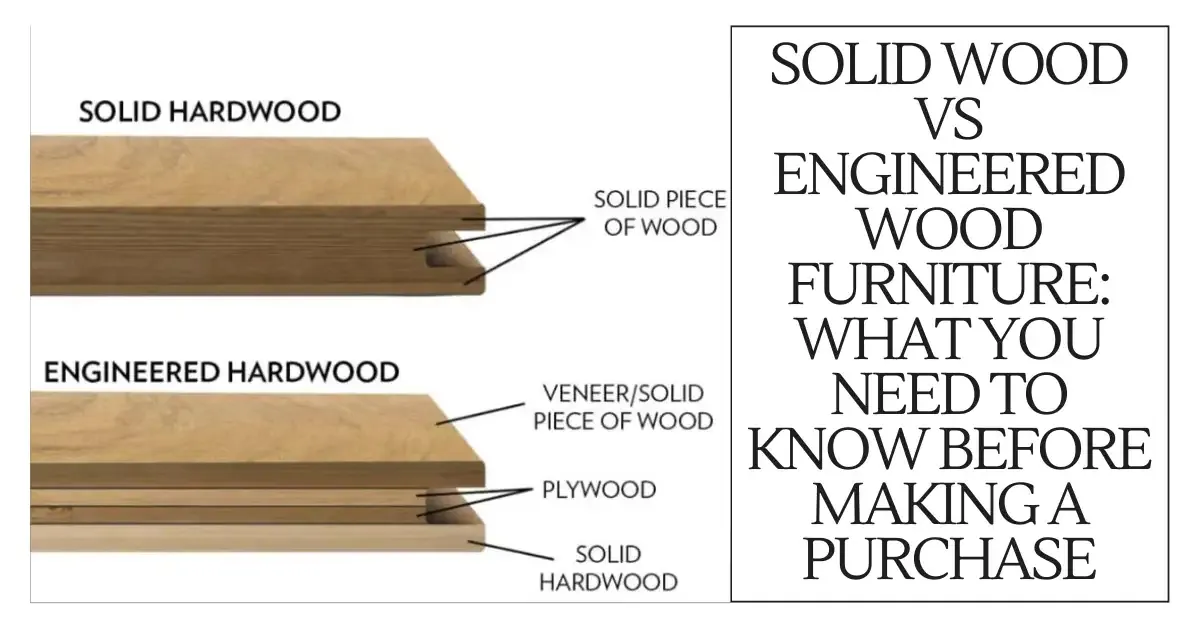
The final factor is the surface treatment or veneer. A thick wood veneer provides the look of solid lumber, while a thin melamine coating offers high scratch resistance but can’t be refinished. Most people make the mistake of assuming all “wood” products can be sanded; only those with a thick real-wood top layer can be restored this way.
How to identify common board types
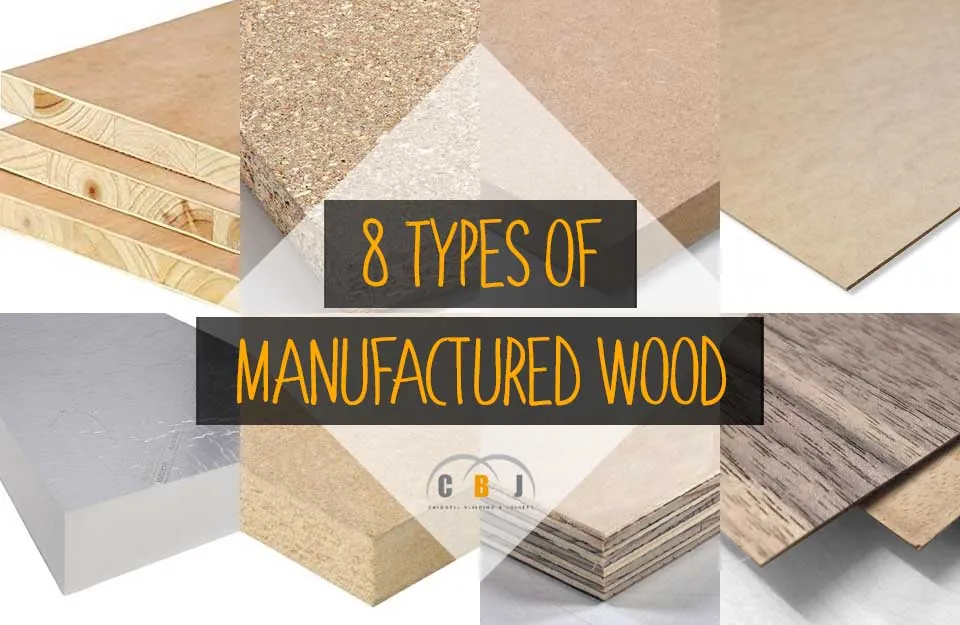
- Plywood: This consists of thin wood veneers glued together in alternating grain directions. Look for the layered edge to identify it; it’s the strongest option for load-bearing shelves.
- Particleboard: This is made from wood chips and resin pressed into sheets. Check for large, visible chips on the edge; it’s best suited for light-duty furniture that stays stationary.
- Medium-Density Fiberboard (MDF): This uses fine wood fibers and resin. It has a smooth, uniform edge that’s easy to paint, but it’s heavy and sensitive to moisture.
- Oriented Strand Board (OSB): This uses large, compressed wood strands. It’s primarily used for structural sheathing in walls and floors, not for decorative furniture.
- Hardboard: This is a very dense, thin sheet made from exploded wood fibers. It’s often used for cabinet backings or drawer bottoms where strength is secondary to thickness.
Comparison of composite board types
| Material | Best Use Case | Strength | Moisture Resistance |
|---|---|---|---|
| Plywood | Structural/Shelving | High | Moderate |
| MDF | Painted Cabinetry | Medium | Low |
| Particleboard | Flat-pack Furniture | Low | Very Low |
| OSB | Flooring/Sheathing | High | Moderate |
| Hardboard | Drawer Bottoms | Medium | Low |
Plywood remains the gold standard for load-bearing projects because its cross-layered veneer construction resists warping under tension. If you’re building a bookshelf that spans more than 30 inches, use 3/4-inch plywood to prevent sagging.
MDF offers a perfectly smooth surface for paint, but it swells instantly when exposed to standing water. Avoid using it for bathroom vanities or laundry rooms where humidity cycles are constant. If you must use it in damp areas, seal every edge with two coats of oil-based primer.
Particleboard is the most cost-effective choice for stationary furniture, yet it fails under repeated stress. Never use it for items that require frequent disassembly, as the internal wood chips crumble once screws are removed and reinserted.
OSB provides superior shear strength for subfloors, but its rough texture makes it unsuitable for finish carpentry. If you’re choosing between OSB and plywood for a roof deck, remember that OSB is heavier and takes longer to dry if it gets caught in a rainstorm during installation.
Hardboard is thin and dense, making it ideal for drawer bottoms or pegboards. Don’t rely on it for structural framing, as it lacks the rigidity to support weight over a span.
Choosing the right material
Experienced builders prioritize the core material based on the specific load and environment. They know that using particleboard for a long shelf will lead to sagging, so they switch to plywood for those applications. Beginners often choose based on price alone, which leads to early failure of the furniture.
Preparing for the project
Successful projects start with matching the material to the environment. If the piece will be exposed to steam or spills, choose a moisture-resistant grade of plywood or MDF. If the piece is purely decorative and will be painted, standard MDF offers the smoothest finish.
Working with the material
Always use sharp carbide-tipped blades when cutting these boards to prevent chipping the surface. If you’re using screws, pre-drill your holes to avoid splitting the core, especially with particleboard or MDF, which have little structural integrity near the edge.
Common issues and solutions
| What you notice | What it means | What to do | Prevention |
|---|---|---|---|
| Swelling edges | Moisture damage | Replace board | Seal all raw edges |
| Loose screws | Stripped core | Fill with wood glue | Use pilot holes |
| Bowing shelf | Overload | Add support | Use thicker plywood |
| Chipped finish | Blade dullness | Cover with trim | Use fine-tooth blades |
| Paint peeling | Poor prep | Sand and prime | Use oil-based primer |
Regulatory standards and safety
Product safety is governed by strict emission standards to ensure indoor air quality. In the United States, the EPA regulates composite wood products under the Formaldehyde Standards for Composite Wood Products Act. This ensures that all boards sold for residential use meet specific emission limits.
Look for the TSCA Title VI certification label on the product packaging or the back of the board itself. If a product lacks this stamp, it may not meet current federal requirements for formaldehyde off-gassing. Avoid purchasing any unlabeled composite wood, as these materials can release volatile organic compounds for years after installation.
If you’re working with materials manufactured before 2017, they may have been produced under less stringent emission standards than current regulations require. Always wear an N95-rated respirator when cutting or sanding these legacy boards to prevent inhaling hazardous dust particles.
When choosing between materials, prioritize those labeled NAF (No Added Formaldehyde) or ULEF (Ultra-Low Emitting Formaldehyde) if you’re building for nurseries or bedrooms. These designations provide an extra layer of protection beyond the basic federal floor. If the manufacturer can’t provide a certificate of compliance for a specific batch, assume the material doesn’t meet the highest safety tier and choose a different supplier.
Understanding the real cost
The cost of these materials varies based on the raw wood species used for the veneers and the grade of the adhesive. Plywood is generally the most expensive due to its structural strength, while particleboard is the cheapest.
Don’t assume the cheapest board is the best value. If you use cheap particleboard for a project that needs to last, you’ll end up replacing it prematurely, doubling your total cost. Compare the price per square foot and verify the thickness against your structural needs.
Most buyers fail to account for the hidden expense of finishing. A low-grade board often requires three times the sanding and primer to achieve a smooth surface. If your time is valuable, the extra effort spent prepping cheap material erodes the savings compared to higher-quality alternatives.
If your project involves high humidity, such as a bathroom vanity or a basement workshop, avoid particleboard entirely. It acts like a sponge, swelling and crumbling when exposed to moisture. In these damp zones, use marine-grade plywood or solid wood.
If you’re building a stationary bookshelf for a dry living room, particleboard is perfectly adequate. However, if you’re crafting a dining table or a workbench that must support heavy loads, stick to plywood. The rule is simple: if the piece must bear weight or endure moisture, pay the premium for structural integrity.
Maintaining your furniture
Keep these materials dry to prevent the core from expanding. If you notice a spill, wipe it up immediately and ensure the area is well-ventilated. If a piece becomes damaged, you can often patch small dents with wood filler, but severe swelling usually requires replacing the entire board.
Check the finish periodically for cracks or gaps, especially at the edges. If you find a gap, apply a small amount of wood glue or caulk to seal the core against moisture. This simple step can add years to the life of your furniture.
When to choose solid wood instead
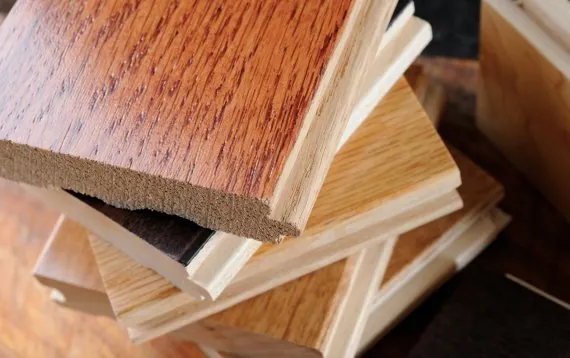
Sometimes these materials aren’t the right choice for your project. If you’re building a fine heirloom piece that needs to be passed down through generations, solid wood is superior because it can be sanded and refinished multiple times. Unlike veneers or laminates, which feature a thin surface layer that wears through to raw fiber, solid wood remains consistent throughout its entire thickness.
Avoid using composite boards for outdoor furniture. Even moisture-resistant grades will eventually fail when exposed to the cycle of rain and direct sunlight. For outdoor builds, use pressure-treated lumber or naturally rot-resistant species like cedar or teak instead.
A common mistake is assuming that a “waterproof” adhesive label makes a composite board suitable for permanent exterior use. This oversight typically costs the builder an entire project within three years as the core begins to swell and delaminate.
If you’re unsure which material suits your needs, perform the scratch test. If you can see a different color or texture just one millimeter beneath the surface, that material will show permanent damage the moment it’s dinged. Choose solid wood when the aesthetic value of the piece must survive the inevitable wear of a decade or more of daily use.
Related guides
Frequently asked questions
Can I paint manufactured wood?
Yes, you can paint these materials, but you must use a high-quality primer first. MDF takes paint particularly well because of its smooth, fiber-dense surface, but you should sand it lightly and use a shellac-based primer to seal the edges before applying your final coats.
Is it safe to use indoors?
Yes, it’s safe if the product meets current formaldehyde emission standards. Look for a label confirming compliance with the EPA’s Toxic Substances Control Act, which ensures the boards meet strict safety limits for home environments.
How long does it last?
Longevity varies depending on the quality and the environment. High-quality plywood can last a long time in a dry home, whereas low-quality particleboard in a humid room may begin to fail relatively quickly.
What happens if it gets wet?
It swells and loses its structural integrity if water reaches the core. Once the adhesive bond is broken by moisture, the board won’t shrink back to its original shape and usually needs to be replaced.
Does it matter which way I cut it?
Yes, it matters for both strength and appearance. When cutting plywood, the orientation of the grain layers affects how much the board will flex, and cutting against the grain can cause the veneer to chip along the edge.
How do I stop it from sagging?
Use a thicker board or add support brackets at intervals of no more than 24 inches. The amount of sag depends on the density of the board and the weight of the objects placed on it, so shorter spans always provide better rigidity.
Conclusion
Start by identifying the specific type of board required for your project load and environment. You’ll know you have the right material when it remains flat and stable under weight. If you notice the board bending or the edges crumbling, stop and consult a professional for a structural alternative.