
If your water heater smells like gas, leave the building right away and call your gas company or emergency services from outside. Don’t flip any light switches, use your phone indoors, or light anything until you’re clear of the house. A gas smell from a water heater can mean a leak, and gas can ignite from a tiny spark.
Turn off gas and get outside first
Get everyone out of the house immediately and move at least 100 feet upwind from the water heater. Don’t linger to gather belongings or pets if it delays your exit by more than five seconds.
Avoid flipping any light switches or using electronic devices like garage door openers or phones while inside. Even a tiny spark from a doorbell or a light switch can ignite accumulated gas, turning a leak into an explosion.
If you can reach the gas shut-off valve safely on your way out, turn it a quarter turn so the handle sits crosswise to the pipe. If the valve is stiff or rusted, don’t force it; you risk breaking the pipe and worsening the leak.
Call your gas company’s emergency line or 911 only once you’re a safe distance away. Stay out until a certified technician explicitly clears the building for re-entry.
Safety: Inside a mains-powered machine, the parts behind the outer cover can hold a dangerous electrical charge even after it has been unplugged — that’s why they sit behind a cover. Opening the housing, or testing or replacing anything behind it, is a job for a qualified technician, never a home repair.
Why gas gathers around a water heater
A water heater burns gas to heat water, and it needs fresh air to burn that gas cleanly. When the burner gets the right mix of gas and air, the flame burns mostly out of sight and the exhaust goes up the vent pipe. If something blocks that airflow or the gas line leaks before it reaches the burner, unburned gas can escape into the room instead.
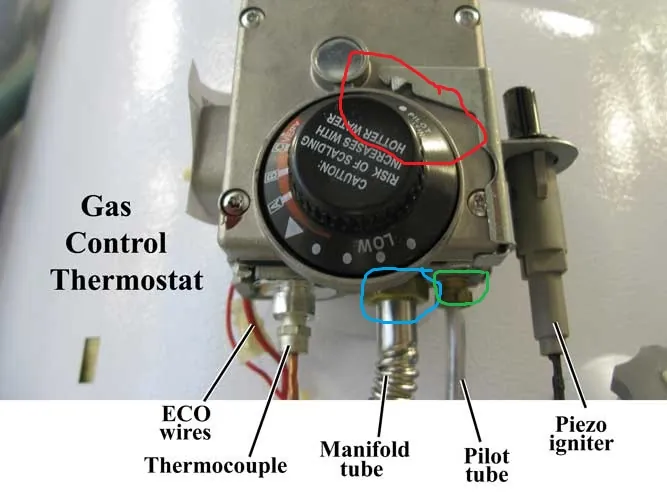
Natural gas itself has no smell; gas companies add a sulfur-like odor so people can notice a leak quickly. If you detect this scent, check the pilot light immediately. If the flame is out but the burner continues to hiss, the gas control valve has failed to shut off the gas supply.
The thermocouple signals the gas valve to keep the pilot gas supply open while the pilot is lit; if the pilot flame is extinguished, the valve should close the gas supply.
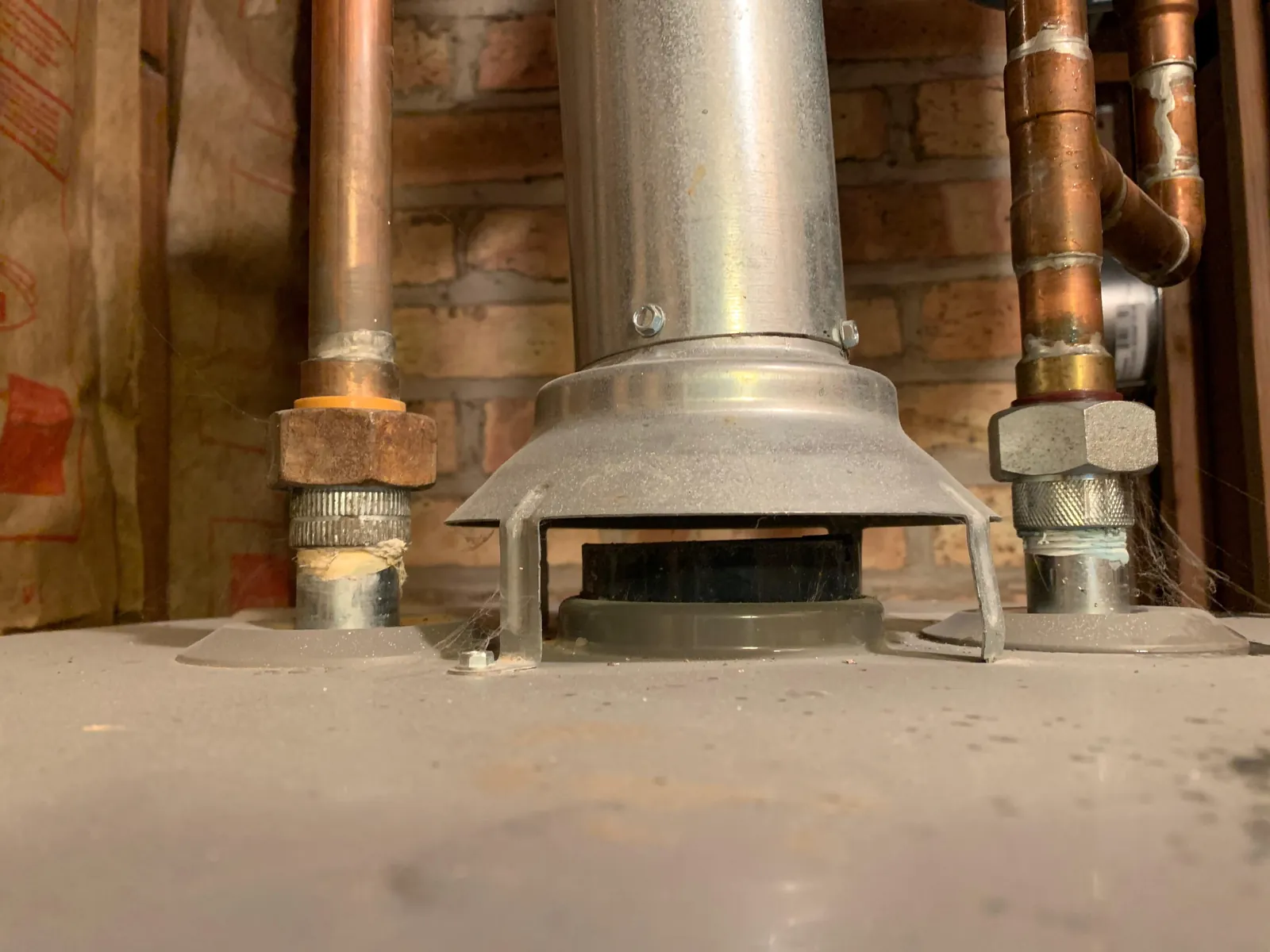
The most common sources are a loose fitting on the gas supply line, a cracked or shifted vent pipe, or a burner that won’t light fully. If the flame appears yellow rather than crisp blue, the air intake is likely clogged with dust. Clean the intake screen annually to prevent incomplete combustion that leads to soot and gas accumulation.
Check these, cheapest first
Sniff around the unit
Stand a few feet away and move closer slowly. A strong smell right at the water heater means the leak is probably at the unit itself; a faint smell everywhere in the room points to a wider problem. Don’t lean in close or sniff directly at any fitting.
Look at the pilot light
Find the small viewing window on the front. If you can’t see a steady blue flame, the pilot is out. A pilot that won’t stay lit often means the thermocouple needs replacing, which is a technician’s job.
Check the gas shut-off valve
Follow the gas pipe to the valve near the heater. If the handle lines up with the pipe, gas is on. If it sits crosswise, gas is off. Never force a stiff valve; that can crack the fitting and make a leak worse.
Inspect the vent pipe
Look at the metal pipe running from the top of the heater upward. A disconnected, rusted, or blocked vent can push exhaust and unburned gas back into the room. Don’t touch the pipe; it can be hot.
Listen near the burner
A quiet hiss near the gas line or burner often means gas is escaping where it should not. A normal burner makes a soft whoosh when it lights, not a constant hiss.
Fix the most likely cause
If the pilot light is out and you feel confident, follow the lighting instructions printed on the water heater’s label. Most units ask you to turn the gas control knob to pilot, press it down, and hold a long lighter to the pilot opening for about 30 to 60 seconds. Release the knob slowly; the flame should stay lit. If it does not, stop and call a technician. Never try to light the burner if you still smell gas strongly.
If you smell gas, leave the area immediately and call your utility provider from outside. Don’t flip light switches or use a phone inside the house, as even a small electrical spark can trigger an explosion.
The fix has held when you no longer smell gas after relighting and the burner fires with a steady blue flame. If the flame appears yellow or orange, the burner isn’t getting enough oxygen and requires professional cleaning. If the smell returns within a week, shut the gas off again and call a professional. A recurring smell means a leak or a part failure that won’t resolve on its own.
Stop here and call a technician
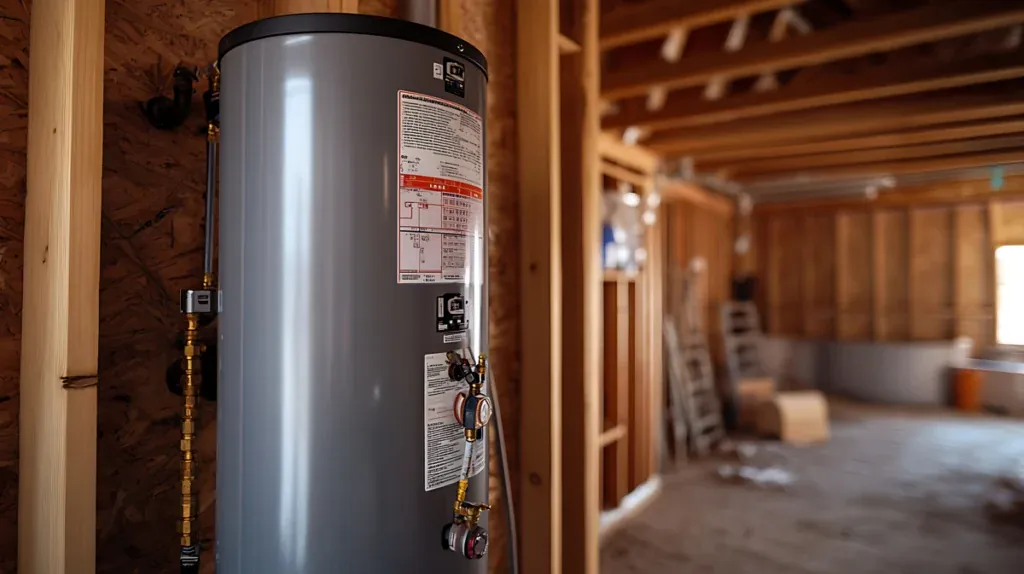
Any smell that stays after you relight the pilot means the problem is past what a home user should touch. A technician will check the gas valve, the thermocouple, the burner assembly, and every fitting on the supply line first. Work inside the gas line, replacing the gas control valve, or opening the heater’s combustion chamber needs training and tools most people don’t have.
Gas leaks can cause fire or carbon monoxide poisoning, so this is one repair where calling someone qualified is the right move. If the smell is faint but persists for more than ten minutes after the burner engages, shut off the main gas supply valve immediately. Don’t attempt to relight the unit again.
Many homeowners mistakenly try to tighten gas fittings themselves using standard household wrenches. This often cracks old brass connectors, turning a minor leak into a dangerous rupture. Tell the technician exactly what you checked and whether the pilot stayed lit.
Related guides
Frequently asked questions
Can I fix a gas-smelling water heater myself?
Only relighting the pilot is safe to try, and only if the smell is faint and you can follow the label’s steps exactly. Anything past that, including checking fittings or replacing parts, needs a qualified technician.
Why does my water heater smell like gas when it’s off?
A leaking fitting on the gas supply line can release gas whether the heater is running or not. A pilot light that won’t stay lit can also let gas escape through the burner. Either way, treat it as a leak until a technician says otherwise.
How long does it take for gas to clear from a room?
It depends on how much gas escaped and how much fresh air can move through the space. Open windows and doors from outside, then wait for the gas company or fire department to test the air before going back in.
Is it safe to sleep in the house if the water heater smells like gas?
No. Gas can build up while you sleep and one spark can ignite it. Leave and call for help from outside.
What happens if I turn a light switch on with gas in the air?
A switch can create a tiny spark, and that spark can ignite gas that has collected in the room. Leave switches exactly as they’re and exit without touching anything electrical.
Does the brand of water heater change what I should do?
No. Every gas water heater should be treated the same way when you smell gas: get out, shut the gas at the valve if it’s safe on your way out, and call the gas company from outside.
Conclusion
The gas company and fire departments treat any gas smell inside a home as an emergency. The U.S. Consumer Product Safety Commission warns that gas appliances can produce carbon monoxide when they don’t vent properly, and carbon monoxide has no smell or warning at all. If you ever feel dizzy or nauseous near the heater, that’s another reason to leave immediately and get checked.