
A strong pool smell like chlorine is often caused by the buildup of chloramines, which happen when free chlorine binds to contaminants like sweat or urine in the water. This reaction creates chemical compounds that irritate the eyes and nose rather than disinfecting the pool. If your water has this distinct odor, it usually means your sanitizer levels are too low to break down these waste products effectively. You need to test your water chemistry to determine the exact cause.
Why your pool smells like chlorine
| Item | Best for | Example |
|---|---|---|
| Chloramines | Removing odors | High combined chlorine |
| Low pH | Balancing water | Acidic pool water |
| Algae growth | Cleaning surfaces | Green or cloudy water |
| Heavy usage | Restoring clarity | After a pool party |
| Dirty filters | Improving flow | Clogged sand filter |
Chloramines in pool water
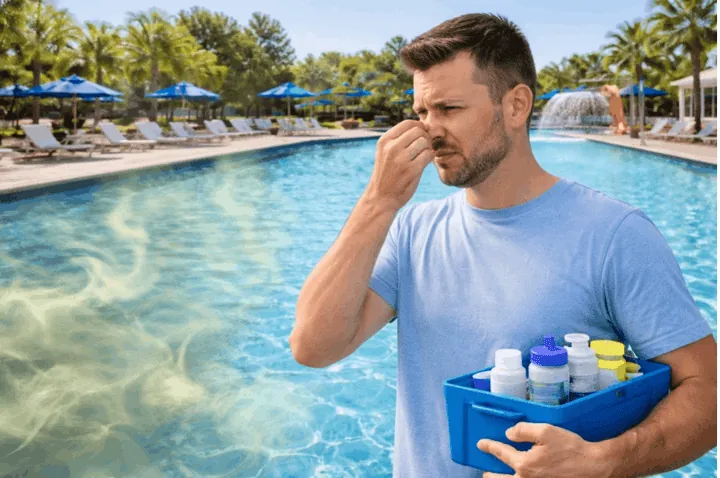
Chloramines are the primary reason a pool has a sharp, stinging smell. When free chlorine reacts with organic matter like skin cells, oils, or nitrogen-based materials, it forms these compounds. These molecules are much less effective at killing bacteria than fresh chlorine. If you can smell the water from several feet away, your combined chlorine level is likely above 0.5 parts per million.
- Testing the water helps you identify the difference between free chlorine and combined chlorine.
- Shocking the pool breaks the chemical bonds of the chloramines and restores sanitizing power.
- Maintaining a proper ratio of free to combined chlorine keeps the air around the pool fresh.
- Frequent water testing prevents the buildup of these irritating substances over time.
If your test kit shows combined chlorine levels above 0.5 parts per million, you should add enough shock to reach a “breakpoint” level, which is the amount required to oxidize the combined chlorine present in your specific volume of water.
Low pH balance
Water that’s too acidic often makes the chlorine odor feel much stronger. When the pH drops below 7.2, the water becomes aggressive and can irritate the skin and eyes. This acidity doesn’t necessarily create more chloramines, but it changes how the chlorine interacts with the air above the surface. You can check your pH levels using standard test strips or a liquid reagent kit.
- Keeping the pH between 7.4 and 7.6 ensures the chlorine works at its peak efficiency.
- Adding a base, such as sodium carbonate, raises the pH to a neutral, comfortable level.
- Monitoring the pH weekly accounts for changes caused by rain, wind, and heavy swimmer traffic.
- Balancing the water prevents long-term damage to pool equipment like heaters and ladders.
If your pH reads below 7.2, add a pH increaser according to the volume of your pool. Always follow the specific dosing instructions found on the chemical container label.
Dirty filter systems
A dirty filter fails to remove the organic debris that feeds the production of chloramines. If the filter media is clogged with dirt, oils, or dead algae, the water can’t circulate properly through the sanitizer system. This leads to stagnant spots where bacteria thrive.
- Backwashing sand or DE filters removes the trapped waste that consumes your chlorine.
- Cleaning cartridge filters with a high-pressure hose restores the flow rate of the pump.
- Checking the pressure gauge tells you exactly when the system requires a deep cleaning cycle.
- Replacing old filter media ensures the system captures the smallest particles of organic waste.
If the pressure gauge on your filter reads 8 to 10 psi higher than the clean starting pressure, it’s time to backwash or clean the filter.
Heavy swimmer load
A high number of people in the pool at one time will quickly deplete the available chlorine. As more contaminants enter the water, the chlorine works harder to neutralize them, which results in a temporary spike in chloramine production. This is common after parties or busy weekends. You should always test and balance the water chemistry immediately after heavy use to prevent the odor from lingering.
- Adding an extra dose of sanitizer after a party clears the water of organic waste.
- Encouraging swimmers to shower before entering reduces the amount of oils and lotions in the pool.
- Running the pump for 24 hours after heavy use helps the chemicals circulate and clear the water.
If you have more than five people in a small residential pool, expect the chlorine levels to drop significantly within just two or three hours of use.
Other potential odor sources
- Algae blooms: Even if the water looks clear, early-stage algae consume chlorine and produce odors. If the water has a slight tint or feels slippery, treat the pool with an algaecide and shock.
- Contaminated surfaces: Debris trapped in the skimmer basket or pool cover can rot and smell like chemicals. Regularly empty the baskets and clean the cover to remove these sources of odor.
Deciding on the right treatment
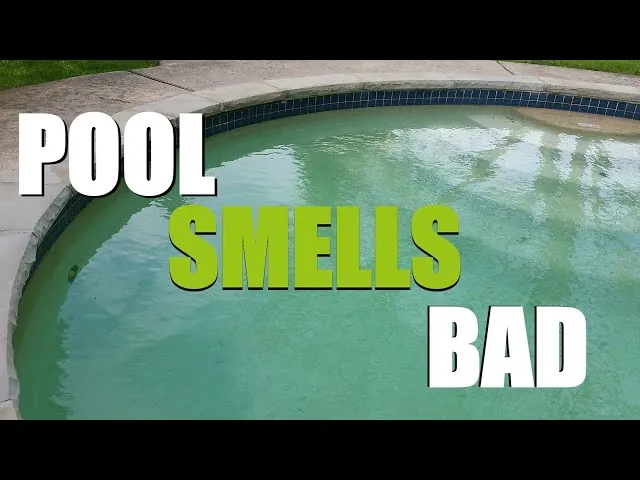
You can determine the right path by checking your pool’s chemical levels first. If your test shows low free chlorine but high combined chlorine, you must shock the water to break the chloramines. If the chlorine levels are fine but the pH is low, you only need to add a base to bring the water back into balance. If both levels are normal, check the filter pressure to see if the system is struggling to clean the water.
These steps can often be combined; you should always balance your pH before adding a large dose of shock. If you can’t get the water clear or the smell persists after these steps, you likely have a deeper issue with the pool circulation or a significant buildup of stabilized chlorine that requires a partial water change.
Related guides
Frequently asked questions
How long does it take for the smell to go away?
The smell typically disappears within 24 to 48 hours after you successfully shock the pool and balance the water. This assumes you have removed the source of the waste and the pump is running continuously to circulate the fresh chemicals through the entire pool volume.
Is it safe to swim if the pool smells like chlorine?
It isn’t recommended to swim if you can smell a strong chemical odor, as this indicates the presence of irritating chloramines. High levels of chloramines can cause red eyes and skin rashes. Wait until your test kit shows that the combined chlorine level has dropped below 0.5 parts per million.
Why does my pool smell even when the chlorine is high?
Your pool smells because the chlorine is busy fighting off high levels of organic waste, which creates chloramines. A high reading on your test kit might actually be showing “combined” chlorine rather than “free” chlorine. You must shock the pool to break these apart and restore the water’s health.
Does the smell mean I have too much chlorine?
The smell almost always means you have too little free chlorine, not too much. When free chlorine levels are high and combined chlorine is low, the water shouldn’t have a strong, stinging odor. The sharp smell is a sign that the chlorine is depleted and ineffective at cleaning the water.
What happens if I do nothing about the smell?
If you ignore the smell, the water will likely become cloudy and eventually turn green as algae and bacteria take over. The water will also become more irritating to your skin and eyes. Over time, the poor water quality can damage your pool liner, heater, and plumbing seals.
Does the size of the pool change how I treat it?
Yes, the volume of your pool dictates how many chemicals you need to add to reach the correct concentration. Always check the manufacturer’s label on your pool chemicals to calculate the dosage based on your specific pool volume in gallons. Using too much or too little won’t solve the odor.
Conclusion
Start by testing your water for both free and combined chlorine using a reliable test kit. If your combined chlorine is high, add the recommended amount of shock to reach the breakpoint level. If the water remains cloudy or continues to smell after 48 hours of proper filtration, contact a local pool service professional to check for mechanical leaks or equipment failure.