
When eggs smell bad, it’s usually because the hydrogen sulfide gas inside has broken through the shell or the egg has begun to rot. You can tell if an egg is truly spoiled by checking for a sulfur-like odor immediately after cracking it into a bowl. If the shell is intact, a faint smell from the outside is often just moisture or bacteria on the porous surface.
Why eggs smell bad

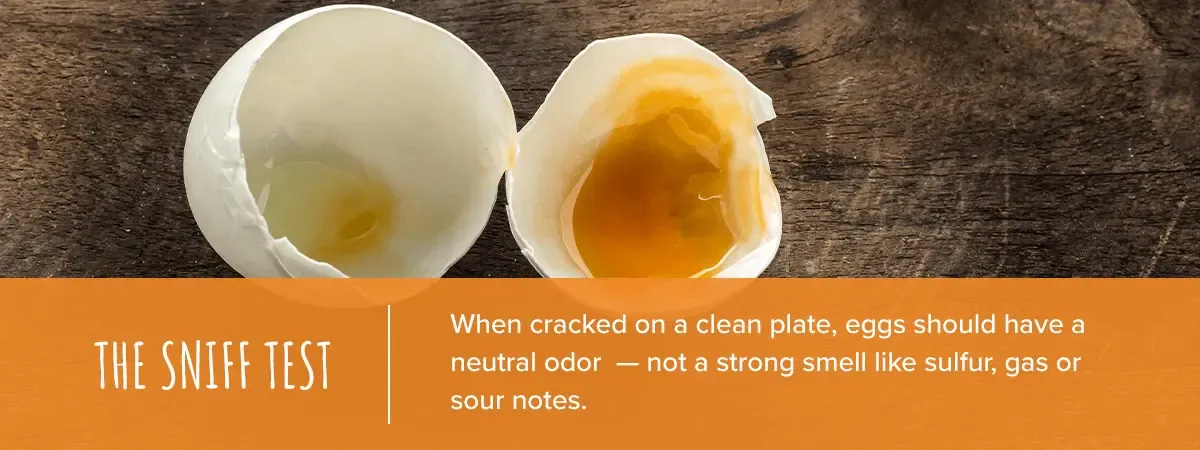
A fresh egg has no noticeable odor, even when cracked. If you notice a sharp, unpleasant smell, the egg is likely contaminated with bacteria and should be thrown away immediately.
Sulfur smell is the most common sign of a rotten egg, caused by hydrogen sulfide gas produced by bacteria inside the shell. If you detect this scent, discard the egg without hesitation. Don’t attempt to cook it, as heat may not neutralize heat-stable bacterial toxins.
Bacteria enter through tiny cracks in the shell, which speeds up the spoiling process. Even a hairline fracture invisible to the naked eye acts as a highway for contaminants. If you find a cracked shell, treat the egg as compromised.
Discoloration is a clear warning. If the yolk or white appears green, pink, or iridescent, the egg is unsafe to eat. These pigments often signal the presence of Pseudomonas bacteria.
A watery egg white that doesn’t hold its shape indicates an older egg. Use the float test to confirm its age. If the egg stands upright or floats to the surface, the air pocket has grown large. Crack the egg into a bowl to check for signs of spoilage before deciding whether to use it.
Why Eggs Develop Odors
The primary reason eggs smell bad is the buildup of gases resulting from bacterial growth. As an egg ages, the protective coating on the shell, known as the bloom, slowly degrades. This allows air and microbes to pass through the thousands of tiny pores in the shell. Once bacteria enter, they consume the proteins in the egg white and yolk.
This biological breakdown releases hydrogen sulfide, which is the same gas responsible for the smell of rotten eggs. If you’re ever unsure about the safety of an egg, you can check the USDA food safety guidelines for proper storage and handling. These guidelines explain how temperature control prevents the rapid growth of pathogens that cause these smells.
The quality of an egg also depends on how it’s stored. If you store your eggs in a warm pantry instead of a refrigerator, the bacteria will multiply much faster. You should keep eggs at or below 40°F to slow down these natural processes. If the temperature in your fridge fluctuates, the eggs will lose their freshness significantly faster than if they’re kept in a stable, cold environment.
Situations Where Odor Varies
| Situation | What changes | What to do instead |
|---|---|---|
| Strong smell on shell | Surface bacteria only | Wash shell or discard |
| Egg floats in water | Air cell is large | Use for baking only |
| Cracked shell | Risk of contamination | Throw away immediately |
| Sulfur smell after cooking | Overcooked yolk | Don’t overcook eggs |
| Metallic smell | Reaction with pan | Use stainless steel pan |
A sulfurous scent often signals that you have boiled the egg for more than twelve minutes. This reaction occurs when iron in the yolk meets sulfur in the white, creating ferrous sulfide. If the yolk remains bright yellow, the smell is likely just trapped steam; let the egg vent for thirty seconds before serving.
Always inspect the shell for hairline fractures before storage. A microscopic crack allows bacteria to bypass the protective bloom, turning a fresh egg rancid within days. If you find a crack, cook the egg immediately or discard it.
When choosing cookware, avoid reactive metals like aluminum or copper. These materials leach ions into the egg during the heating process, which produces a sharp, metallic odor.
How to Test and Handle Eggs
Check the “sell-by” date on the carton to ensure the eggs are within the expected window of freshness. If you find yourself holding an egg past this date, perform the float test by placing it in a bowl of water. A fresh egg sinks to the bottom, while one that floats has developed a large air pocket and should be discarded.
Inspect every egg for cracks or leaks in the shell before you bring them home from the store. Bacteria like Salmonella can easily penetrate hairline fractures.
Keep eggs in their original carton in the main part of the refrigerator, not the door, to keep them cold. The door temperature fluctuates too much, which accelerates spoilage.
Crack each egg into a separate small bowl first to smell it before adding it to your main ingredients. If the egg smells like sulfur or has a strange appearance, discard it in the trash. Clean any surfaces or utensils that touched the bad egg with hot, soapy water to prevent cross-contamination.
Mistakes That Ruin Egg Safety

Washing eggs before storage strips away the cuticle, a natural protective bloom that seals microscopic pores. Without this barrier, moisture and bacteria migrate directly into the yolk. If you buy farm-fresh eggs, leave them unwashed until the moment you begin cooking.
Storing eggs in the fridge door exposes them to constant temperature fluctuations. Every time you grab a snack, the internal heat spikes, accelerating spoilage. Always keep your carton on the middle shelf where the air remains a steady 37°F.
Leaving eggs at room temperature invites rapid bacterial growth. Pathogens like Salmonella thrive between 40°F and 140°F, doubling their population in mere minutes. If an egg sits out for more than two hours, discard it immediately.
Using cracked eggs is a gamble that rarely pays off. Once the shell fractures, the protective membrane is breached. If you find a crack, throw the egg away to avoid illness.
Related guides
- Dog Smells Like Fish From Back End: Causes and Solutions
- How to Tell if Wood Is Rotten: Simple Screwdriver Test in 2026
Frequently asked questions
Can I eat an egg if it smells slightly musty?
No, you shouldn’t eat an egg if it has any unusual smell, including a musty or sour odor. A fresh egg should be completely odorless, so any smell indicates that bacteria or mold have begun to break down the contents inside the shell.
Why do my hard-boiled eggs smell like sulfur?
Hard-boiled eggs smell like sulfur because the heat causes the hydrogen in the egg white to react with the sulfur in the yolk. This is a common chemical reaction when eggs are cooked for too long; it isn’t a sign that the egg is spoiled.
How long do eggs stay fresh in the fridge?
Eggs stay fresh for 3 to 5 weeks when kept at a constant temperature of 40°F or below. You should always check the carton for the specific expiration date provided by the producer, as this is the most accurate guide for your specific batch.
Does the float test prove an egg is rotten?
The float test only proves that an egg is old, not necessarily that it’s rotten. As eggs age, the air pocket inside grows larger, which makes them float, but you must still crack the egg and smell it to confirm it’s safe.
Is it safe to use eggs after the sell-by date?
It’s generally safe to use eggs for 2 to 3 weeks past the sell-by date if they have been refrigerated properly. Always check for visible spoilage or off-putting textures after cracking to ensure the egg hasn’t gone bad during that time.
What happens if I accidentally eat a bad egg?
Consuming a contaminated egg can cause food poisoning symptoms like nausea, vomiting, or stomach cramps. If you feel unwell after eating an egg, drink plenty of fluids and contact a medical professional if your symptoms become severe.
Conclusion
If you aren’t sure about a carton in your fridge, it’s best to play it safe and toss them out. Don’t risk an upset stomach just to save a few cents. When in doubt, you’ll find that buying a fresh dozen is the smartest choice for your next meal.