
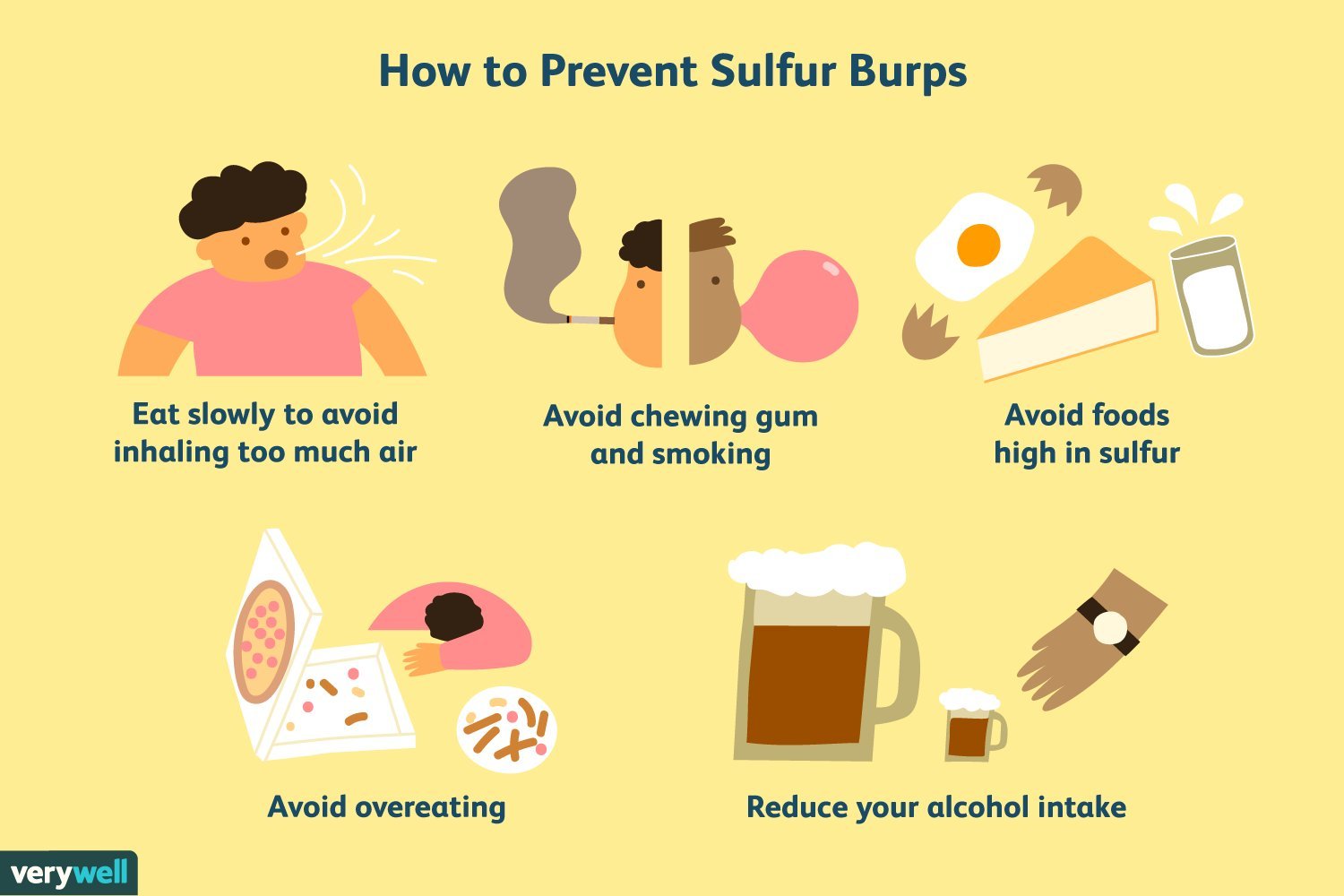
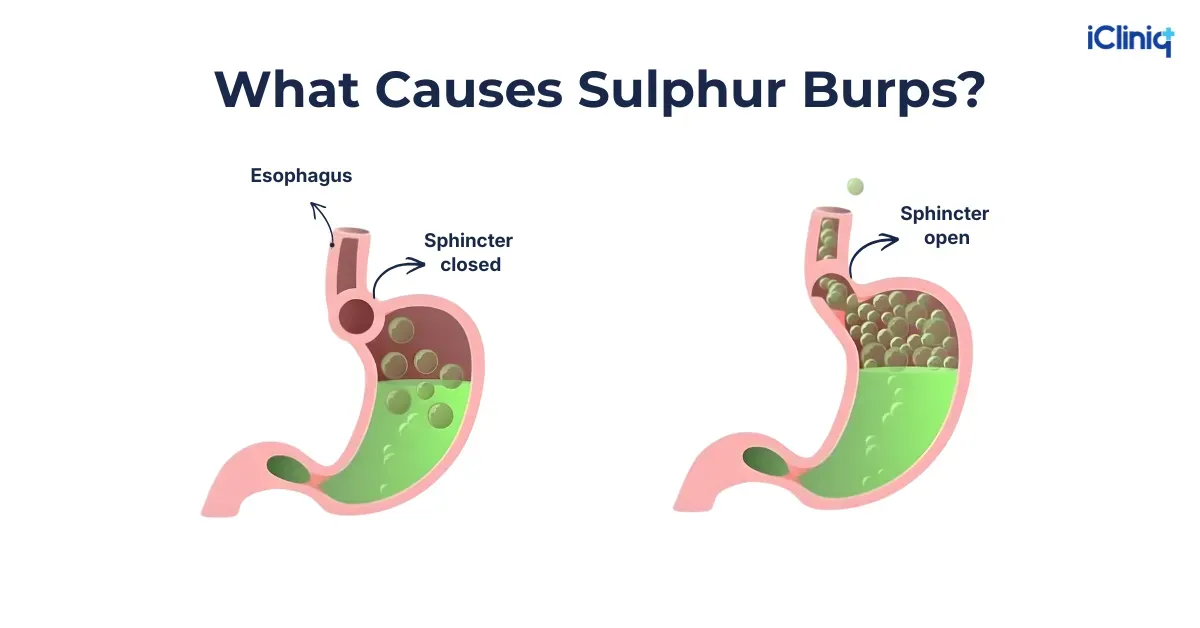
Burps smell like rotten eggs when sulfur gas builds up in your stomach and escapes through your mouth. The odor usually comes from hydrogen sulfide, a gas produced when certain foods break down in the gut or when bacteria act on proteins in the digestive tract. Occasional eggy burps are common and often harmless, but frequent or severe episodes can point to an underlying digestive issue worth addressing.
Key Takeaways
- Track your diet to spot high-sulfur foods such as eggs, meat, garlic, onions, and cruciferous vegetables.
- Drink water and walk after meals to help gas move through your digestive tract.
- Try over-the-counter simethicone or bismuth subsalicylate for occasional relief.
- See a doctor if burps smell like rotten eggs regularly and come with pain, weight loss, or changes in bowel habits.
What Causes Egg-Smelling Burps
Digestion naturally produces gas, but the smell depends on what you eat and how your gut processes it. Proteins rich in sulfur break down into hydrogen sulfide, which creates the rotten egg odor. Foods such as eggs, red meat, poultry, fish, garlic, onions, and cruciferous vegetables like broccoli and cauliflower are common culprits. Carbonated drinks add extra gas, while beer and wine can contribute both gas and sulfur compounds.
Eating behaviors matter too. Eating quickly, chewing gum, sucking on hard candy, or drinking through a straw causes you to swallow air, which increases burping frequency. Poorly fitting dentures can have the same effect.
Medical causes include gastroesophageal reflux disease (GERD), small intestinal bacterial overgrowth (SIBO), Helicobacter pylori infection, and food intolerances such as lactose intolerance. Giardiasis, a parasitic infection, is also known for producing sulfur-tasting burps. Certain medications, especially those containing sulfur, can change the odor of your breath and burps.
When to See a Doctor
Most eggy burps resolve on their own, but some patterns need medical attention. Contact a healthcare provider if the burps last more than a few days, happen after every meal, or come with abdominal pain, nausea, vomiting, diarrhea, unexplained weight loss, or bloody stools. These symptoms can signal an infection, ulcer, or other gastrointestinal condition that requires treatment.
Seek urgent care if you have severe chest pain, trouble swallowing, or signs of dehydration. A doctor may order breath tests, stool tests, or imaging to check for H. pylori, SIBO, or other issues.
Foods That Trigger Sulfur Burps
High-sulfur foods are the most common dietary trigger. Eggs are a classic example, but meat, poultry, and fish also contain sulfur-containing amino acids. Garlic and onions release sulfur compounds during digestion, and cruciferous vegetables such as broccoli, cauliflower, cabbage, and Brussels sprouts are well-known gas producers. Dried fruits, beer, wine, and carbonated beverages can also increase the likelihood of smelly burps.
Keeping a food diary for one to two weeks helps you identify your personal triggers. Write down what you eat, when you burp, and how strong the odor is. You may find that only certain combinations or portions cause problems.
Home Remedies That Help
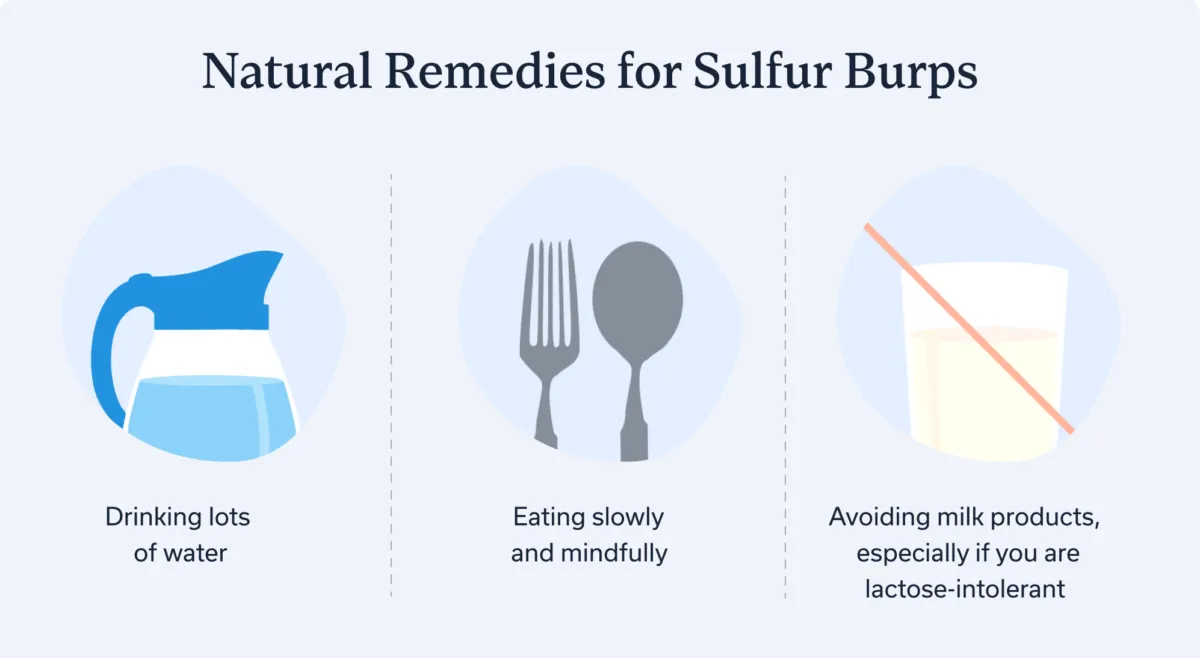
Several home strategies can reduce sulfur burps. Drinking a full glass of water after meals supports digestion and helps move gas through the system. A short walk after eating encourages gas to pass naturally. Ginger tea or chewing fresh ginger may calm the stomach and reduce gas production. Some people find relief with diluted apple cider vinegar before meals, though evidence is limited.
Pro Tip: Sip warm water with a squeeze of lemon after a high-protein meal to support digestion without adding carbonation.
Over-the-counter options include simethicone, which breaks up gas bubbles, and bismuth subsalicylate, which can reduce the odor of gas. Activated charcoal is sometimes used, but it can interfere with medication absorption, so check with a pharmacist first.
Lifestyle Changes to Reduce Burping
Small changes in how you eat and live can cut down on burping significantly. Eat slowly and chew food thoroughly to swallow less air. Avoid chewing gum, hard candy, and straws. If you wear dentures, make sure they fit properly. Quitting smoking reduces swallowed air and improves overall digestive health.
Regular physical activity, even a 15-minute walk after dinner, helps gas move through the intestines. Managing stress matters too, because anxiety can speed up digestion or cause you to gulp air without noticing.
Medical Treatments for Persistent Cases
When home remedies aren’t enough, medical treatment depends on the cause. H. pylori infection is treated with a combination of antibiotics and acid-reducing medication. SIBO may require a course of antibiotics such as rifaximin, prescribed by a doctor. GERD is managed with proton pump inhibitors or H2 blockers, along with dietary adjustments.
Warning: Don’t take antibiotics without a confirmed diagnosis. Unnecessary antibiotics can worsen bacterial overgrowth and contribute to resistance.
If a food intolerance is suspected, a healthcare provider may recommend an elimination diet or lactose breath test. Treating the underlying condition usually resolves the sulfur burps over time.
Diet Comparison: Foods to Limit vs. Foods to Try
| Foods to Limit | Why They Cause Issues | Foods to Try Instead |
|---|---|---|
| Eggs | High sulfur protein | Oatmeal with fruit |
| Red meat | Sulfur amino acids | Skinless chicken or tofu |
| Broccoli and cauliflower | Raffinose and sulfur | Spinach or zucchini |
| Garlic and onions | Sulfur compounds | Ginger or herbs like basil |
| Carbonated soda | Added gas and acidity | Still water or herbal tea |
| Beer and wine | Fermentation byproducts | Diluted fruit juice in moderation |
This table is a starting point, not a permanent ban. Many people tolerate small portions of trigger foods without symptoms.
Quick Relief Steps to Try Today
| Step | What to Do | When to Do It |
|---|---|---|
| 1 | Drink 8 ounces of still water | After meals |
| 2 | Walk for 10 to 15 minutes | After eating |
| 3 | Sip ginger tea | When burps start |
| 4 | Take simethicone as directed | For gas pressure |
| 5 | Avoid lying down for 2 hours | After dinner |
If these steps don’t help within a few days, consider speaking with a pharmacist or doctor about other options.
Related guides
Frequently Asked Questions
Why do my burps taste like rotten eggs?
The taste comes from hydrogen sulfide gas produced when sulfur-containing foods break down in your stomach or intestines. It’s usually diet-related, but infections such as giardiasis can also cause it.
Are sulfur burps a sign of something serious?
Occasional eggy burps are usually harmless and linked to food or eating habits. Persistent burps with pain, weight loss, or bowel changes deserve a medical evaluation.
Can drinking water stop egg-smelling burps?
Water can help by supporting digestion and moving gas through the tract, but it won’t eliminate the odor if the cause is a medical condition or a high-sulfur meal.
Which over-the-counter medicine helps with sulfur burps?
Simethicone relieves gas pressure, and bismuth subsalicylate can reduce gas odor. Read the label and ask a pharmacist if you take other medications.
Should I stop eating eggs if my burps smell like sulfur?
Not necessarily. Try reducing portion size or frequency first, and keep a food diary to confirm whether eggs are your personal trigger before cutting them out completely.
Conclusion
Most people can manage egg-smelling burps with diet tweaks, better eating habits, and over-the-counter relief. Start by keeping a simple food and symptom diary for one week to spot your triggers, then adjust your meals and habits accordingly.