
A rotten egg smell from your air conditioner isn’t normal, and it shouldn’t be ignored. If you searched ac smells like rotten eggs, you’re likely dealing with one of three possibilities: a natural gas leak, a dead animal inside the ductwork, or a biological buildup inside the evaporator coil or condensate drain. Natural gas itself is odorless, but utility companies add a sulfur compound called mercaptan so leaks smell like rotten eggs. That means an eggy odor coming through your vents could be gas entering the return air and being circulated through your home, which is a safety emergency. The other causes are less dangerous but still require prompt attention to protect indoor air quality and prevent damage to your cooling system.
Key Takeaways
- Turn off the AC at the thermostat and breaker if you suspect gas, then leave the home and call your gas utility or 911 from outside.
- Don’t light matches, flip electrical switches, or use anything that could spark while the odor is present.
- Inspect visible vents and accessible duct sections for signs of a dead animal, such as flies, maggots, or a worsening stench near one register.
- Schedule a professional HVAC cleaning if the smell appears only when the system runs and points to the evaporator coil or condensate drain.
- Replace air filters every one to three months and keep the drain line clear to help prevent biological odors from returning.
Is It a Gas Leak?
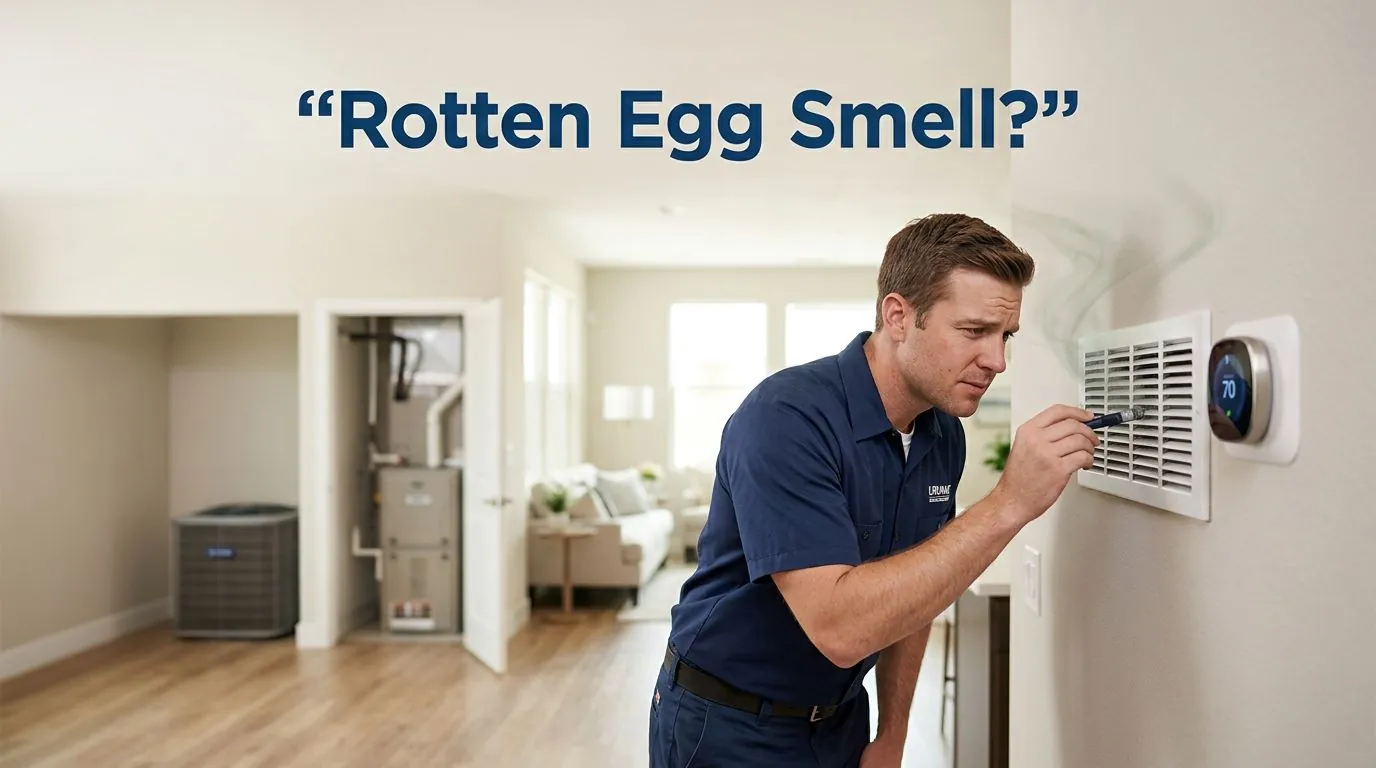
The first thing to rule out is a natural gas leak. Because gas is odorless, utility providers add mercaptan, which produces that unmistakable rotten egg scent. If your AC is running and the smell blows through the vents, a leak near the return air duct or at the furnace could be pulling gas into the airflow and distributing it through your house.
Warning: A gas leak can explode or cause carbon monoxide poisoning. Treat any strong sulfur odor as an emergency until a professional rules it out.
If the smell is strong, sudden, or accompanied by a hissing sound near the furnace or gas line, turn the system off, get everyone outside, and call your gas company or emergency services from a safe distance. Don’t turn lights on or off, don’t use a phone inside the house, and don’t start a car in an attached garage. Only a licensed technician or utility worker should declare the home safe to re-enter.
Dead Animal in the Ductwork
Small animals sometimes enter ducts through broken vents, missing screens, or gaps in the attic or crawl space. When an animal dies inside the ductwork, the AC fan pushes the odor through the vents every time the system cycles on. The smell is usually strongest near one register and tends to intensify as the system runs.
Look at visible vents and any accessible duct sections in the attic, basement, or crawl space. You may see flies, droppings, nesting material, or staining around a particular register. If you can reach the animal safely and the duct section is exposed, you can remove it and clean the area. Otherwise, an HVAC technician or duct cleaning professional should inspect the system, remove the remains, and seal the entry point to prevent it from happening again.
Evaporator Coil and Drain Pan Buildup
The evaporator coil removes humidity from the air as it cools your home. That moisture drips into a condensate pan and exits through a drain line. If the pan holds standing water or the drain line clogs, mold, mildew, and bacteria can grow. Some microbial growth produces a sulfur-like or rotten egg odor, especially in humid climates or when the system has sat unused for weeks.
This type of smell usually appears only when the blower is running and may smell stronger at startup before fading slightly. It rarely smells as sharp as a gas leak, but it can still aggravate allergies and asthma. Cleaning the coil, pan, and drain line typically resolves it.
Dirty Air Filter and Blower Wheel
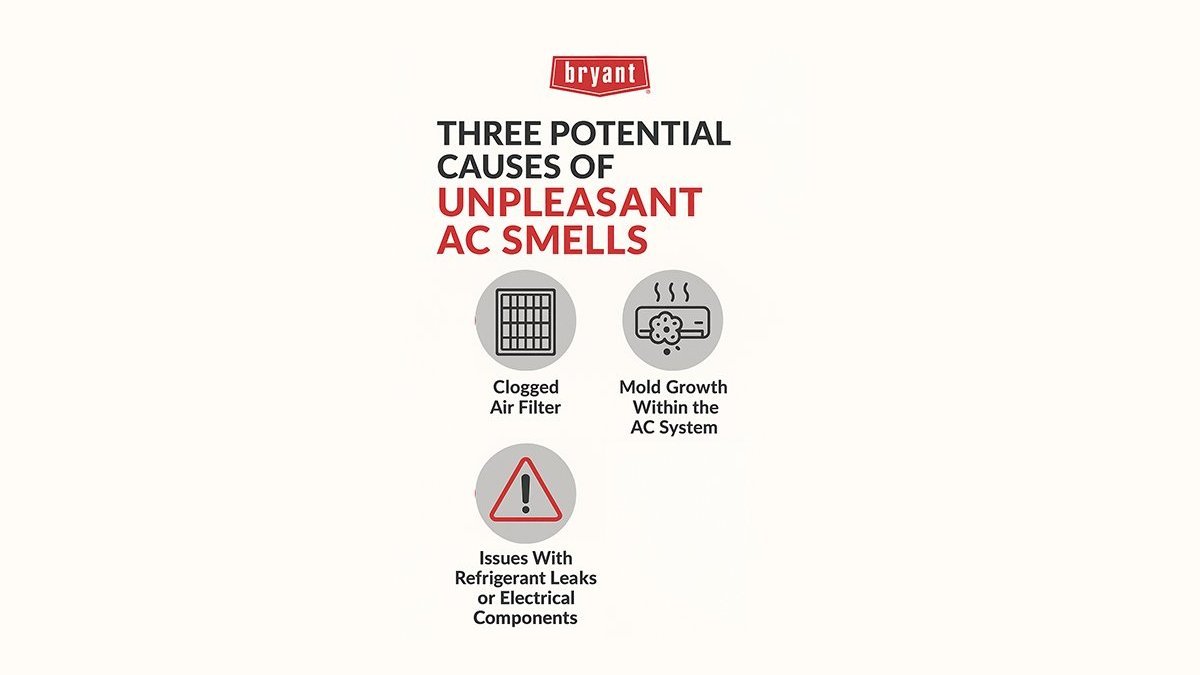
A clogged air filter restricts airflow and allows dust, pet dander, and moisture to collect on the blower wheel and inside the cabinet. Over time, that trapped debris can develop a musty or sour smell that some people describe as rotten eggs, particularly if the filter stays damp in a humid environment.
Check the filter first. If it looks gray, clogged, or wet, replace it. While the filter is out, shine a flashlight into the return air compartment. If you see visible mold or sludge on the blower wheel, the unit needs professional cleaning before you run it again.
Refrigerant Leaks That Smell Like Rotten Eggs
Refrigerant leaks usually smell sweet, like chloroform or ether, not like rotten eggs. However, if you can’t identify the source and the odor is chemical or sharp, shut the system off and call a technician. Refrigerant exposure is hazardous, and a leak can damage the compressor if the system keeps running.
Burning or electrical smells point to an overheating motor or wiring problem and also require immediate service. Any odor that doesn’t match the usual musty or dusty scent of a seasonal startup deserves a closer look.
What to Do Right Now
Follow these steps in order when your AC smells like rotten eggs:
- Turn the thermostat to OFF and switch off power at the breaker if you suspect gas.
- Evacuate the home and call your gas utility or emergency services from outside if the smell is strong or sudden.
- If the smell is mild and only happens when the AC runs, turn the system off to stop circulating the odor.
- Check the air filter and replace it if it’s dirty, damp, or clogged.
- Look at visible supply and return vents for signs of pests or debris.
- Call a licensed HVAC technician for an inspection if you can’t find the source or if the smell persists after changing the filter.
Don’t run the AC while trying to diagnose the smell. Running the fan can spread gas, mold spores, or particles throughout the house.
When to Call a Professional
Some problems are safe for a homeowner to handle, but others are not. The table below helps you decide what you can check yourself and when to call for service.
| Situation | What You Can Do | When to Call a Pro |
|---|---|---|
| Strong sulfur or gas odor | Evacuate and call the gas utility from outside | Immediately; don’t re-enter until cleared |
| Smell at one vent only | Inspect visible register for debris or pests | If you can’t reach the source or see nesting material |
| Smell when AC starts, then fades | Replace the air filter | If odor continues after filter replacement |
| Visible mold or slime in drain pan | None; don’t spray chemicals into the coil | For coil cleaning, drain line flush, and pan treatment |
| Repeated odor after cleaning | Change filters on schedule | For duct inspection, sealing, and sanitizing |
A professional inspection typically includes checking the heat exchanger, burners, gas connections, evaporator coil, condensate drain, and ductwork. Most HVAC companies offer seasonal maintenance visits that cover these items.
Prevention and Maintenance Schedule
Routine care is the best way to keep odors from coming back. The table below outlines a typical maintenance timeline for a central air conditioning system.
| Task | Frequency | Who Usually Does It |
|---|---|---|
| Inspect and replace air filter | Every 1 to 3 months | Homeowner |
| Clear outdoor unit of leaves and debris | Every 1 to 3 months | Homeowner |
| Flush condensate drain line | Once per year | Homeowner or technician |
| Clean evaporator coil and blower | Once per year | HVAC technician |
| Inspect ductwork for leaks and pests | Every 2 to 3 years | HVAC technician or duct specialist |
| Full system tune-up | Once per year | Licensed HVAC technician |
Use a filter with the MERV rating recommended by your equipment manufacturer. A filter that’s too restrictive can reduce airflow and cause the same moisture problems you’re trying to prevent.
Pro Tip: Pour a cup of white vinegar or a manufacturer-approved drain treatment into the condensate drain access point every few months during cooling season to help keep the line clear. Don’t use bleach unless your system manual specifically approves it, because bleach can damage some drain pan materials and fittings.
Costs You Might Face
Repair costs vary by region, system age, and the exact problem. The figures below are typical ranges, not exact quotes.
| Issue | Typical Cost Range |
|---|---|
| Air filter replacement | $10 to $40 |
| Condensate drain line cleaning | $75 to $250 |
| Evaporator coil cleaning | $200 to $600 |
| Dead animal removal and duct sanitizing | $300 to $900 |
| Duct sealing and repair | $500 to $2,000 |
| Annual HVAC maintenance visit | $100 to $250 |
| Gas leak repair by utility or plumber | $150 to $1,000+ |
Ask for a written estimate before any major work. Some utility companies offer free or discounted gas leak inspections as a public safety service.
Related guides
Frequently Asked Questions
Is a rotten egg smell from the AC dangerous?
It can be. If natural gas is leaking into the return air, the odor means there’s a risk of fire, explosion, or carbon monoxide exposure. Treat it as an emergency and call your gas utility from outside the home. If it turns out to be mold or a dead animal, it’s mainly an air quality issue rather than an immediate safety threat.
Can I just spray air freshener into the vents?
No. Masking the smell doesn’t fix the cause, and spraying chemicals into the ductwork can coat the coil, clog the filter, or irritate your lungs when the fan blows those particles through the house. Find and remove the source instead.
How do I tell if it’s gas or mold?
Gas odors are usually sharp, constant, and present even when the AC is off if the leak is near the furnace or gas line. Mold smells tend to appear only when the blower runs and often fade after the system has been operating for a while. When in doubt, assume it’s gas and call for help.
Will changing the air filter fix the smell?
Only if the odor is coming from a dirty filter or blower wheel. If the source is a gas leak, dead animal, or clogged condensate drain, a new filter won’t help and could delay needed repairs.
How often should I have my ducts inspected?
Every two to three years is typical for most homes, or sooner if you notice pests, visible debris coming from registers, or persistent odors that filter changes don’t resolve.
Should I run the fan to air out the house?
Not if you suspect gas. Running the fan can circulate the odor and potentially draw more gas into the system. Turn the system off, leave the house, and call for help from outside. Once professionals declare the home safe, you can open windows and run the fan to ventilate.
Conclusion
A rotten egg smell from your air conditioner is a warning you should act on. Start by ruling out a gas leak, then check the filter and visible vents for simpler causes. If the odor persists, call a licensed HVAC technician to inspect the coil, drain, and ductwork before you rely on the system again.