

Stop driving immediately if you see a fuel leak or smell raw gasoline inside your cabin. Safety is the priority here, so pull over to a safe area, turn off the engine, and exit the vehicle. You have a car smells like gas situation that requires you to stop and inspect the exterior for puddles or drips before you consider starting the ignition again.
Immediate Steps to Prevent Risk
Park the vehicle on a flat, paved surface away from any open flames or sparks. Avoid parking over dry grass or leaves, as the heat from a catalytic converter can ignite these materials in seconds.
Turn off the ignition completely to stop the fuel pump from pushing gas through the lines. If the engine stalls while driving, keep the vehicle in gear to maintain steering and braking control while you safely steer to the shoulder, then turn off the ignition once stopped.
Exit the vehicle and move all passengers to a safe location at least 50 feet away from the car. This distance provides a buffer against potential fuel spray or sudden combustion.
Check under the chassis for visible puddles of liquid or signs of wetness near the fuel tank. If you smell raw gasoline, assume a leak exists even if the ground appears dry. If you see a steady drip, don’t attempt to restart the engine and call for a tow truck immediately.
Why Your Car Smells Like Gas
The smell of raw fuel inside a vehicle usually means there’s a breach in the fuel delivery system or the evaporative emissions control system. When fuel lines, the gas tank, or the charcoal canister fail, vapors can escape and get pulled into the cabin through the ventilation system. Because gasoline is highly volatile, even a tiny pinhole leak can release a strong odor that fills the interior quickly.
Most modern vehicles use a charcoal canister to trap these vapors. If this part fails or the hoses connected to it crack due to age, the vapors have nowhere to go but out into the atmosphere or into your vents. Another common issue involves the fuel injectors or their seals.
If a seal dries out or cracks, it allows fuel to spray or seep out near the engine block. Because the engine bay is hot, this fuel evaporates almost instantly, creating a sharp, stinging smell that enters the cabin when you’re idling or moving at low speeds.
Common Sources of Fuel Odors

| Source | Symptom | Likelihood |
|---|---|---|
| Fuel Filler Cap | Loose or worn seal | High |
| Fuel Injector O-Rings | Wetness near engine | Medium |
| Charcoal Canister | Strong smell near rear | Medium |
| Fuel Lines | Visible drips or wet spots | Low |
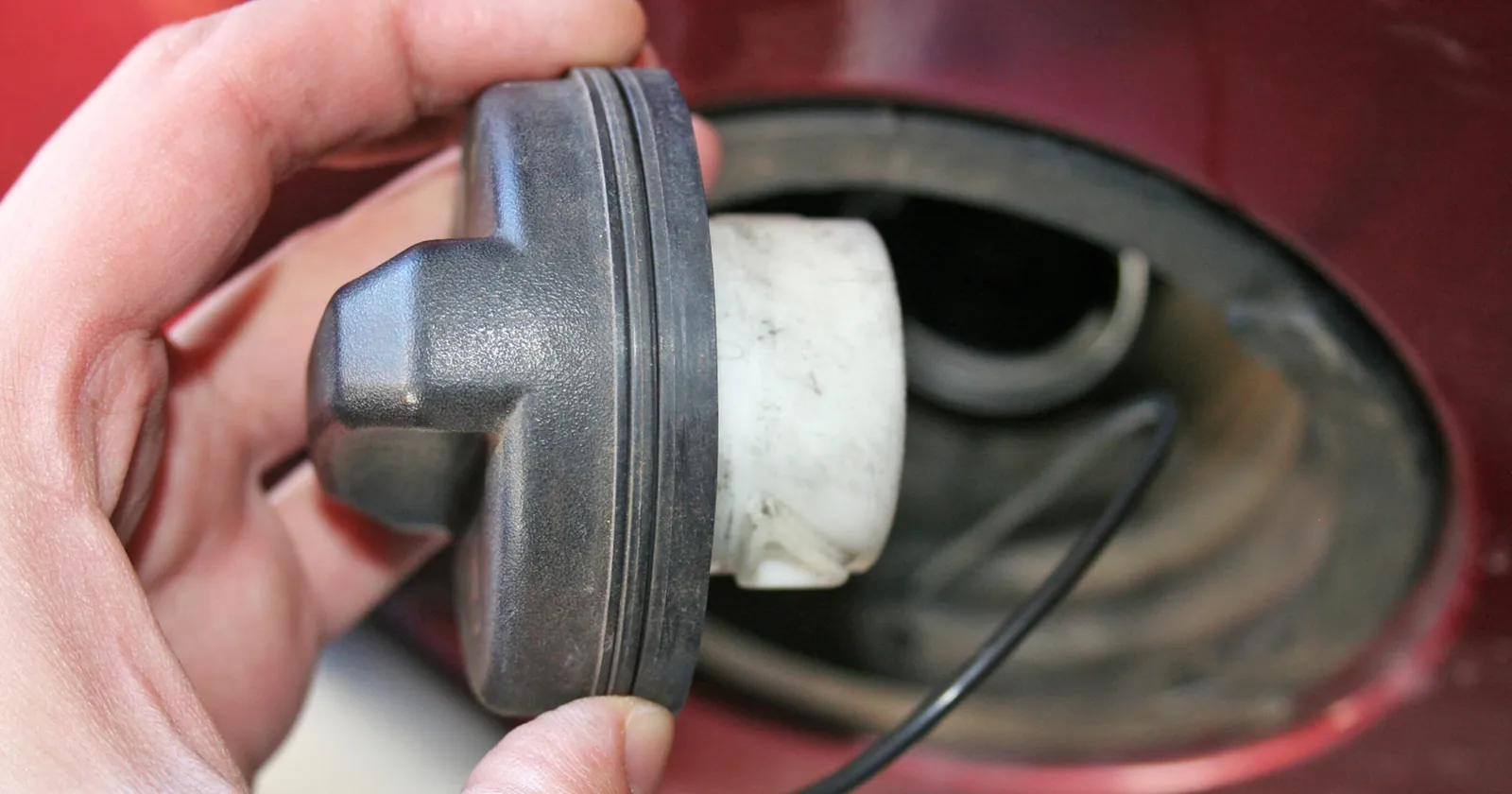
Tighten the gas cap
Check if the cap is loose or if the rubber gasket looks cracked. A loose cap stops the system from holding pressure, which triggers a check engine light and lets vapors escape. If the gasket is dry or brittle, replace the cap entirely to restore the seal.
Inspect the engine bay
Open the hood and look for any signs of moisture or dark spots on the fuel rail. A damp injector or fuel line indicates a leak that needs immediate attention. If you see liquid, don’t start the engine because the heat can easily ignite the fuel.
Check under the vehicle
Look along the underside of the car where the fuel lines run from the tank to the front. If you see rust or wet spots on the metal lines, a pipe has likely corroded through. This is common in areas that use road salt in winter.
Inspect the charcoal canister
Find the canister near the rear of the vehicle and look for cracked hoses or damaged plastic housing. If these lines are loose or split, they will leak vapors directly under the car. This often causes the smell to be strongest when you’re standing outside the rear bumper.
Fixing the Fuel Leak
The repair for a fuel odor depends entirely on which component has failed. If the gas cap is the culprit, buying a new one from your local auto parts store is a cheap, five-minute fix that solves the problem instantly. If you find a cracked rubber hose, you might be able to replace the section yourself, but you must use fuel-rated hose and high-quality clamps to prevent a future leak.
If the leak comes from a metal fuel line or a leaking fuel injector, you must replace the damaged part. Never use tape or temporary sealants on a fuel line, as the high pressure in the system will blow through these patches within minutes. You’ll know the fix is successful if the odor disappears immediately after the repair and no longer returns when the engine reaches operating temperature.
When to Call a Mechanic

You should stop your repair attempts if you identify a leak in the fuel tank itself or deep within the engine’s fuel injection system. These areas require specialized tools to depressurize the system safely before any work begins. A mistake here could lead to a fire or a high-pressure spray of gasoline that can cause severe injury.
If the leak is external, such as a cracked rubber hose or a loose clamp, you can typically fix it with basic hand tools. However, if the fuel is pooling near the exhaust manifold or dripping onto hot electrical components, tow the vehicle immediately. The risk of ignition outweighs the cost of a service call.
A professional mechanic will use a smoke machine to find hidden leaks in the evaporative system that are impossible to see by eye. When you take the car to a shop, tell them exactly where you smelled the fuel. Specify if the odor is worse when the engine is cold or after it has been running.
Related guides
Frequently Asked Questions
Is it safe to drive my car if it smells like gas?
It isn’t safe to drive your vehicle if you can smell raw gasoline inside the cabin. Fuel vapors are toxic and flammable, and a persistent smell indicates a leak that could worsen into a fire at any moment while you’re on the road.
Why does my car smell like gas only after I fill up?
This usually happens because the filler neck or the gas cap seal is leaking liquid or vapor during the filling process. If you notice this, check the area around the filler neck for wetness and ensure your gas cap is tightened until it clicks at every fill-up.
Can a bad spark plug cause a gas smell?
A bad spark plug itself doesn’t cause a gas smell, but a misfiring cylinder can. If a cylinder fails to burn the fuel, the unburned gas is pushed out through the exhaust system, which creates a strong, pungent odor that you might mistake for a fuel leak.
How much does it cost to fix a gas leak?
The cost varies based on the part that failed, with a simple gas cap being inexpensive and a full fuel line or pump replacement costing significantly more. You must have a mechanic perform a pressure test to get an accurate quote for your specific vehicle.
Does the smell of gas mean my engine is failing?
The smell of gas doesn’t mean the engine itself is failing, but it does mean a critical safety system is broken. The engine may be running perfectly fine, but the fuel delivery system is venting dangerous vapors into the air instead of keeping them contained within the lines.
Will a check engine light always come on if there’s a gas leak?
A check engine light will often trigger if the leak is in the evaporative emissions system because the computer detects a loss of pressure. However, if the leak is a direct liquid drip from a fuel line, the light might not come on, even though the situation is very dangerous.
Conclusion
If you can’t pinpoint the source of the odor, don’t take any chances with your safety. It’s best to have your vehicle towed to a trusted mechanic who can pressure-test the fuel system. They’ll find the leak quickly, and you’ll be back on the road with peace of mind soon.