
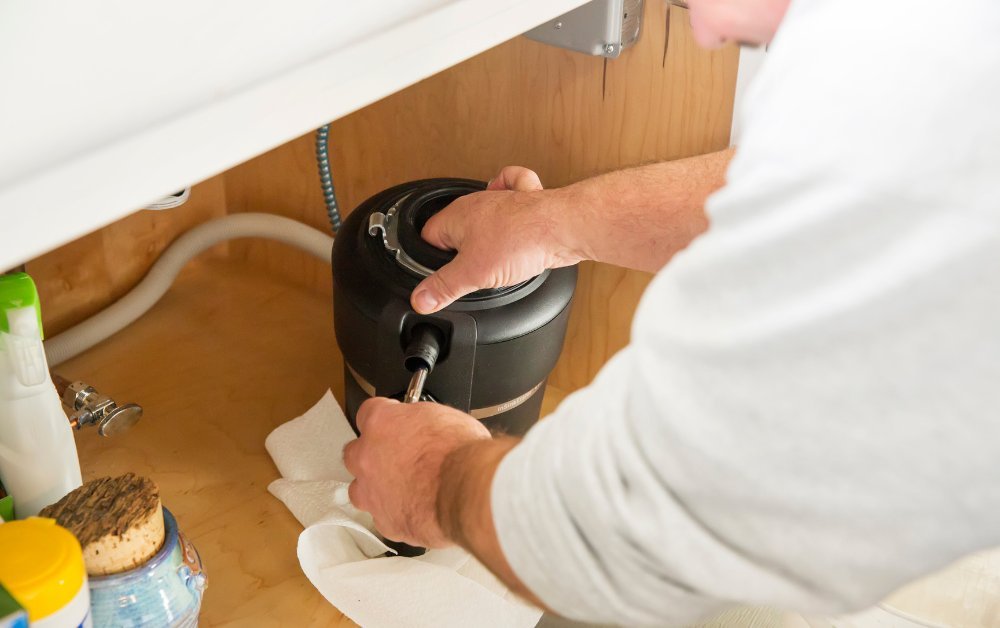
A garbage disposal smells like sewage when rotting food sits inside the chamber or the drain line and breaks down. The most common cause is food waste that never made it all the way down the pipe, where it decays and sends the odor back up through the sink. You can usually clear it yourself with basic supplies and a few minutes of work.
Why a garbage disposal smells bad
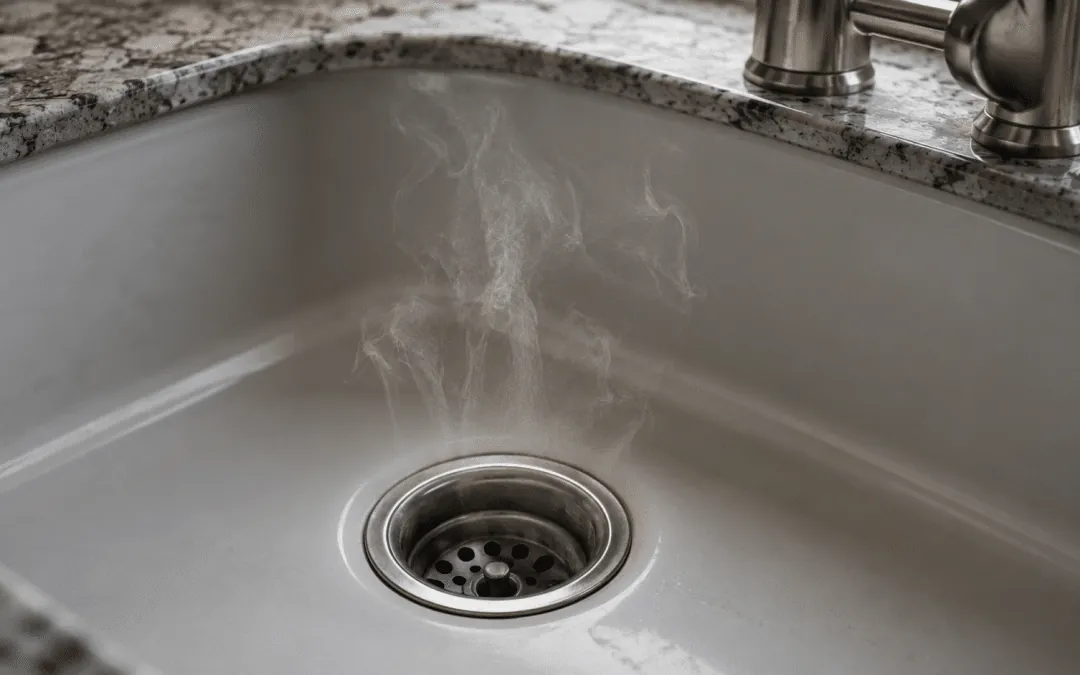
Food particles stick to the grind chamber and the splash guard after you run the unit. Water alone doesn’t always carry them away, especially if you put starchy or fibrous waste down the drain. As that trapped food rots, bacteria grow and release the sewage-like smell you notice when the sink sits idle.
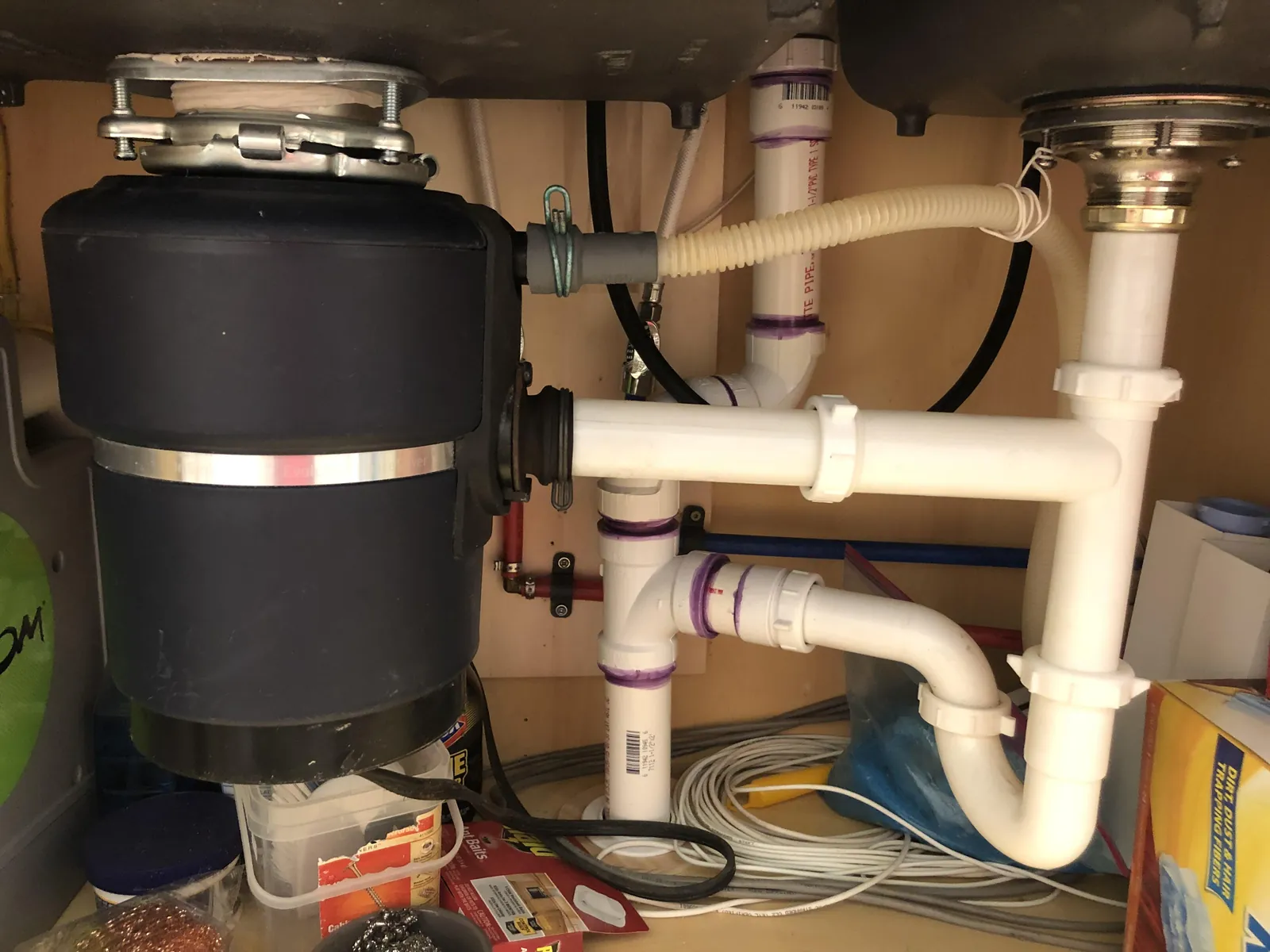
A dry or missing P-trap under the sink lets sewer gases rise through the drain instead of blocking them. The U-shaped pipe is supposed to hold water, but if the disposal goes unused for days, that water can evaporate and the barrier disappears. A clogged drain line farther down also forces air and odor back up through the disposal opening.
Run the disposal with a strong flow of cold water before and after grinding to check whether the trap is doing its job. If the smell returns within hours, the problem is likely trapped food inside the chamber rather than the drain line. Don’t take the unit apart or reach inside the housing — that’s a job for someone trained to work with it.
Flush the disposal with ice and salt
This fix works for light buildup on the grinding teeth and inside the chamber. Fill the disposal with two cups of ice cubes, add half a cup of rock salt, run cold water, and turn the unit on until the ice is gone. The ice acts as a scouring agent, while the salt creates an abrasive slurry that knocks loose food particles clinging to the interior surfaces.
You’ll know it worked when the sewage smell fades during and right after the run. If the odor returns within twenty-four hours, the organic matter is trapped in the drain line or the splash guard, meaning the buildup is deeper than ice can reach. In that case, you must manually scrub the underside of the rubber flaps with a stiff-bristled brush.
This method needs no special training, but never put your hand inside the disposal to retrieve anything. If the unit hums but doesn’t spin, the motor is jammed. Call a plumber if an object is stuck or the drain remains blocked.
Clean the splash guard and drain line
The rubber splash guard collects food on its underside, where water never reaches. Lift each flap and scrub it with a stiff-bristled brush and grease-cutting dish soap, then rinse thoroughly. If you skip this, the decaying organic matter will sour the air in your kitchen within hours.
For the drain line, pour a half-cup of baking soda into the disposal, follow it with a half-cup of white vinegar, let the mixture foam for fifteen minutes, and flush with a full kettle of boiling water. This clears the minor buildup that causes slow drainage.
If the smell disappears after cleaning but returns within forty-eight hours, food is likely trapped in the P-trap or the horizontal pipe section beyond the unit’s reach. In that case, you must manually disassemble the pipe under the sink to remove the obstruction. Never use caustic chemical drain cleaners in a disposal. They can corrode the internal metal components and create a severe chemical burn hazard if someone later reaches inside to clear a jam.
Replace the unit when cleaning fails
This is for the harder cases where the disposal itself is the source. If the chamber is corroded, the unit leaks, or the smell persists after repeated cleaning and snaking the drain, replacing the disposal is usually worth it. A new unit removes the old buildup entirely and comes without the worn seals that trap odor.
Check the mounting flange for rust or hairline cracks before buying a replacement. If the leak originates from the sink flange rather than the disposal housing, you only need to reseal the drain assembly. This repair is inexpensive compared to the cost of purchasing a new disposal unit.
If your kitchen sink drains slowly but the disposal sounds normal, the issue is likely a blockage in the P-trap or the main branch line. A simple clog costs far less to clear than a new disposal. Only commit to a replacement if the motor hums without spinning or if you see standing water leaking from the unit’s base.
Things that make the smell worse
Running hot water while grinding melts fats, which then coat the disposal chamber and harden into a rancid film as they cool. Always use cold water to keep grease solid so the blades can break it into smaller, flushable pieces.
Grinding coffee grounds or eggshells regularly creates a fine, sandy sludge. These particles settle in the pipe’s corrugated walls and trap other food scraps, forming a permanent odor reservoir. If you must dispose of these, follow them with a full minute of high-pressure water to clear the line.
Leaving food in the disposal overnight allows bacteria to colonize the damp, dark chamber. This rot spreads quickly to the splash guard, which often harbors the bulk of the stench. If the smell persists after a thorough cleaning, scrub the underside of the rubber flaps with a stiff brush and dish soap.
Avoid bleach or caustic drain cleaners. These chemicals corrode the disposal’s internal seals and metal components, leading to premature leaks. They also fail to dissolve the organic buildup that causes the odor in the first place. Use baking soda and vinegar instead to safely neutralize the acidity of the rotting waste.
Keep the disposal from smelling again
| If you’re doing this | Do this instead | Why | | Run the disposal only briefly | Run it with cold water for fifteen to thirty seconds after grinding | Flushes all food out of the chamber and line | | Put starchy or fibrous waste down the drain | Throw potato peels, celery, and pasta in the trash | These materials cling to the chamber and rot | | Let the disposal sit unused for days | Run it with water every few days | Keeps water in the P-trap and stops sewer gas | | Ignore a lingering odor | Clean the splash guard and flush the line | Trapped food won’t go away on its own |
Most homeowners make the mistake of assuming the blades are self-cleaning. In reality, food particles lodge in the underside of the rubber splash guard, where they decay indefinitely. Scrub this flap with a stiff-bristled brush and dish soap once a week to remove the invisible buildup.
If you detect a metallic or sulfurous smell despite a clean guard, check your P-trap. If the water seal has evaporated, sewer gas enters your kitchen directly. You can fix this by pouring a gallon of water down the drain to reset the barrier.
Finally, distinguish between a mechanical failure and a sanitation issue. If the unit smells like burning rubber while running, the motor is likely overheating. In that case, stop using the unit immediately and call a technician. If the smell is strictly organic, your routine maintenance will resolve the odor within two cycles.
Related guides
- Dog Smells Like Fish From Back End: Causes and Solutions
- How to Remove Gorilla Glue From Wood: A Simple Step-by-Step Fix in 2026
- How to Fix Polyurethane Mistakes: A Step-by-Step Repair Guide in 2026
Frequently asked questions
Why does my garbage disposal smell like sewage?
Trapped food waste inside the chamber or drain line rots and releases odor, or a dry P-trap lets sewer gas rise through the sink.
Can I use bleach to get rid of the smell?
No. Bleach doesn’t remove trapped food and can damage the disposal or create fumes when mixed with other cleaners.
How long should I run the disposal after grinding?
Run it with cold water for fifteen to thirty seconds after the food is gone to flush the chamber and line completely.
Is it safe to put my hand inside the disposal?
No. Never reach inside the housing, even when the unit is off — call a plumber to remove anything stuck inside.
What happens if I ignore the smell?
The buildup grows, the odor gets stronger, and the drain can clog completely until someone cleans or replaces the unit.
How often should I clean the disposal?
Clean it once a week if you use it daily, or whenever you notice an odor starting to return.
When should I call a plumber?
Call one if the smell remains after cleaning, the unit leaks, or something is stuck inside the housing.
Conclusion
If the unpleasant scent lingers after you’ve cleaned the unit, there might be a deeper issue with your plumbing trap or venting system. Don’t hesitate to call a local plumber if you’re still struggling. They’ll quickly spot any hidden clogs and ensure your kitchen stays fresh for the long haul.