

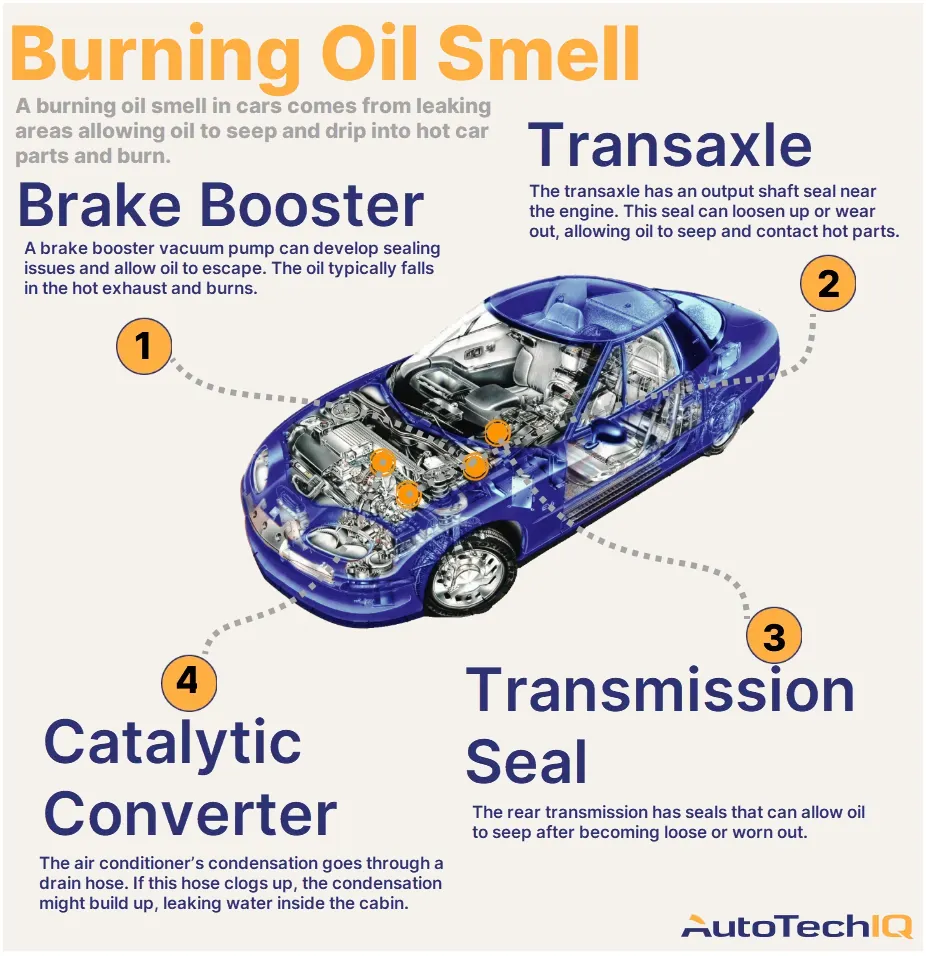
Noticing a sharp, acrid scent under the hood or drifting through the vents often means oil is leaking onto a hot engine surface. If you searched “car smells like burning oil,” you’re usually dealing with a leak that lands on the exhaust manifold, valve cover gasket, oil filter housing, or another component hot enough to vaporize oil on contact. Most drivers first catch the smell after a drive, when the engine is warm and oil residue begins to smoke lightly. It can also come from oil that seeped onto the exhaust during a recent oil change, or from an overfilled crankcase that pushes oil past seals and onto hot parts.
Key Takeaways

- Treat any burning-oil smell as a possible fire risk and check the engine bay as soon as it’s safe to do so.
- Common leak points include the valve cover gasket, oil filter housing, oil pan gasket, rear main seal, and turbocharger oil lines.
- Check the dipstick when the engine is cold and the car is on level ground; add oil only if the level is below the “Add” mark.
- Don’t keep driving if you see smoke, low oil pressure, or a rapidly dropping oil level; have the vehicle towed instead.
- Repair costs typically fall between $150 and $1,200 depending on which seal or gasket is leaking and how much labor is involved.
Why Your Car Smells Like Burning Oil
Oil is meant to stay inside the engine, lubricating moving parts under pressure. When a seal, gasket, or line fails, oil escapes and lands on components that run several hundred degrees hotter than the oil itself. The oil doesn’t burn cleanly; it smokes and creates that distinctive burnt-oil odor. You may notice the smell more when the car is idling after highway driving, because airflow drops while engine heat remains high.
The most frequent leak sources are:
- Valve cover gasket: sits at the top of the engine and often hardens with age, letting oil seep down the block onto the exhaust manifold.
- Oil filter housing or adapter seal: a common leak point on many European and Asian engines; oil drips onto the subframe or exhaust components below.
- Oil pan gasket: located at the bottom of the engine; road debris and age can cause seepage that drips onto the exhaust or catalytic converter.
- Rear main seal: sits between the engine and transmission; leaks here often appear as oil on the transmission bell housing or exhaust pipe.
- Turbocharger oil feed or drain lines: on turbocharged engines, a failing line can spray or drip oil directly onto the turbo housing or exhaust manifold.
A less obvious cause is an overfilled engine. Too much oil can foam and be pushed past seals or through the PCV system, coating intake or exhaust parts in oil mist. Residual oil from a recent oil change can also produce the smell for a short time if some was spilled on the engine or exhaust and hasn’t yet burned off.
Is It Safe to Keep Driving?
A burning-oil smell should never be ignored, even if the car seems to run normally. Oil dripping onto the exhaust manifold or catalytic converter creates a real ignition risk, especially if the leak worsens while you’re driving. The bigger danger, though, is gradual oil loss. You may not see a puddle on the driveway because the oil burns off before it reaches the ground, but the level can drop low enough to starve the engine of lubrication.
Pro Tip: Pop the hood after the engine has cooled and use a flashlight to look for fresh, wet oil around the valve cover, oil filter housing, and oil pan. Shine the light along the exhaust manifold and downpipe; even a thin film of oil there confirms the smell is coming from a leak rather than spilled fluid from a service.
If you also notice the oil pressure warning light, a ticking or knocking engine, visible smoke from under the hood, or the temperature gauge climbing, stop driving as soon as it’s safe. Low oil pressure can destroy an engine in minutes. In those cases, call for a tow rather than risking another mile.
How to Check Your Oil Level
Checking the oil level takes only a few minutes and tells you whether the leak has become critical.
- Park on level ground and turn off the engine.
- Wait at least 10 minutes so the oil drains back into the pan and the engine is cool enough to touch safely.
- Locate the dipstick, usually marked with a bright yellow or orange handle.
- Pull it out, wipe it clean with a rag, reinsert it fully, then pull it out again to read the level.
- Compare the oil film to the “Min” and “Max” or “Add” and “Full” marks.
If the level is at or below the “Add” mark, add the correct oil type in small amounts—about a quarter liter at a time—and recheck. Don’t overfill, because excess oil can create its own leaks and smoke. If the level looks normal but the smell persists, the leak may be small enough that it’s burning off before it affects the total volume.
Common Causes and What They Cost
Repair prices vary widely by vehicle make, engine layout, and which component is leaking. The table below lists typical parts-and-labor ranges for common leak sources. These are shop estimates; a dealership will usually cost more than an independent mechanic, and some engines require intake or timing-cover removal that adds hours of labor.
| Leak Source | Typical Repair Cost | What Is Usually Replaced |
|---|---|---|
| Valve cover gasket | $150–$450 | Gasket, spark plug tube seals |
| Oil filter housing seal | $200–$550 | Housing seal or gasket, sometimes filter |
| Oil pan gasket | $250–$700 | Gasket, sometimes drain plug and washer |
| Rear main seal | $600–$1,200+ | Seal; transmission may need lowering |
| Turbo oil feed/drain line | $300–$800 | Hoses, lines, and fittings |
A shop will usually begin by cleaning the engine and running it to locate the exact leak point. Some shops charge a diagnostic fee of $100 to $150, which is often credited toward the repair if you book the work with them.
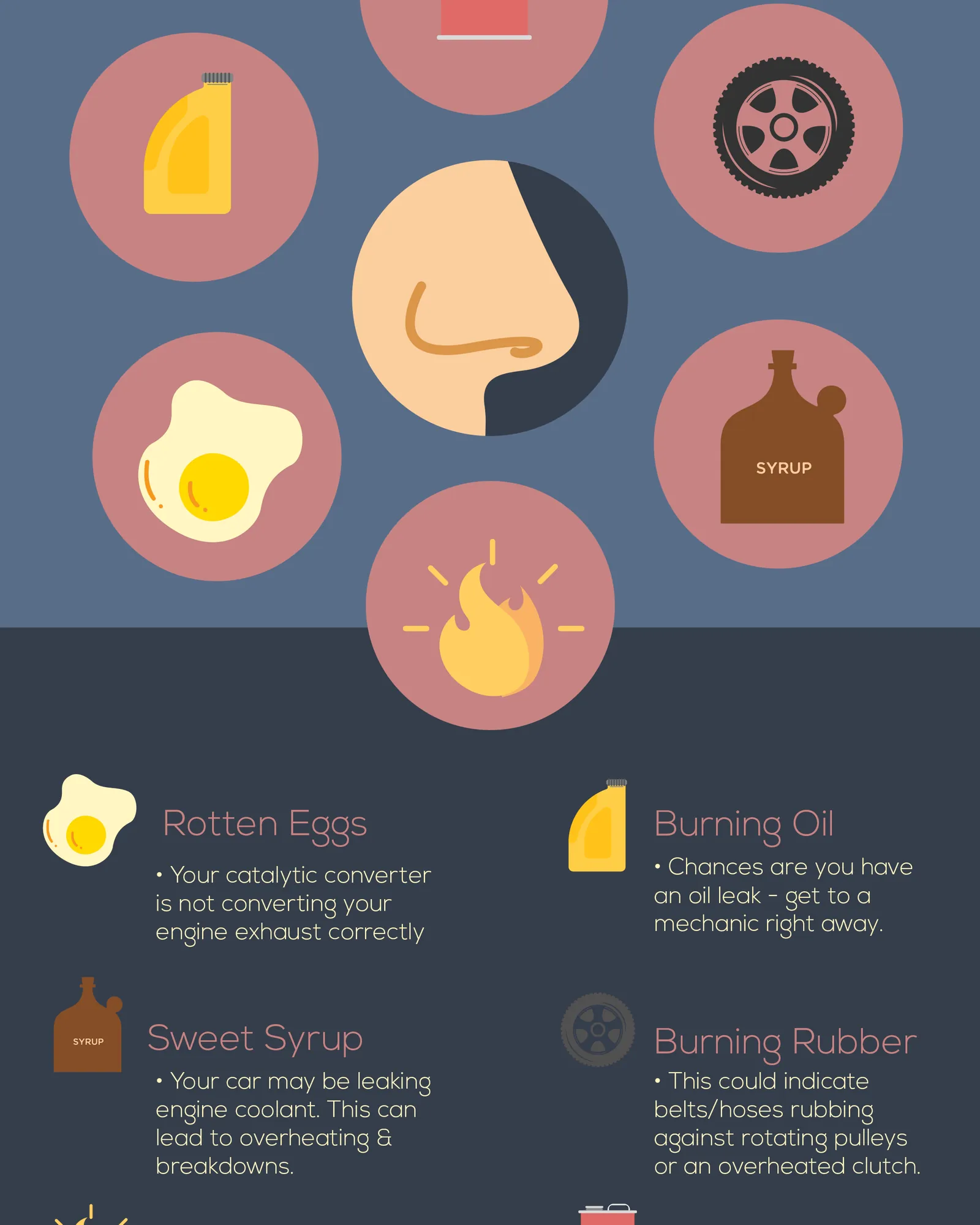
Other Smells That Get Confused With Burning Oil
Not every burnt scent under the hood is engine oil. Knowing the difference can save you from chasing the wrong repair.
- Burning transmission fluid: often smells sweeter and more chemical than oil; leaks usually appear near the transmission cooler lines or pan.
- Burning coolant: has a sweet, syrupy odor and may come with white steam from the exhaust or under the hood.
- Burning brakes or clutch: smells acrid and metallic, usually strongest after hard braking or aggressive shifting; often accompanied by a spongy pedal or slipping clutch.
- Burning electrical insulation: smells like sharp plastic or sulfur and may appear with flickering lights or a dead accessory.
If you can’t identify the source, describe the smell and where you notice it most to your mechanic. A technician can use UV dye and a blacklight to trace an oil leak precisely.
When to See a Mechanic
You should book an inspection if the smell returns after every drive, if you find yourself adding oil between changes, or if you see blue-gray smoke from the tailpipe. Blue smoke at startup often points to worn valve guides or piston rings, while smoke under acceleration can indicate turbocharger seal wear on turbocharged engines.
A mechanic will typically:
- Inspect the valve cover, oil filter housing, oil pan, and seals for external leaks.
- Check the PCV system for blockage that can pressurize the crankcase and force oil past gaskets.
- Scan for oil pressure and temperature data to rule out internal wear.
- Recommend cleaning the engine and re-inspecting after a short drive to confirm the leak location.
Warning: Don’t rely on oil stop-leak additives as a permanent fix. They may swell a seal temporarily, but they can also clog narrow oil passages and create more expensive problems later.
DIY Checks You Can Do Safely
Some preliminary checks are safe for most owners, but anything requiring you to lift the car or work near a hot exhaust should be left to a professional.
Safe checks:
- Check the dipstick level and condition; milky or gritty oil signals bigger trouble.
- Look under the car with a flashlight for fresh wet spots or drips after it has been parked overnight.
- Place a piece of cardboard under the engine overnight to see if oil is reaching the ground.
- Sniff around the engine bay with the hood open and the engine cool to localize the odor.
Leave these to a shop:
- Raising the vehicle on jack stands to inspect the oil pan or rear main seal.
- Removing the valve cover or any sealed engine component.
- Working on turbocharger oil lines, which are often in tight, hot spaces.
What Happens If You Ignore It
A slow oil leak can turn into an expensive repair if the level drops far enough. Engines that run low on oil suffer accelerated wear on bearings, camshafts, and timing components. In extreme cases, oil starvation can seize the engine entirely, requiring a rebuild or replacement that costs thousands of dollars. There’s also the fire risk: oil on a hot exhaust manifold can ignite under the right conditions, especially if the leak sprays rather than seeps.
Even a minor leak is worth fixing because it prevents the smell from entering the cabin through the ventilation system. Breathing oil fumes regularly is unpleasant and can cause headaches or nausea on longer drives.
Related guides
- Dog Smells Like Fish From Back End: Causes and Solutions
- Can You Use Oil Based Primer Over Latex Paint? The Fix in 2026
Frequently Asked Questions
Can I drive my car if it smells like burning oil?
You can drive a short distance to a repair shop if the oil level is normal and there are no warning lights, smoke, or loss of power. Treat the smell as a warning and have it inspected promptly rather than continuing regular use.
Why does the smell come and go?
The odor is often strongest after the engine is warm and the car is idling, because airflow is low while exhaust components stay hot. A small leak may only produce enough smoke to notice under those conditions, then fade as the engine cools.
Will an oil change fix the smell?
Only if the smell is caused by spilled oil from a recent service or by an overfilled crankcase. If a gasket or seal is leaking, fresh oil won’t stop the odor; it will simply replace what is being lost.
How much does it cost to fix a burning oil smell?
Typical shop repairs fall between $150 and $1,200, depending on which gasket or seal is leaking and how much disassembly is required. A valve cover gasket is usually at the low end, while a rear main seal is at the high end.
Can burning oil damage my engine?
Yes. Oil that leaks out is oil that isn’t lubricating internal parts. Over time, low oil level or pressure causes wear that can lead to overheating, bearing failure, or complete engine seizure.
Is burning oil a fire hazard?
Oil dripping onto a hot exhaust manifold or catalytic converter can ignite under some conditions. Any visible smoke or strong odor warrants a prompt inspection to reduce that risk.
Conclusion
Don’t wait for the smell to disappear on its own. Open the hood when the engine is cool, check your oil level, and schedule an inspection with a qualified mechanic to find the leak before it becomes a more expensive repair.