
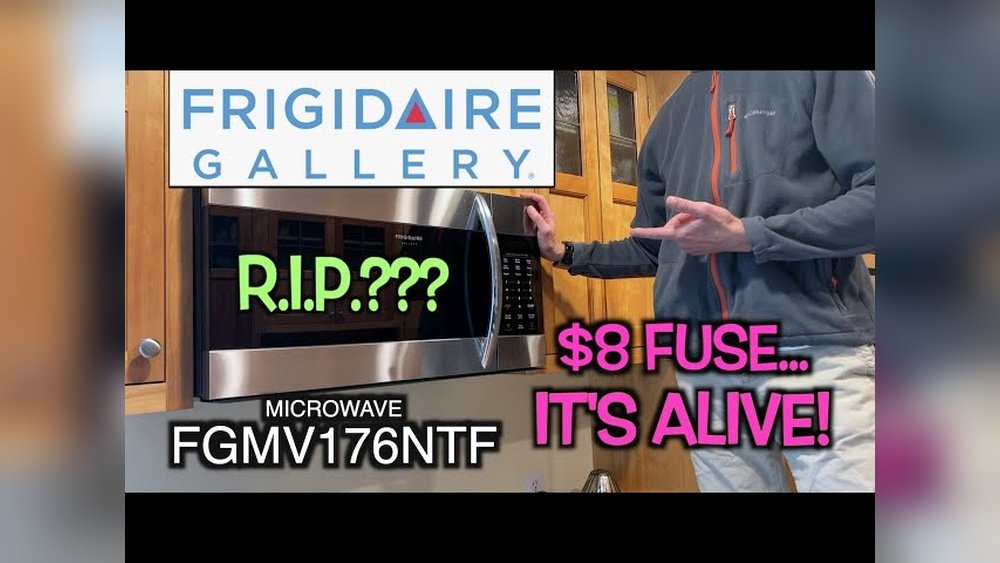
A Frigidaire microwave is a staple in many kitchens, offering convenience and speed for meal preparation. However, when this essential appliance starts blowing fuses, it can bring your culinary routine to a grinding halt. This recurring issue isn’t just an annoyance; it’s a clear signal that something is amiss within the microwave’s electrical system. Understanding the potential causes behind a Frigidaire microwave keeps blowing fuse is crucial for diagnosing the problem, ensuring safety, and determining whether a simple fix or professional repair is needed.
Blowing fuses in a microwave, especially a Frigidaire, typically points to an electrical overload or a short circuit. These safety mechanisms are designed to prevent damage to the appliance and, more importantly, to protect your home from potential fire hazards.
While a single blown fuse might be a fluke, repeated occurrences demand attention. This comprehensive guide will explore the common culprits behind a Frigidaire microwave blowing its fuse, offering detailed explanations, troubleshooting steps, and advice on when to call in the experts.
We’ll cover everything from simple user errors to more complex internal component failures, empowering you to tackle this frustrating problem effectively.
Key Takeaways
- Blown fuses in a Frigidaire microwave indicate an electrical issue, often an overload or short circuit, designed to protect the appliance and prevent fires.
- Common causes range from external factors like faulty outlets and surge protectors to internal component failures such as the door interlock switches, magnetron, high-voltage diode, or transformer.
- User error, like operating the microwave with metal inside or attempting to cook improperly shielded food, can also trigger fuse blowouts.
- Troubleshooting steps should begin with simple checks of the power source and microwave door, progressing to more involved internal diagnostics if necessary.
- Safety is paramount when dealing with microwave repairs due to high-voltage components; always unplug the appliance before attempting any internal inspection.
- For persistent or complex issues, professional repair is often the safest and most effective solution.

Credit: www.youtube.com
Understanding Microwave Fuses And Their Purpose
Every electrical appliance has a fuse, and microwaves are no exception. A fuse is essentially a safety device containing a metal wire designed to melt and break an electrical circuit when the current flowing through it exceeds a safe level.
This prevents damage to the appliance’s internal components and, critically, mitigates the risk of electrical fires.
A microwave oven operates with a high-power electrical system. When you plug it in, electricity flows through various components to generate the microwave energy that heats your food. The fuse is strategically placed in this circuit. If a component malfunctions and draws excessive current, or if there’s a direct short circuit, the fuse will blow, instantly cutting off power.
Types Of Fuses In Microwaves
Frigidaire microwaves, like most others, typically have at least one main fuse. This primary fuse is usually located on the main control board or near the power input. Some models might have additional fuses for specific circuits, such as the lighting or turntable motor, though the main fuse is the one most likely to blow if there’s a significant electrical fault.
The specific type and rating of the fuse are critical; using an incorrect replacement fuse can be extremely dangerous. Always refer to your Frigidaire microwave’s user manual or the fuse itself for the correct amperage and voltage rating.
Why Fuses Blow: Overload Vs. Short Circuit
It’s important to distinguish between an electrical overload and a short circuit, as both can cause a fuse to blow but stem from different problems.
- Overload: This occurs when a circuit attempts to draw more electrical current than it is designed to handle. In a microwave, an overload might happen if a component is failing and drawing excessive power, or if multiple high-power appliances are drawing from the same circuit. It can also happen if the microwave is attempting to operate under conditions it’s not designed for, such as trying to heat something that’s not suitable for microwave cooking.
- Short Circuit: A short circuit is a more serious condition where electricity flows along an unintended path, often bypassing the normal load. This usually happens when a wire’s insulation is damaged, allowing two conductors to touch, or a conductor to touch a metal casing. Short circuits result in a sudden, massive surge of current, causing the fuse to blow almost instantaneously.

Credit: www.reddit.com
Common Causes For A Frigidaire Microwave Blowing A Fuse
When your Frigidaire microwave repeatedly blows its fuse, it’s rarely a random occurrence. Several specific issues can trigger this protective shutdown. Identifying the root cause is the first step toward a solution.
Internal Component Failures
Many fuse-blowing incidents are due to the failure of one or more internal components within the microwave. These are often the most complex issues to diagnose and repair.
High-voltage Transformer Failure
The high-voltage transformer is a critical component that steps up the household voltage (e.g., 120V) to the several thousand volts required by the magnetron to generate microwaves. If this transformer overheats, its internal windings can short out. This creates a massive current draw, immediately blowing the fuse to protect the rest of the system and prevent a fire. Signs of a failing transformer can include a humming noise when the microwave is supposed to be operating, a burning smell, or visible signs of overheating.
Magnetron Malfunction
The magnetron is the heart of the microwave, responsible for producing the microwave energy. Like any electronic component, it can fail over time. A failing magnetron might start drawing excessive current, or it could develop an internal short. This sudden increase in current will blow the fuse. Symptoms of a failing magnetron can be inconsistent heating, unusual noises during operation, or the fuse blowing shortly after starting a cooking cycle.
High-voltage Diode Or Capacitor Issues
Microwaves use a high-voltage diode and a high-voltage capacitor as part of the system that powers the magnetron. The diode rectifies the AC voltage from the transformer into DC, and the capacitor stores this high-voltage DC power. If either the diode or the capacitor fails (e.g., the capacitor shorts out or the diode breaks down), it can cause a direct short circuit across the high-voltage system, leading to the fuse blowing. These components operate at extremely high voltages, making them dangerous to handle even when the microwave is unplugged.
Control Board Or Transformer Failure
While less common than magnetron or transformer issues, the main control board or its associated control transformer can also fail. A short within the control board itself, or a failure in the smaller transformer that powers the control circuitry, can draw excessive current and blow the fuse. This might be accompanied by erratic display behavior or the microwave not responding to button presses.
Door Interlock Switch Problems
Microwave ovens have door interlock switches that serve a crucial safety function: they prevent the microwave from operating unless the door is securely closed. There are typically multiple interlock switches. If one of these switches fails, becomes misaligned, or is damaged, it can send incorrect signals to the control board, or it might create a short circuit. In some cases, a faulty interlock switch can cause the microwave to attempt to draw power even when the door is open, or it might malfunction in a way that shorts the high-voltage circuit, leading to a blown fuse.
Faulty Power Cord Or Internal Wiring
The power cord itself can be a source of problems. If the cord is frayed, damaged, or has internal breaks, it can lead to short circuits. Similarly, internal wiring within the microwave can become loose, pinched, or its insulation can degrade over time, creating a path for electricity to short circuit. This is particularly true around the high-voltage components. A visual inspection of the power cord and any accessible wiring can sometimes reveal obvious damage.
External Electrical Issues
Sometimes, the problem isn’t with the microwave itself but with the electrical outlet or the circuit breaker it’s plugged into.
Faulty Wall Outlet
A damaged or worn wall outlet can cause poor electrical connections, leading to arcing and increased resistance, which can sometimes manifest as blown fuses. If the outlet’s internal contacts are loose or corroded, they might not be able to handle the microwave’s power draw.
Overloaded Circuit
Microwave ovens are high-power appliances, often drawing 1000 watts or more. If the electrical circuit the microwave is plugged into is already heavily loaded with other high-draw appliances (like toasters, coffee makers, or hair dryers), it can lead to an overload. While this typically trips the circuit breaker, in some scenarios, it might cause a fuse to blow within the microwave if the surge is significant and rapid.
Surge Protector Issues
While surge protectors are designed to protect electronics, a faulty surge protector or one that is overloaded can sometimes cause issues. If the surge protector itself has failed or is struggling to deliver consistent power, it might contribute to fuse blowouts in connected appliances. It’s always recommended to plug high-power appliances like microwaves directly into a wall outlet, or at least use a heavy-duty surge protector specifically rated for such devices.
User Error And Improper Usage
While less common for recurring fuse issues, certain user mistakes can trigger a fuse blowout.
Using Metal Inside The Microwave
Placing metal objects (utensils, foil, metallic-trimmed dishes) inside the microwave can cause arcing, which is a rapid discharge of electricity. This arcing can draw excessive current and blow the fuse. It can also damage the magnetron.
Operating With The Door Ajar
If the microwave is operated with the door not fully latched, the interlock switches may not engage correctly, potentially leading to electrical faults or the appliance attempting to operate in an unsafe state, which could blow a fuse.
Troubleshooting Steps For A Frigidaire Microwave Blowing A Fuse
When your Frigidaire microwave keeps blowing its fuse, a systematic troubleshooting approach can help pinpoint the issue. Remember to prioritize safety at all times.
Step 1: Safety First, Unplug The Microwave
Before you do anything else, unplug the Frigidaire microwave from the wall outlet. This is non-negotiable. Microwaves contain high-voltage components that can store a dangerous electrical charge even after being unplugged. Never attempt any internal inspection or repair while the appliance is connected to power.
Step 2: Check The Power Source
Start with the simplest potential causes outside the microwave itself.
- Test the Outlet: Plug a different, known-working small appliance (like a lamp or phone charger) into the same outlet. If that appliance doesn’t work, the outlet may be faulty or the circuit breaker may have tripped. Check your home’s circuit breaker panel and reset any tripped breakers. If the outlet is indeed dead, try plugging the microwave into a different outlet in your home.
- Inspect the Power Cord: Visually examine the microwave’s power cord for any signs of damage, fraying, or kinks. If you see any damage, this could be the culprit.
- Bypass Surge Protector: If the microwave is plugged into a surge protector or extension cord, try plugging it directly into the wall outlet. Faulty or overloaded surge protectors can cause issues.
Step 3: Examine The Door And Interlock Switches
The door and its associated switches are critical safety features and common failure points.
- Check Door Alignment: Ensure the microwave door closes properly and latches securely. Look for any signs of damage to the door itself or the frame. A misaligned door can prevent the interlock switches from engaging correctly.
- Inspect Door Latches: Make sure the latches are not bent or broken. If they appear damaged, they may need replacement.
- Listen for Switch Operation: When you open and close the door, you should hear distinct clicks as the interlock switches engage and disengage. If you don’t hear them, or if they sound damaged, the switches may be faulty. Note: Testing the interlock switches themselves requires disassembly and a multimeter, which should only be done by someone comfortable with electrical testing.
Step 4: Observe The Fuse Blowing Behavior
Pay close attention to *when* the fuse blows. This can provide valuable clues.
- Immediately Upon Plugging In: If the fuse blows the instant you plug the microwave in, it suggests a severe short circuit, likely in the main power supply components like the transformer, capacitor, or diode, or possibly a major short in the control board.
- When Starting a Cook Cycle: If the fuse blows only after you press “Start” or a few seconds into the cooking cycle, it could indicate a problem with the magnetron, the high-voltage transformer, or the high-voltage capacitor/diode trying to power the magnetron.
- During Specific Power Levels: If it blows only at certain power levels (e.g., high power but not defrost), it might point to a specific component struggling under load.
Step 5: Internal Component Inspection (advanced)
Warning: This step involves working with high-voltage components and requires caution. If you are not experienced with electrical repairs, it is best to skip this and call a professional.
If you are comfortable and have the necessary tools (like a multimeter), you can attempt to inspect internal components.
- Access the Internals: After ensuring the microwave is unplugged and has sat for a while (to discharge the capacitor), carefully remove the outer casing. Refer to your Frigidaire model’s service manual if available.
- Visual Inspection: Look for any obvious signs of damage:
- Burn marks: On circuit boards, wiring, or around components.
- Bulging or leaking capacitors: The high-voltage capacitor should be perfectly cylindrical.
- Damaged wiring: Wires that are frayed, melted, or disconnected.
- Signs of overheating: Discoloration on the transformer or other components.
- Component Testing (Requires Multimeter):
- High-Voltage Diode: Test for continuity. It should conduct in one direction but not the other. A shorted diode will read very low resistance in both directions.
- High-Voltage Capacitor: Test for shorts. It should not show continuity between its terminals. A charged capacitor can be dangerous; ensure it’s discharged properly before testing.
- Magnetron: This is harder to test definitively without specialized equipment, but sometimes internal shorts can be detected with a multimeter.
- Transformer: Check for continuity in the primary and secondary windings. Look for signs of internal shorts.
Step 6: Replacing The Fuse (temporary Measure)
If you’ve identified a potential issue but aren’t ready for a full repair, or if you suspect an intermittent external cause, you might consider replacing the fuse. Crucially, use only the exact same type and rating of fuse specified for your Frigidaire model. Installing a higher-rated fuse is extremely dangerous and can lead to fire or severe damage. Replacing the fuse will tell you if the problem is resolved or if it blows again immediately, confirming a persistent fault.

Credit: atoz1.com
Common Frigidaire Microwave Models And Fuse Issues
While specific models may have unique quirks, the underlying principles of why a Frigidaire microwave blows a fuse remain consistent across their product lines, from countertop models to over-the-range units. Understanding common failure points in popular Frigidaire series can offer targeted insights.
Frigidaire Gallery Series
The Frigidaire Gallery series often features advanced functionalities and over-the-range designs. Models like the FGMO30S8KMA or similar variants can experience fuse issues due to the complexity of their control boards and integrated ventilation systems. If a Gallery model blows a fuse, focus on:
- Control Board: The sophisticated digital controls are susceptible to power surges or component failure.
- Ventilation Fan Motor: If the fan motor draws excessive current, it could contribute to an overload, though this is less common for main fuse blowouts than high-voltage component issues.
- Door Interlock Switches: These are critical for all models, ensuring safe operation, especially in over-the-range units where they are frequently used.
Frigidaire Professional Series
The Professional series aims for robust performance. Models might include built-in units or larger capacity countertop microwaves. For these, potential fuse issues might relate to:
- High-Power Components: These units often have more powerful magnetrons and transformers to handle larger cooking tasks, increasing the stress on these components.
- Wiring Harnesses: With larger chassis, wiring can be more susceptible to pinching or wear over time, potentially leading to shorts.
Frigidaire Standard Countertop Models
Simpler, more budget-friendly countertop models (e.g., older FFCM models) tend to have fewer complex electronics. Fuse blowouts in these units are more likely attributable to:
- Basic Component Failure: Magnetron, transformer, or diode failure are prime suspects.
- Power Cord Issues: Due to simpler construction, external factors like power cord damage might be more readily apparent.
Example: Frigidaire Ffmo1611l Fuse Problem
Let’s consider a hypothetical scenario with a Frigidaire FFMO1611L countertop microwave. A user reports that their microwave blows the fuse whenever they try to heat food for more than 30 seconds.
- Initial Checks: The user confirms the outlet is fine and the power cord looks intact. They also ensure the door closes securely.
- Observation: The fuse blows consistently after about 30 seconds of operation, regardless of the food being heated. This timing suggests the issue occurs once the high-voltage system is fully engaged and under load.
- Hypothesis: This points strongly towards a component within the high-voltage circuit: the magnetron, high-voltage transformer, or the capacitor/diode assembly.
- Internal Inspection (Professional): A technician would likely disconnect power, discharge the capacitor, and then test the continuity of the diode, capacitor, and transformer windings. They might also inspect the magnetron for signs of damage. If the transformer shows signs of overheating or the diode tests as shorted, that would be the likely cause.
- Repair: Depending on the diagnosis, the faulty component would be replaced. For instance, if the high-voltage diode is found to be shorted, replacing it along with the fuse might resolve the issue.
Data Table: Common Microwave Component Failure Likelihood
| Component | Likelihood of Causing Fuse Blowout | Typical Symptoms | Repair Difficulty |
|---|---|---|---|
| High-Voltage Transformer | High | Humming, burning smell, fuse blows immediately | High |
| Magnetron | High | Inconsistent heating, fuse blows after starting | High |
| High-Voltage Diode | Medium | Fuse blows immediately or shortly after starting | Medium |
| High-Voltage Capacitor | Medium | Fuse blows immediately or shortly after starting | Medium |
| Door Interlock Switches | Medium | Fuse blows intermittently, or microwave won’t start | Medium |
| Control Board | Low | Erratic display, fuse blows immediately | High |
| Power Cord / Wiring | Low | Visible damage, fuse blows immediately | Low |
*Note: Repair difficulty is subjective and depends on user’s technical skill and access to parts/manuals.*
When To Call A Professional Repair Service
Deciding whether to attempt a repair yourself or call a professional is a crucial step. While some issues are straightforward, others involve significant risks.
Safety Concerns
As repeatedly mentioned, microwaves contain high-voltage components (transformer, capacitor, magnetron) that can store a lethal electrical charge. Even when unplugged, a capacitor can hold enough electricity to cause serious injury or death. If you are not experienced in working with high-voltage electronics, do not attempt internal repairs. A professional technician has the training and tools to safely discharge these components and diagnose problems.
Complexity Of The Problem
If the troubleshooting steps suggest an internal component failure beyond simple visual inspection (like testing diodes, capacitors, or transformers with a multimeter), it’s often best left to the experts. Diagnosing issues with the control board or complex circuitry requires specialized knowledge and diagnostic equipment.
Cost-effectiveness
Consider the age and original cost of your Frigidaire microwave. If it’s an older model, the cost of professional repair (parts and labor) might approach or exceed the price of a new microwave. For newer, higher-end models, repair is often more justifiable.
Get a quote from a repair service before committing.
Availability Of Parts
For some older Frigidaire models, obtaining specific replacement parts might be difficult or expensive. A professional repair service will have access to parts suppliers and can advise on availability.
Warranty Considerations
If your Frigidaire microwave is still under warranty, attempting any self-repair could void the warranty. Always check your warranty terms and contact the manufacturer or an authorized service center first.
When to definitely call a professional:
- You suspect a problem with the high-voltage system (transformer, capacitor, diode, magnetron).
- You see signs of burning, melting, or significant damage inside the microwave.
- The microwave blows the fuse immediately upon being plugged in.
- You are uncomfortable or unsure about any step of the troubleshooting or repair process.
- The appliance is still under warranty.
A qualified appliance repair technician can diagnose the issue accurately and perform the necessary repairs safely. You can often find local services through online searches, asking for recommendations, or checking with the retailer where you purchased the microwave.
Frequently Asked Questions
Is It Safe To Replace A Blown Fuse In My Frigidaire Microwave Myself?
### It can be safe if you follow strict precautions. First and foremost, always unplug the microwave from the wall outlet and wait at least 10-15 minutes for any stored charge in the capacitor to dissipate. Use only the **exact