

A baby smells like vinegar most often because of trapped moisture, bacterial growth in skin folds, or residues from laundry detergents. It’s rarely a sign of a serious illness, but you should check the skin for redness or rashes to rule out contact dermatitis. If the scent persists after a thorough bath, it may be due to the baby’s sweat reacting with fabric or personal care products on their clothing.
Why your baby smells like vinegar

You can use this table to match the smell to a possible cause. If you’re unsure about a specific scent, check the baby’s skin for warmth, broken areas, or signs of discomfort.
| Possible cause | Best for identifying | Example of signs |
|---|---|---|
| Skin fold moisture | Trapped sweat or milk | Redness in neck creases |
| Laundry detergent | Residue on clothing | Strong floral or chemical scent |
| Bacterial growth | Infection of the skin | Yellow or crusty discharge |
| Sweat chemistry | Natural body odor | Sour smell after nap |
| Yeast infection | Diaper area irritations | White patches in folds |
Trapped moisture in skin folds
Skin folds are the most common place for moisture to collect and develop a sour, vinegar-like smell. When sweat, spit-up, or bathwater stays in these creases, it creates a warm environment where bacteria can thrive. This often happens in the neck, armpits, and thigh folds.
- Check the neck and armpits daily for trapped lint or moisture.
- Use a soft, dry cloth to gently pat these areas during every diaper change.
- Avoid using heavy lotions or oils in these folds, as they trap more heat.
If you see broken skin or a bright red rash that doesn’t go away, contact your pediatrician. If the skin looks normal, simply keeping it dry will stop the smell.
Laundry detergent residue
Laundry soap that doesn’t rinse out completely often leaves behind a sharp, acidic scent when it reacts with a baby’s sweat. This usually happens if you use too much detergent or if your washing machine has a short rinse cycle. The residue sits in the fabric fibers and releases an odor as the baby warms the cloth.
- Use half the amount of detergent you usually add for a full load.
- Select the “extra rinse” setting on your machine to remove soap trapped in fibers.
- Avoid using fabric softeners, as these leave a film that traps odors.
If you find that your baby’s clothes feel stiff or sticky after drying, they likely have too much soap in them. Run the clothes through a cycle with only water to clear out the leftover suds.
Bacterial or yeast growth

Bacteria or yeast can grow on a baby’s skin if they have a persistent, damp environment like a diaper area. While a normal baby smell is usually mild, a sharp, vinegary odor might indicate an overgrowth of Candida or common skin bacteria. This often occurs when a diaper is left on for too long or if the baby has sensitive skin.
- Change diapers every 2 to 3 hours to keep the skin environment dry.
- Allow the baby to have “diaper-free time” on a clean towel for 10 minutes.
- Look for small red bumps or a shiny, bright red rash in the diaper zone.
If the skin is raw, bleeding, or if the baby seems to be in pain, stop using wipes and see a doctor. Over-the-counter creams can sometimes make a fungal infection worse if they aren’t the right type for the specific condition.
Sweat and natural body chemistry
Some infants naturally have a stronger, more acidic sweat profile that can smell like vinegar when they’re warm. This isn’t an illness, but rather a normal part of how their body regulates heat. If the smell is only present after the baby has been sleeping or active, it’s likely just normal sweat.
- Dress the baby in breathable cotton to help moisture evaporate.
- Check the room temperature to ensure the baby isn’t overheating.
- Wash the baby with mild, fragrance-free soap to remove sweat buildup.
If the smell is present even after a bath and the baby is otherwise acting normal, it’s likely just their unique scent. You can track if the smell is linked to specific clothing materials, like polyester, which holds onto sweat more than cotton.
Other potential causes
- Spit-up: If milk residue sits on clothing or hair for a few hours, it can turn sour and mimic the smell of vinegar.
- Dietary changes: Sometimes, the transition to solid foods or changes in formula can slightly alter the smell of a baby’s sweat or stools.
- Dehydration: If a baby isn’t getting enough fluids, their urine can become concentrated and have a stronger, sharper odor that clings to their clothes.
How to identify the source of the smell
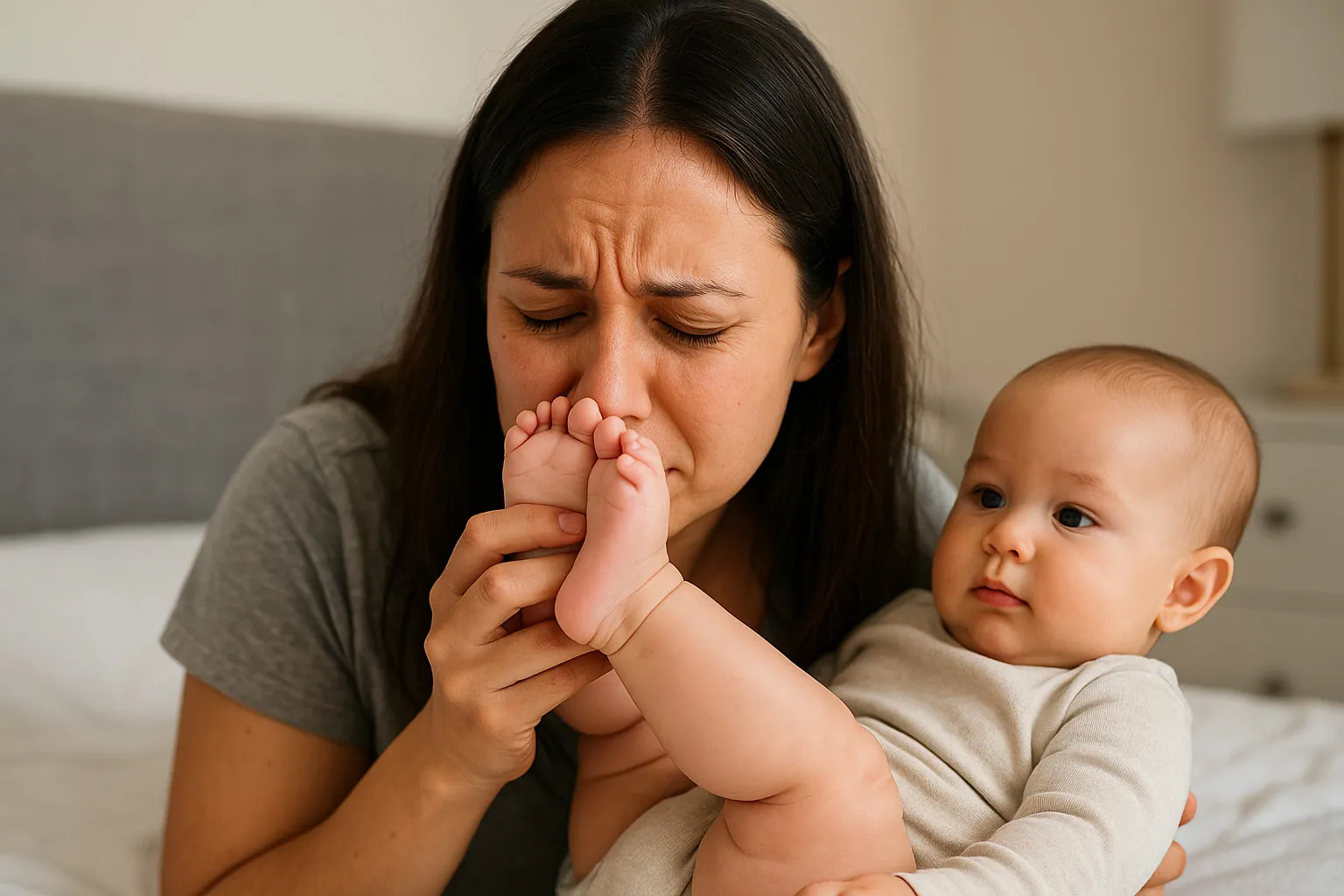
You can determine the source of the smell by performing a simple check of the baby’s environment and skin. If the smell stays on the skin after a bath, the issue is likely related to the skin itself, such as moisture in a fold or a mild rash. If the smell disappears after a bath but returns after the baby wears a specific outfit, the problem is almost certainly the clothing.
- If the baby smells after a bath, check for hidden moisture in deep creases.
- If the smell comes from clothes, re-wash them with extra rinses and no soap.
- If the smell is accompanied by a fever or lethargy, call your doctor immediately.
These two signs—the persistence of the smell and the presence of a rash—are the only two factors that change the urgency of the situation. If you see a rash, treat it as a skin health issue; if there’s no rash, treat it as a cleaning or moisture issue.
Related guides
Frequently asked questions
Is it normal for a baby to smell like vinegar?
It’s common for a baby to have a sour or vinegary smell due to trapped moisture in skin folds or laundry soap residue. These odors are usually harmless and go away with better hygiene or a change in laundry habits. If the smell is very strong, check for a rash.
How long should the vinegar smell last?
The smell should disappear immediately after you bathe the baby or change their clothes. If the odor continues to linger on the skin after a thorough wash, monitor the area for redness or irritation. If it persists for more than 48 hours despite cleaning, consult your pediatrician for an exam.
Can formula cause a baby to smell like vinegar?
Formula itself doesn’t make a baby smell like vinegar, but spit-up can turn sour as it dries on fabric. If the baby has frequent spit-up, the smell might be clinging to their bibs or shirts. Wash clothing frequently and keep the baby’s chin and neck area clean and dry.
Is the smell a sign of a metabolic disorder?
Unusual odors can sometimes be linked to rare metabolic conditions, but these are almost always accompanied by other serious symptoms. If your baby is feeding well, gaining weight, and acting normally, a vinegar smell is likely just sweat or soap. Never assume a medical condition without a doctor’s diagnosis.
Does the smell mean my baby has an infection?
A vinegar smell is rarely the only sign of an infection, though it can indicate a yeast or bacterial overgrowth. Look for symptoms like a bright red, shiny rash, or yellow crusty skin. If the skin looks healthy and the baby isn’t fussy, an infection is very unlikely.
Should I use baby powder to stop the smell?
Avoid using baby powder, as it can be inhaled and may cause respiratory issues. It also tends to clump when mixed with sweat, which can actually trap more moisture in the folds and make the smell worse. Stick to gentle patting with a soft, dry cloth to keep the skin clean.
Conclusion
Start by giving the baby a warm bath with mild, fragrance-free soap to remove all sweat and residue. If the smell is gone, you know it was external; if the smell remains or you see a rash, keep the area dry and call your pediatrician. If the baby develops a fever or stops eating, stop all home care and seek professional medical help immediately.