
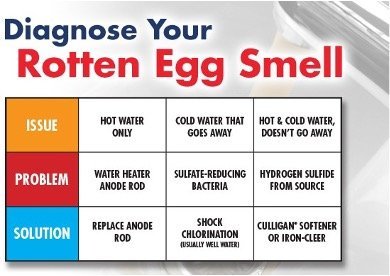
Water smells like rotten eggs when hydrogen sulfide gas is present in the water supply. The gas gives off that unmistakable sulfur odor, and the smell can appear in cold water, hot water, or both. Where it shows up first points to the source, and the source decides what you should do next.
Why your water smells like rotten eggs
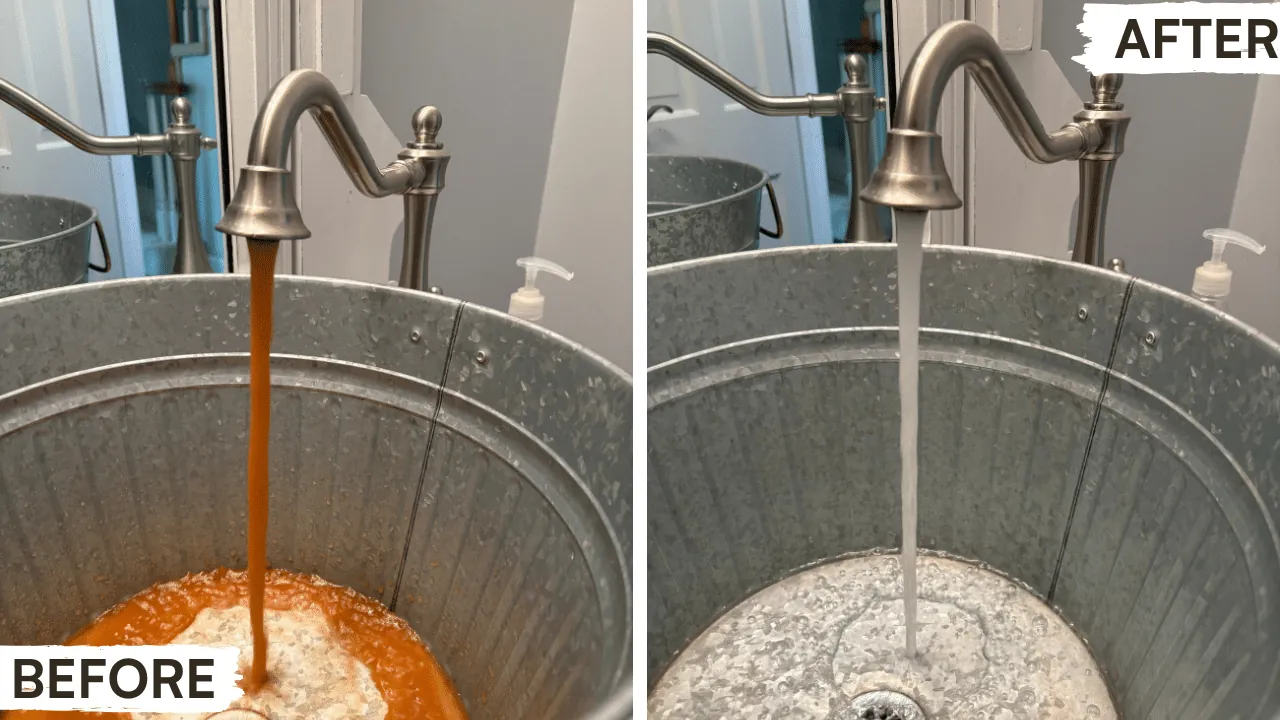
The sulfur smell has three common sources, and each one points to a different fix. Hydrogen sulfide gas forms underground, inside your water heater, or in your sink drain, and the location of the odor tells you which one it is.
| Cause | Best for | Example |
|---|---|---|
| Hydrogen sulfide in groundwater | Well water with sulfur in the soil | Private well drawing from sulfur-rich rock |
| Sulfate-reducing bacteria in the water heater | Hot water that smells, cold water that does not | Water heater anode rod reacting with water |
| Bacteria or buildup in the drain | Smell only at one sink or fixture | Kitchen drain with food debris |
Hydrogen sulfide in the water
This is dissolved hydrogen sulfide gas that comes up from the ground, most common in private wells. It suits homeowners whose water smells the same from every tap, cold and hot. The gas itself isn’t usually harmful at household levels, but it can corrode pipes and stain silverware black over time.
- It affects every tap in the house at once.
- The smell is strongest when you first turn the water on.
- It can leave a black tarnish on metal fixtures.
- It may make beverages taste metallic or bitter.
If your well water smells like rotten eggs at every tap, the likely cause is hydrogen sulfide in the groundwater. A water treatment professional can test the gas level and suggest a filter or aeration system sized for your flow rate.
Sulfate-reducing bacteria in the water heater
This is bacteria living inside the water heater tank, and it only affects hot water. It suits households where the cold water smells fine but the hot water smells like sulfur. The bacteria reduce sulfates in the water to hydrogen sulfide, a process facilitated by the electrical current produced by the magnesium or aluminum anode rod.
- It shows up only in hot water, never in cold.
- The smell is often strongest after the heater has sat unused.
- Flushing the tank can reduce the bacteria temporarily.
- Replacing the anode rod with an aluminum-zinc or powered anode often stops the smell.
This is different from groundwater sulfur because the cold water stays odor-free. If only your hot water smells, the water heater is the source.
Bacteria or buildup in the drain
This is organic matter trapped in the drainpipe, and it affects only one sink or fixture. It suits renters and homeowners alike when the smell rises from a single drain and the water itself smells fine when you fill a glass away from the sink.
- It’s confined to one fixture, not the whole house.
- The smell comes from the drain, not the running water.
- Flushing the drain with baking soda and vinegar often clears it.
- A slow drain usually means a buildup that will keep coming back.
To check this, fill a glass with cold water from the suspect tap, walk away from the sink, and smell the water away from the drain. If the water has no odor but the sink does, the drain is the problem.
The rest of them
Water softener resin bed — resin can harbor sulfur bacteria and smells when the system needs sanitizing; suits homes with a softener and odor only in softened water. If you bypass the softener and the smell vanishes, the resin bed is the culprit. You must use a hydrogen peroxide-based cleaner, as chlorine bleach often destroys the resin beads.
Well pump or pressure tank — stagnant water in the tank can grow odor-causing bacteria; suits homes where the smell fades after running the tap for a minute. If the odor is strongest in the morning or after long absences, the tank is likely waterlogged. You’ll need to drain the tank completely to reset the air cushion.
Municipal water supply — rare, but a treatment issue can cause a temporary sulfur smell; suits homes on city water where neighbors report the same odor. Check your local water utility’s website for recent service advisories.
How to choose between them
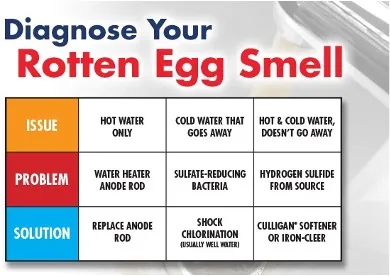
The deciding factor is which water smells. If cold and hot water both smell at every tap, the cause is likely hydrogen sulfide in the groundwater, and you should test the well water. If only hot water smells, the water heater is the source, and a plumber can inspect the anode rod and tank.
If only one sink smells and a glass of water taken from that tap has no odor, the drain is the problem. These causes don’t overlap much, so fixing one won’t fix another. If you’re on city water and the smell is new, ask your neighbors whether they notice it too — if they do, contact your water utility before spending money on treatment.
Related guides
Frequently asked questions
Can I drink water that smells like rotten eggs?
While small amounts of hydrogen sulfide in household water are generally safe to drink, you shouldn’t assume the water is potable without testing it first.
Why does only my hot water smell?
This usually means sulfate-reducing bacteria inside the water heater tank reacting with the anode rod. The cold water stays odor-free because the bacteria live in the heated tank, not in the pipes or the supply. A plumber can flush the tank or replace the anode rod to stop the gas from forming.
Is it safe to shower in water that smells like sulfur?
Showering in water with typical household levels of hydrogen sulfide is generally considered safe, though the odor can be unpleasant. The gas can irritate eyes or airways in very high concentrations, which is uncommon in home plumbing. If the smell is strong or you feel irritation, stop using the water and have it tested.
What happens if I ignore it?
The smell itself may not get worse, but hydrogen sulfide can corrode pipes, darken silverware, and stain fixtures over time. If the cause is bacteria in the water heater, the tank can keep producing gas as long as the anode rod and conditions support it. Ignoring it means living with the odor and possible gradual damage to plumbing.
Does it matter if I am on city water or a well?
Yes. City water is treated and monitored, so a sulfur smell there’s usually temporary or limited to one home’s plumbing. Well water isn’t treated by a utility, so hydrogen sulfide is more common and the homeowner is responsible for testing and treatment. Check with your water utility if you’re on city water and the smell is new.
How long will the smell last after treatment?
It depends on the cause and the treatment used. A drained and flushed water heater may lose the odor within a day, while a whole-house filter for well water can take longer to fully clear the gas from the pipes. Run the taps after treatment until the smell is gone, then retest if it returns.
What should I test my water for?
Test for hydrogen sulfide, sulfate, iron bacteria, and coliform bacteria to cover the most likely causes. A certified lab can tell you which tests make sense for your situation, and the results decide whether you need filtration, a new anode rod, or drain cleaning. Your county health department can often point you to a certified lab nearby.
What to do next
Start by figuring out which water smells — cold, hot, or just at one sink — because that tells you where the problem is. Expect the odor to fade once you fix the actual source, whether that’s the water heater, the drain, or the water supply itself.
If the smell covers the whole house and you’re on a well, stop using the water for drinking and cooking until a certified lab tests it, since you can’t tell what is in it from the smell alone.
For well water testing and treatment guidance, contact your local health department or the EPA’s private well resources.