
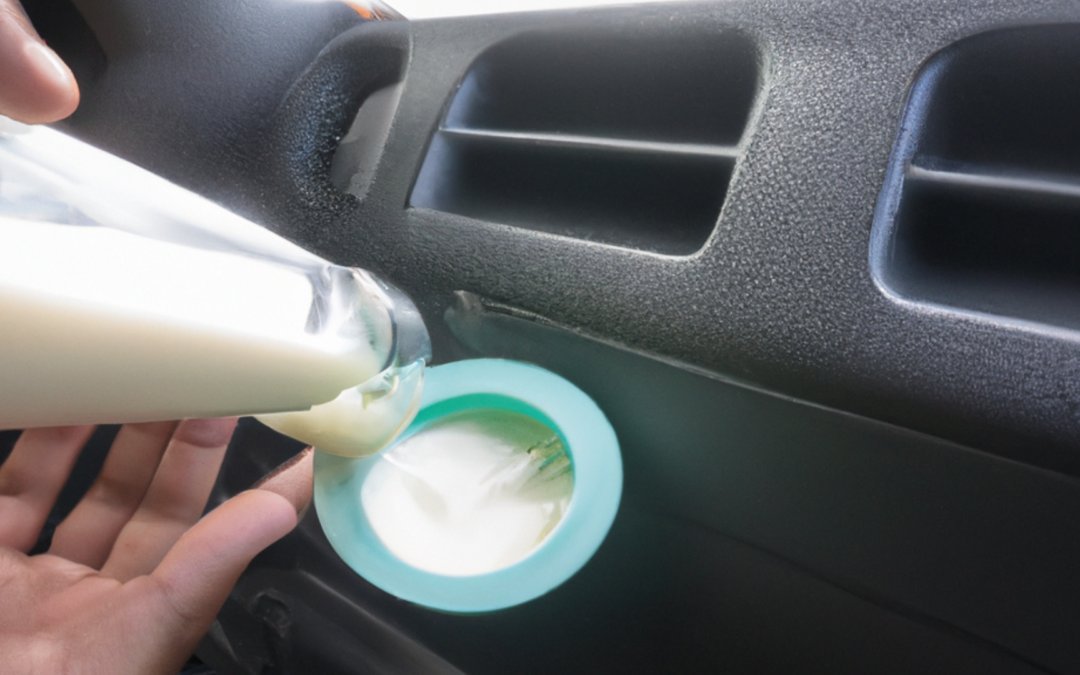
A car smells like rotten milk when sour milk has soaked into the carpet, seat foam or headliner, or when something else is decaying inside the cabin. Milk that leaks under a seat or into a floor mat feeds bacteria, and those bacteria release the sour smell as they break down the proteins. Heat and humidity intensify the stink on warm days. The source depends on the spill location and duration.
Why does my car smell like rotten milk?

One lead sentence sets up the table.
| Cause | What it smells like | Where to check first |
|---|---|---|
| Spilled milk | Sour, dairy smell | Under seats and floor mats |
| Old food | Rotting vegetable or meat smell | Glove box, door pockets, under seats |
| Mold in the AC system | Damp, musty sour smell | Vents when the fan runs |
| Cabin air filter | Stale, damp smell | Behind the glove box |
| Dead rodent | Sharp, rotting smell | Under the hood near the cowl |
A spilled milk smell usually starts right after the accident and gets stronger in warm weather.
Spilled milk under the carpet or seat foam
Milk that soaks into carpet padding or seat foam stays wet long after the surface looks dry. Bacteria feed on the milk proteins and release the sour smell as they multiply. Heat and humidity accelerate the odor. Surface cleaning with a cloth or paper towel doesn’t reach the liquid underneath.
- Pull up floor mats and check the carpet underneath for damp or discolored patches.
- Press a paper towel into the carpet and seat foam; if it comes up wet or stained, the milk is still there.
- Use a wet/dry vacuum to pull liquid out of the carpet and foam, then blot with clean towels.
- Sprinkle baking soda over the damp area, let it sit for several hours, then vacuum it up.
- Leave the windows cracked open on a dry day so the area can dry fully.
An example: a gallon of milk tips over in the back seat on a Tuesday, and by Friday the whole car smells sour because the milk ran under the seat and into the foam.
This isn’t for anyone hoping an air freshener or quick wipe-down will fix milk soaked into foam; the smell will return as the car warms.
Mold or mildew in the air conditioning system
Mold grows on the AC evaporator when moisture collects there and never fully dries. Turning the system off immediately leaves water on the coil, feeding mold and bacteria. Blowers push musty air through the vents.
- Run the fan on high with the windows open for a few minutes before parking to dry out the evaporator.
- Switch to fresh-air mode instead of recirculate so the system pulls in outside air rather than reusing damp cabin air.
- Spray an AC evaporator cleaner into the air intake according to the product directions, then run the system to circulate it.
- Replace the cabin air filter if it hasn’t been changed in a year or more.
An example: a driver notices a sour, damp smell only when the AC starts, and it disappears once the system has been running for a while.
This isn’t for someone who only smells the odor near the seats or floor mats — that points to a spill, not the AC.
You can treat the intake and change the filter, but you can’t reach the coil without removing dashboard parts.
Rotting food trapped under a seat or in a storage pocket
Food left in the car can rot and produce a sour smell mistaken for spoiled milk. A forgotten sandwich, a spilled yogurt cup, or a piece of fruit under the passenger seat breaks down over days and releases odor as bacteria work on it. The smell tends to stay in one area of the car rather than blowing through every vent.
- Lift every floor mat and look under both front and rear seats.
- Check door pockets, the glove box, the center console, and the trunk for forgotten containers or wrappers.
- Remove anything you find, then clean the area with warm soapy water and let it dry completely.
- Place an open box of baking soda in the car overnight to absorb lingering odors.
An example: a half-empty yogurt cup rolls under the rear seat and isn’t found for a week, by which time the whole back of the car smells sour.
This isn’t for a car where the smell is identical in every seat and only appears when the fan runs — that isn’t a single piece of rotting food.
Dead rodent in the ventilation intake

A mouse or other small rodent can crawl into the fresh-air intake near the base of the windshield and die there. The fan pulls the rotting odor into the cabin. The smell persists and intensifies when the fan is on high.
- Check the area at the base of the windshield, under the plastic cowl cover, for leaves, nesting material, or signs of an animal.
- Look in the engine bay near the air intake for droppings or fur.
- Run the fan on fresh-air mode and see if the smell changes; if it gets stronger at the vents, the source is likely in the intake system.
- If you can see and safely reach the rodent, remove it with gloves and a sealed bag, then clean the area.
An example: a car parked under a tree for a week develops a sharp rotting smell that blows through the vents whenever the fan is on.
This isn’t for anyone unwilling to wear gloves and handle a dead animal, or any car where the rodent is deep inside the dashboard or ductwork.
How far into the ventilation system the animal has gone can’t be known from outside the car, so if it isn’t visible at the intake, a professional needs to take the housing apart.
A dirty or wet cabin air filter
The cabin air filter sits behind the glove box in most cars and catches dust, pollen, and moisture before air reaches the cabin. When damp or clogged, mold grows and carries a stale smell into the car. Unlike spilled milk, this odor comes through the vents and smells like a damp basement. Replacing the filter is usually quick and inexpensive.
- Locate the cabin air filter behind the glove box using the owner’s manual.
- Pull the filter out and hold it to the light; if it’s dark, damp, or clogged with leaves, replace it.
- Install a new filter with the airflow arrow pointing in the direction shown in the manual.
- Run the fan on high with the windows open after replacing it to clear out any remaining musty air.
An example: a driver changes a cabin air filter that hasn’t been replaced in two years, and the sour vent smell disappears the same day.
This isn’t for a car where the odor is concentrated in one seat or on the floor — that isn’t a filter problem.
Other causes
- Engine coolant leak — a sweet, sour smell that comes through the vents when the heater is on; check under the hood for a leaking heater core.
- Transmission fluid leak — a burnt, sour odor that appears after driving; look for reddish fluid under the car.
- Wet carpet from a leak — rainwater entering through a door seal or sunroof drain creates a damp, sour smell; check the carpet after a storm.
- Clogged sunroof drain — water backs up into the headliner and smells musty; test by pouring a small amount of water into the drain channel and watching where it exits.
How to choose between them
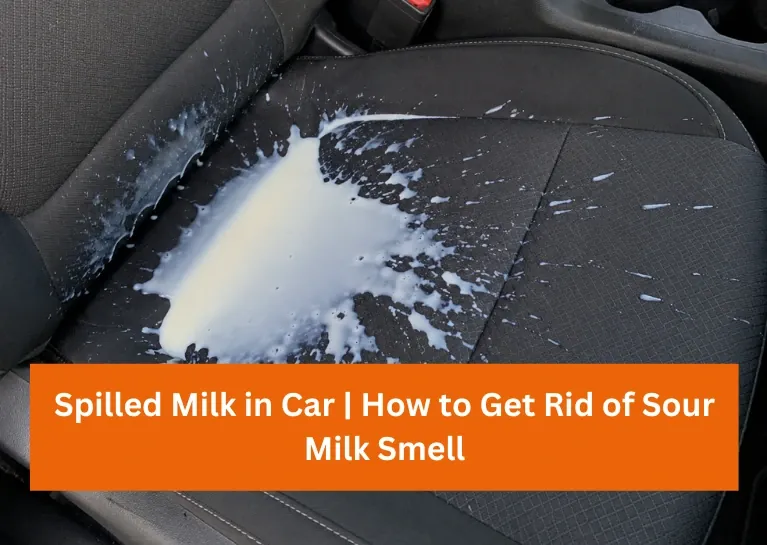
The right fix depends on where the smell comes from and when it appears. Start by matching the odor to the situation.
Picking one cause doesn’t always exclude the others — a spilled milk smell can encourage mold in the carpet, and a wet cabin filter can make any odor circulate more strongly. Clean the source first, then decide whether the vents still need treatment.
How far the liquid or odor has traveled depends on how much spilled and where the car was parked, so you can only judge it by lifting mats and checking the vents yourself.
Related guides
- How to Remove Mold From Wood Furniture: A Step-by-Step Guide in 2026
- How to Seal Burnt Wood: Step-by-Step Guide for a Clean Finish in 2026
- Can You Cut MDF With a Table Saw: Tips for Clean Results in 2026
Frequently asked questions
Can spilled milk smell go away on its own?
No. Milk soaked into carpet or foam will smell sour until the liquid is removed and the area is dried.
Why does the smell get worse in hot weather?
Heat speeds up bacterial growth, making the odor stronger as the car interior warms up.
Is it safe to drive with a rotten milk smell?
The smell itself isn’t dangerous, but mold spores from damp carpet or the AC system can irritate allergies or asthma, so find and remove the source.
What happens if I only clean the surface?
The milk stays in the padding or foam underneath, and the smell returns as soon as the area warms up or gets damp again.
Does an air freshener fix it?
No. It covers the odor for a short time but does nothing to the milk, mold, or rotting food causing it.
How long does it take to remove the smell?
A wet/dry vacuum and baking soda can dry a small spill in a day; deeper soaking may take several days.
Does it matter which side of the car the smell is on?
Yes. A smell under one seat points to a spill, while a smell through all vents points to the AC system.
What to do next
If the odor persists after drying the carpet and replacing the cabin air filter, consult a professional mechanic. They can inspect your vehicle’s ventilation system for hidden debris or deep-seated mold, ensuring your car’s interior remains fresh and safe for your daily commute.