

A dishwasher smells like rotten eggs because hydrogen sulfide gas is building up inside the tub. The most common cause is food trapped in the filter or drain, where bacteria break it down and release that sulfur smell. Before you run another cycle, pull out the bottom rack and check the filter at the base of the tub — if it’s clogged with food, you have found the source.
Why a dishwasher smells like rotten eggs

The smell comes from hydrogen sulfide gas, which bacteria release as they break down food inside the machine. It usually starts in one of three places.
First, food particles collect in the filter at the bottom of the tub and rot during the next wash. If you can’t remember the last time you scrubbed the mesh screen, that’s your culprit. Remove the filter and rinse it under hot water to clear the trapped debris.
Second, bits of food lodge in the drain hose or garbage disposal connection. If the smell persists after cleaning the filter, check the high-loop hose under your sink. If the hose hangs lower than the drain inlet, wastewater flows back into the machine.
Third, the machine runs cool cycles with the door shut. Moisture stays inside and bacteria grow between loads. Always leave the door propped open by an inch after a cycle to allow the interior to dry completely.
Safety: Inside a mains-powered machine, the parts behind the outer cover can hold a dangerous electrical charge even after it has been unplugged — that’s why they sit behind a cover. Opening the housing, or testing or replacing anything behind it, is a job for a qualified technician, never a home repair.
Clean the filter and spray arms
This fix is for anyone whose dishwasher smells after a cycle or between loads. Pull out the bottom rack, unscrew or unlatch the cylindrical filter at the base of the tub, and lift it out. Rinse it under hot tap water, scrubbing the mesh with a soft brush until no food remains. Wipe the filter housing with a damp cloth, then check that the spray arm holes are clear—poke any blocked hole with a toothpick.
If your spray arm doesn’t spin freely when flicked with a finger, mineral buildup is likely the culprit. Soak the arm in a mixture of equal parts water and white vinegar for thirty minutes to dissolve the deposits.
Most users make the mistake of ignoring the rubber gasket around the door, which often hides the odor source even after the filter is clean. Wipe this seal with a damp cloth to remove trapped grime.
Reassemble everything, run one empty cycle with a dishwasher cleaner or a cup of white vinegar in the top rack, and the smell should fade within that wash. If the filter is cracked or the spray arm won’t seat properly, stop and contact the manufacturer. A poor seal traps stagnant water, inviting mold.
Run a hot sanitizing cycle

This fix works when the machine itself feels slimy or the smell comes from the interior walls rather than the filter. Choose the hottest cycle available—often labeled Sanitize or Heavy—and run the dishwasher empty with a dishwasher cleaning tablet or two cups of white vinegar in a bowl on the top rack.
The hot water flushes the drain line and washes residue off the tub walls. If you use vinegar, place the bowl upright on the top rack so it doesn’t tip over and dilute too early. If the smell disappears after this cycle and doesn’t return over the next few loads, the interior is clean.
If the odor returns within three days, the cause is likely deeper in the drain hose or garbage disposal connection. In this case, check the high loop under your sink. If the hose hangs lower than the drain inlet, water pools and stagnates. Raise the hose and secure it higher than the disposal connection to stop the backflow.
Check the drain hose and garbage disposal connection
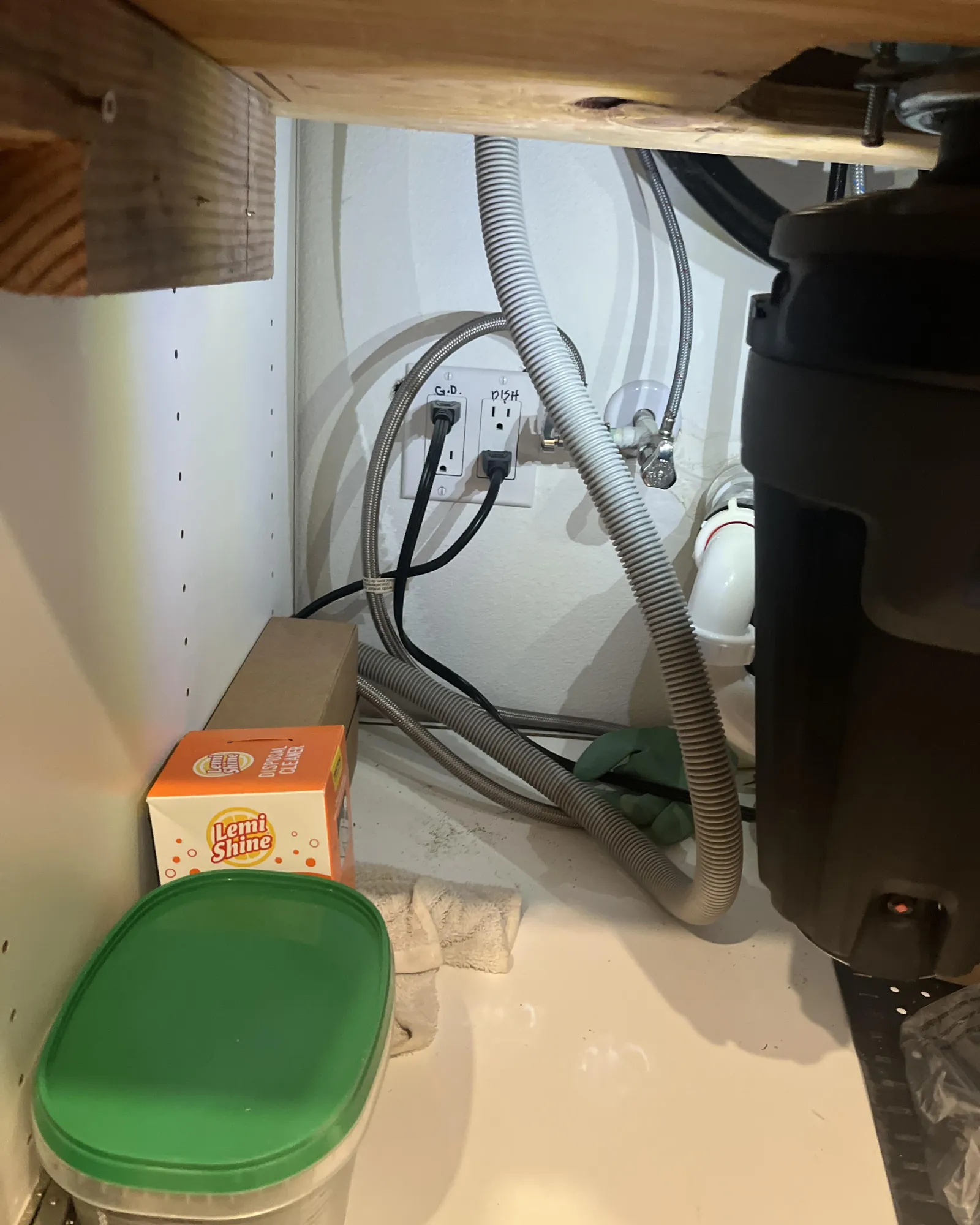
This is the fix for harder cases where the filter is clean but the rotten-egg smell persists. Disconnect the power, then look at the drain hose where it joins the sink drain or garbage disposal. Food can collect in a low loop or a blocked disposal inlet, and the smell travels back into the dishwasher.
Check for a “high loop” configuration. The hose must rise at least 20 inches above the floor of the cabinet before descending to the disposal. Without this gravity trap, gray water from your sink flows directly into the dishwasher sump. If the hose is kinked or cracked, replace the entire line immediately; patch jobs fail under pressure and cause leaks inside your cabinetry.
Run the disposal with cold water for thirty seconds before starting a wash cycle to clear the inlet port. If the connection remains hidden behind panels you can’t reach without specialized tools, call a technician. Pushing too hard on brittle plastic fittings often leads to expensive water damage.
What not to do about a dishwasher smell
Masking the smell with lemon or essential oils only covers the odor. It leaves the rotting food and bacteria in place, allowing the biological film to grow thicker.
Running bleach through the machine is a common mistake that often costs you a repair bill. Bleach degrades rubber seals and can void the manufacturer’s warranty on most modern models. If you see signs of brittle gaskets or gray residue, stop using harsh chemicals immediately.
Ignoring the scent because your dishes still look clean is a trap. Trapped organic matter continues to break down, releasing acidic gases that corrode internal metal components over time. If the smell persists after a filter cleaning, check the drain hose for a high loop. If the hose sits flat, wastewater flows back into the basin.
Keep the dishwasher smelling fresh
| If you’re doing this | Do this instead | Why |
|---|---|---|
| Letting plates sit with food on them for days before running the machine | Scrape plates and rinse heavy food off before loading | Less food enters the filter and drain in the first place |
| Running short, cool cycles every time | Run the hottest cycle at least once a week | Hot water flushes grease and food from the tub and drain line |
| Leaving the door shut tightly between loads | Leave the door ajar after a cycle until the inside dries | Trapped moisture lets bacteria grow and create the sulfur smell |
| Waiting months to check the filter | Remove and rinse the filter every month | A clean filter stops food from rotting inside the tub |
Related guides
- Dog Smells Like Fish From Back End: Causes and Solutions
- How to Fix Polyurethane Mistakes: A Step-by-Step Repair Guide in 2026
- How to Fix a Hole in a Gun Stock: Step-by-Step Repair Guide in 2026
Frequently asked questions
Why does my dishwasher smell like rotten eggs?
The smell is hydrogen sulfide gas from bacteria breaking down trapped food, usually in the filter, drain hose, or garbage disposal connection. Removing the food source removes the gas.
Can I use bleach to get rid of the smell?
No. Bleach can damage rubber seals and gaskets inside the dishwasher and may void the warranty on some models. Use a dishwasher cleaner or white vinegar instead.
How long will the smell last after cleaning?
It should clear within one empty hot cycle if the filter and drain are clean. If it returns, food is still trapped deeper in the drain line or disposal connection.
Is it safe to keep running the dishwasher while it smells?
Yes for the dishes, but not for the machine long-term. The trapped food keeps decomposing and can corrode parts or clog the drain over time.
What happens if I ignore the smell?
The odor gets stronger as more food breaks down, and the blockage can eventually stop the dishwasher from draining properly, leaving dirty water in the tub.
Should I call a technician or replace the dishwasher?
Call an appliance technician if the smell persists after cleaning the filter, spray arms, drain hose, and disposal connection. Replace the machine only if it’s old, leaking, or the repair cost approaches half the price of a new one.
Conclusion
Dishwasher smells like rotten eggs usually come from one trapped source — food in the filter, drain, or disposal connection — and clearing it out is often all the machine needs. If the odor comes back after you have cleaned everything you can reach safely, that’s the point to call an appliance technician rather than keep running cycles that only move the same food around.