

A house that smells like cigarette smoke despite having no smokers is usually affected by old residue trapped in walls, carpets, curtains, and furniture. While this explains most cases, some homes have hidden sources like smoke drifting through shared vents or lingering in an HVAC system. You can confirm the source by closing the windows and walking through each room to find where the odor is strongest, then checking shared walls and vents.
Why your house smells like cigarette smoke with no smokers

Rank the causes from most likely to least likely, then confirm the one that matches your home.
| Cause | How common | How to confirm it | Fix it yourself? |
|---|---|---|---|
| Residual smoke in walls, carpets and soft furnishings | Most of the time | Smell is stronger in certain rooms and near fabric or painted surfaces | Yes |
| Smoke drifting in from a neighbour through vents or shared walls | In a small number of cases | Smell gets worse when a neighbour smokes or when the fan runs | Yes |
| Smoke trapped in the HVAC system and air ducts | Less common | Smell is strongest right after the heating or cooling starts | Yes with care |
| A hidden source such as a former smoker’s closet, garage or basement room | Rare | Smell is localised to one space you rarely enter | Yes |
| Third-hand smoke residue on surfaces that releases odour over time | Rare | Smell persists after cleaning and airing | No |
Residual smoke in walls, carpets and soft furnishings
Cigarette smoke leaves tar and nicotine particles that cling to painted walls, ceilings, carpets, curtains and upholstered furniture. Those particles keep releasing odour long after the last cigarette, which is exactly why a house can smell like cigarette smoke with no smokers living in it. To confirm it, press a clean white cloth firmly against a wall or carpet in the smelliest room; a yellow or brown stain on the cloth points to residue.
Wash walls with a mild cleaner, steam-clean carpets, and launder or replace curtains and soft furnishings. For walls that still smell after washing, seal them with a primer made for odour blocking before repainting. Expect the work to take a weekend for one room and longer for a whole house. Costs depend on how much needs cleaning or replacing.
Smoke drifting in from a neighbour through vents or shared walls
This cause is different from the first because the smell arrives from outside your home rather than sitting inside it. You can tell them apart by timing: neighbour smoke usually gets stronger at certain times of day or when your extractor fans run, while old residue smells about the same all day. Check your bathroom and kitchen fans, dryer vent, and any shared wall or ceiling for gaps where air can pass through.
Seal cracks with caulk, fit backdraft dampers on vents, and run your own ventilation to keep indoor air pressure slightly higher. If the smoke enters through a shared duct system, sealing your own vents may not be enough. That’s the point where you should speak with your landlord, building manager or a ventilation specialist rather than keep sealing things yourself.
Smoke trapped in the HVAC system and air ducts
Dust and particles settle inside heating and cooling ducts, and when the system starts, warm air pushes the trapped smell through every room. The clue is that the odour is strongest right after the furnace or air conditioner kicks on, then fades as the air keeps moving. Turn the system off, remove a vent cover, and shine a flashlight into the duct to look for dust, debris or discolouration.
Change the furnace filter, vacuum the reachable parts of the duct with a hose attachment, and consider professional duct cleaning if the smell returns quickly. A filter change takes minutes; duct cleaning takes a few hours and costs more than a filter but less than replacing the system. If you aren’t sure what type of filter your system takes, check the unit itself or its manual instead of guessing.
The less likely causes
These are the remaining causes, and they’re rare for a reason.
A closet, garage, or basement room used by a former smoker often traps stale air. The smell stays localized to one space you rarely enter. If you notice the scent only when opening a specific door, focus your efforts there rather than treating the entire house.
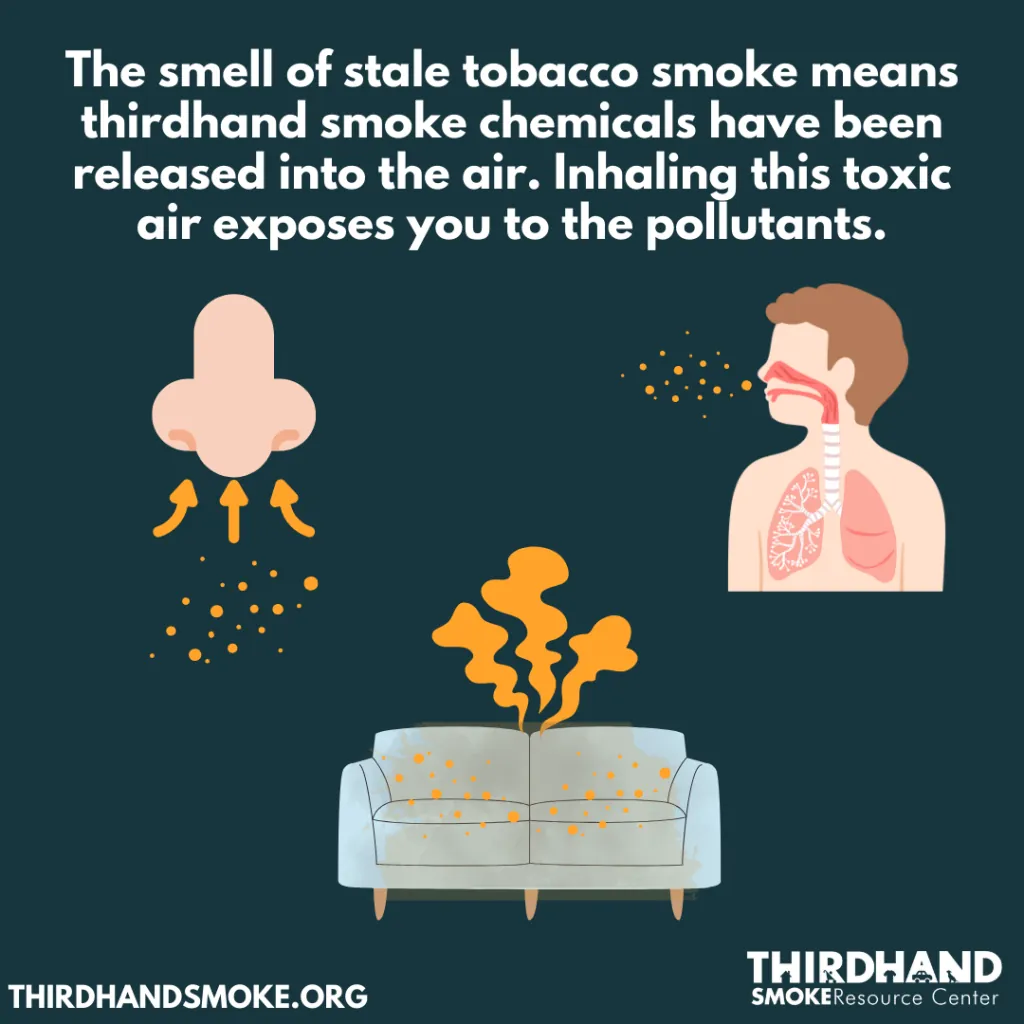
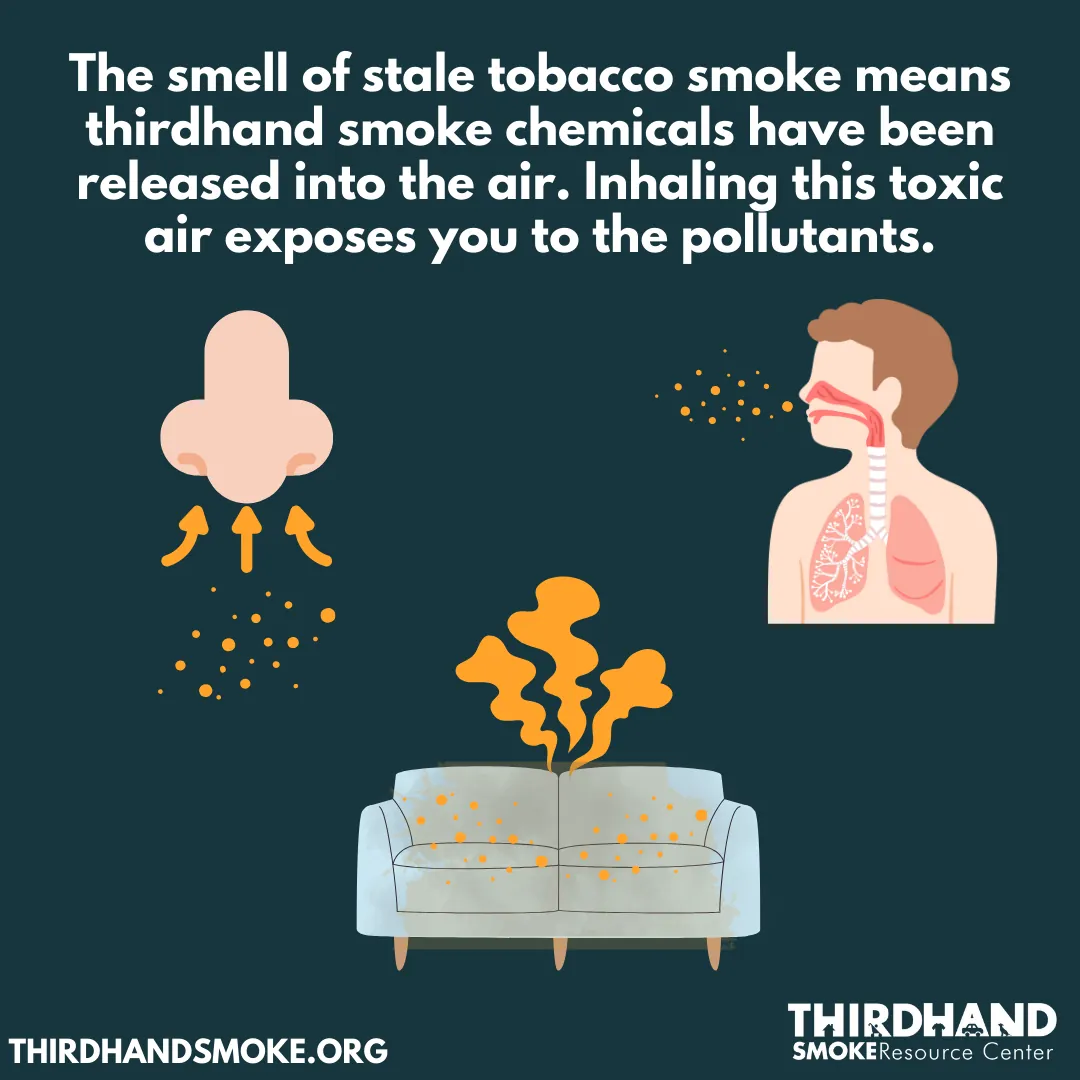
Third-hand smoke residue on surfaces keeps releasing odors over time. This smell persists even after you have deep-cleaned and aired the home for days. If the scent returns within hours of closing the windows, the toxins have likely bonded to the paint or porous wood.
Smoke stored in old insulation or inside wall cavities creates a stubborn, pervasive funk. The odor is strongest near exterior walls or corners where airflow is stagnant. If you detect a sharp, chemical-like smell emanating from electrical outlets, don’t attempt to seal them yourself.
Where the next step needs training, a license, or specialized equipment, stop and call a professional. Never work inside sealed walls or ductwork you can’t see into. Disturbing old insulation can release hazardous fibers or trapped particulates, costing you far more in health risks than a service call.
What fixing the smoke smell demands of your home
Each main fix asks for something different. Cleaning walls and carpets takes your time and a basic cleaner or rental machine; sealing vents takes caulk and a few hand tools; changing a furnace filter takes minutes and a new filter that matches your unit.
Professional duct cleaning or odour-sealing primer costs more than a filter but less than replacing the whole system. What you pay depends on how many rooms are affected and whether you do the work yourself or hire someone.
If the smell lingers after a deep clean, the soot has likely settled into your HVAC intake. In this case, you must replace the insulation lining inside your return air ducts. Scrubbing the metal won’t reach the porous material where smoke particles hide.
Most homeowners fail by using standard paint over smoke-damaged drywall. This mistake costs you twice because the smell will bleed through within weeks. Always apply a shellac-based primer first to lock the odor molecules behind a permanent chemical barrier. If the surface remains tacky after two hours, the primer hasn’t yet sealed the pores.
Frequently asked questions
Can cigarette smoke smell come through walls?
Yes. Smoke travels through small cracks, shared vents and openings around pipes, and it can linger in neighbouring units before drifting into yours.
Why does the smell get worse when the heat comes on?
Warm air moving through ducts stirs up trapped smoke particles and pushes them into every room at once.
How long does it take to get the smoke smell out?
It takes anywhere from a few hours to several weeks, depending on how deeply the smoke soaked into walls, carpets and soft furnishings.
Is it safe to sleep in a room that smells like smoke?
It’s best to air the room out first, because the odour comes from particles and chemicals that settled on surfaces over time.
What happens if I just paint over the walls?
The smell usually comes back, because paint alone doesn’t seal the odour trapped under the surface.
Does it matter if no one has smoked here for years?
Yes. Smoke residue clings to walls and fabrics, releasing odors long after smoking has stopped. This persistent smell often requires deep cleaning or professional remediation to fully remove, as the particles become embedded in porous surfaces throughout your home.
Conclusion
If the smell stays localised to one room or gets worse when your heating or cooling runs, the cause is probably inside your home rather than coming from next door. If it follows your neighbour’s schedule or appears only when fans run, it’s likely drifting in through shared vents or walls, and that’s the point to involve your landlord, building manager or a ventilation specialist rather than keep sealing things yourself.