
If you searched mouth smells bad even after brushing, you’re dealing with a problem that toothpaste alone won’t fix. Brushing removes food and plaque from tooth surfaces, but odor often comes from bacteria living on the tongue, under the gumline, between teeth, or from sources outside the mouth entirely. This guide covers the most common causes, how to tell them apart, and what you can do at home before booking a professional visit.
Key Takeaways
- Brush twice daily with fluoride toothpaste and floss once daily to remove plaque between teeth.
- Clean your tongue every day with a scraper or soft brush to remove bacteria and debris.
- Drink water regularly and limit coffee, alcohol, garlic, and onions to reduce dry mouth and food odors.
- Schedule a dental exam if bad breath persists for more than two to three weeks despite good home care.
- See a medical professional if you also have heartburn, sinus congestion, or other whole-body symptoms.
What Causes Bad Breath After Brushing
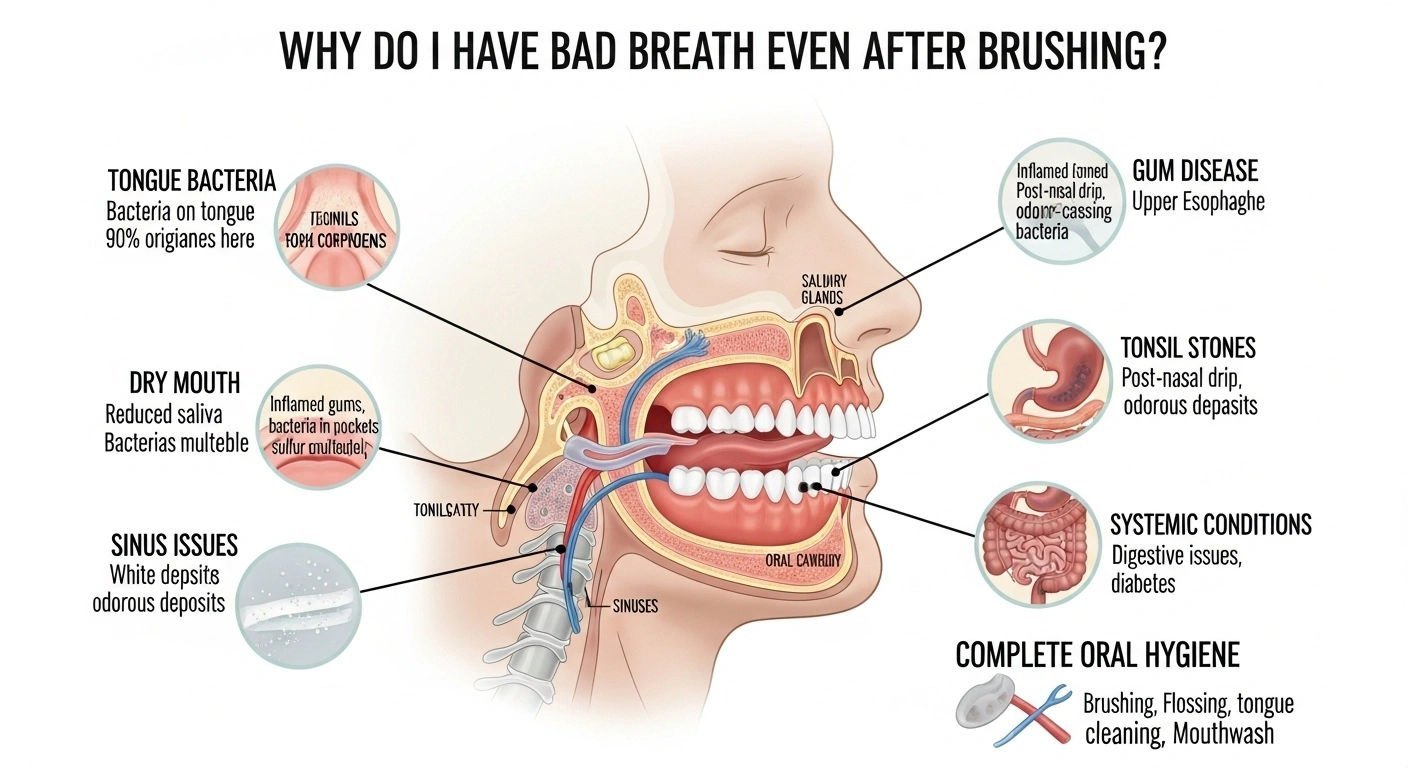
Bad breath, or halitosis, usually starts with bacteria. These microbes break down proteins and release sulfur compounds that smell like rotten eggs or cabbage. Brushing cleans the fronts and backs of teeth, but it doesn’t always reach every source.
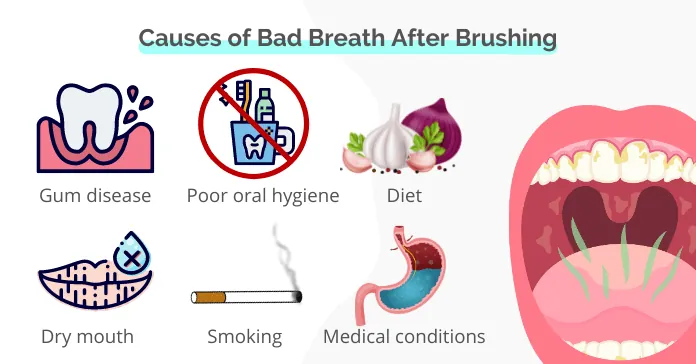
Common causes include:
- Plaque and tartar buildup along the gumline
- Food trapped between teeth or under dental work
- Bacteria coating the back of the tongue
- Dry mouth from medications, mouth breathing, or dehydration
- Cavities, gum disease, or infected teeth
- Tonsil stones trapped in the tonsil crevices
- Sinus infections or postnasal drip
- Acid reflux or stomach-related issues
- Tobacco use and certain diets
Where the Smell Actually Comes From
The mouth contains several places where odor-causing bacteria collect. Brushing only handles some of them.
| Source | Why brushing misses it | What to do |
|---|---|---|
| Tongue coating | Bristles often skip the back of the tongue | Use a tongue scraper daily |
| Between teeth | Toothbrush bristles can’t reach tight contacts | Floss or use interdental brushes |
| Gumline pockets | Deep pockets hide bacteria below the gumline | See a dentist or periodontist |
| Tonsils | Tonsil stones sit in throat crevices | Gargle salt water; see a doctor if large |
| Dry mouth | Low saliva lets bacteria multiply | Drink water; review medications |
Oral Hygiene Habits That May Be Missing
Even people who brush twice a day can skip steps that matter for breath.
- Floss daily. Plaque between teeth is a leading source of odor that brushing can’t reach.
- Clean the tongue. Use a tongue scraper or a brush with a tongue-cleaning pad, moving from back to front.
- Replace your toothbrush. A worn brush cleans poorly; swap it every three to four months or after illness.
- Clean dental appliances. Retainers, night guards, dentures, and partials can trap food and bacteria if not cleaned daily.
- Rinse with water after meals. This washes away loose particles when brushing isn’t possible.
Pro Tip: Brush for a full two minutes. Most people brush for less than half that time, leaving plaque behind.
Foods, Drinks, and Dry Mouth
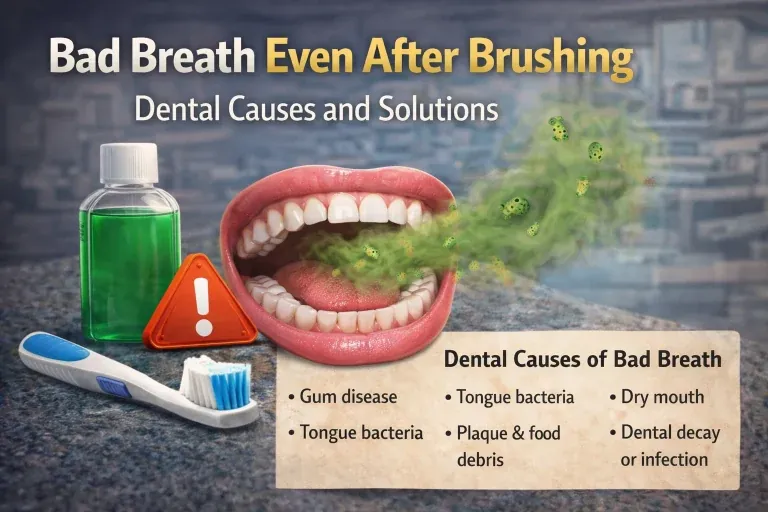
What you consume affects breath long after brushing. Garlic and onions contain sulfur compounds that enter the bloodstream and are exhaled through the lungs, so brushing doesn’t remove the smell. Coffee and alcohol can dry the mouth, reducing saliva that normally washes away bacteria. Tobacco products leave their own odor and increase gum disease risk.
Typical offenders:
- Garlic and onions
- Coffee and black tea
- Alcohol
- Tuna and other strong-smelling fish
- Sugary foods that feed bacteria
- Tobacco and vaping products
Pro Tip: Sip water throughout the day. Saliva is your mouth’s natural rinse, and staying hydrated helps keep it flowing.
Medical Conditions That Can Cause Breath Odor
Sometimes the mouth is clean but the smell comes from elsewhere.
- Gum disease: Inflamed or infected gums create deep pockets where bacteria thrive.
- Dry mouth (xerostomia): Medications for blood pressure, allergies, or depression can reduce saliva.
- Acid reflux: Stomach acid rising into the throat can create a sour or bitter smell.
- Sinus issues: Postnasal drip from infections or allergies feeds bacteria in the back of the throat.
- Tonsil stones: Hardened bits of food and mucus collect in tonsil crevices and smell foul.
- Diabetes: Uncontrolled blood sugar can produce a fruity or acetone-like breath odor.
- Liver or kidney disease: Rare but serious causes of distinctive breath smells.
Warning: A fruity or chemical breath odor combined with nausea, confusion, or abdominal pain can signal a medical emergency. Seek urgent care if this occurs.
When to See a Dentist
You should book a dental exam if bad breath lasts more than two to three weeks despite daily brushing, flossing, and tongue cleaning. A dentist can check for cavities, gum disease, infected teeth, or poorly fitting crowns and bridges. Professional cleaning removes tartar that home brushing cannot. If the dentist finds no oral cause, they may refer you to a physician to investigate reflux, sinus problems, or other medical conditions.
Products That May Help
No mouthwash cures bad breath on its own, but some products support a cleaner mouth.
| Product type | How it helps | Examples |
|---|---|---|
| Tongue scraper | Removes coating from the tongue | Metal or plastic scrapers |
| Alcohol-free mouthwash | Reduces bacteria without drying | Cetaphil, TheraBreath |
| Interdental brushes | Cleans between teeth and around bridges | GUM, TePe |
| Sugar-free gum | Stimulates saliva flow | Xylitol-sweetened brands |
| Water flosser | Flushes debris from pockets and appliances | Waterpik |
Look for alcohol-free rinses, since alcohol can dry the mouth and worsen odor over time.
A Simple Daily Routine to Try

Follow this order for about a week and note whether breath improves.
- Floss or use interdental brushes first.
- Brush for two minutes with fluoride toothpaste, including the gumline.
- Scrape or brush the tongue from back to front.
- Rinse with water or an alcohol-free mouthwash.
- Drink water after meals and limit odor-causing foods.
If breath doesn’t improve after two to three weeks of consistent effort, make a dental appointment.
Related guides
- How to Apply Varnish Without Brush Marks: A Pro Guide in 2026
- How to Clean Polyurethane Brush: The Best Solvent Methods in 2026
- How to Clean Acrylic Paint Brushes: A Simple Step-by-Step Guide in 2026
Frequently Asked Questions
Why does my breath smell even though I brush twice a day?
Brushing cleans tooth surfaces but may miss bacteria on the tongue, between teeth, below the gumline, or from medical issues such as reflux or dry mouth.
Can mouthwash fix bad breath after brushing?
Mouthwash can temporarily mask odor and reduce some bacteria, but it won’t cure gum disease, cavities, or dry mouth. Use it as a supplement, not a replacement for brushing and flossing.
Should I brush my tongue?
Yes. The back of the tongue holds bacteria and debris that cause odor. A tongue scraper or soft toothbrush used daily can help.
When should I see a dentist about bad breath?
See a dentist if the smell persists for more than two to three weeks despite good daily oral hygiene, or if you have bleeding gums, tooth pain, or a coated tongue that won’t go away.
Can stomach problems cause bad breath?
Yes. Acid reflux and some digestive conditions can send odors up into the mouth. A physician can evaluate these if your dentist finds no oral cause.
Conclusion
Next step: start the daily routine above today, and if there’s no change after two to three weeks, call your dentist for an exam.