
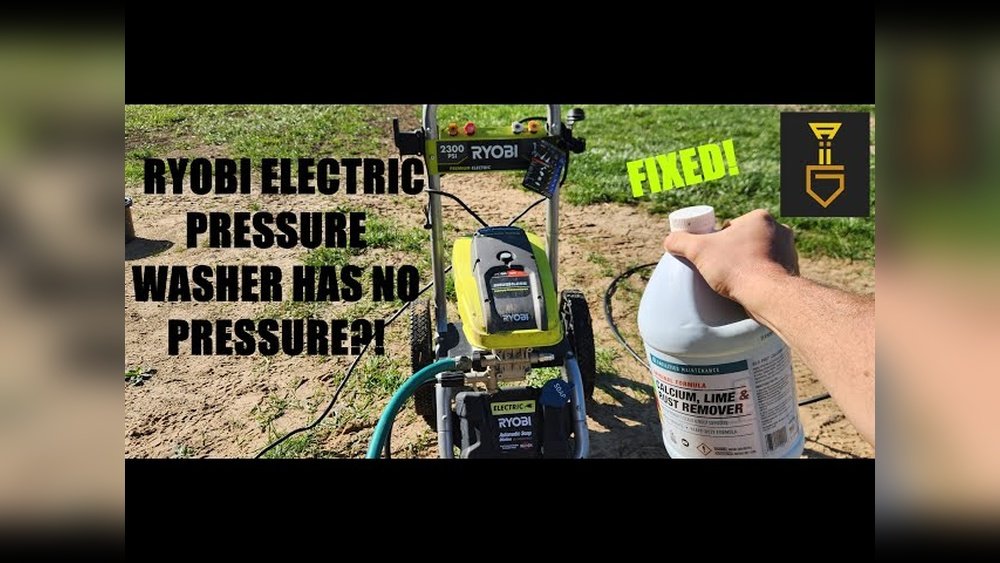
The hum of a power washer is a familiar sound for many homeowners, promising a quick and effective way to tackle stubborn grime on driveways, decks, and siding. However, what happens when that powerful spray suddenly dwindles to a trickle, or worse, nothing at all?
A Ryobi power washer that’s lost its pressure can be a frustrating experience, turning a straightforward cleaning task into a perplexing puzzle. Understanding the common culprits behind this issue is the first step toward restoring your machine’s performance and getting back to that satisfying blast of cleaning power.
This guide will explore the most frequent reasons why your Ryobi power washer might be experiencing a loss of pressure. We’ll dissect potential problems ranging from simple user errors and maintenance oversights to more complex mechanical issues. By systematically diagnosing these possibilities, you’ll be equipped to troubleshoot effectively, whether you’re dealing with a brand-new unit or a well-loved workhorse.
We aim to provide actionable steps and insights to help you bring your Ryobi power washer back to its peak performance, ensuring your outdoor cleaning projects are completed efficiently and effectively.
Key Takeaways
- Clogged Nozzles and Filters: Debris is the most common cause of low pressure, affecting the spray tip and inlet filters.
- Water Supply Issues: Insufficient water flow or kinks in the garden hose can starve the pump.
- Pump Problems: Worn seals, air in the pump, or internal damage can significantly reduce pressure.
- Hose and Connection Leaks: Compromised hoses or loose fittings allow pressurized water to escape.
- Improper Assembly or Operation: Incorrect setup or using the wrong accessories can impact performance.
- Engine/Motor Issues: For gas models, engine problems can lead to reduced pump output; for electric models, motor issues can have a similar effect.
- Regular Maintenance is Crucial: Consistent cleaning of filters, checking for leaks, and proper storage prevent many pressure loss issues.
Understanding Power Washer Pressure
Before diving into the specifics of why a Ryobi power washer might lose pressure, it’s essential to understand what “pressure” means in this context. Power washer pressure is typically measured in pounds per square inch (PSI). This metric indicates the force with which the water is expelled from the nozzle. A higher PSI means a more powerful spray, capable of removing tougher dirt and grime. Ryobi offers a range of power washers, from electric models suitable for light-duty tasks with lower PSI ratings (e.g., 1300-2000 PSI) to gas-powered units designed for more demanding jobs with higher PSI ratings (e.g., 2000-3100+ PSI).
The GPM (gallons per minute) is another critical factor, representing the volume of water the machine dispenses. While PSI dictates the force, GPM influences how quickly you can cover an area. A good balance of both PSI and GPM is necessary for optimal cleaning performance. When a Ryobi power washer fails to deliver adequate pressure, it’s usually because either the PSI output is too low, the GPM is insufficient, or both. Identifying the root cause requires a systematic approach, starting with the simplest and most common issues.

Credit: www.youtube.com
Common Causes For Low Pressure In Ryobi Power Washers
A sudden or gradual decrease in pressure from your Ryobi power washer can be attributed to a variety of factors. These can range from simple, easily fixable problems to more complex internal issues requiring professional attention. Understanding these potential causes will help you diagnose the problem efficiently.
Clogged Nozzles And Spray Tips
The most frequent culprit behind a Ryobi power washer’s loss of pressure is a clogged nozzle or spray tip. These small openings are where the water is forced out at high velocity. Over time, sediment, dirt, rust particles, or mineral deposits from the water supply can accumulate inside, constricting the flow and reducing the spray’s force and pattern.
- Types of Clogs: Clogs can be partial, leading to a weak or erratic spray, or complete, resulting in no spray at all. Different nozzle types (e.g., 0-degree, 15-degree, 25-degree, 40-degree, soap nozzle) can become clogged. The 0-degree nozzle, with its narrowest opening, is particularly susceptible.
- Diagnosis: Observe the spray pattern. If it’s weak, erratic, or sprays in an unusual direction, a clogged nozzle is likely. You might also notice a significant drop in the overall force.
- Solution:
- Turn off and unplug/disconnect the power source.
- Remove the spray wand.
- Carefully detach the spray nozzle.
- Inspect the nozzle opening for visible debris.
- Use a thin, stiff wire (like a paperclip or a specialized nozzle cleaning tool) to gently dislodge any obstructions. Be careful not to enlarge the hole, as this can permanently alter the nozzle’s performance.
- Rinse the nozzle thoroughly with water.
- For stubborn clogs, soak the nozzle in a vinegar and water solution for a few hours.
- Reinstall the clean nozzle and test the pressure.
Dirty Or Clogged Inlet Filters
The inlet filter (also known as the water filter or screen) is situated where the garden hose connects to the power washer. Its purpose is to prevent debris from entering the pump and causing damage. If this filter becomes clogged with sediment, sand, or other particles, it will restrict the amount of water reaching the pump, directly leading to reduced pressure.
- Importance: This is a critical component for protecting the pump. Regular cleaning is essential for maintaining optimal water flow.
- Diagnosis: A clogged inlet filter will often result in a noticeable drop in pressure, especially when the unit is first turned on. If the washer runs intermittently or struggles to maintain a consistent spray, the filter is a prime suspect.
- Solution:
- Turn off and unplug/disconnect the power source.
- Disconnect the garden hose from the power washer.
- Locate the inlet filter. It’s usually a small, mesh screen inside the water inlet connection.
- Carefully remove the filter. Some models have a removable filter housing.
- Rinse the filter thoroughly under running water. Use a soft brush to gently scrub away any embedded debris.
- Inspect the filter for any tears or damage. If damaged, it should be replaced.
- Reinsert the clean filter and reconnect the garden hose.
Insufficient Water Supply
Power washers are designed to work with a specific volume of water flow. If the water supply from your garden hose is inadequate, the pump will not receive enough water to operate at its designed pressure. This is often overlooked but is a significant cause of low pressure.
- Factors Affecting Supply:
- Low household water pressure: If your home’s overall water pressure is low, the power washer won’t receive sufficient input.
- Kinked or undersized garden hose: A kinked hose restricts flow. Using a hose that is too narrow in diameter (e.g., less than 5/8 inch) or too long can also create resistance.
- Partially closed faucet: Ensure the outdoor faucet is fully opened.
- Diagnosis: The pressure might be low from the start, or it might fluctuate as the pump struggles to draw enough water. The machine might also make unusual noises.
- Solution:
- Check your home’s water pressure. You can use a water pressure gauge attached to a faucet. Most power washers require a minimum of 20-40 PSI input.
- Ensure the garden hose is fully connected and not kinked.
- Use a garden hose that is at least 5/8 inch in diameter and no longer than 50 feet. Longer or narrower hoses increase friction loss.
- Confirm the outdoor faucet is fully open.
- Consider using a dedicated water source if household pressure is consistently low.
Leaks In The System
Leaks are a major enemy of pressure. Any breach in the system, from the garden hose connection to the spray wand or the pump itself, will allow pressurized water to escape, significantly reducing the output force.
- Common Leak Points:
- Garden hose connections: Loose fittings at either the faucet or the power washer inlet.
- Garden hose itself: Punctures or cracks in the hose.
- High-pressure hose: Damage to the hose connecting the pump to the spray wand, including cuts, abrasions, or leaks at the fittings.
- Spray wand and gun connections: Loose fittings or worn O-rings.
- Pump seals: Internal leaks within the pump assembly.
- Diagnosis: Listen for hissing sounds while the machine is running. Visually inspect all connections, hoses, and the pump housing for dripping water. Pay close attention to the high-pressure hose, as it’s often subjected to stress.
- Solution:
- Turn off and unplug/disconnect the power source.
- Inspect all hose connections. Tighten any loose fittings.
- Examine the garden hose and high-pressure hose for visible damage. Replace any damaged hoses immediately.
- Check the O-rings at the spray wand and hose connections. Replace worn or damaged O-rings. Ryobi often provides spare O-rings with their units.
- For leaks originating from the pump itself, it may indicate internal seal failure, which often requires professional repair or pump replacement.
Air In The Pump Or Hoses
If air enters the pump system, it can disrupt the smooth flow of water and lead to a loss of pressure. This is particularly common after the unit has been stored, refilled, or if there’s a leak allowing air to be drawn in.
- How Air Enters:
- Running the pump dry.
- Loose connections allowing air ingress.
- Improper startup procedure after storage.
- Diagnosis: The spray might be intermittent, sputtering, or weak, often accompanied by gurgling sounds from the pump.
- Solution: “Bleeding” the pump is usually necessary.
- Ensure the water supply is fully connected and the faucet is on.
- Disconnect the high-pressure hose from the pump outlet.
- Turn on the power washer (electric) or start the engine (gas). Let it run for 15-30 seconds. You should see water being expelled forcefully from the pump outlet. This process pushes out any trapped air.
- Turn off the power washer/engine.
- Reconnect the high-pressure hose securely.
- Turn on the water supply and power.
- Squeeze the trigger on the spray gun to release any remaining air in the wand and hose.
- Test the pressure.
Pump Issues
The pump is the heart of the power washer, responsible for generating high pressure. If the pump itself is damaged or worn, it will directly impact performance.
- Common Pump Problems:
- Worn seals or O-rings: Internal seals can degrade over time, leading to pressure loss.
- Damaged pistons or plungers: These components are crucial for the pumping action. Wear or damage impairs their function.
- Overheating: Repeated overheating can damage pump components.
- Running dry: Operating the pump without adequate water flow can cause internal damage.
- Diagnosis: If you’ve ruled out all other common issues (clogs, leaks, water supply) and the pressure remains low, the pump is a likely suspect. Unusual noises from the pump, such as grinding or knocking, can also indicate a problem.
- Solution:
- Minor seal issues might be repairable with a pump repair kit, though this requires mechanical skill.
- Significant damage to the pump often necessitates replacement. Depending on the model and the cost of a new pump versus a new power washer, replacement might not always be cost-effective. Consult your Ryobi manual or a service center.
Issues With Gas Engines (ryobi Gas Power Washers)
For Ryobi gas-powered pressure washers, problems with the engine can indirectly affect pump performance. The engine drives the pump, so if the engine isn’t running optimally, the pump won’t receive the necessary power.
- Common Engine Problems:
- Fuel issues: Stale fuel, a clogged fuel filter, or carburetor problems can cause the engine to run poorly, leading to reduced power output.
- Air filter: A dirty air filter restricts airflow to the engine, reducing its efficiency and power.
- Spark plug: A fouled or worn spark plug can cause misfires and inconsistent engine operation.
- Low oil level: Some engines have a low-oil shutdown sensor that can cause the engine to run poorly or shut off.
- Diagnosis: The engine might be sputtering, running rough, lacking power, or difficult to start. The overall performance of the power washer will be diminished.
- Solution:
- Check and replace stale fuel.
- Clean or replace the air filter.
- Inspect and clean or replace the spark plug.
- Ensure the oil level is correct.
- Clean or replace the fuel filter.
- For carburetor issues, cleaning or professional adjustment may be required.
Issues With Electric Motors (ryobi Electric Power Washers)
Electric Ryobi power washers rely on an electric motor to drive the pump. If the motor is malfunctioning, the pump won’t receive adequate power.
- Common Motor Problems:
- Overheating: The motor can overheat due to prolonged use, blocked vents, or internal issues, leading to reduced power or shutdown.
- Electrical connection issues: Loose or damaged power cords or internal wiring can affect motor performance.
- Faulty motor: In rare cases, the motor itself may fail.
- Diagnosis: The motor might sound strained, run slower than usual, or the unit might shut off unexpectedly. Check for tripped circuit breakers or GFCIs.
- Solution:
- Ensure vents are clear and the unit is not overheating. Allow it to cool down.
- Inspect the power cord and all electrical connections for damage.
- Ensure you are using an appropriate gauge extension cord if needed (refer to the Ryobi manual).
- If the motor is suspected to be faulty, professional diagnosis and repair or replacement are necessary.
Using The Wrong Accessories Or Detergent
While less common, using incorrect accessories or detergents can sometimes contribute to perceived pressure loss or inefficient cleaning.
- Spray Nozzles: As mentioned earlier, using a nozzle with too wide an angle (e.g., 40-degree) for a task requiring high impact can make it seem like the pressure is low. Conversely, using a nozzle that’s too narrow for the machine’s intended flow rate can sometimes cause issues.
- Detergent Siphoning Tube: If your Ryobi power washer uses a detergent siphon tube, ensure it’s properly submerged in the detergent solution and not clogged. A blocked tube will prevent detergent from being drawn, affecting cleaning effectiveness, though not directly pressure. Some models have specific settings for detergent use that need to be engaged.
- High-Pressure Hose Compatibility: Ensure the high-pressure hose is designed for your specific Ryobi model and its pressure rating. Using an incompatible hose could be a safety hazard and affect performance.

Credit: www.youtube.com
Troubleshooting Checklist For Ryobi Power Washer Low Pressure
When your Ryobi power washer isn’t performing as expected, follow this systematic checklist to pinpoint the issue.
- Check the Basics:
- Is the water faucet fully open?
- Is the garden hose kinked or damaged?
- Is the garden hose diameter adequate (at least 5/8 inch)?
- Is the extension cord (if electric) correctly sized and in good condition?
- Is the power source (outlet, breaker, generator) providing sufficient power?
- Inspect the Inlet:
- Disconnect the garden hose.
- Remove and thoroughly clean the inlet filter. Check for damage.
- Examine the Nozzle and Wand:
- Select a standard nozzle (e.g., 25-degree).
- Remove the nozzle and check for visible obstructions.
- Attempt to clear any debris using a cleaning tool or wire.
- Inspect the O-ring at the base of the spray wand connection.
- Check for Leaks:
- Run the power washer briefly.
- Listen for hissing sounds.
- Visually inspect the high-pressure hose, wand connections, and pump housing for drips or sprays of water.
- Tighten any loose fittings. Replace damaged hoses or O-rings.
- Bleed the Pump:
- If you suspect air in the system (after checking for leaks and ensuring water supply), disconnect the high-pressure hose from the pump.
- Run the unit briefly to expel air.
- Reconnect the hose securely.
- Assess Engine/Motor Performance (Gas/Electric):
- Gas: Check fuel quality, air filter, spark plug condition, and oil level. Ensure the engine is running smoothly at full throttle.
- Electric: Ensure the motor isn’t overheating, check power cord integrity, and verify the unit is receiving stable power.
- Consider Pump Condition:
- If all the above steps fail to restore pressure, the issue likely lies within the pump itself (worn seals, internal damage). This may require professional service or pump replacement.
Example: A user with a Ryobi 1700 PSI electric power washer noticed a significant drop in pressure after washing their car. They followed the checklist: the faucet was fully open, the hose wasn’t kinked, and the inlet filter was clean. However, upon inspecting the spray nozzle, they found a small pebble lodged inside. After clearing the pebble and rinsing the nozzle, the pressure returned to normal.

Credit: www.youtube.com
Maintenance Tips To Prevent Pressure Loss
Proactive maintenance is the most effective way to prevent your Ryobi power washer from losing pressure and to extend its lifespan. Regular care ensures all components function optimally.
Regular Cleaning Of Filters
- Inlet Filter: Clean this after every few uses, or more frequently if you’re drawing water from a source prone to sediment (like a rain barrel or unpaved area). A quick rinse under running water usually suffices.
- Nozzles: Clean nozzles periodically, especially if you notice any reduction in spray quality. Store them in a clean, dry place.
Inspecting Hoses And Connections
- Before Each Use: Briefly check the garden hose and high-pressure hose for cuts, abrasions, or bulges. Ensure all connections are snug.
- After Use: Disconnect hoses and allow them to dry before storing to prevent mold and corrosion.
Proper Storage
- Winterization (for gas models): If you live in an area with freezing temperatures, proper winterization is crucial. This typically involves draining all water from the pump and hoses and using a pump saver solution to prevent internal damage from ice expansion. Refer to your Ryobi manual for specific winterization instructions.
- General Storage: Store your power washer in a clean, dry place, protected from extreme temperatures and direct sunlight. Ensure it’s stored upright on a level surface.
Using Pump Saver (especially For Gas Models)
- Purpose: Pump saver fluids help to lubricate pump seals, prevent corrosion, and protect against freezing.
- When to Use: It’s highly recommended for any period of storage longer than a few weeks, and essential for winter storage. Follow the product instructions carefully.
Checking Oil Levels (gas Models)
- Ensure the engine oil level is maintained according to the manufacturer’s recommendations. Low oil can lead to engine malfunction and reduced power output.
Avoiding Pump Damage
- Never run the pump dry. Always ensure a sufficient water supply before starting the engine or motor.
- Avoid prolonged overheating. Don’t let the power washer run continuously for excessively long periods without a break, especially in hot weather.
- Use the correct accessories. Ensure you’re using nozzles and hoses rated for your machine’s pressure.
Reviewing The Manual
- Your Ryobi power washer’s owner’s manual is an invaluable resource. It contains specific maintenance schedules, troubleshooting tips, and safety warnings tailored to your model. Keep it accessible.
Data Point: According to industry best practices, cleaning the inlet filter after every 5-10 hours of use can significantly extend the life of the pump and prevent common pressure-related issues.
Ryobi Power Washer Models And Potential Issues
Ryobi offers a diverse range of power washers, from compact electric units ideal for patios and cars to robust gas models designed for tough driveways and siding. While the fundamental principles of pressure loss apply across the board, certain model types might exhibit specific tendencies.