
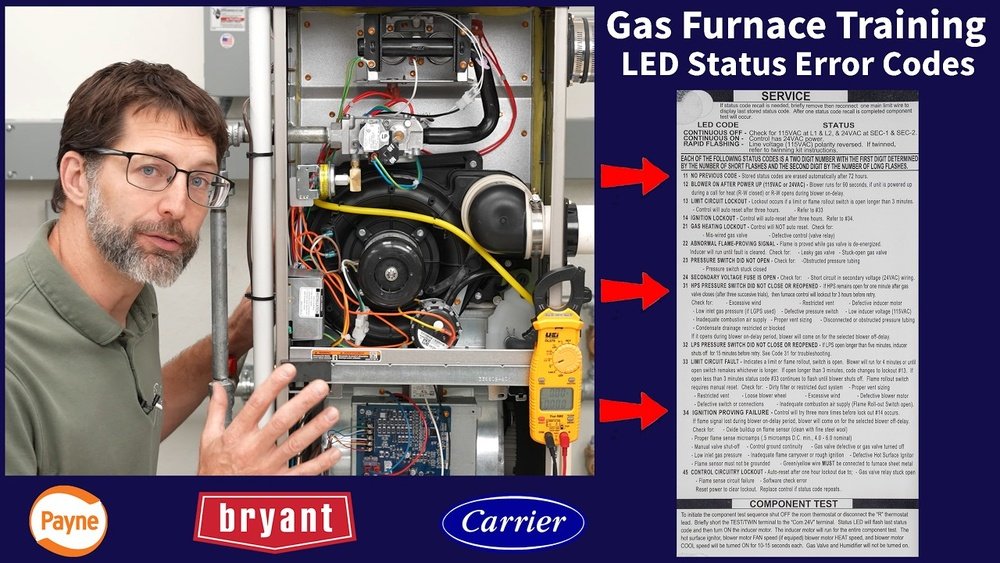
When your Carrier furnace displays a series of blinking lights, it’s not just a random light show. These flash codes are a sophisticated diagnostic language, a direct line of communication from your heating system to you or your HVAC technician. Understanding these codes can transform a potentially stressful breakdown into a manageable troubleshooting session, saving you time, money, and unnecessary worry. Instead of guessing what might be wrong, you can pinpoint the issue with remarkable accuracy, allowing for quicker repairs and a more informed conversation with service professionals.
This guide will demystify the Carrier furnace flash codes, providing you with the knowledge to interpret these signals. We’ll explore what each code signifies, common causes behind them, and the steps you can take to address them. Whether you’re a homeowner looking to gain a better understanding of your HVAC system or an aspiring technician seeking to hone your diagnostic skills, this comprehensive resource will equip you with the expertise to decode your Carrier furnace’s messages.
Key Takeaways
- Diagnostic Language: Carrier furnace flash codes are blinking light sequences on the control board that indicate specific operational faults.
- Troubleshooting Tool: These codes are crucial for diagnosing problems quickly and efficiently, guiding both homeowners and technicians.
- Common Codes: Familiarize yourself with the most frequent codes, such as those indicating ignition failure, flame rollout, or blower issues.
- Control Board Location: The diagnostic LED is typically located on the furnace’s control board, usually behind an access panel.
- Safety First: Always disconnect power before attempting any inspection or troubleshooting beyond simply observing the codes.
- Professional Help: While codes provide guidance, complex issues or those involving gas or electrical components require a qualified HVAC technician.
- Interpreting Blinks: Codes are read by counting the number of short and long blinks, or a sequence of blinks, that repeat.

Credit: www.youtube.com
Understanding Carrier Furnace Control Boards And Diagnostic Leds
At the heart of every modern Carrier furnace lies its control board, often referred to as the bộ điều khiển chính or integrated furnace control (IFC). This sophisticated circuit board acts as the furnace’s brain, receiving input from various sensors and components, and then dictating the operation of the furnace. It manages everything from the thermostat’s call for heat to the ignition sequence, the gas valve, the blower motor, and safety limit switches.
The diagnostic LED (Light Emitting Diode) is a small, usually green, light integrated into this control board. Its primary function is to provide real-time status updates and, more importantly, to signal diagnostic information when a fault occurs. When the furnace operates normally, the LED might blink in a steady, slow pattern, indicating everything is functioning as expected. However, when a problem arises, this steady blink often changes into a specific, repeating sequence. This sequence is the flash code.
Locating The Control Board And Led
Accessing the control board and its diagnostic LED typically requires removing an access panel on the furnace cabinet. This panel is usually held in place by one or two screws. Once removed, you’ll see a network of wires connected to various components. The control board itself is a rectangular circuit board, often green or blue, with numerous chips, resistors, and connectors. The diagnostic LED is a small, pin-like component protruding from the board, often with a clear or colored plastic lens.
Pro Tip: Always ensure the furnace power switch is in the OFF position and has been for at least 30 seconds before opening any access panels. This is a critical safety measure to prevent electrical shock and damage to components.
How Flash Codes Work
Carrier furnaces use a standardized system for their flash codes, although specific models might have slight variations. The codes are typically communicated through a series of blinks. The pattern is crucial:
- Number of Blinks: The sequence often involves a specific number of blinks.
- Pause Between Blinks/Sequences: A short pause might differentiate individual blinks within a sequence, and a longer pause typically separates repeating code sequences.
- Steady vs. Rapid Blink: A steady, slow blink usually indicates normal operation, while a rapid blink or a specific pattern of short and long blinks signifies an error.
Technicians and experienced homeowners learn to count these blinks and consult a legend or chart specific to their furnace model to interpret the meaning. This chart is often found on a sticker inside the furnace cabinet, near the control board, or within the furnace’s installation and service manual.
Common Carrier Furnace Flash Codes And Their Meanings
Carrier furnaces are known for their reliability, but like any complex mechanical system, they can encounter issues. The flash codes are designed to quickly point towards the root cause. While the exact codes can vary slightly between different Carrier furnace series (e.
g. , Infinity, Performance, Comfort), several common codes appear across many models. Understanding these prevalent codes can significantly speed up the diagnostic process.
Ignition And Flame Sensing Issues
These are among the most frequent problems encountered. They relate to the furnace’s ability to safely ignite the gas burner and detect the presence of a flame.
- Code 1 (One Blink): This often signifies a normal, steady state or a warm-up delay. If the furnace is running, this is expected. If the furnace is not heating and shows one blink, it might indicate a thermostat issue or that the furnace is in a programmed delay.
- Code 3 (Three Blinks): This is a critical code, typically indicating ignition failure or interrupted ignition. This means the furnace attempted to ignite the gas, but either the ignitor didn’t heat up properly, the gas valve didn’t open, or the flame sensor did not detect a flame after ignition.
- Common Causes: Faulty ignitor (hot surface ignitor or spark ignitor), faulty gas valve, blocked gas orifice, or a problem with the flame sensor.
- Code 4 (Four Blinks): This code usually points to a flame rollout or high limit switch tripped. Flame rollout is a dangerous condition where the flame exits the combustion chamber. This is a safety shutdown.
- Common Causes: A blocked heat exchanger, a malfunctioning inducer motor (not venting exhaust properly), or a faulty high-limit switch itself. This code requires immediate attention due to safety concerns.
- Code 5 (Five Blinks): This often indicates flame sensed when no heat demand is present. This is a safety issue where the furnace thinks there’s a flame but the thermostat isn’t calling for heat.
- Common Causes: A faulty flame sensor, a sticking gas valve, or a problem with the control board.
Airflow And Blower Motor Issues
Proper airflow is essential for efficient and safe furnace operation. Codes related to airflow often indicate problems with the inducer motor or the circulation blower.
- Code 7 (Seven Blinks): This commonly signals a blower failure or overheating. It means the circulation blower is not running or not running at the correct speed, leading to the furnace overheating and tripping its safety limits.
- Common Causes: A failed blower motor, a faulty blower motor capacitor, a wiring issue to the blower, or a problem with the control board’s control of the blower.
- Code 8 (Eight Blinks): This code often relates to the inducer motor not running correctly or failing to reach the necessary speed before ignition is attempted. The inducer motor is responsible for drafting combustion gases out of the furnace.
- Common Causes: A faulty inducer motor, a blocked inducer motor vent, a cracked inducer motor housing, or wiring issues.
System And Electrical Faults
Some codes indicate more general system malfunctions or issues with electrical components.
- Code 9 (Nine Blinks): This code can indicate a pressure switch malfunction. The pressure switch ensures the inducer motor is operating correctly to vent exhaust gases. If it doesn’t detect the correct pressure, it will prevent the furnace from running.
- Common Causes: A faulty pressure switch, a blocked or kinked vent tube leading to the pressure switch, or a malfunctioning inducer motor.
- Code 10 (Ten Blinks): This often signifies a shorted limit switch or overheating. Similar to code 4, it indicates a safety limit has been tripped due to excessive heat, but the nature of the fault might lie with the switch itself being shorted.
- Common Causes: A faulty high-limit switch, a continuously running inducer motor, or a circulation blower failure.
- Code 11 (Eleven Blinks): This code can indicate a control board failure or a wiring fault. If the control board itself is malfunctioning or if there’s a short in the wiring harness, it may generate this code.
- Common Causes: A defective control board, loose or damaged wiring connections, or a short circuit in one of the furnace’s components.
Note: This list covers common codes. Always refer to your specific Carrier furnace model’s documentation for the most accurate interpretation.
Diagnosing The Problem: A Step-by-step Approach
Observing a flash code is the first step; understanding how to proceed is the next. A systematic approach can help you gather more information and decide whether a DIY fix is possible or if professional intervention is necessary.
Step 1: Identify The Flash Code
- Locate the LED: Open the furnace access panel (after powering off the unit). Find the control board and the blinking LED.
- Observe the Pattern: Carefully count the number of blinks and note any pauses. For example, a code might be “3 short blinks, pause, 3 short blinks.”
- Consult the Legend: Look for a sticker on the inside of the furnace cabinet, near the control board, or consult your furnace’s manual. This legend will list the flash codes and their corresponding meanings. If you don’t have the manual, a quick online search for your specific Carrier furnace model number and “flash codes” should yield results.
Step 2: Assess The Situation And Safety
- Power Cycle the Furnace: Sometimes, a temporary glitch can trigger a code. Turn off the furnace power at the thermostat and at the furnace’s power switch (usually a toggle switch near the unit). Wait about 60 seconds, then turn the power back on. Observe if the code reappears.
- Visual Inspection (Power Off! ): With the power completely disconnected, visually inspect accessible components for obvious issues:
- Debris: Check for excessive dust or debris around the burners, ignitor, flame sensor, and blower motor.
- Wiring: Look for any loose, frayed, or burnt wires connected to the control board or sensors.
- Vents: Ensure the furnace exhaust vent pipe is clear of obstructions (snow, nests, etc. ).
- Condensate Drain: If you have a high-efficiency furnace, check that the condensate drain line is not clogged.
Step 3: Initial Troubleshooting Based On Code Type
If the code indicates an ignition or flame issue (e.g., Code 3 or 5):
- Flame Sensor: This is a common culprit. It can become coated with soot, preventing it from properly detecting the flame. If you are comfortable and knowledgeable, you can attempt to clean it (ensure power is OFF). Gently remove the flame sensor (usually held by one screw), clean the metal rod with fine-grit sandpaper or steel wool, and reinstall it.
- Ignitor: Hot surface ignitors can crack or fail. Visually inspect it for cracks. If it appears intact, its failure might be electrical, requiring a multimeter test (which should be done by a professional if you’re unsure).
If the code indicates an airflow or blower issue (e.g., Code 7 or 8):
- Blower Compartment: Check for obvious obstructions in the blower wheel.
- Filter: Ensure your furnace filter is clean. A severely clogged filter can restrict airflow and cause overheating, potentially leading to blower-related codes.
If the code indicates a limit switch or rollout issue (e.g., Code 4 or 10):
- High-Limit Switch: These switches are safety devices. If tripped, they indicate the furnace has overheated. The cause of overheating (blocked vents, bad blower, etc.) Must be addressed. If the switch itself is faulty, it will need replacement.
- Flame Rollout: This is a serious safety concern. Do not attempt to bypass safety features. This requires professional diagnosis of the combustion chamber and venting.
Step 4: When To Call A Professional
It’s crucial to recognize the limits of DIY troubleshooting. You should call a qualified HVAC technician if:
- You are uncomfortable working with electrical components or gas lines.
- The problem involves the gas valve or gas supply.
- You suspect a heat exchanger issue (often accompanied by a burning smell or soot).
- The flash code persists after a power cycle and basic checks.
- The code indicates a serious safety concern like flame rollout.
- You lack the necessary tools or expertise for further diagnosis (e.g., using a multimeter).
Example: A homeowner noticed their Carrier furnace was blowing cool air and displaying a three-blink code. After checking the furnace manual, they found this indicated an “ignition failure.” They confirmed the thermostat was set correctly and the furnace power was on. They decided to power cycle the unit, but the code returned. Upon further inspection (with power off), they noticed the ignitor glowed briefly but then shut off without igniting the gas. Recognizing this as potentially complex, they called an HVAC technician, who confirmed a faulty ignitor and replaced it, restoring heat.

Credit: www.youtube.com
Common Component Failures Indicated By Flash Codes
Flash codes are incredibly useful because they often point directly to specific components that are malfunctioning. Understanding these common failure points can help you better grasp the diagnostic information provided by your Carrier furnace.
The Ignitor Assembly
The ignitor is responsible for generating the heat necessary to ignite the natural gas or propane mixture in the combustion chamber. Carrier furnaces typically use one of two types:
- Hot Surface Ignitor (HSI): This is a silicon carbide or nitride element that heats up to glowing red temperatures, similar to a light bulb filament. Codes indicating ignition failure (like a three-blink code) can often be traced to a cracked or burnt-out HSI. These are consumable parts and have a finite lifespan.
- Spark Ignitor: Some older or specific models might use a spark ignitor, which generates a high-voltage spark to ignite the gas, much like a gas grill ignitor. Failure here could be due to the ignitor itself, the transformer generating the spark, or the gap between the ignitor and the flame sensor being incorrect.
The Flame Sensor
The flame sensor is a crucial safety device. It’s a metal rod positioned in the path of the flame. Once the gas ignites, the flame heats the sensor. This heat causes a small electrical current to flow through the sensor and back to the control board.
If the control board detects this current, it knows a flame is present and continues to allow gas flow. If the sensor doesn’t detect heat (or flame) after ignition, the control board shuts off the gas valve for safety.
- Common Failure: The most frequent issue with flame sensors is fouling from soot or combustion byproducts. This coating insulates the metal rod, preventing it from conducting the necessary electrical signal. A three-blink code (ignition failure) or a five-blink code (flame present when not demanded, sometimes due to a faulty sensor causing phantom readings) can often be resolved by cleaning the flame sensor. A severely damaged or corroded sensor may need replacement.
The Pressure Switch
The pressure switch monitors the operation of the inducer motor. This motor pulls air in to mix with fuel and pushes exhaust gases out of the furnace. The pressure switch has a small tube connected to the inducer motor housing.
When the inducer motor runs, it creates a specific pressure (or vacuum) that is detected by the switch.
- Function: If the inducer motor fails to start, runs too slowly, or if the exhaust vent is blocked, the correct pressure won’t be generated. The pressure switch will not close (or open, depending on its design), and the control board will receive a signal indicating a problem, often resulting in a nine-blink code.
- Troubleshooting: Issues can stem from a faulty switch, a blocked or kinked tube, or a problem with the inducer motor itself.
The High-limit Switch
The high-limit switch is another critical safety device designed to prevent the furnace from overheating. It’s typically located near the heat exchanger. If the temperature inside the furnace exceeds a safe threshold, this switch will open, cutting power to the burners and signaling the control board to shut down the heating cycle.
- Indication: Codes like four blinks or ten blinks often point to the high-limit switch being tripped. It’s important to remember that the switch trips *because* of overheating; simply replacing the switch without addressing the root cause of the overheating (e.g., a dirty filter, failing blower motor, blocked ductwork) will lead to repeated failures. In some cases, the high-limit switch itself can fail and trip unnecessarily or become “shorted,” indicating a fault even when temperatures are normal.
The Blower Motor And Inducer Motor
These motors are vital for safe and efficient operation.
- Inducer Motor: As mentioned, this motor drafts combustion gases. If it fails, the furnace won’t run, and you’ll likely see codes related to pressure switches or inducer failure (eight blinks).
- Circulation Blower Motor: This motor pushes the heated air through your home’s ductwork. If it fails or runs too slowly, the furnace can overheat, triggering high-limit switches and potentially seven-blink codes. Problems can range from a failed motor winding to a faulty motor capacitor, which helps start and run the motor.
Carrier Furnace Flash Code Comparison Table
To provide a clearer overview, here’s a table summarizing some of the most common Carrier furnace flash codes, their typical meanings, and potential causes. Remember that specific model variations exist.
| Flash Code (Blinks) | Typical Meaning | Potential Causes | Severity & Action |
|---|---|---|---|
| 1 | Normal Operation / Warm-up Delay | None (if furnace is running) | Normal. |
| 3 | Ignition Failure / Interrupted Ignition | Faulty ignitor (HSI or spark), faulty gas valve, blocked gas orifice, faulty flame sensor, control board issue. | **High.** Furnace not heating. Requires diagnosis of ignition components. |
| 4 | Flame Rollout / High Limit Tripped | Blocked heat exchanger, malfunctioning inducer motor, faulty high-limit switch, improper venting. | **Critical Safety Hazard.** Do not operate. Flame exiting combustion chamber is dangerous. Requires immediate professional inspection. |
| 5 | Flame Present When No Heat Demand | Faulty flame sensor (reading phantom flame), sticking gas valve, control board issue. | **High.** Safety shutdown. Indicates a potentially dangerous situation. Requires professional diagnosis. |
| 7 | Blower Failure / Overheating | Failed circulation blower motor, faulty blower capacitor, wiring issue to blower, control board issue, clogged filter restricting airflow. | **High.** Furnace may overheat, blower not circulating air. Check filter first. If persists, requires professional motor/electrical diagnosis. |
| 8 | Inducer Motor Failure / Speed Issue | Failed inducer motor, blocked inducer vent, cracked inducer housing, wiring issue. | **High.** Furnace cannot safely vent exhaust gases. Requires professional diagnosis of inducer motor and venting system. |
| 9 | Pressure Switch Malfunction | Faulty pressure switch, blocked/kinked vent tube, malfunctioning inducer motor. | **High.** Furnace cannot verify safe venting. Requires professional diagnosis of pressure switch and inducer system. |
| 10 | Shorted Limit Switch / Overheating | Faulty high-limit switch, continuous inducer operation, circulation blower failure. | **High.** Indicates overheating. Address the cause of overheating. If switch is faulty, requires replacement. |
| 11 | Control Board Failure / Wiring Fault / Lockout | Defective control board, loose/damaged wiring, short circuit in system, repeated safety lockouts. | **High.** System is locked out or control board is not functioning. Requires professional diagnosis, potentially control board replacement. |
Advanced Troubleshooting And Maintenance Tips
Beyond simply reading the codes, proactive maintenance and a deeper understanding of your furnace can prevent issues and ensure longevity.
Regular Maintenance Schedule
- Annual Professional Tune-Up: Schedule an annual inspection and cleaning with a qualified HVAC technician. They will check all components, clean burners and sensors, test safety controls, and ensure optimal performance. This is the single best way to prevent unexpected breakdowns and costly repairs.
- Filter Replacement: This is a homeowner’s responsibility and a critical one. A dirty air filter restricts airflow, making your furnace work harder, reducing efficiency, and potentially causing overheating and tripping limit switches (leading to codes like 4, 7, or 10). Check your filter monthly and replace it as needed, typically every 1-3 months depending on the filter type and household conditions (pets, allergies, etc. ).