
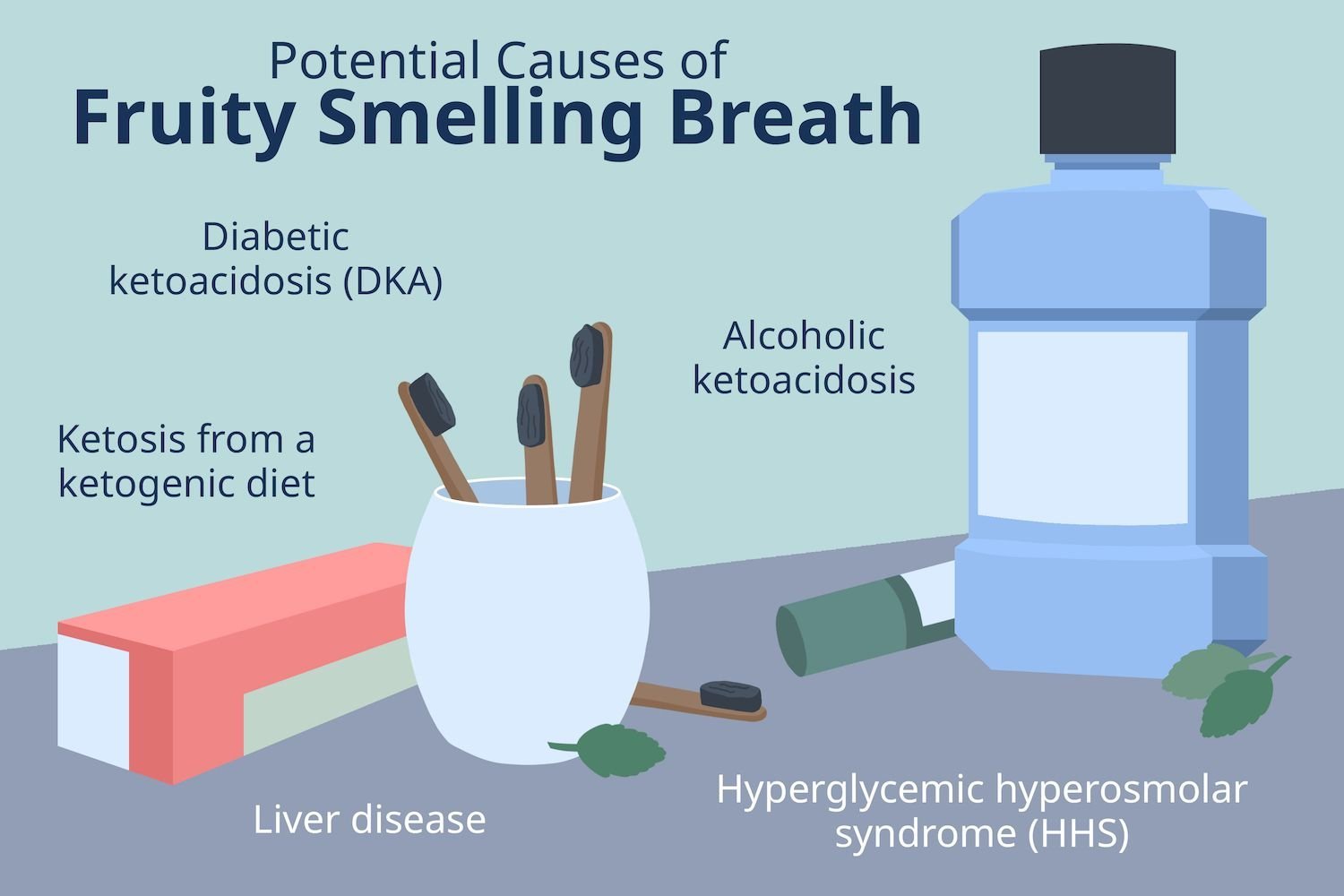
Breath that smells like nail polish remover is usually described as fruity, sweet, or chemical—like acetone. That smell isn’t normal, and it’s worth paying attention to. When someone searches breath smells like nail polish, they’re often worried about diabetes, liver problems, or a recent chemical exposure. The good news is that most causes are identifiable, and many are treatable once you know what to look for. This article walks through the likely causes, when to seek emergency care, and what steps to take next.
Key Takeaways

- Acetone-like breath is often a sign of elevated ketones in the body, not just something you ate.
- Fruity or chemical breath with excessive thirst, frequent urination, nausea, or confusion can signal diabetic ketoacidosis, which is a medical emergency.
- Not eating for long periods, very low-carb diets, and heavy alcohol use can also produce acetone breath in people without diabetes.
- Liver or kidney disease can change breath odor, though the smell is often described differently than pure nail polish remover.
- See a doctor promptly if the smell appears suddenly, returns often, or comes with other symptoms; call emergency services if confusion, vomiting, or breathing trouble accompanies it.
What Causes Breath That Smells Like Nail Polish
Acetone is a ketone body. When your body burns fat instead of glucose for fuel, the liver produces ketones, and acetone can leave the body through your breath. That process creates the nail polish remover odor people notice.
Several situations can push the body into ketone production:
- Diabetic ketoacidosis: A serious complication of diabetes, usually type 1, where insulin is too low and blood sugar and ketones rise to dangerous levels.
- Fasting or starvation: Going without food for extended periods forces the body to burn fat.
- Ketogenic or very low-carbohydrate diets: Severely restricting carbohydrates can raise ketone levels enough to change breath odor.
- Heavy alcohol use: Alcohol can interfere with metabolism and nutrition, sometimes leading to alcoholic ketoacidosis.
- Liver disease: A failing liver may not process substances normally, which can alter breath odor.
- Kidney disease: When kidneys can’t filter waste effectively, breath may take on an unusual smell, though it’s more often described as ammonia-like or fishy than purely acetone.
Diabetic Ketoacidosis: The Most Serious Cause
Diabetic ketoacidosis, or DKA, happens when the body lacks enough insulin to use glucose for energy. It starts breaking down fat rapidly, flooding the bloodstream with ketones. The blood becomes acidic, and the person may exhale acetone through the lungs.
Warning signs include:
- Fruity or nail polish remover breath
- Extreme thirst and dry mouth
- Frequent urination
- Nausea, vomiting, or abdominal pain
- Confusion, fatigue, or difficulty staying awake
- Rapid or deep breathing
DKA can progress quickly and become life-threatening. Anyone with diabetes who notices acetone breath along with these symptoms should seek emergency care immediately. People who haven’t been diagnosed with diabetes but develop these signs also need urgent medical evaluation.
Pro Tip: If you have diabetes and your breath suddenly smells like acetone, check your blood sugar and ketone levels right away if you have a home testing kit. High readings with symptoms mean go to the emergency room, not wait for a regular appointment.
Fasting, Low-Carb Diets, and Ketosis
Not all acetone breath signals disease. Nutritional ketosis from a ketogenic diet is a controlled state where the body burns fat for fuel. Some people on very low-carbohydrate eating plans notice a mild fruity or chemical breath odor, especially in the first few weeks.
Extended fasting or skipping meals for long stretches can have a similar effect. The odor is usually mild and disappears when carbohydrate intake returns to normal or eating resumes.
The difference between dietary ketosis and ketoacidosis matters. Dietary ketosis generally doesn’t cause nausea, vomiting, confusion, or extreme thirst. If those symptoms appear, the cause is more likely medical than dietary.
Alcohol and Breath Odor
Heavy drinking can lead to alcoholic ketoacidosis, particularly in people who drink heavily and eat little. The body produces ketones as it metabolizes alcohol and lacks glucose from food. Breath may smell fruity or chemical, and the person may feel nauseated, dehydrated, or confused.
Alcohol itself also has a distinct breath odor, but that smell comes from the lungs and usually fades as the body processes the drink. Acetone-like breath tied to drinking, especially with illness symptoms, should be evaluated by a healthcare professional.
Liver and Kidney Disease

Liver disease can change breath odor because the liver normally helps process compounds that would otherwise be exhaled. When liver function declines, those substances can build up. The classic description for advanced liver disease is a musty or sweet smell sometimes called fetor hepaticus, though some people notice a chemical or solvent-like quality.
Kidney disease more commonly produces breath that smells like ammonia, urine, or fish, because the kidneys aren’t removing nitrogen waste from the blood. It’s less likely to smell exactly like nail polish remover, but any new, persistent breath odor with fatigue, swelling, or changes in urination deserves medical attention.
Other Causes and Contributing Factors
Dry mouth can make any breath odor more noticeable because saliva helps wash away bacteria and food particles. Dehydration, mouth breathing, certain medications, and salivary gland problems can all reduce saliva.
Poor oral hygiene causes bad breath from bacteria, but that odor is usually sulfurous or rotten rather than acetone-like. Still, gum disease, cavities, or infections can worsen whatever underlying smell exists.
Rarely, exposure to solvents, paints, or cleaning chemicals can leave a chemical odor on the breath, but this is usually short-lived and tied directly to the exposure.
When to See a Doctor
Make a medical appointment if:
- Your breath smells like acetone or nail polish remover without an obvious reason such as a new diet.
- The odor keeps coming back.
- You have dry mouth, excessive thirst, or frequent urination.
- You’re on a low-carb diet or fasting and feel unwell.
Go to the emergency department or call emergency services if acetone breath comes with:
- Vomiting or inability to keep fluids down
- Confusion or altered mental state
- Rapid, deep, or labored breathing
- Loss of consciousness
Warning: Don’t drive yourself if you feel confused, very weak, or are having trouble breathing. Have someone else drive or call for emergency transport.
What to Expect at the Medical Visit
A healthcare professional will likely ask about your medical history, diet, alcohol use, medications, and symptoms. They may check your vital signs and perform a physical exam.
Common tests include:
- Blood glucose and ketone measurements
- Blood chemistry to check electrolytes and kidney function
- Liver function tests
- Urinalysis for ketones and glucose
- A1C test to assess longer-term blood sugar control
Treatment depends on the cause. DKA requires hospital care with intravenous fluids, insulin, and electrolyte replacement. Dietary ketosis usually needs no treatment beyond adjusting eating habits. Liver or kidney disease management focuses on the underlying condition.
Smell Comparison: What Different Breath Odors May Mean
| Breath odor | Possible cause | Associated symptoms |
|---|---|---|
| Fruity, chemical, nail polish remover | Ketones from diabetes, fasting, low-carb diet, alcohol | Thirst, urination, nausea, confusion |
| Ammonia, urine, fish | Kidney disease | Swelling, fatigue, changes in urination |
| Musty, sweet, moldy | Advanced liver disease | Jaundice, abdominal swelling, confusion |
| Rotten, sulfurous | Poor oral hygiene, gum disease, infection | Bleeding gums, tooth pain, coating on tongue |
Steps to Take If You Notice the Smell

- Note when the odor started and whether it’s constant or comes and goes.
- Write down other symptoms, including thirst, urination changes, nausea, fatigue, or confusion.
- Record your recent diet, especially carbohydrates, fasting, or alcohol intake.
- List medications and supplements you take.
- If you have diabetes, check blood sugar and ketones if you can.
- Contact a healthcare provider for an evaluation; seek emergency care for severe symptoms.
- Follow up on any recommended testing and treatment.
Related guides
Frequently Asked Questions
Can breath smell like nail polish remover without diabetes?
Yes. Fasting, very low-carbohydrate diets, prolonged exercise, and heavy alcohol use can all raise ketone levels enough to create an acetone-like breath odor in people without diabetes.
Does ketogenic diet breath always mean ketoacidosis?
No. Nutritional ketosis from a ketogenic diet is different from diabetic ketoacidosis. Ketoacidosis involves dangerous blood acidity and usually causes vomiting, confusion, and extreme illness; dietary ketosis does not.
Can liver disease make breath smell like acetone?
Liver disease can change breath odor, but the classic smell is often described as musty or sweet rather than nail polish remover. Any persistent new breath odor with other symptoms should be checked by a doctor.
Is acetone breath in children an emergency?
It can be. In a child with type 1 diabetes or undiagnosed diabetes, fruity breath with thirst, urination, vomiting, or lethargy may indicate diabetic ketoacidosis and requires immediate emergency care.
Should I brush my teeth more if my breath smells like chemicals?
Brushing and flossing support oral health, but they won’t remove an odor coming from ketones in the bloodstream. If the smell is metabolic, only treating the underlying cause will resolve it.
How fast does diabetic ketoacidosis develop?
DKA can develop over several hours to a day or two, sometimes faster in children or during illness. Because it can become life-threatening quickly, symptoms shouldn’t be ignored.
Conclusion
If your breath smells like acetone or nail polish remover and you aren’t sure why, make an appointment with a healthcare provider to find the cause. Seek emergency care right away if the smell comes with vomiting, confusion, trouble breathing, or extreme weakness.