
You should stop driving immediately if you notice your car smells like burning, as this often indicates an active fire risk or a critical mechanical failure. Pull over to a safe location, turn off the engine, and exit the vehicle. Don’t attempt to pop the hood if you see smoke or flames, as the sudden rush of air can cause a fire to flare up instantly.
Immediate Steps to Prevent Damage
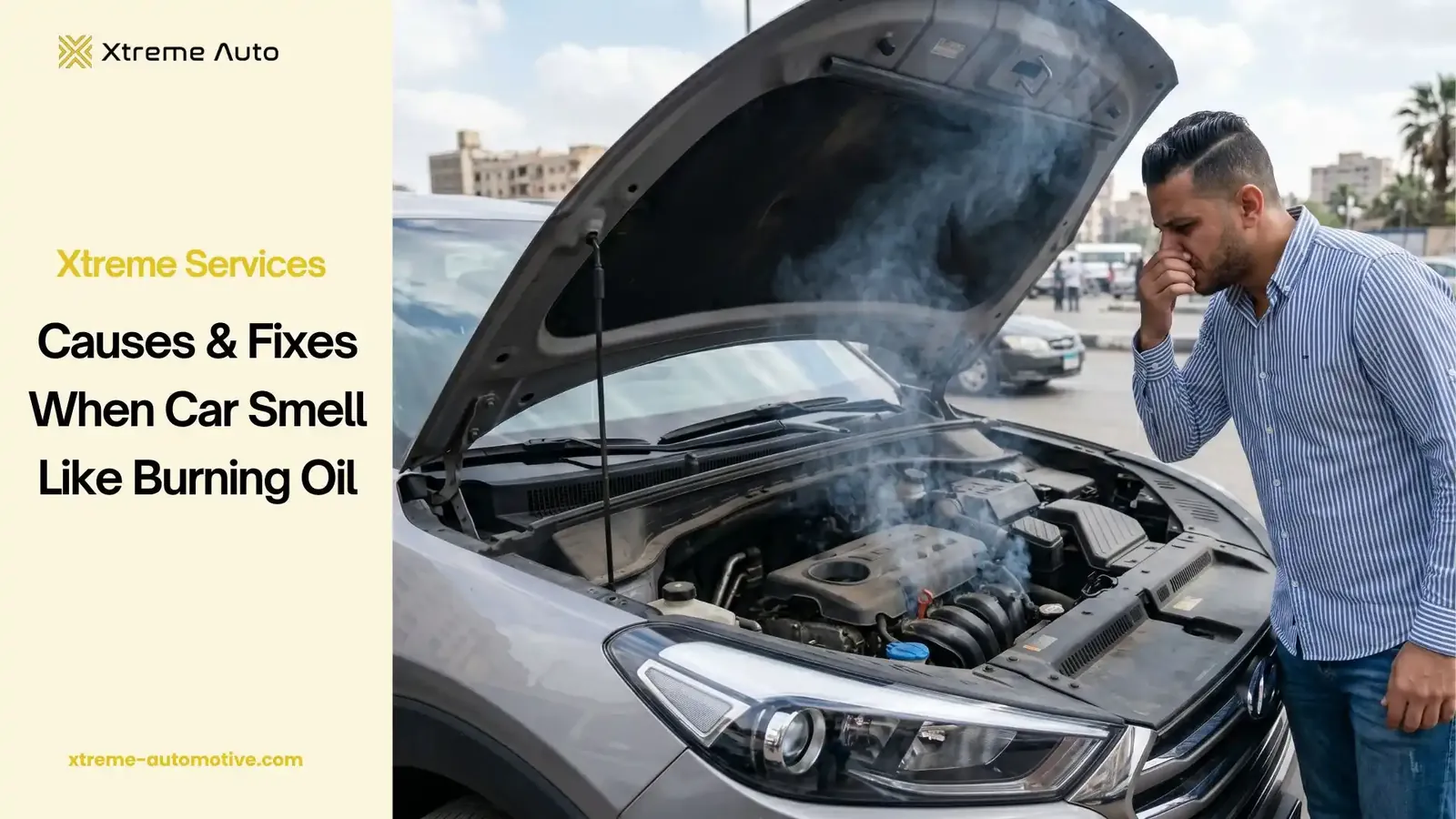
If you detect an unusual odor while driving, take these steps to keep yourself and your passengers safe:
Turn on your hazard lights and pull over to a safe, level spot away from traffic. Avoid parking over dry grass or leaves, as a hot catalytic converter can ignite these materials in seconds.
Switch off the ignition to stop fuel pumps and electrical systems from running. If the smell is sweet like maple syrup, your coolant is leaking; if it’s acrid or rubbery, you likely have an electrical short.
Exit the vehicle and move all passengers at least 100 feet away from the car. Many drivers make the mistake of staying inside to check their phones, but if a fire starts, toxic fumes can overcome you in under a minute.
Call emergency services if you see actual smoke or flames. Don’t try to open the hood until the engine has cooled; introducing fresh oxygen can cause a flare-up.
Why Your Vehicle Smells This Way
When a car smells like burning, it’s typically because a fluid is leaking onto hot engine components or a mechanical part is overheating. The most common cause is oil leaking from a worn valve cover gasket onto the hot exhaust manifold. As the oil hits the metal, it vaporizes and creates a sharp, acrid smell that enters the cabin through the air vents.
Another frequent source is a seized brake caliper. If the brake pad remains pressed against the rotor while you drive, the friction generates intense heat, causing the brake pad material to burn. You’ll often notice this smell coming from one specific wheel. You can verify this by using an infrared thermometer to check if one wheel is significantly hotter than the others after a short drive.
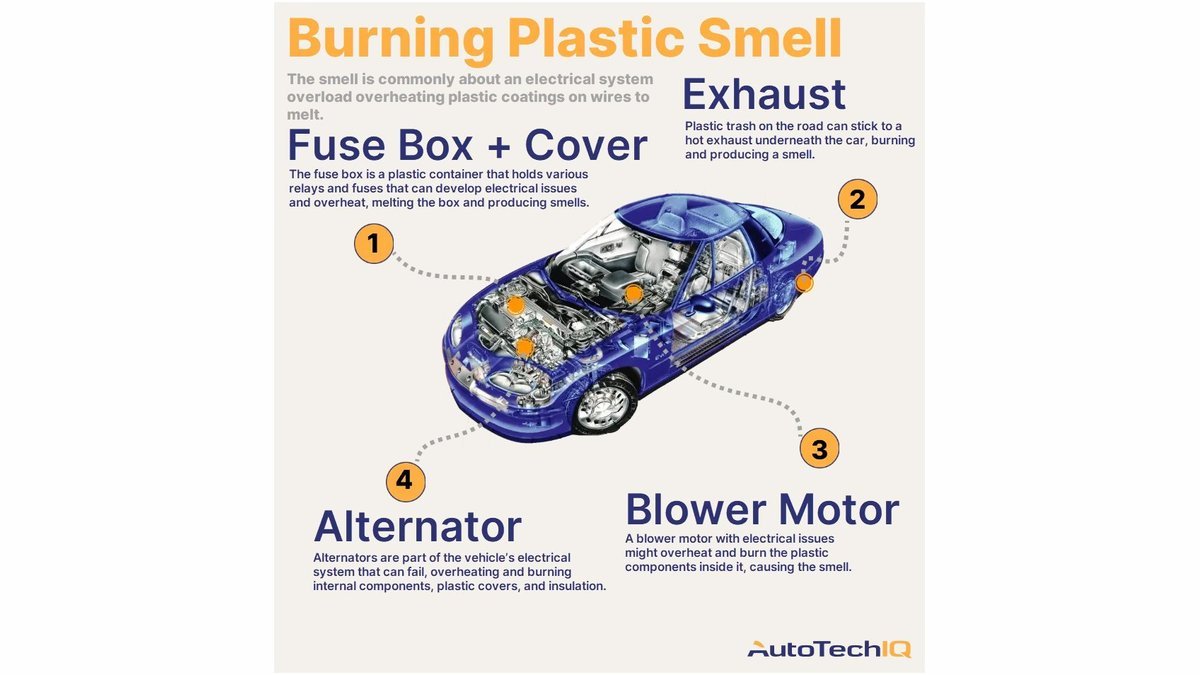
Electrical shorts also cause burning smells, which usually resemble melting plastic. This happens when insulation on wires rubs against metal or melts due to a high-current short circuit. According to the National Highway Traffic Safety Administration, electrical system failures are a leading cause of vehicle fires, so you must treat any plastic-like odor with extreme caution.
Common Sources When Your Car Smells Like Burning
| Symptom | Likely Cause |
|---|---|
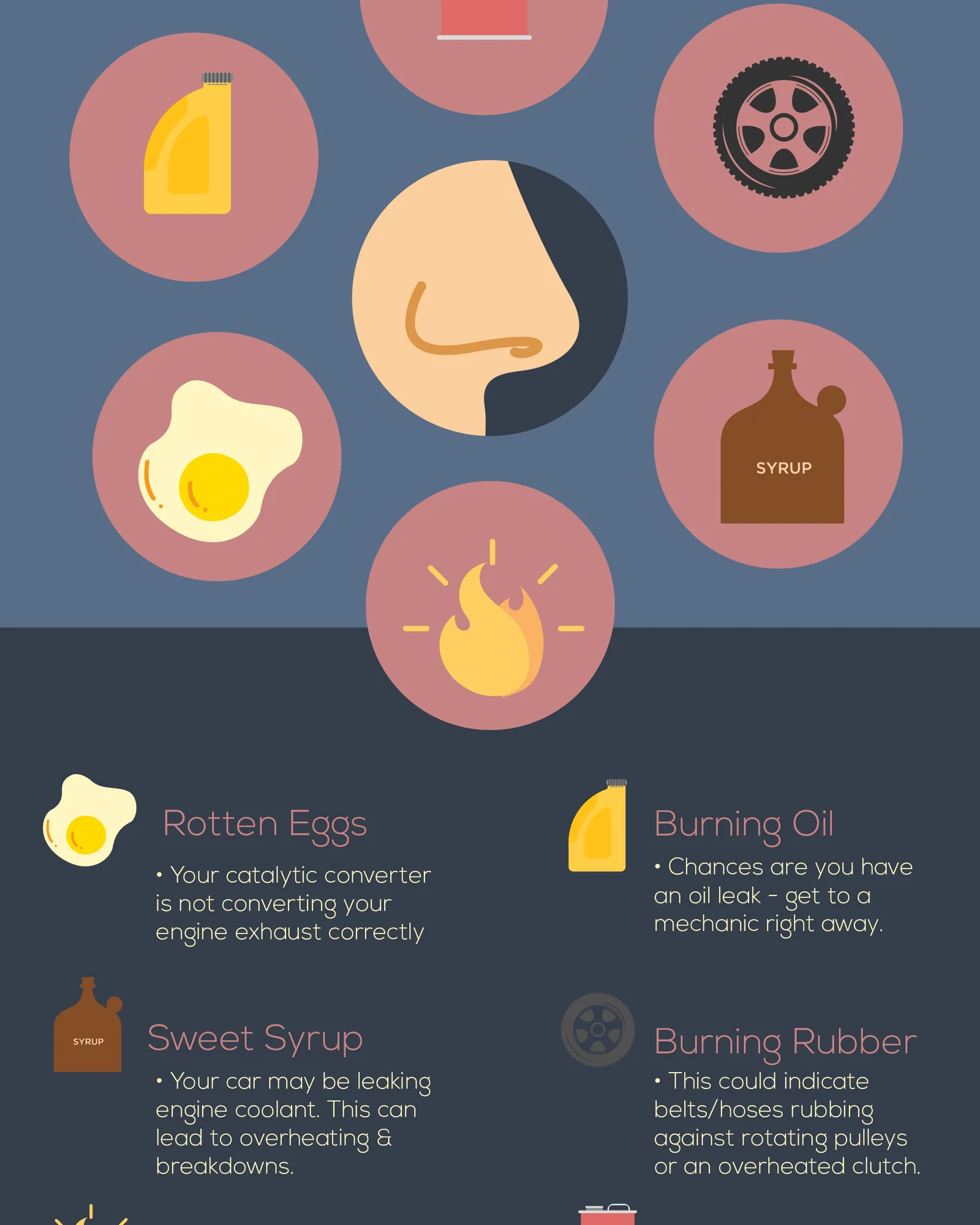
| Acrid, oily smell | Leaking engine oil on exhaust |
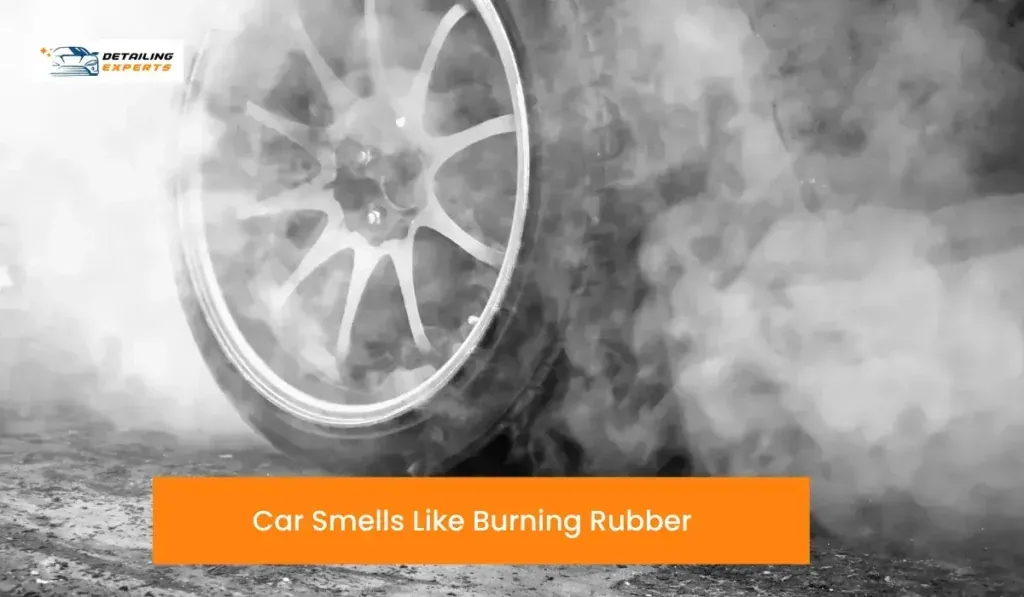
| Sharp, rubbery smell | Worn or slipping drive belt |
| Sweet, syrupy smell | Leaking engine coolant |
| Burning plastic scent | Faulty electrical wiring or fuse |
| Intense, metallic friction | Seized brake caliper |
If you smell sweetness inside the cabin while the heater is running, check your floor mats for dampness. A leaking heater core often pools coolant there, fogging your windshield from the inside.
Ignore the rubbery scent at your own peril. If a serpentine belt snaps while you drive, you lose your power steering and alternator instantly. Pull over if the smell persists for more than a few miles.
When you suspect a seized brake caliper, touch your wheel rims after a short drive. If one rim is significantly hotter than the others, the caliper is dragging. Don’t continue driving, as the heat can warp your rotors or boil your brake fluid.
Checks You Can Perform Yourself
You can identify the source of the smell by performing these basic inspections once the engine is cool.
Check Engine Oil Levels
Look at the dipstick to see if your oil level is low. A sudden drop in oil often confirms a leak that could be hitting hot parts.
Inspect Under the Vehicle
Look for fresh fluid spots on the ground where you parked. Dark brown stains suggest oil, while bright green or pink puddles indicate coolant leaks.
Examine the Drive Belts
Look at the rubber belts on the front of the engine for fraying or cracks. If a belt is loose or worn, it will slip and create a rubbery burning scent.
Smell Near Each Wheel
Walk around the car and sniff near each tire after a drive. A strong, pungent odor at one wheel usually points to a stuck brake caliper.
Check the Dashboard Fuses
Look at your fuse box for any signs of melted plastic or discoloration. A blown fuse that smells like ozone or plastic indicates a short circuit.
Repairing the Burning Odor
Most burning smells require professional intervention because they involve critical systems like brakes, fuel lines, or high-voltage electrical circuits. If you find a leaking hose or a loose belt, a mechanic can replace these parts quickly.
If the smell comes from an oil leak, the technician will likely replace the valve cover gasket or the oil pan seal. A common mistake is ignoring a faint, sweet scent, which often indicates a coolant leak hitting a hot exhaust manifold. This costs you more than a gasket; it risks catastrophic engine overheating.
If the issue is a seized brake caliper, they will need to replace the caliper and the associated brake pads. You can diagnose this yourself by using an infrared thermometer to check if one wheel is significantly hotter than the others after a short drive. If one wheel is significantly hotter than the others, the caliper is stuck.
Once the repair is complete, the smell should dissipate after a short drive as any residual fluid burns off. If the odor returns within a few days, the leak is still active or the initial repair missed the root cause.
When to Call a Professional
You should stop your DIY efforts the moment you identify a fuel leak or an electrical short. Fuel leaks are dangerous and can ignite from a single spark, while electrical shorts are often hidden deep within the dashboard or wiring harness. Don’t attempt to repair fuel lines or electrical components yourself, as these require specific training and specialized tools to ensure the vehicle remains roadworthy.
A certified mechanic will use a diagnostic computer to check for stored fault codes and perform a pressure test to find the exact location of a leak. When you call, describe the smell and tell them if you saw any fluid on the ground or if the smell only happens when you use the brakes.
Related guides
Frequently Asked Questions
Can I keep driving if the smell is faint?
No, you should never ignore a burning smell even if it seems faint. A small leak can quickly become a large one, and a minor electrical short can turn into a vehicle fire without warning. Always have a professional inspect the car to find the source.
Is it safe to use the heater?
It isn’t safe to use the heater if your car smells like burning. The heating system draws air from the engine bay into the cabin, which will pull smoke, fumes, or toxic gases directly toward you and your passengers. Keep the vents closed and the windows open.
How much does it cost to fix?
The cost depends entirely on the failed part, ranging from a simple belt replacement to a complex engine gasket repair. You can check your owner’s manual for recommended service intervals, but you must have a shop provide an estimate based on your specific vehicle’s make and model.
Does a burning smell always mean a fire?
A burning smell doesn’t always mean the car is currently on fire, but it does mean a component is overheating. This heat is a precursor to a fire, so you must treat it as an emergency. Never assume the smell will go away on its own.
Can old oil cause a burning smell?
Old oil itself doesn’t cause a burning smell unless it’s leaking. If your engine is clean and has no leaks, the oil should stay contained within the engine. A smell indicates that the oil has escaped its intended path and is touching hot metal.
Should I check the transmission fluid?
You should check the transmission fluid if the burning smell is accompanied by rough shifting. Transmission fluid has a distinct, sharp odor when it burns, often caused by the fluid overheating during heavy use. If the fluid looks dark or smells burnt, have a transmission specialist inspect the unit.
Conclusion
Once you’re safely away from the vehicle, call a professional towing service to transport it to a trusted mechanic. Don’t try to drive it any further, as you won’t want to risk permanent engine damage or your personal safety. It’s always better to be cautious when your car isn’t acting right.