
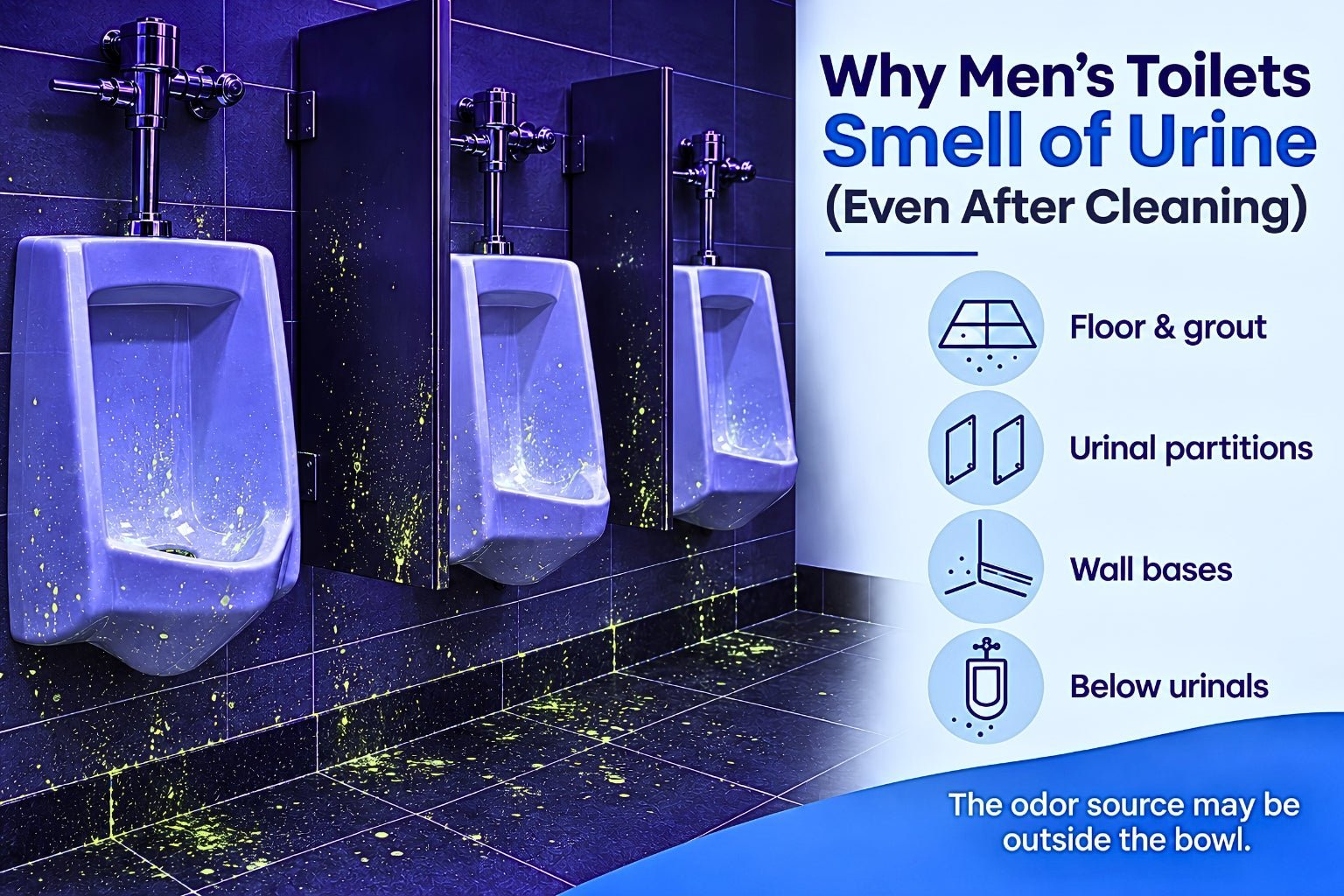
The phrase toilet smells like urine even after cleaning describes one of the most common bathroom frustrations. You scrub the bowl, wipe the seat, and mop the floor, yet a stale urine odor still hangs in the air. The reason is usually that cleaning the visible surfaces misses the places urine actually settles: beneath the seat hinges, around the base where the toilet meets the floor, inside the tank, and along the grout lines. Urine can also splash behind the bowl or soak into the wax ring and subfloor, where ordinary bathroom cleaner can’t reach it. Finding the source matters because covering the smell with air freshener doesn’t fix the problem, and a persistent odor can point to a leak or a damaged seal that will get worse over time.
Key Takeaways
- Lift the seat and clean under the hinges and around the mounting bolts where urine splashes and dries.
- Check the base of the toilet for a broken wax ring or loose bolts that let urine seep onto the floor.
- Pour an enzymatic cleaner into the overflow pipe and tank to reach odor-causing bacteria inside the porcelain.
- Scrub grout lines and caulk around the toilet with a bleach-based cleaner or replace them if they’re stained.
- Use an enzyme-based cleaner rather than a masking spray so the odor source is broken down, not covered up.
- If the smell comes from the drain or vent pipe, call a plumber to inspect the P-trap and sewer vent.
Why Your Toilet Still Smells Like Urine After Cleaning
Most people clean the parts they can see: the bowl, the seat, and the rim. Urine, however, doesn’t stay where it’s easy to reach. It splashes up under the seat, drips around the hinge area, and runs down the back of the bowl where it meets the tank.
Once it dries, uric acid crystals cling to porcelain, grout, and caulk. Regular cleaners remove the visible stain but often leave the crystals behind, so the smell returns as soon as the room warms up or humidity rises.
The base of the toilet is another common culprit. If the wax ring under the toilet has failed, or if the floor bolts are loose, urine can seep out every time someone sits down. That liquid soaks into the subfloor and the surrounding grout, creating an odor that no amount of bowl scrubbing will remove. You may also smell urine coming from the tank itself, where bacteria and mineral buildup collect along the waterline and inside the overflow pipe.
Common Places Urine Hides
Under the Seat and Around the Hinges
The underside of the toilet seat collects splashes that never make it into the bowl. The hinge area is especially hard to reach with a standard brush, and urine can dry there in a thin film that reactivates with moisture. Remove the seat entirely if your model allows it, and scrub the hinge posts, the mounting holes, and the bumpers underneath.
Around the Base and Floor Junction
Look closely at where the toilet meets the floor. Dark staining, soft flooring, or a rocking toilet often means the wax ring is compromised. Urine can leak past a failed seal and pool underneath, where it soaks into the subfloor and the grout around the base. Tightening the floor bolts may stop a fresh leak, but a damaged wax ring usually requires removing the toilet and replacing the ring.
Inside the Tank and Overflow Pipe
The tank is rarely part of a regular cleaning routine, but it holds standing water that can become stagnant. Bacteria grow along the waterline, inside the overflow tube, and on the flapper chain. When you flush, that water swirls through the bowl and can carry a urine-like smell with it. A tank that smells like a urinal needs a dedicated cleaning with a product safe for rubber and plastic components.
In Grout and Caulk Lines
Grout is porous, and caulk shrinks and cracks over time. Urine that misses the bowl soaks into these materials, and ordinary surface cleaners can’t pull it back out. If the grout around your toilet is discolored or the caulk is peeling, the odor source is likely embedded in those materials rather than on the porcelain itself.
Cleaning Methods That Actually Work
Enzymatic Cleaners
Enzyme-based cleaners break down uric acid and the bacteria that feed on it. They’re the best choice for urine odors because they digest the source instead of covering it with fragrance. Apply the cleaner to the bowl, under the seat, around the base, and into the tank, then let it sit for the time listed on the label before scrubbing or flushing.
Bleach-Based Bathroom Cleaners
A bleach-based cleaner disinfects hard surfaces and removes stains from grout and porcelain. Use it on the seat, the rim, and the exterior base, but avoid mixing it with ammonia or vinegar, which creates toxic gas. Bleach is strong on surfaces but doesn’t penetrate deep into grout the way an enzymatic product can.
Vinegar and Baking Soda
White vinegar and baking soda can help with light mineral buildup and surface freshening, but they aren’t strong enough to dissolve dried urine crystals or kill established bacteria in a subfloor. Use them for routine maintenance between deeper cleans, not as the primary fix for a persistent urine smell.
Tank Tablets and In-Bowl Cleaners
Drop-in tank tablets can keep water fresher between cleanings, but some contain chemicals that degrade rubber flappers and seals over time. If you use them, choose a product labeled safe for tank components and check the flapper regularly for warping or residue buildup.
Step-by-Step Deep Clean
- Put on rubber gloves and ventilate the bathroom by opening a window or running the fan.
- Remove the toilet seat if possible, and soak it in warm water with an enzymatic cleaner.
- Scrub the hinge area, mounting bolts, and bumpers with a small brush, then rinse and dry.
- Apply an enzymatic cleaner to the bowl interior, under the rim, and around the base; let it dwell as directed.
- Scrub the bowl with a toilet brush, paying attention to the trapway and the back rim where splashes dry.
- Wipe the exterior of the tank, the handle, and the base with a disinfecting cleaner.
- Pour a cup of enzymatic cleaner into the tank and let it sit before flushing twice.
- Scrub grout lines around the toilet with a grout brush and bleach-based cleaner; rinse thoroughly.
- Replace cracked or peeling caulk around the base after the area is completely dry.
- Flush the toilet several times and run the fan for at least 20 minutes to dry everything fully.
| Area to Clean | Recommended Product | Tool to Use |
|---|---|---|
| Toilet bowl and rim | Enzymatic cleaner | Toilet brush |
| Seat hinges and underside | Enzymatic cleaner | Small nylon brush |
| Grout and caulk lines | Bleach-based cleaner | Grout brush |
| Inside tank and overflow pipe | Tank-safe enzymatic cleaner | Measuring cup |
| Floor around base | Disinfectant cleaner | Microfiber cloth |
When the Smell Is a Plumbing Problem
If you have cleaned every surface and the odor remains, the issue may be inside the drain or vent system. A dry P-trap allows sewer gases to rise into the bathroom, and a blocked vent pipe can prevent those gases from escaping outside. A cracked wax ring can also let sewer gas escape around the base even when there’s no visible water leak.
Signs that you need a plumber include gurgling sounds when you flush, slow drainage in multiple fixtures, water pooling around the base, or a smell that gets worse after running water elsewhere in the house. A plumber can camera the drain line, test the vent stack, and replace a failed wax ring. This isn’t a job to put off, because sewer gas contains methane and hydrogen sulfide, which are harmful in enclosed spaces.
Pro Tip: Before you assume the toilet is the problem, check the floor drain and the sink overflow hole. Hair, soap scum, and bacteria can collect there and produce a smell that seems to come from the toilet.
Products to Consider
| Product Type | Best For | What to Look For |
|---|---|---|
| Enzymatic bathroom cleaner | Urine odor on surfaces and in grout | Enzyme or bio-enzymatic formula, no added fragrance |
| Bleach-based bathroom spray | Disinfecting hard surfaces and stain removal | Sodium hypochlorite, spray nozzle for tight areas |
| Toilet tank cleaning tablets | Ongoing tank maintenance | Label stating safe for rubber flappers and seals |
| Grout sealer | Protecting grout after deep cleaning | Penetrating sealer for bathroom floors |
| Wax ring with flange | Replacing a failed base seal | Extra-thick or reinforced ring for uneven floors |
Prevention Habits
- Close the lid before flushing to reduce aerosolized droplets that land on the seat and floor.
- Wipe the seat and base daily with a disinfecting wipe, especially in households with children or anyone who misses the bowl.
- Clean the tank every three months to prevent bacterial film from building up in standing water.
- Re-caulk around the base every few years, or sooner if the caulk cracks or turns dark.
- Run the bathroom fan during showers and for twenty minutes afterward to lower humidity, which reactivates dried urine crystals.
Related guides
- How to Use Mineral Spirits on Wood for Cleaning and Prep in 2026
- Can You Use Oil Based Primer Over Latex Paint? The Fix in 2026
- How to Clean Polyurethane Brush: The Best Solvent Methods in 2026
Frequently Asked Questions
Why does my toilet smell like urine right after I clean it?
You’re likely cleaning the visible bowl but missing the areas where urine actually collects: under the seat hinges, around the base, inside the tank, and in the grout lines. Urine crystals and bacteria stay behind even when the bowl looks clean, so the odor returns as soon as the room warms up.
Can a wax ring cause a urine smell?
Yes. A failed wax ring allows liquid and sewer gas to escape around the base of the toilet. The urine soaks into the subfloor and grout, creating a persistent odor that surface cleaning can’t reach. Replacing the wax ring usually requires removing the toilet, so this is often a plumber’s job.
Will vinegar remove urine smell from a toilet?
Vinegar can help with light mineral buildup and surface freshness, but it isn’t strong enough to break down dried uric acid crystals or kill bacteria embedded in grout or under the floor. An enzymatic cleaner is more effective for a true urine odor because it digests the source rather than masking it.
How often should I clean my toilet tank?
Clean the tank every three months, or sooner if you notice a musty or urine-like smell when you lift the lid. Standing water in the tank can grow bacterial film along the waterline and inside the overflow pipe, and that odor gets flushed into the bowl with every use.
Should I use bleach or enzyme cleaner for urine odor?
Use an enzymatic cleaner as your primary treatment because it breaks down uric acid and bacteria. Use bleach-based cleaner for disinfecting hard surfaces and removing stains from grout, but never mix the two, and don’t rely on bleach alone to remove odor trapped in porous materials.
Conclusion
Keeping a toilet odor-free means cleaning the places urine actually reaches, not just the bowl you can see. Start with a full deep clean using an enzymatic cleaner, check the base for leaks or a failing wax ring, and commit to wiping the seat and base daily. If the smell survives all of that, call a plumber to inspect the drain, vent, and seals before the problem damages your floor.