
Have you ever wondered how your favorite music or videos get from one device to another? It all comes down to signals—either analog or digital.
But what exactly sets these two apart? Understanding the difference between analog and digital signals can help you make smarter choices with your gadgets, improve your tech knowledge, and even enhance your everyday experiences. Stick with me, and by the end of this article, you’ll see why this simple topic matters more than you might think.
Ready to dive in? Let’s get started.

Credit: www.youtube.com
Analog Signal Basics
Understanding analog signals is key to grasping how many devices communicate. These signals carry information in a continuous flow. They change smoothly over time, representing data in natural forms. This section breaks down the basics of analog signals for easy learning.
What Is An Analog Signal
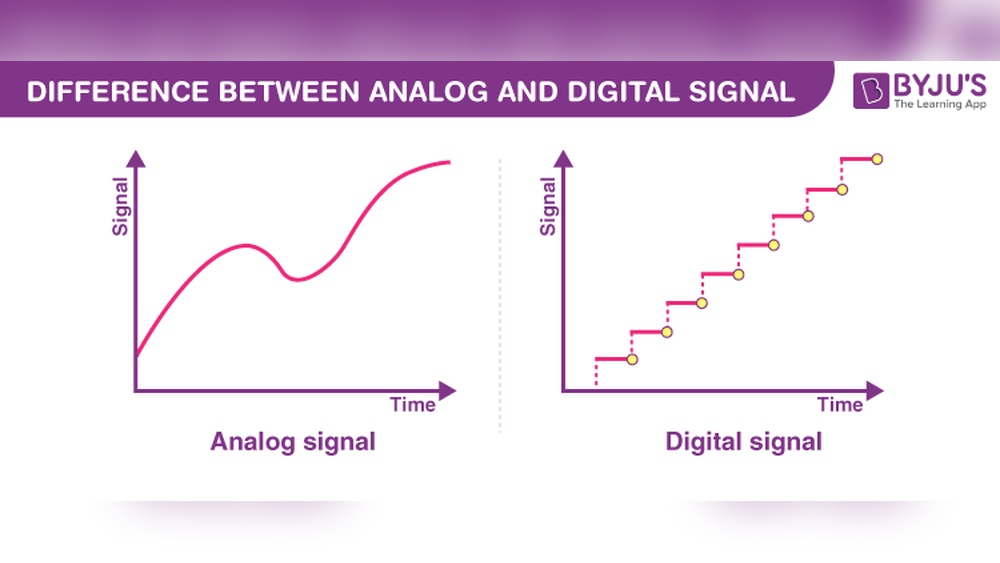
An analog signal is a type of signal that varies smoothly. It shows information as continuous waves. These waves can change in amplitude, frequency, or phase. Analog signals represent real-world data like sound, light, or temperature. They do not use discrete steps or levels.
Characteristics Of Analog Signals
Analog signals have several key traits. They are continuous and can take any value within a range. The signal changes over time, following the original data closely. Noise and distortion can affect analog signals easily. They can be strong or weak depending on the source. Analog signals often require careful handling to maintain quality.
Common Analog Signal Sources
Many everyday devices produce analog signals. Microphones convert sound waves into electrical signals. Analog radios receive signals as continuous waves. Thermometers can send temperature readings through analog signals. Older TVs and record players also use analog signals. These sources rely on smooth, natural signal changes to work.
Digital Signal Basics
Digital signals play a crucial role in modern technology. They carry information using specific patterns of zeros and ones. Understanding digital signal basics helps in many fields like computing, communications, and electronics.
What Is A Digital Signal
A digital signal is a type of signal that uses discrete values. It represents information using two states: high and low. These states are often called 1 and 0. Digital signals differ from analog signals, which vary continuously. Digital signals are easier to store and process in electronic devices.
Characteristics Of Digital Signals
Digital signals have clear and defined levels. They use binary code, which is simple and reliable. Noise affects digital signals less than analog ones. Digital signals can be easily copied without losing quality. They allow for error detection and correction in data transmission.
Common Digital Signal Sources
Many devices generate digital signals. Computers and smartphones send data using digital signals. Digital cameras capture images and store them digitally. Televisions and radios often use digital signals for better quality. Sensors in machines and cars also produce digital signals for control systems.
Signal Quality And Noise
Signal quality plays a big role in how well communication systems work. Noise can reduce signal clarity and cause errors. Understanding how noise affects analog and digital signals helps choose the right system for the job.
How Noise Affects Analog Signals
Analog signals carry data as continuous waves. Noise mixes with these waves, causing changes in amplitude or frequency. This interference makes the signal weaker and less clear. Over long distances, noise can build up and distort the original message. The result is poor sound or image quality.
Noise Resistance In Digital Signals
Digital signals use discrete values, usually zeros and ones. This makes them easier to protect from noise. Small changes in the signal do not affect the data. Digital systems can detect and fix errors caused by noise. This keeps the information clear and accurate even with interference.
Signal Distortion Comparison
Analog signals lose quality as noise increases. The distortion is gradual and hard to fix. Digital signals stay clear until noise passes a certain limit. Then, errors happen suddenly. Overall, digital signals handle noise better and maintain quality longer.

Credit: controlbyte.tech
Transmission And Bandwidth
Transmission and bandwidth are key factors in how signals travel and how much information they carry. Signals must move across distances clearly and quickly. The type of signal affects both how it moves and the space it needs on a channel.
Bandwidth is the range of frequencies a signal uses. It limits how much data can pass through at once. Different signals need different bandwidth sizes. Understanding their transmission methods and bandwidth helps in choosing the right system for communication.
Analog Signal Transmission Methods
Analog signals send information as continuous waves. These waves vary in amplitude or frequency to carry data. Common methods include amplitude modulation (AM) and frequency modulation (FM). They use simple hardware and work well over long distances.
Analog transmission is sensitive to noise and distortion. Noise can change the wave shape, causing errors. Amplifiers boost signals but also increase noise. This limits the quality of analog signals over long distances.
Digital Signal Transmission Methods
Digital signals send information as binary code—ones and zeros. These signals use pulses or discrete steps to represent data. Methods like pulse code modulation (PCM) convert analog inputs into digital form. Digital transmission often uses cables, fiber optics, or wireless systems.
Digital signals resist noise better than analog. Repeaters regenerate the signal perfectly without adding noise. This keeps the data clear over long distances. Digital transmission supports error detection and correction, improving reliability.
Bandwidth Efficiency Comparison
Analog signals need wider bandwidth for higher quality. Greater detail requires more frequency space. This limits the number of analog channels in a given bandwidth.
Digital signals use bandwidth more efficiently. Compression techniques reduce data size without losing quality. Multiple digital signals can share the same bandwidth using multiplexing. This increases the total data transmitted on one channel.
Digital transmission maximizes available bandwidth. It supports faster data rates and more users. This efficiency makes digital the preferred choice for modern communication systems.
Storage And Processing
Storage and processing are key parts of how signals work. They affect how data is saved and handled in devices. Analog and digital signals use different methods for these tasks. Understanding these differences helps explain their strengths and limits.
Analog Data Storage Techniques
Analog data stores information in continuous signals. It uses physical forms like tapes and vinyl records. These mediums capture signal variations as they happen. The quality depends on the medium’s condition and environment. Analog storage can degrade over time. Noise and distortion often affect the stored data.
Digital Data Storage Techniques
Digital data stores information as binary code. This means data is saved as zeros and ones. It uses devices like hard drives, SSDs, and flash memory. Digital storage is less prone to noise and damage. Data can be copied without losing quality. Large amounts of data fit in small spaces.
Processing Flexibility And Speed
Analog processing handles signals in real time. It works well for simple, continuous changes. Digital processing uses computers and microchips. It offers fast, flexible manipulation of data. Digital systems can perform complex calculations quickly. They also allow easy editing and error correction. Processing speed and accuracy usually favor digital systems.

Credit: crossroadenergy.com
Applications And Use Cases
Understanding where analog and digital signals are used helps to see their strengths. Each type fits certain tasks better. Some devices need smooth, continuous signals. Others require clear, exact data. Sometimes, a mix of both signals works best.
Where Analog Signals Excel
Analog signals work well with natural sounds and images. Radios and old TVs use analog signals. These signals capture small changes in sound or light. They offer smooth and real-time feedback. Analog is great in music and voice transmission. It keeps the original quality without breaking it into pieces.
Where Digital Signals Shine
Digital signals are common in computers and smartphones. They turn information into numbers. This makes data easy to store and share. Digital signals resist noise and interference. They keep information clear over long distances. Digital is ideal for internet, digital photos, and videos. It allows quick processing and editing of data.
Hybrid Systems Combining Both
Some systems use both analog and digital signals. Smartphones, for example, take analog sound and convert it to digital. This lets users talk and listen clearly. Hybrid systems mix the smoothness of analog with digital accuracy. They improve performance in audio, video, and sensors. These systems get the best from both worlds.
Cost And Complexity
Cost and complexity play a big role in choosing between analog and digital signals. Each type affects the price of equipment and how hard it is to design and maintain systems. Understanding these factors helps pick the best option for your needs.
Equipment And Maintenance Costs
Analog equipment often costs less upfront. It uses simpler parts and fewer chips. Digital equipment can be pricier due to advanced processors and converters. Maintenance for analog gear is usually easier and cheaper. Digital systems may require skilled technicians and special tools. Repair costs for digital devices tend to be higher.
System Design Complexity
Analog systems have a straightforward design. They process continuous signals directly. Digital systems involve coding, decoding, and signal processing steps. This adds layers to the design process. Designers need knowledge of software and hardware for digital signals. Analog designs are easier to build but may lack some features.
Scalability Considerations
Scaling analog systems can be difficult and costly. Adding new components often means new wiring and calibration. Digital systems scale better with software updates and modular hardware. Expanding digital networks is simpler and more flexible. This makes digital signals ideal for growing systems and new technology integration.
Future Trends
The future of signal technology holds exciting possibilities for both analog and digital signals. Advances in technology will improve performance, efficiency, and applications. These trends will shape how we communicate, process data, and interact with devices.
Experts continue to explore new methods to enhance signal clarity and reduce noise. The balance between analog warmth and digital precision will influence future designs. Innovation will push the limits of what signals can achieve in many fields.
Advances In Analog Technology
Analog technology is evolving to meet modern needs. Engineers focus on reducing distortion and improving signal fidelity. New materials and components allow better signal transmission over longer distances. Analog sensors are becoming more sensitive and reliable. These improvements keep analog relevant in audio, radio, and measurement systems.
Innovations In Digital Signal Processing
Digital signal processing (DSP) continues to advance rapidly. Algorithms become faster and more efficient, handling complex data easily. Machine learning helps DSP systems adapt and improve automatically. This leads to clearer audio, sharper images, and better data compression. Digital signals are also becoming more secure and resistant to interference.
Emerging Signal Technologies
New signal technologies are appearing at the edge of research. Quantum signals promise ultra-fast and secure communication. Optical signals use light for higher bandwidth and lower loss. Hybrid systems combine analog and digital methods for the best results. These emerging technologies will expand possibilities in telecom, medicine, and computing.
Frequently Asked Questions
What Is The Main Difference Between Analog And Digital Signals?
Analog signals are continuous and vary smoothly over time. Digital signals use discrete values, often represented as 0s and 1s.
Which Signal Type Is Better For Noise Resistance?
Digital signals handle noise better because they have clear, fixed values. Analog signals can lose quality when noise interferes.
How Do Analog And Digital Signals Affect Sound Quality?
Analog signals capture sound in a natural, continuous form. Digital signals can reproduce sound clearly but may lose some detail.
Where Are Analog Signals Still Commonly Used Today?
Analog signals appear in older technologies like vinyl records and traditional radios. Some sensors and microphones also use analog signals.
Why Are Digital Signals Preferred In Modern Communication?
Digital signals allow easy error correction and data compression. They work well with computers and modern devices for fast, reliable communication.
Conclusion
Analog and digital signals both have their strengths. Analog signals offer smooth, continuous data. Digital signals provide clear, easy-to-process information. Each type suits different needs and devices. Choosing depends on your specific situation. Understanding their differences helps you make smart decisions.
Technology continues to evolve, blending both signal types. Stay curious and keep learning about these signals. This knowledge supports better tech use every day.