
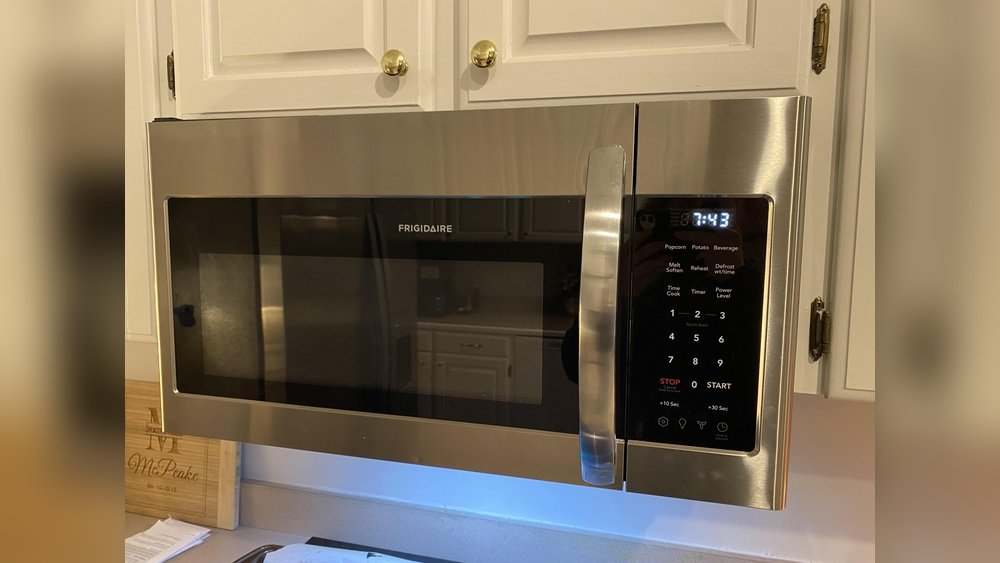
A Frigidaire microwave not heating is a common household frustration. You pop in your leftovers, set the timer, and anticipate a warm meal, only to find it still cold when the cycle finishes. This issue can stem from a variety of causes, ranging from simple user errors to more complex internal component failures. Understanding these potential problems is the first step toward diagnosing and resolving the issue, saving you both time and the expense of a premature replacement.
This comprehensive guide will walk you through the most common reasons why your Frigidaire microwave might be failing to heat, offering practical troubleshooting steps you can take yourself. We’ll explore everything from checking the power supply and door seals to identifying potential failures in crucial components like the magnetron and high-voltage diode.
By systematically addressing each possibility, you can pinpoint the root cause and determine whether a simple fix is within reach or if professional repair or replacement is necessary.
Key Takeaways
- Power Supply Issues: Ensure the microwave is properly plugged in and the circuit breaker hasn’t tripped.
- Door Interlock Switches: Malfunctioning switches can prevent the microwave from operating correctly, including heating.
- Magnetron Failure: This is the most common internal component failure causing a lack of heat.
- High-Voltage Diode and Capacitor: These components work together with the magnetron and can fail, preventing heating.
- Thermal Cut-off Fuse: This safety feature can blow if the microwave overheats, disabling it.
- Control Board Problems: While less common, a faulty control board can also lead to heating issues.
- User Error: Double-check settings and ensure the correct power level is selected.

Credit: registerappliance.com
Common Frigidaire Microwave Heating Problems And Solutions
When your Frigidaire microwave refuses to heat, it’s easy to feel helpless. However, many of the reasons behind this malfunction are addressable with a bit of systematic troubleshooting. We’ll break down the most frequent culprits, guiding you through checks you can perform before calling for professional help.
Power And Basic Checks
Before diving into the internal workings of your microwave, it’s essential to rule out the simplest explanations. These preliminary checks can often resolve the issue without requiring any technical expertise.
Verifying Power Connection
The most basic, yet often overlooked, reason for a microwave not heating is a lack of power.
- Plugged In? Ensure the microwave’s power cord is securely plugged into a functioning wall outlet. Sometimes, vibrations can loosen the plug.
- Outlet Functionality: Test the outlet with another small appliance, like a lamp or toaster, to confirm it’s providing power.
- Circuit Breaker: Check your home’s electrical panel for a tripped circuit breaker. If the breaker for the kitchen or the specific outlet has tripped, reset it. If it trips again immediately, there might be a short circuit in the outlet or the microwave itself, requiring professional attention.
Examining The Door And Seals
The microwave door plays a critical role in its operation. A damaged door or faulty seals can prevent the microwave from heating as a safety measure.
- Door Latch Mechanism: Inspect the door latches for any visible damage, such as bent or broken plastic parts. The door must close completely for the safety interlock switches to engage.
- Door Seals: Check the rubber or plastic seals around the door for tears, cracks, or missing sections. Damaged seals can allow microwave energy to escape, but more importantly, they can prevent the door from closing properly, thus disabling the heating function.
- Door Alignment: Ensure the door is properly aligned with the microwave frame. If it appears crooked or saggy, it might not be making proper contact with the latches.
Understanding The Microwave’s Heating System
To effectively troubleshoot a Frigidaire microwave that isn’t heating, it’s helpful to understand the core components responsible for generating microwave energy. The primary components involved are the magnetron, the high-voltage transformer, the high-voltage diode, and the high-voltage capacitor. These parts work in concert to produce the microwaves that cook your food.
The control board sends signals to these components, and various safety interlock switches and a thermal fuse act as safeguards. When any of these critical parts fail, the microwave may still power on, display time, and turn the turntable, but it will not generate heat.
Diagnosing Component Failures
When basic checks don’t resolve the heating issue, it’s time to consider internal component failures. Warning: Working with microwave components can be dangerous due to the presence of high-voltage parts that can retain a lethal electrical charge even when unplugged. It is strongly recommended that only qualified technicians perform these internal diagnostics.
The Magnetron: The Heart Of The Microwave
The magnetron is arguably the most critical component for generating heat. It’s a vacuum tube that converts electrical energy into high-frequency radio waves (microwaves). If the magnetron fails, no microwaves will be produced, and your food will remain cold.
Signs of a Failing Magnetron:
- The microwave runs, the turntable spins, and the light comes on, but nothing heats.
- You might hear unusual humming or buzzing sounds that weren’t present before.
- In some cases, a failing magnetron can emit a burning smell.
Testing a Magnetron:
Testing a magnetron is complex and requires specialized tools and knowledge of high-voltage safety procedures. A common method involves checking for continuity across its terminals and inspecting for physical damage, such as a damaged ceramic insulator or a blown fuse within the magnetron itself.
However, a multimeter test alone may not definitively diagnose a faulty magnetron, as it can still pass basic continuity tests but fail under load.
High-voltage Diode And Capacitor
The high-voltage diode and high-voltage capacitor work together to increase the voltage supplied to the magnetron. The transformer steps up the line voltage, and the capacitor and diode rectify and further boost this voltage to the level required by the magnetron.
- High-Voltage Diode: This component acts like a one-way valve for electrical current. If it fails (either opens or shorts), it can prevent the necessary voltage from reaching the magnetron.
- High-Voltage Capacitor: This component stores electrical energy. If it fails (shorts or opens), it can also disrupt the power supply to the magnetron or even damage the transformer.
Signs of Failure:
Similar to a magnetron failure, you’ll experience a lack of heating despite the microwave seemingly operating normally. You might also hear a loud humming or buzzing sound, and in severe cases, smell burning. A blown fuse often accompanies a failing diode or capacitor.
Testing:
These components carry high voltage and require extreme caution. A technician would typically use a multimeter to check for shorts or open circuits. For the capacitor, it must be discharged safely before testing. A shorted capacitor or diode is a common cause of a blown high-voltage fuse.
The High-voltage Transformer
The high-voltage transformer is responsible for stepping up the household voltage (e.g., 120V in the US) to a much higher voltage (around 4000-5000V) needed by the magnetron.
Signs of Failure:
A failing transformer might exhibit a loud humming noise, or you might smell burning oil if it’s an oil-filled type. If it fails completely, no high voltage will be generated, leading to no heating.
Testing:
A transformer can be tested for continuity of its primary and secondary windings. However, a common failure mode is an internal short, which can be difficult to detect with a simple continuity test and may require specialized equipment or knowledge.
Thermal Cut-off Fuse
The thermal cut-off fuse is a safety device designed to protect the microwave from overheating. It’s usually located near the magnetron or other heat-generating components. If the microwave overheats due to poor ventilation or a component malfunction, this fuse will blow, cutting off power to the heating circuit.
Signs of Failure:
If the thermal fuse blows, the microwave might stop heating entirely or stop mid-cycle. It can also cause the microwave to not turn on at all.
Testing:
This fuse can be tested for continuity using a multimeter. If there is no continuity, the fuse has blown and needs to be replaced. It’s crucial to determine *why* the fuse blew, as simply replacing it without addressing the underlying cause (like poor ventilation or a faulty component) will likely lead to it blowing again.
Door Interlock Switches
Microwaves have multiple door interlock switches (often two or three) that act as safety mechanisms. These switches ensure the microwave only operates when the door is securely closed. If one or more of these switches fail, the microwave may not heat, or it might shut off unexpectedly.
Signs of Failure:
- The microwave might not start at all.
- The microwave might start but stop heating after a few seconds.
- The light and turntable may work, but no heat is generated.
- You might hear a clicking sound from the door area when it shouldn’t be active.
Testing:
These switches can be tested for continuity using a multimeter. They are designed to be normally closed (NC) or normally open (NO) depending on their function and position. A technician can test their state when the door is open and closed to see if they are functioning as intended.
The Control Board
While less common than magnetron or high-voltage component failures, a malfunctioning control board can also lead to a Frigidaire microwave not heating. The control board is the “brain” of the microwave, managing all its functions, including sending power to the heating components.
Signs of Failure:
- Erratic behavior, such as buttons not responding or the display showing incorrect information.
- The microwave might not heat, but all other functions appear normal.
- The microwave might start and stop randomly or not start at all.
Testing:
Diagnosing a faulty control board is often done by elimination. If all other components and circuits test as functional, the control board becomes the primary suspect. Testing can involve checking for voltage outputs to various components and inspecting the board for visible damage like burn marks or damaged components.
Frigidaire Microwave Heating Issues: A Comparison Of Common Causes
To help visualize the potential problems, consider this comparison of the most frequent reasons for a Frigidaire microwave not heating:
| Problem Area | Likely Symptom | Component Involved | DIY Fix Possible? | Complexity |
|---|---|---|---|---|
| Power Supply | Microwave completely dead or no heat at all. | Plug, Outlet, Circuit Breaker | Yes | Low |
| Door Issues | Microwave won’t start, or starts but doesn’t heat. | Door Latches, Seals, Interlock Switches | Yes (for visible damage) | Low to Medium (for switch replacement) |
| Heating Circuit Failure | Microwave runs, turntable spins, but food remains cold. | Magnetron, High-Voltage Diode, Capacitor, Transformer | No (High Voltage Danger) | High |
| Overheating Protection | Microwave stops heating, possibly mid-cycle. | Thermal Cut-off Fuse | Yes (if cause is identified and resolved) | Medium |
| Control System | Erratic behavior, buttons unresponsive, or no heating. | Control Board | No | High |
Troubleshooting Steps For A Frigidaire Microwave Not Heating
When your Frigidaire microwave stops heating, follow these steps systematically to diagnose the problem. Remember, safety is paramount, especially when dealing with internal components.
Step 1: Basic Checks (power And Door)
As outlined earlier, begin with the simplest potential issues:
- Check the power cord and outlet.
- Verify the circuit breaker.
- Inspect the door for damage and ensure it closes securely.
- Listen for unusual noises when you attempt to run the microwave (humming, buzzing, clicking).
Step 2: Test With Water (confirmation Of No Heat)
To definitively confirm the microwave isn’t heating, place a microwave-safe cup or bowl filled with water inside. Run the microwave on high power for one to two minutes.
- If the water is hot: The microwave is heating, and the issue might be with specific power levels or settings, or a problem that only occurs under certain conditions.
- If the water is still cold or lukewarm: The microwave is indeed not heating, and you need to proceed to more advanced troubleshooting.
Step 3: Check The Door Interlock Switches (if Comfortable)
If you’re comfortable and have basic tools, you can inspect the door interlock switches.
- Unplug the microwave.
- Access the switches: This usually involves removing the outer casing, which can vary by model. Consult your Frigidaire microwave’s service manual if available.
- Visually inspect the switches for any signs of burning, melting, or physical damage.
- Test continuity: Using a multimeter, test each switch. They should have continuity in the “closed” state (when the door is shut) and no continuity in the “open” state (when the door is open), or vice versa, depending on the switch type. If a switch fails this test, it needs replacement.
Step 4: Inspect For Blown Fuses (if Comfortable)
Many microwaves have a high-voltage fuse that blows if there’s a fault in the high-voltage circuit.
- Unplug the microwave.
- Locate the fuse: It’s typically a small, cylindrical fuse housed in a plastic holder, often near the transformer or capacitor.
- Test continuity: Remove the fuse and test it with a multimeter. If it shows no continuity, it’s blown and needs replacement.
- Crucially, identify the cause: A blown fuse is usually a symptom of another problem (like a shorted diode or capacitor). Simply replacing the fuse without fixing the root cause will result in it blowing again.
Step 5: Consider Professional Repair
If you’ve gone through the basic checks and aren’t comfortable performing internal diagnostics, or if you suspect a faulty magnetron, transformer, diode, capacitor, or control board, it’s time to call a professional appliance repair technician. These components are high-voltage and can be dangerous to handle without proper training and safety equipment.
When To Consider Replacement
While it’s often desirable to repair appliances, there comes a point where replacement becomes the more economical and practical choice.
Cost Of Repair Vs. Replacement
The cost of replacing major internal components like the magnetron or transformer can be significant. Often, the labor costs for diagnosis and repair, combined with the price of parts, can approach or even exceed the cost of a new microwave.
- Magnetron Replacement: Can range from $150 to $300 or more, depending on the model and labor rates.
- Transformer/Diode/Capacitor Replacement: Similar cost range, often bundled if multiple components fail.
- Control Board Replacement: Can be one of the most expensive parts, sometimes costing $200-$400+.
If your Frigidaire microwave is older, or if the estimated repair cost is more than 50% of the price of a comparable new model, replacement is usually the better option. For example, a new Frigidaire microwave can be purchased for $150-$300, making a $250 repair less appealing.
Age And Condition Of The Microwave
If your microwave is more than 7-10 years old, even if a repair is feasible, other components may be nearing the end of their lifespan. Investing in a repair might only be a temporary fix. Newer microwaves also often come with improved features and energy efficiency.
Safety Concerns
Microwaves contain components that can retain dangerous electrical charges. If you’re unsure about the safety of a repair or if the unit has signs of significant damage (like burn marks or damaged wiring), replacement is the safest course of action.
Maintaining Your Frigidaire Microwave For Longevity
Proper maintenance can extend the life of your Frigidaire microwave and help prevent issues like not heating.
Proper Ventilation
Ensure your microwave has adequate space around it for ventilation. Do not block the vents, as this can cause overheating, leading to the thermal cut-off fuse blowing or damage to other components. For over-the-range models, ensure the exhaust fan and filter are clean and functioning correctly.
Regular Cleaning
Food debris and splatters can accumulate over time. Clean the interior regularly with a mild detergent and water. This not only keeps your microwave hygienic but also prevents burnt-on food from potentially causing issues or emitting odors.
Avoid Running Empty
Never run your microwave when it’s empty. The microwave energy needs something to absorb it (like food or water). Running it empty can cause the energy to reflect back onto the magnetron, potentially damaging it.
Use Microwave-safe Cookware
Always use cookware specifically labeled as microwave-safe. Metal objects, aluminum foil, and certain plastics can cause arcing (sparks) or damage the microwave’s interior and components.
Frigidaire Microwave Not Heating: A Case Study
Consider the experience of Sarah, a homeowner whose Frigidaire microwave suddenly stopped heating. She noticed that while the turntable spun, the light illuminated, and the timer counted down, her food remained cold after a cooking cycle.
Initially, Sarah checked if the microwave was properly plugged in and confirmed the outlet was working by plugging in a coffee maker. She also checked her home’s circuit breaker, which hadn’t tripped. Next, she examined the microwave door, ensuring it closed snugly and that there was no visible damage to the latches or seals.
Still no heat, Sarah decided to test the microwave’s heating function by placing a cup of water inside and running it for two minutes. The water remained barely lukewarm, confirming a heating issue. Unsure about internal components, Sarah consulted her Frigidaire microwave’s owner’s manual, which suggested checking for blown fuses or faulty door switches.
Given the potential dangers of high voltage, Sarah opted to contact a local appliance repair service. The technician arrived the next day, unplugged the microwave, and carefully removed the outer casing. After a thorough inspection, he identified that one of the door interlock switches had failed. This switch, designed to sense the door’s closed position, was not sending the correct signal to activate the heating components. The technician replaced the faulty switch, reassembled the microwave, and tested it. Sarah’s microwave was once again heating food effectively. The repair cost was $120, significantly less than the price of a new microwave.
Frequently Asked Questions

Credit: www.youtube.com
What Are The Most Common Reasons A Frigidaire Microwave Stops Heating?
The most frequent causes for a Frigidaire microwave not heating include a faulty magnetron, issues with door interlock switches, a blown thermal cut-off fuse, or problems with the high-voltage diode or capacitor. Less common but still possible are issues with the high-voltage transformer or the control board. Simple power supply problems or a door not closing properly can also prevent heating.
Why Does My Frigidaire Microwave Run But Not Heat?
This typically indicates that the microwave’s basic electrical supply and control systems are functional, but the specific components responsible for generating microwave energy have failed. The magnetron, high-voltage diode, high-voltage capacitor, or high-voltage transformer are the primary suspects. These components are essential for producing the microwaves that cook food. If any of them fail, the microwave will still operate (light on, turntable spinning) but won’t generate heat.
Is It Safe To Use A Microwave That Isn’t Heating?
While a microwave that isn’t heating is generally safe in terms of not emitting harmful radiation (as the heating components are likely the issue, not the containment), it’s not advisable to continue using it in this state. If the problem is due to a component failure, it could potentially lead to further damage or pose an electrical hazard if attempted repairs are made improperly.
It’s best to stop using it and have it diagnosed by a professional.
How Do I Test If My Frigidaire Microwave’s Magnetron Is Bad?
Testing a magnetron requires advanced knowledge of high-voltage electronics and specialized tools, making it a task best left to qualified appliance repair technicians. A technician would typically use a multimeter to check for continuity across the magnetron’s terminals and inspect it for physical damage. However, a magnetron can sometimes pass basic continuity tests and still be faulty under load, meaning a definitive diagnosis often requires more complex testing or observation during operation. Warning: Attempting to test or handle a magnetron without proper training can be extremely dangerous due to residual high voltage.
Can I Fix A Frigidaire Microwave That’s Not Heating Myself?
You can perform basic troubleshooting yourself, such as checking the power supply, ensuring the door closes correctly, and confirming the outlet is functional. If you are comfortable and have the necessary tools (like a multimeter) and understand high-voltage safety precautions, you might be able to test door interlock switches or a thermal fuse. However, diagnosing and replacing internal high-voltage components like the magnetron, high-voltage transformer, diode, or capacitor is dangerous and should be left to trained professionals. If these are the suspected culprits, professional repair or replacement of the unit is