
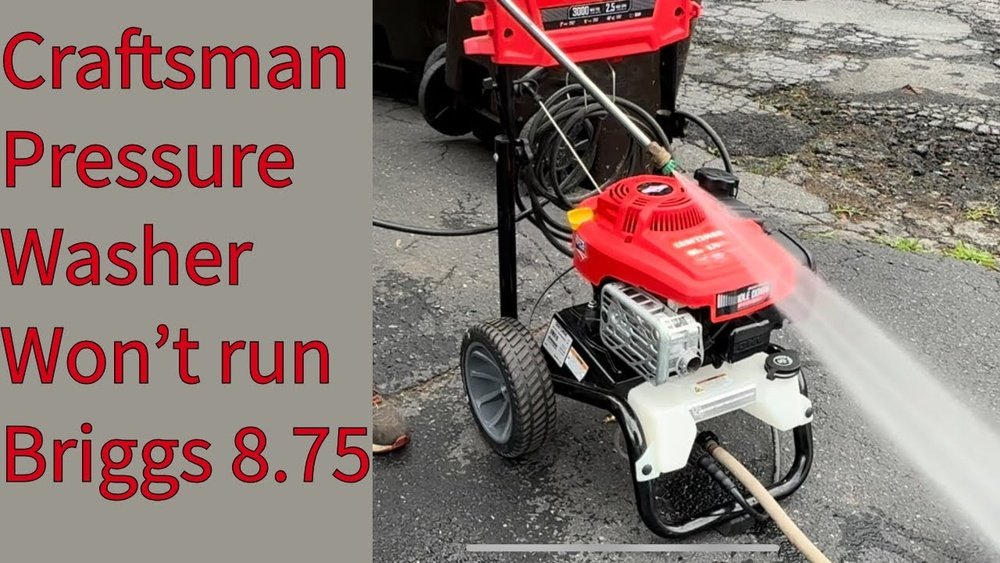
A Craftsman pressure washer is a powerful tool for tackling tough cleaning jobs around your home, from dirty driveways and siding to grimy patio furniture. When it’s working correctly, it delivers a high-pressure stream that can make old surfaces look new.
However, like any piece of machinery, a Craftsman pressure washer can sometimes refuse to start, leaving you with a half-finished project and a growing sense of frustration. This situation can arise from a variety of issues, ranging from simple user errors to more complex mechanical problems.
Understanding why your Craftsman pressure washer won’t start is the first step toward getting it back in action. Common culprits include fuel-related problems, ignition issues, water supply blockages, or even safety lockouts. Many of these issues can be resolved with basic troubleshooting and maintenance, saving you the time and expense of a professional repair.
This guide will walk you through the most frequent reasons your Craftsman pressure washer might be failing to start and provide clear, actionable steps to diagnose and fix the problem, drawing on common experiences and manufacturer recommendations.
Key Takeaways
- Fuel Issues: Ensure you are using fresh, clean gasoline, the correct fuel-to-oil ratio (if applicable for 2-stroke engines), and that the fuel valve is open. Clogged fuel filters or carburetors are common.
- Spark Plug Problems: A dirty, fouled, or improperly gapped spark plug is a frequent cause of no-start conditions. Inspect, clean, or replace it.
- Water Supply & Inlet: Verify the water source is adequate, the hose is connected correctly, and there are no kinks or blockages in the inlet filter or hose.
- Air Filter: A clogged air filter restricts airflow, preventing combustion. Check and clean or replace it.
- Safety Features: Ensure all safety interlocks (like the trigger lock) are disengaged and the unit is properly primed.
- Engine Oil Level: For 4-stroke engines, ensure the oil level is adequate, as low oil can trigger a safety shut-off.
- Carburetor Issues: A dirty or malfunctioning carburetor is a very common problem, often requiring cleaning or rebuilding.
- Primer Bulb: If your model has a primer bulb, ensure it is functioning correctly to help start a cold engine.
Common Reasons A Craftsman Pressure Washer Won’t Start
When your Craftsman pressure washer refuses to fire up, it’s usually due to one of several common issues. These problems often fall into categories related to fuel, ignition, air intake, or water supply. Before diving into complex repairs, it’s essential to systematically check these fundamental areas.
Many users report that a simple oversight in one of these domains is the root cause of their starting troubles.
Fuel System Problems
The fuel system is the lifeblood of any gasoline-powered engine, and pressure washers are no exception. Issues here can range from stale fuel to blockages that prevent fuel from reaching the combustion chamber.
Stale Or Contaminated Fuel
Gasoline degrades over time, especially when stored for extended periods. Ethanol in modern gasoline can also attract moisture, leading to separation and corrosion. If your pressure washer has been sitting for more than a month or two, the fuel in the tank could be the culprit.
- Symptoms: The engine may sputter, run rough, or not start at all.
- Solution: Drain the old fuel from the tank and carburetor bowl. Refill with fresh gasoline. For best results, use gasoline that is less than 30 days old and has an octane rating of 87 or higher, as recommended by most Craftsman engine manuals. If you anticipate storing the pressure washer for an extended period, use a fuel stabilizer.
Clogged Fuel Filter
The fuel filter prevents debris from entering the carburetor. If it becomes clogged, it restricts fuel flow.
- Symptoms: Engine may start briefly and then die, or refuse to start at all.
- Solution: Locate the fuel filter (usually inline between the fuel tank and carburetor). Replace it with a new one. This is a relatively inexpensive part and a common maintenance item.
Fuel Valve Blockage
Some pressure washers have a fuel shut-off valve between the tank and the carburetor. If this valve is closed or partially blocked, fuel won’t flow.
- Symptoms: Engine won’t start, or starts and immediately dies.
- Solution: Ensure the fuel valve is in the “ON” position. If it appears obstructed, you may need to remove and clean it.
Carburetor Issues
The carburetor mixes fuel and air. If it’s dirty, clogged with gummed-up fuel residue, or has a faulty float, it can prevent the engine from starting. This is one of the most common reasons for a no-start condition, especially after the unit has been stored.
- Symptoms: Engine cranks but won’t fire, or sputters and dies.
- Solution:
- Check the Carburetor Bowl: Look for a small bolt or nut at the bottom of the carburetor. Carefully loosen and remove it to drain any fuel and debris from the bowl.
- Clean the Carburetor: For a more thorough cleaning, you may need to remove the carburetor from the engine. Disassemble it carefully, clean all jets and passages with carburetor cleaner and compressed air, and reassemble. If you’re uncomfortable with this, consider taking it to a small engine repair shop.
- Primer Bulb: If your Craftsman model has a primer bulb, ensure it is functioning. It should feel firm when pressed after a few pumps, indicating it’s drawing fuel. If it feels soft or cracked, it needs replacement.
Ignition System Problems
A spark is necessary to ignite the fuel-air mixture. If the ignition system isn’t working correctly, the engine won’t start.
Spark Plug Issues
The spark plug is a small but vital component. It can become fouled with carbon deposits, oil, or fuel, or the gap can be incorrect, preventing a strong spark.
- Symptoms: Engine cranks but doesn’t start, or starts intermittently.
- Solution:
- Remove the Spark Plug: Use a spark plug wrench to carefully remove the plug.
- Inspect: Check for heavy carbon buildup, oil fouling, or damage to the electrode.
- Clean and Gap: If dirty, clean the plug with a wire brush and carburetor cleaner. Check the gap using a feeler gauge and adjust it to the manufacturer’s specification (usually found in your owner’s manual, often around 0.020-0.030 inches).
- Replace: If the plug is damaged or heavily fouled, it’s best to replace it. Spark plugs are inexpensive.
Faulty Ignition Coil Or Module
The ignition coil (or module) generates the high voltage needed to create a spark. If this component fails, you won’t get a spark.
- Symptoms: Engine cranks but no spark at the plug.
- Solution: This is a more complex repair. You can test for spark by removing the spark plug wire, inserting a spare spark plug into the boot, grounding the metal body of the plug against the engine block, and pulling the starter cord. If you see no spark, the ignition coil may be faulty and will need replacement. This often requires diagnosing with a multimeter or by trying a known good coil.
Loose Or Damaged Spark Plug Wire
A loose connection or damaged wire can prevent the spark from reaching the plug.
- Symptoms: No spark, or intermittent spark.
- Solution: Ensure the spark plug wire is firmly seated on both the spark plug and the ignition coil. Inspect the wire for cracks or damage.
Air Intake Problems
The engine needs air to combust fuel. Restrictions in the air intake system can prevent starting.
Clogged Air Filter
A dirty air filter restricts the flow of air into the carburetor, leading to a rich fuel mixture that can prevent starting.
- Symptoms: Engine may start and run poorly, or not start at all.
- Solution: Locate the air filter housing. Remove the filter and inspect it. If it’s dirty or clogged with debris, clean it (if it’s a foam or washable type) or replace it with a new one. Foam filters can often be washed with soap and water, then re-oiled lightly. Paper filters typically need replacement.
Blocked Air Intake
Obstructions in the intake manifold or carburetor throat can also prevent airflow.
- Symptoms: Engine won’t start.
- Solution: Visually inspect the air intake path for any blockages, such as spiderwebs or debris.
Water Supply And Pump Issues
While these don’t directly prevent the *engine* from starting, they can prevent the *pressure washer* from operating correctly or from starting in a way that indicates a problem. Some safety features are tied to water flow.
Insufficient Water Supply
Most pressure washers require a minimum water flow rate from your garden hose to operate safely and effectively. If the water supply is too low, the pump can overheat or the engine may not start due to safety cutoffs.
- Symptoms: Engine may start briefly and die, or not start at all. Pump may make unusual noises.
- Solution: Ensure your garden hose is fully connected to the water inlet and that the water source (faucet) is fully open. Check the flow rate by timing how long it takes to fill a 5-gallon bucket. You typically need at least 5-6 GPM (gallons per minute).
Kinked Or Blocked Inlet Hose
A kink in the garden hose or a blockage in the water inlet filter can restrict water flow.
- Symptoms: Low pressure, or engine won’t start/runs poorly.
- Solution: Inspect the entire length of the garden hose for kinks. Remove the water inlet filter screen from the pressure washer pump and clean any debris from it.
Water In Oil (4-stroke Engines)
For 4-stroke engines, if water contaminates the engine oil, it can prevent the engine from starting and cause significant damage. This can happen if the unit is stored improperly or if seals fail.
- Symptoms: Milky or foamy oil, engine won’t start.
- Solution: Check the oil level and appearance. If the oil looks milky, drain it completely, flush the engine with clean oil (if possible, consult your manual), and refill with the correct type and amount of fresh engine oil. If the problem persists or you suspect internal damage, consult a professional.
Safety Features And Operator Error
Modern pressure washers have safety features that can prevent them from starting if not engaged correctly.
Trigger Lock Engaged
Most Craftsman pressure washers have a safety lock on the trigger to prevent accidental spraying. If this is engaged, the engine may not start or the pump may not engage.
- Symptoms: Engine won’t start, or pump doesn’t engage.
- Solution: Ensure the trigger lock is disengaged.
Low Oil Level Sensor (4-stroke Engines)
Many 4-stroke engines have a low oil sensor that will prevent the engine from starting if the oil level is too low.
- Symptoms: Engine won’t crank or start.
- Solution: Check the engine oil level using the dipstick. Add the correct type of oil if it’s low. Refer to your owner’s manual for the recommended oil type and capacity.
Unit Not Primed (cold Start)
Some engines, especially when cold, benefit from priming to help draw fuel into the cylinder. If your model has a primer bulb, ensure you use it correctly.
- Symptoms: Engine cranks but won’t start, especially when cold.
- Solution: Press the primer bulb 3-5 times until you feel resistance or see fuel in the bulb. If the bulb is cracked or doesn’t seem to be working, it may need replacement.

Credit: www.youtube.com
Troubleshooting Steps For A Craftsman Pressure Washer That Won’t Start
When your Craftsman pressure washer refuses to cooperate, a methodical approach to troubleshooting is key. Rather than randomly trying fixes, follow a logical sequence to identify and resolve the issue efficiently. This process mirrors what a mechanic would do, starting with the simplest and most common problems.
Step 1: Check The Basics (the Obvious First)
Before you start disassembling anything, run through a quick checklist of the most common oversights.
- Fuel Level: Is there enough fresh fuel in the tank?
- Fuel Valve: Is the fuel shut-off valve open?
- Water Supply: Is the water source turned on, and is the hose connected securely?
- Trigger Lock: Is the trigger safety lock disengaged?
- Choke: Is the choke set correctly for a cold start (usually ON or CLOSED)?
- Oil Level (4-Stroke): Is the engine oil at the proper level?
Step 2: Inspect Fuel And Air Components
If the basics check out, move to the fuel and air systems, as these are frequent culprits.
Inspecting The Fuel System
- Freshness: If the fuel is more than a month old, drain it and refill with fresh gasoline.
- Fuel Filter: Locate and inspect the fuel filter. If it looks dirty or clogged, replace it. This is a simple and common fix.
- Fuel Line: Check the fuel line for kinks or damage.
Inspecting The Air System
- Air Filter: Remove the air filter. If it’s visibly dirty or clogged, clean it or replace it. A clean air filter is crucial for proper engine operation.
Step 3: Check The Ignition System
No spark means no combustion. This is another very common area for problems.
Spark Plug Inspection And Testing
- Removal: Carefully remove the spark plug using a spark plug wrench.
- Visual Check: Look for signs of fouling (black, sooty deposits), oil (wet, black residue), or damage to the electrode.
- Cleaning/Gapping: Clean any deposits with a wire brush and carb cleaner. Check the gap with a feeler gauge and adjust to your manual’s specification.
- Testing for Spark: Reconnect the spark plug wire to the removed spark plug. Ground the metal body of the spark plug firmly against a clean metal part of the engine block (e.g., a cooling fin). Have someone pull the starter cord while you observe the spark plug gap. A strong, blue spark indicates the ignition system is likely working. A weak, yellow spark, or no spark at all, suggests an ignition problem (coil, wiring, or plug itself).
Step 4: Address Carburetor Issues
If you have fuel, air, and spark, but the engine still won’t start or runs very poorly, the carburetor is a prime suspect.
- Primer Bulb: If your model has one, ensure it functions correctly. If it feels soft or cracked, replace it.
- Carburetor Bowl Drain: Loosen the drain screw at the bottom of the carburetor bowl. If fuel drains out, it means fuel is reaching the bowl. If not, there’s a blockage upstream (filter, fuel line, or valve).
- Carburetor Cleaning: If fuel is reaching the bowl but the engine still won’t start, the internal passages of the carburetor may be clogged. This often requires removing and cleaning the carburetor, as detailed in the “Fuel System Problems” section.
Step 5: Water And Pump System Checks
While not directly related to engine ignition, these can cause issues or indicate underlying problems.
- Water Flow: Ensure you have strong water flow from your faucet and no kinks in the hose.
- Inlet Filter: Clean the water inlet filter.
- Pump Damage: Listen for unusual noises from the pump when attempting to start. While less common for a no-start issue, a seized pump can sometimes prevent an engine from turning over.
Step 6: When To Seek Professional Help
If you’ve gone through these steps and your Craftsman pressure washer still won’t start, or if you’ve identified a more complex mechanical issue (like a suspected faulty ignition coil, internal engine damage, or a severely gummed-up carburetor you’re not comfortable fixing), it’s time to consult a qualified small engine mechanic.
Attempting repairs beyond your comfort level can sometimes cause more damage.

Credit: www.youtube.com
Diagnosing Specific Craftsman Pressure Washer Models
While the general principles of troubleshooting apply to all Craftsman pressure washers, specific models might have unique features or common issues. Craftsman offers a range of pressure washers, from smaller electric models to powerful gas-powered units, often featuring engines from brands like Briggs & Stratton or Honda, or their own branded engines.
Understanding your specific model can help narrow down potential problems.
Gas Vs. Electric Models
The most significant distinction is between gas and electric pressure washers.
- Electric Models: These are simpler and have fewer potential starting issues related to fuel or ignition. Problems are typically related to power supply (tripped breaker, faulty cord, GFCI issues) or pump blockages. If an electric Craftsman pressure washer won’t start, check the power source, the GFCI outlet, and ensure the water inlet isn’t blocked.
- Gas Models: These have the complexities of an internal combustion engine, involving fuel, air, spark, and oil. The troubleshooting steps outlined above primarily apply to these models.
Engine Brand Specifics
Many Craftsman gas pressure washers use engines manufactured by other companies, most notably Briggs & Stratton. While Craftsman engines also exist.
- Briggs & Stratton Engines: These are very common. Many Briggs & Stratton engines have features like:
- ReadyStart®: Auto-choke system, meaning you don’t need to manually choke the engine. If the ReadyStart system malfunctions, it could affect starting.
- Lo-Tone™ Muffler: Affects sound, not starting.
- Paper Air Filters: Typically require replacement when dirty.
- Overhead Valve (OHV) Design: Common in modern engines, offering better efficiency.
- Low Oil Shutdown: A safety feature that prevents starting if oil is low.
- Common Issues: Carburetor gumming, clogged fuel filters, and spark plug fouling are prevalent, much like any small engine. Referencing the specific Briggs & Stratton engine manual for your model can provide detailed troubleshooting for that engine. You can often find the engine model number on a sticker on the engine itself.
- Craftsman Branded Engines: Older or some newer models might feature engines branded as Craftsman. These often operate on similar principles to Briggs & Stratton or Honda engines.
- Common Issues: Similar to other gasoline engines, expect fuel system (carburetor, filter, fuel line) and ignition system (spark plug, coil) issues to be the most frequent causes of no-start problems.
Model-specific Features To Consider
When troubleshooting your specific Craftsman pressure washer, consider these features:
- Primer Bulb: If your model has one, check its condition and function. A cracked or non-functional primer bulb will make cold starts difficult.
- Choke System: Is it manual or automatic (like ReadyStart)? Ensure it’s functioning correctly. A stuck choke can cause starting problems.
- Fuel Shut-off Valve: Some models have one, others don’t. If yours does, ensure it’s open.
- Water Pressure Sensor/Low Water Cutoff: Some advanced models might have sensors that prevent starting if water flow is inadequate. This is less common on basic Craftsman units but worth considering for higher-end models.
Example Scenario: Craftsman 2700 Psi Pressure Washer
Let’s say you have a Craftsman 2700 PSI model with a Briggs & Stratton engine that won’t start.
- Initial Check: You confirm there’s fresh fuel, the fuel valve is open, water is on, and the trigger lock is off.
- Air Filter: You remove and inspect the air filter; it’s dirty. You clean it or replace it.
- Spark Plug: You remove the spark plug. It’s fouled with black carbon. You clean it, check the gap, and reinstall it.
- Attempt to Start: The engine still won’t start.
- Carburetor Bowl: You loosen the drain screw on the carburetor bowl. No fuel drains out. This indicates a blockage *before* the bowl.
- Fuel Filter: You locate the inline fuel filter and see it’s clogged. You replace it.
- Attempt to Start: The engine now fires up and runs, albeit a bit rough.
- Carburetor Cleaning (if needed): If it still runs rough, the carburetor itself might need cleaning or adjustment.
This example illustrates how a systematic approach, starting with simple checks and moving to more involved components, can pinpoint the issue.

Credit: www.youtube.com
Maintenance Tips To Prevent Starting Problems
Preventative maintenance is the most effective way to avoid your Craftsman pressure washer refusing to start. Regular care ensures all components are in good working order and prevents the buildup of issues that lead to breakdowns.
Regular Fuel System Care
The fuel system is often the most problematic area for small engines that aren’t used daily.
- Use Fresh Fuel: Always use fresh gasoline (less than 30 days old).
- Fuel Stabilizer: If you don’t use the pressure washer regularly or during seasonal storage, add a quality fuel stabilizer to prevent fuel degradation and gum formation. This is a critical step.
- Clean Fuel Tank: Periodically inspect and clean the fuel tank for any sediment or rust.
- Replace Fuel Filter: Change the fuel filter annually or as recommended