
Have you ever wondered how your phone call stays clear or how your favorite music sounds so crisp? It all comes down to the type of signals carrying the information—digital or analog.
Understanding the difference between digital signal vs analog signal can change the way you see technology around you. This knowledge isn’t just for tech experts; it can help you make smarter choices about devices, improve your gadgets’ performance, and even solve common tech problems.
Keep reading, and you’ll discover the key facts that make one signal type better in certain situations—and why it matters to you.
Signal Basics
Signals carry information from one place to another. They help devices talk to each other. Understanding signal types is key to learning about technology. Signals come in two main forms: analog and digital. Each type works differently and has unique uses.
What Is An Analog Signal
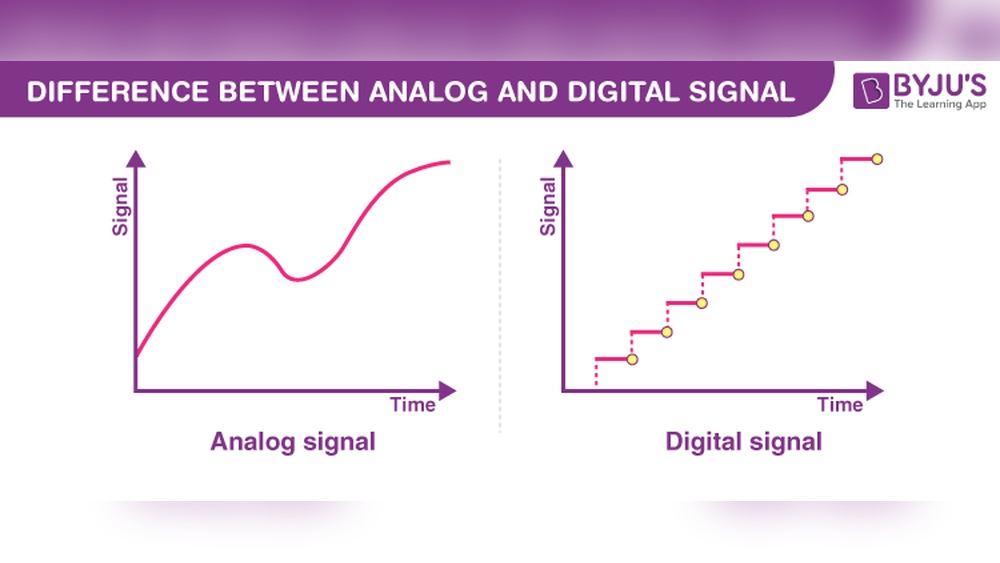
An analog signal is a continuous wave. It changes smoothly over time. This wave represents information like sound or light. The signal’s strength and frequency vary. Old radios and televisions use analog signals. The signal can lose quality over distance. Noise can also affect the signal.
What Is A Digital Signal
A digital signal uses fixed steps or levels. It represents data as numbers, usually 0 and 1. This makes the signal easy to copy and store. Digital signals are common in computers and smartphones. They resist noise better than analog signals. The signal stays clear even over long distances.

Credit: controlbyte.tech
Waveform Characteristics
Waveform characteristics define how signals behave and carry information. Understanding these traits helps distinguish digital signals from analog signals. Each type has unique properties that affect its transmission and processing.
Continuous Vs Discrete Signals
Analog signals are continuous. They change smoothly over time without breaks. This means the waveform flows in an unbroken line. It can represent many values between its minimum and maximum.
Digital signals are discrete. They jump between specific values, usually just two: 0 and 1. These signals create square waves rather than smooth curves. The jumps happen at fixed time intervals, making digital signals easier to process.
Signal Amplitude And Frequency
Amplitude is the height of the waveform. Analog signals have varying amplitude that can take any value. This variation carries information in analog form.
Digital signals have fixed amplitude levels. The values switch between high and low states only. This clear difference helps reduce noise and errors.
Frequency is how often the waveform repeats in one second. Analog signals can have any frequency, changing smoothly over time. Digital signals use a clock signal to keep timing steady, ensuring accurate data transfer.
Data Representation
Data representation defines how information is carried by signals. It affects how devices read, store, and send data. Signals can represent data in two main ways: analog and digital. Each method uses a distinct encoding style to express information clearly. Understanding these methods helps grasp how technology processes data.
Analog Signal Encoding
Analog signals encode data through continuous waves. These waves vary in amplitude and frequency. The changes in the wave reflect the information. For example, sound waves are analog because they continuously change. This type of encoding captures subtle variations well. It suits natural signals like voice or music.
However, analog signals can face noise and distortion. These issues affect data accuracy. Small changes in the wave can lead to errors. Devices must work hard to keep the signal clear. Despite this, analog encoding remains common in many systems.
Digital Signal Encoding
Digital signals encode data using discrete values. They use binary code, which means ones and zeros. Each bit represents a piece of information. Digital encoding converts data into a sequence of 0s and 1s. This method makes data easy to store and transmit.
Digital signals resist noise better than analog signals. Small errors do not change the entire data set. This leads to higher accuracy and clearer communication. Digital encoding powers computers, smartphones, and modern networks. It allows for efficient data processing and error correction.
Transmission Methods
Transmission methods define how signals travel from one place to another. These methods affect signal quality, speed, and reliability. Understanding the differences helps in choosing the right system for communication.
Analog Transmission
Analog transmission sends continuous signals that vary in amplitude or frequency. It mimics real-world signals like sound or light. This method uses waves to carry information over cables or air.
Analog signals are prone to noise and distortion. Signal quality can degrade over long distances. Devices like amplifiers boost these signals but also increase noise.
This method suits simple communication systems such as radio and traditional telephony. It requires less complex hardware but offers lower data accuracy.
Digital Transmission
Digital transmission sends data in binary format, using 0s and 1s. It breaks information into discrete packets. This method allows error detection and correction during transmission.
Digital signals resist noise better than analog signals. They maintain quality over long distances without much loss. Repeaters regenerate the signal to keep it strong.
This method supports high-speed data transfer for internet, TV, and mobile networks. It requires more complex equipment but provides clearer, more reliable communication.
Noise And Interference
Noise and interference affect both digital and analog signals. They come from many sources like electrical devices, weather, and physical barriers. These unwanted signals can cause problems in communication and data transfer. Understanding their effects helps in choosing the right signal type for different uses.
Effects On Analog Signals
Analog signals carry information as continuous waves. Noise adds extra waves that mix with the original signal. This mixing causes the signal to lose clarity. The sound may become fuzzy, and images may blur or distort. The more noise present, the harder it is to understand the signal.
Interference can cause static, hissing, or crackling sounds in analog audio. In video, it may result in snow or lines on the screen. Analog signals do not have a way to correct these errors. Once noise enters, it stays and worsens over distance.
Effects On Digital Signals
Digital signals use binary code, with ones and zeros. Noise can cause some bits to flip from one to zero or vice versa. Digital systems check for errors and often fix them automatically. This error correction keeps the data clear and accurate.
Small amounts of noise usually do not affect digital signals much. The signal is either received correctly or lost entirely. This clear distinction reduces the impact of interference. Digital signals can travel longer distances without losing quality.
Signal Processing
Signal processing involves analyzing, modifying, and synthesizing signals. It helps improve the quality and usefulness of signals. Both analog and digital signals need processing, but the methods differ.
Processing changes raw signals into a form better for communication or storage. It reduces noise, enhances features, or extracts information. The choice of technique depends on the signal type.
Analog Signal Processing Techniques
Analog signal processing works with continuous signals. It uses circuits like filters, amplifiers, and modulators. Filters remove unwanted noise or interference from signals. Amplifiers increase the signal strength without changing its shape. Modulators change the signal to carry information over distances.
Analog techniques rely on physical components and real-time processing. They are simple but less flexible than digital methods. These techniques suit applications like radio broadcasting and audio equipment.
Digital Signal Processing Techniques
Digital signal processing uses computers or digital hardware. It converts analog signals into digital form first. Then, it applies algorithms to modify or analyze the data. Common techniques include Fast Fourier Transform (FFT), filtering, and compression.
Digital methods offer high precision and flexibility. They allow complex operations that analog circuits cannot perform. Digital processing suits mobile phones, computers, and modern communication systems. It helps improve signal clarity and data transmission efficiency.
Advantages And Disadvantages
Understanding the advantages and disadvantages of digital and analog signals helps choose the right technology. Both have unique traits that suit different needs. Knowing these traits prevents common mistakes in communication and electronics.
Benefits Of Analog Signals
Analog signals show data in a continuous form. This type captures real-world sounds and images smoothly. It works well for audio and video where detail is important. Analog devices often use less power. They are simpler and cheaper to build. The signal changes naturally, matching the original source.
Benefits Of Digital Signals
Digital signals use numbers to represent information. They resist noise and interference better than analog. This means clearer sound and sharper images. Digital data can be easily stored and copied without loss. Devices can send information faster using digital signals. They support modern technology like computers and smartphones.
Limitations Of Each Signal Type
Analog signals lose quality over long distances. Noise can distort the signal during transmission. Analog devices can be bulky and less flexible. Digital signals need more power for processing. They may lose detail if sampled too coarsely. Digital systems depend on software, which can fail. Each signal type fits different tasks and environments.
Applications
Both digital and analog signals play important roles in technology and communication. Each type of signal has specific uses based on its strengths. Understanding where each signal applies helps us see how they impact daily life and industry.
Common Uses Of Analog Signals
Analog signals carry information in continuous waves. They work well for sound and light waves. Radios use analog signals to send music and voice. Traditional telephones rely on analog signals for calls. Analog TV broadcasts use waves to deliver pictures and sound. Older audio equipment like vinyl records and cassette tapes use analog signals. Sensors measuring temperature, pressure, or light often output analog signals. These signals are simple and effective for many natural phenomena.
Common Uses Of Digital Signals
Digital signals represent data in binary form, using ones and zeros. Computers and smartphones process digital signals for fast communication. Digital TV and radio provide clearer sound and images. The internet depends on digital signals for data transmission. Digital cameras capture pictures using digital signals. Modern audio devices like CDs and MP3 players use digital signals. Digital signals are also vital in control systems and robotics. They offer high accuracy and easy storage for complex data.
Future Trends
The future of signals holds exciting changes and improvements. Both analog and digital signals are evolving. These changes will impact many fields like communication, healthcare, and entertainment. Understanding new trends helps us prepare for better technology and tools.
Emerging Technologies In Analog Signals
Analog signals are gaining new life with advanced sensors. These sensors capture data in natural forms like sound and light. Innovations improve signal clarity and reduce noise. New materials help create better analog devices. These devices work well in medical imaging and audio systems. Analog signal processing also uses machine learning for better results. This helps enhance real-world data accuracy.
Emerging Technologies In Digital Signals
Digital signals are advancing rapidly with faster processors. Quantum computing is starting to influence digital signal processing. This means quicker data analysis and better security. Artificial intelligence improves digital signal decoding and error correction. 5G and future 6G networks rely heavily on digital signals. These networks offer higher speeds and lower delays. Digital signals also drive progress in virtual and augmented reality. This will change how we interact with digital content.

Credit: www.youtube.com

Credit: crossroadenergy.com
Frequently Asked Questions
What Is The Main Difference Between Digital And Analog Signals?
Digital signals use binary code (0s and 1s), while analog signals use continuous waves. This makes digital signals more precise and less prone to noise.
How Do Analog Signals Carry Information?
Analog signals carry information through continuous variations in voltage or current. These changes represent sound, light, or other data forms.
Why Are Digital Signals Preferred In Modern Communication?
Digital signals offer better noise resistance and easier data processing. They allow for clearer transmission over long distances.
Can Analog Signals Be Converted To Digital Signals?
Yes, analog signals can be converted to digital using an Analog-to-Digital Converter (ADC). This process samples the signal at intervals and turns it into binary data.
Which Signal Type Is Better For Audio Quality?
Analog signals can capture more subtle sound changes, making them ideal for high-fidelity audio. Digital signals are easier to edit and store.
How Do Noise And Interference Affect Analog Signals?
Noise distorts analog signals, causing loss of quality. Since analog is continuous, it picks up more interference than digital signals.
What Are Common Uses Of Digital Signals In Daily Life?
Digital signals are used in computers, smartphones, and digital TV. They enable fast and reliable data transfer.
Conclusion
Digital and analog signals each have clear strengths and weaknesses. Digital signals offer better noise resistance and easier data storage. Analog signals carry smooth, continuous information, ideal for sound and video. Choosing the right signal depends on the task and environment.
Both types play key roles in technology today. Understanding their differences helps in making smart tech decisions. Simple yet important.