
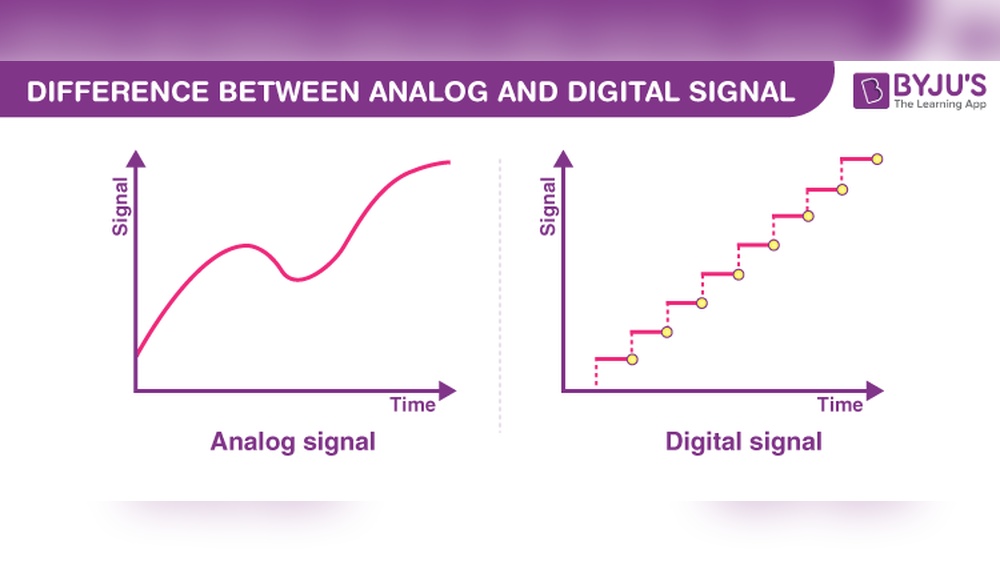
Have you ever wondered why your old vinyl records sound different from your favorite streaming playlist? It all comes down to one simple choice: analog vs digital signal.
Understanding the difference between these two can change how you experience music, movies, and even how your devices work. By the end of this article, you’ll see why this matters to you and how it can impact your everyday life.
Ready to uncover the truth behind these signals? Let’s dive in.

Credit: www.youtube.com
Signal Basics
Signals carry information from one place to another. They form the base of communication systems. Understanding signal basics helps us grasp how devices talk to each other. Two main types of signals exist: analog and digital. Each type has unique features and uses.
What Is An Analog Signal
An analog signal changes continuously over time. It represents data with smooth and varying waves. The signal can take any value within a range. Examples include sound waves and light intensity. Analog signals are natural and easy to understand.
They often face noise, which can distort the signal. This makes analog signals less precise. Devices like old radios and telephones use analog signals. They work well for simple, real-world information.
What Is A Digital Signal
A digital signal uses discrete values to represent data. It switches between fixed levels, often called 0s and 1s. Digital signals are clear and less affected by noise. They provide accurate and reliable communication.
Most modern devices like computers and smartphones use digital signals. These signals allow fast and complex data processing. Digital signals are easy to store and copy without loss.
Waveform Characteristics
Waveform characteristics define how signals behave and transmit information. Understanding these traits helps us see the key differences between analog and digital signals. This knowledge is essential for many areas like electronics, communication, and audio processing.
Continuous Vs Discrete Signals
Analog signals are continuous. They change smoothly over time without breaks. This means the signal can take any value at any moment. The waveform looks like a flowing curve.
Digital signals are discrete. They only have specific values, usually two levels: high or low. These signals look like square waves with clear steps. The signal jumps from one value to another, without values in between.
Amplitude And Frequency Differences
Amplitude in analog signals varies continuously. It can represent subtle changes, like sound volume or light intensity. Frequency also changes smoothly and affects the tone or color.
In digital signals, amplitude is fixed at certain levels. Frequency relates to how fast the signal switches between levels. These changes happen in steps, not smoothly. This makes digital signals less prone to noise.
Transmission Methods
Transmission methods define how information moves from one place to another. Both analog and digital signals use unique ways to send data. Understanding these methods helps us see their strengths and weaknesses.
Analog Signal Transmission
Analog signals carry information as continuous waves. These waves change smoothly over time. This method mimics real-world sounds and images closely.
Transmission happens through cables, radio waves, or fiber optics. Noise and interference can distort the signal easily. Signal quality may drop with distance.
Amplifiers boost the signal but also increase noise. Analog transmission suits voice and music but has limits in clarity.
Digital Signal Transmission
Digital signals send data as binary code: ones and zeros. This code represents information in small, clear steps.
Transmission uses electrical pulses or light signals in cables and fibers. Digital signals resist noise better than analog.
Repeaters regenerate the signal perfectly, keeping quality high. Digital methods allow error checking and data compression.
This transmission is ideal for computers, video, and fast communication systems.
Advantages And Disadvantages
Understanding the advantages and disadvantages of analog and digital signals helps in choosing the right option. Both signal types have unique features that suit different needs. The strengths and limitations affect their use in communication and technology.
Strengths Of Analog Signals
Analog signals show smooth and continuous data changes. They capture natural sounds well, like human voices or music. These signals work well in simple devices without complex parts. Analog systems often cost less to build and maintain. They provide real-time information without needing conversion.
Limitations Of Analog Signals
Analog signals lose quality over distance. Noise and interference can distort the signal easily. It is hard to store analog data without losing clarity. Signal degradation happens with every copy or transfer. Repairing or improving analog signals requires extra equipment.
Strengths Of Digital Signals
Digital signals offer clear and accurate data transmission. They resist noise and interference better than analog signals. Digital data is easy to store, copy, and share without quality loss. Modern devices use digital signals for faster and secure communication. Digital systems support complex processing and encryption.
Limitations Of Digital Signals
Digital signals need conversion from analog sources like sound or light. This conversion can cause slight delays. Devices handling digital signals are often more complex and costly. Digital signals may lose details in low-quality conversions. Power consumption is higher compared to analog systems.
Applications In Real Life
Signals are all around us. They carry information from one place to another. Both analog and digital signals have many real-life uses. Each type serves different purposes based on its strengths.
Understanding where these signals are used helps us see their value. It also shows why technology often mixes both types for best results.
Common Uses Of Analog Signals
Analog signals are continuous waves. They vary smoothly over time. These signals work well with natural information.
Sound from a microphone is a common analog signal. It captures voice and music with natural tones. Older radios and televisions use analog signals to send audio and video.
Temperature sensors in homes often use analog signals. They provide real-time temperature changes. Analog signals also appear in older telephone lines and vinyl records.
Common Uses Of Digital Signals
Digital signals use discrete values, usually zeros and ones. They are less affected by noise and interference.
Computers and smartphones depend on digital signals. They store data and send messages in digital form. Digital television and radio provide clearer picture and sound.
Digital signals are key in internet communication and digital cameras. They allow fast, accurate data transfer. Modern audio devices like MP3 players also use digital signals.

Credit: crossroadenergy.com
Signal Processing Techniques
Signal processing techniques shape how signals are handled and improved. These methods affect clarity, accuracy, and usability of information. Different types of signals require different processing methods.
Analog Signal Processing
Analog signal processing works directly with continuous signals. It uses components like resistors, capacitors, and amplifiers to modify signals. Tasks include filtering noise, amplifying weak signals, and mixing multiple signals. The process happens in real time without converting the signal.
This method suits audio, radio, and other natural signals. Analog processing can be sensitive to noise and distortion. It needs careful design to maintain signal quality. Despite limits, it remains important in many devices.
Digital Signal Processing
Digital signal processing (DSP) converts signals into numbers. It uses algorithms to analyze and change these numbers. This method allows complex operations like compression, error correction, and pattern recognition. DSP provides high precision and flexibility.
Signals are easier to store and transmit digitally. DSP works well with computers and modern electronics. It reduces noise effects and improves signal quality. Many communication and multimedia systems rely on digital processing.
Impact On Modern Technology
The impact of analog and digital signals shapes much of today’s technology. These signals affect how devices work and communicate. Understanding their role helps explain many modern tools and services.
Analog signals are continuous waves that carry information. Digital signals use binary code, representing data with ones and zeros. Each has strengths and limits that influence technology’s design and use.
Role In Communication Systems
Communication depends heavily on signal type. Analog signals transmit voice and music in a smooth flow. Digital signals provide clearer, faster data transfer. Phones and internet services mainly use digital signals now. They reduce noise and improve connection quality. This shift supports high-speed communication and better reliability.
Influence On Media And Entertainment
Media has changed with digital signals. Digital formats offer sharp images and clear sound. Streaming platforms rely on digital signals for smooth playback. Analog signals are still found in some broadcasting but are fading. Digital technology allows more content in smaller files. This change enhances user experience and access to media.

Credit: controlbyte.tech
Frequently Asked Questions
What Is The Main Difference Between Analog And Digital Signals?
Analog signals are continuous and vary smoothly over time. Digital signals use discrete values, usually 0s and 1s, to represent data.
Why Are Digital Signals Preferred Over Analog?
Digital signals are less affected by noise and interference. They provide clearer and more reliable communication.
Can Analog Signals Be Converted To Digital?
Yes, analog signals can be converted using an analog-to-digital converter. This process helps in digital processing and storage.
Which Signal Type Is Better For Audio Quality?
Analog signals can capture more natural sound waves. Digital signals allow easy editing and noise reduction.
How Do Noise And Distortion Affect Analog And Digital Signals?
Noise distorts analog signals more because they are continuous. Digital signals resist noise better due to discrete data levels.
Conclusion
Both analog and digital signals have clear strengths and weaknesses. Analog signals carry continuous information but can lose quality over distance. Digital signals use numbers, making them easier to store and less prone to noise. Choosing between the two depends on the task and equipment you use.
Understanding these basics helps you make smarter decisions in technology and communication. The world of signals is vast, but knowing this difference is a great start.